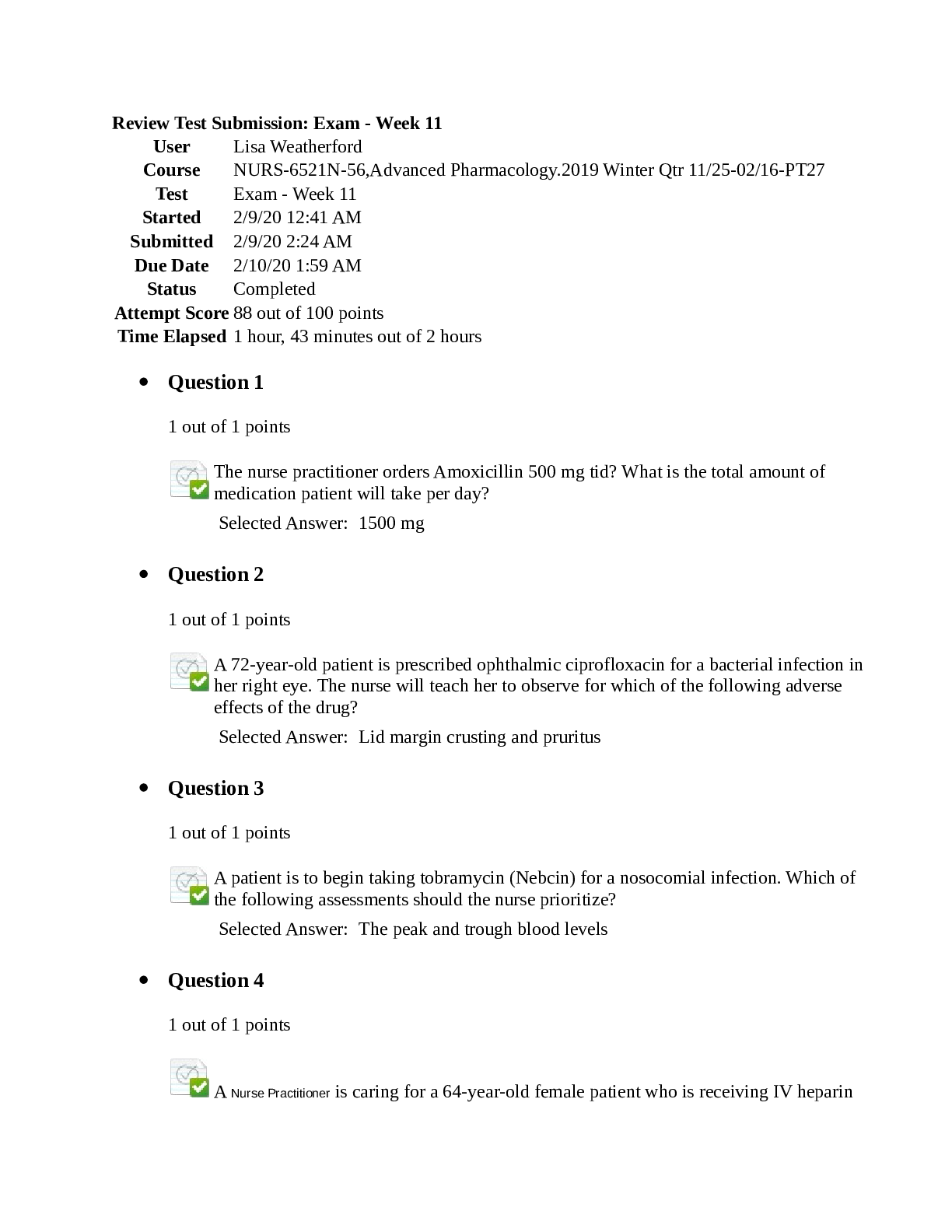
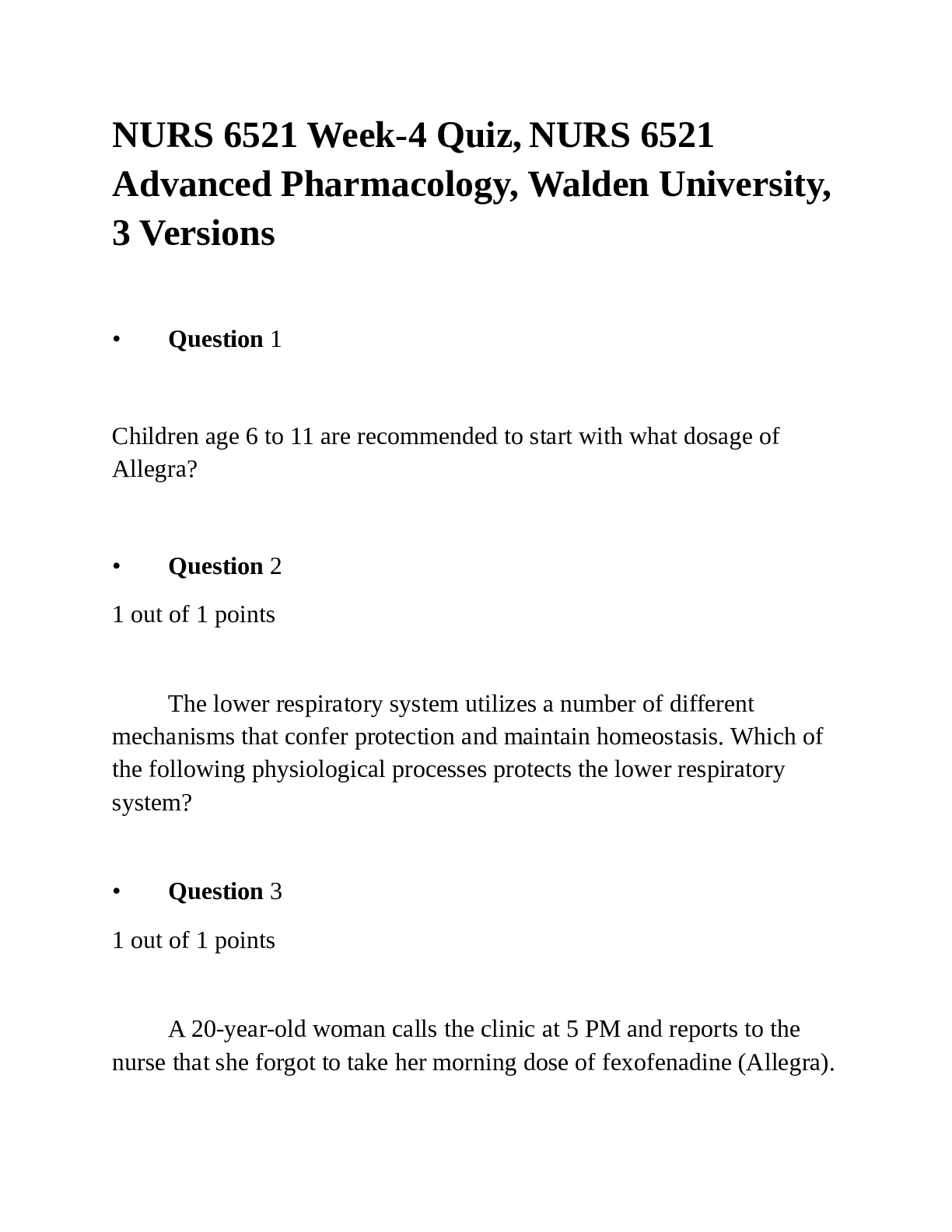
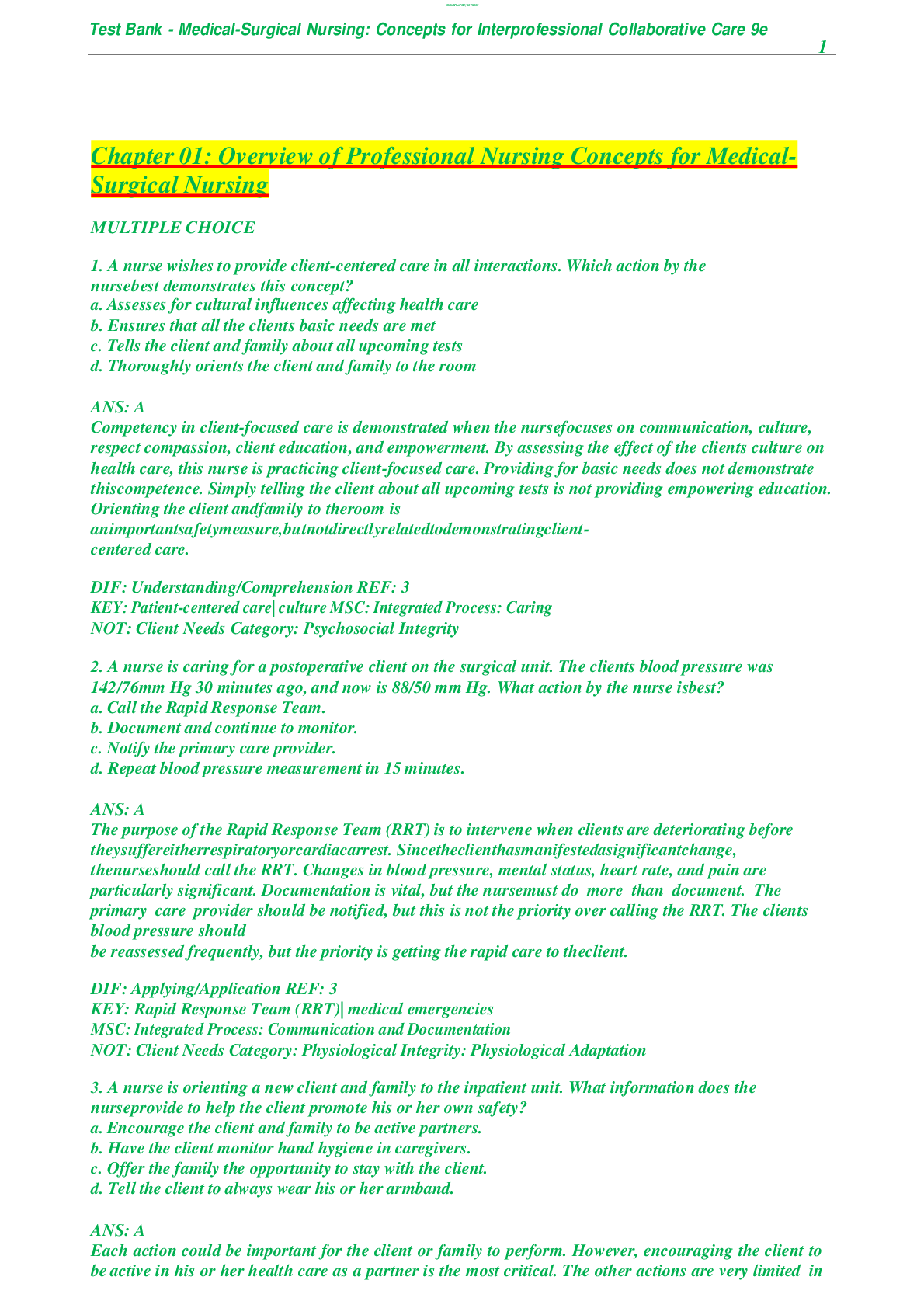
NU 545-805 Unit 1 Test Bank
Document Content and Description Below
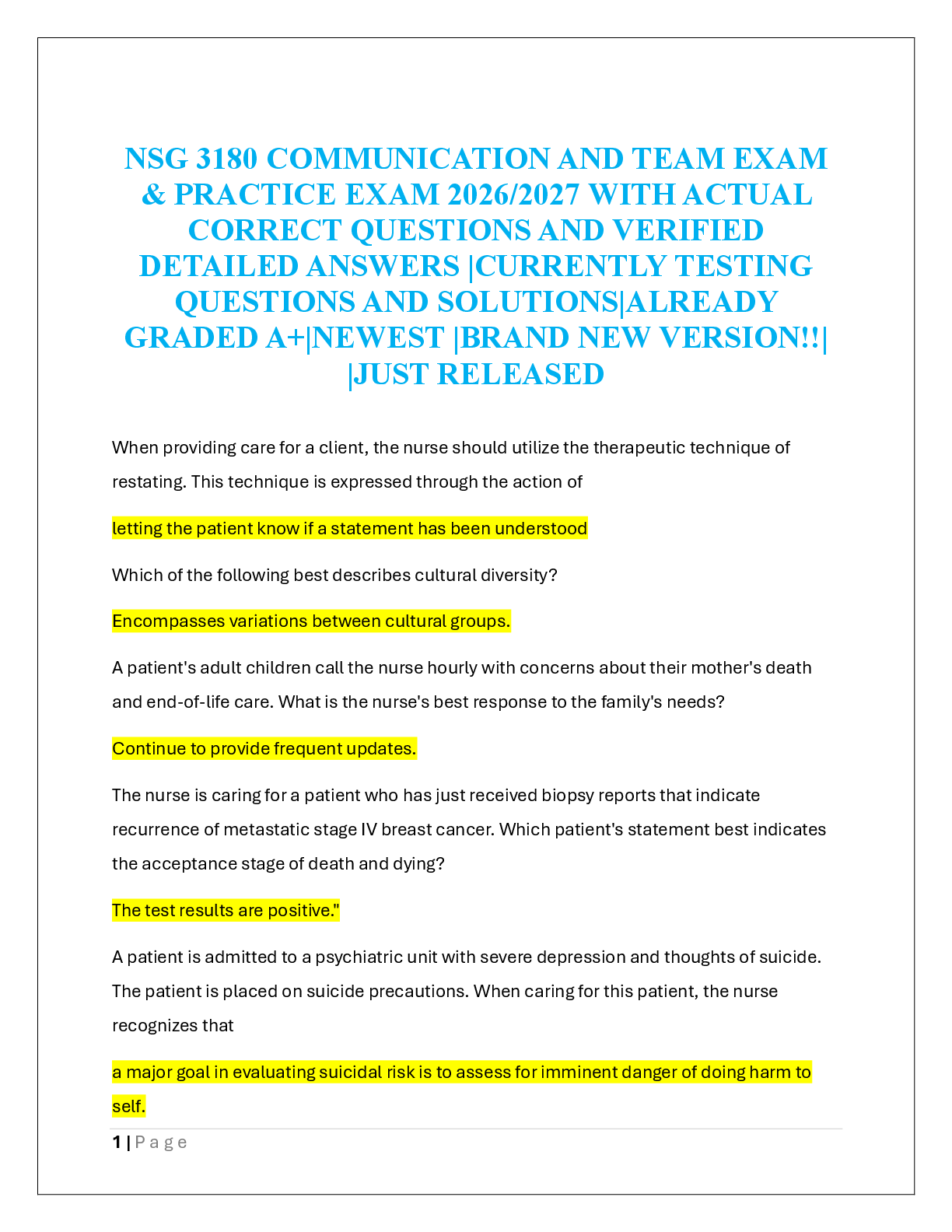
Which action is a purpose of the inflammatory process?
a. To provide specific responses toward antigens
b. To lyse cell membranes of microorganisms c. To prevent infection of the injured tissue
d. To create immunity a
...
[Show More]
Last updated: 1 year ago
Preview 1 out of 20 pages
Instant download

Loading document previews ...
Buy this Document to get the Full Access Instantly
Provided by Students Who Aced it
We Verify Document Content to Gurantee Accuracy
Reviews( 0 )
Document information
Connected school, study & course
About the document
Uploaded On
May 24, 2025
Number of pages
20
Written in
All

Additional information
This document has been written for:
Uploaded
May 24, 2025
Downloads
0
Views
62
Topic Tags
Related Subjects & Courses
Explore similar study resources and related concepts.
Recommended For You
Get more on EXAM »
.png)
$13
16 Pages
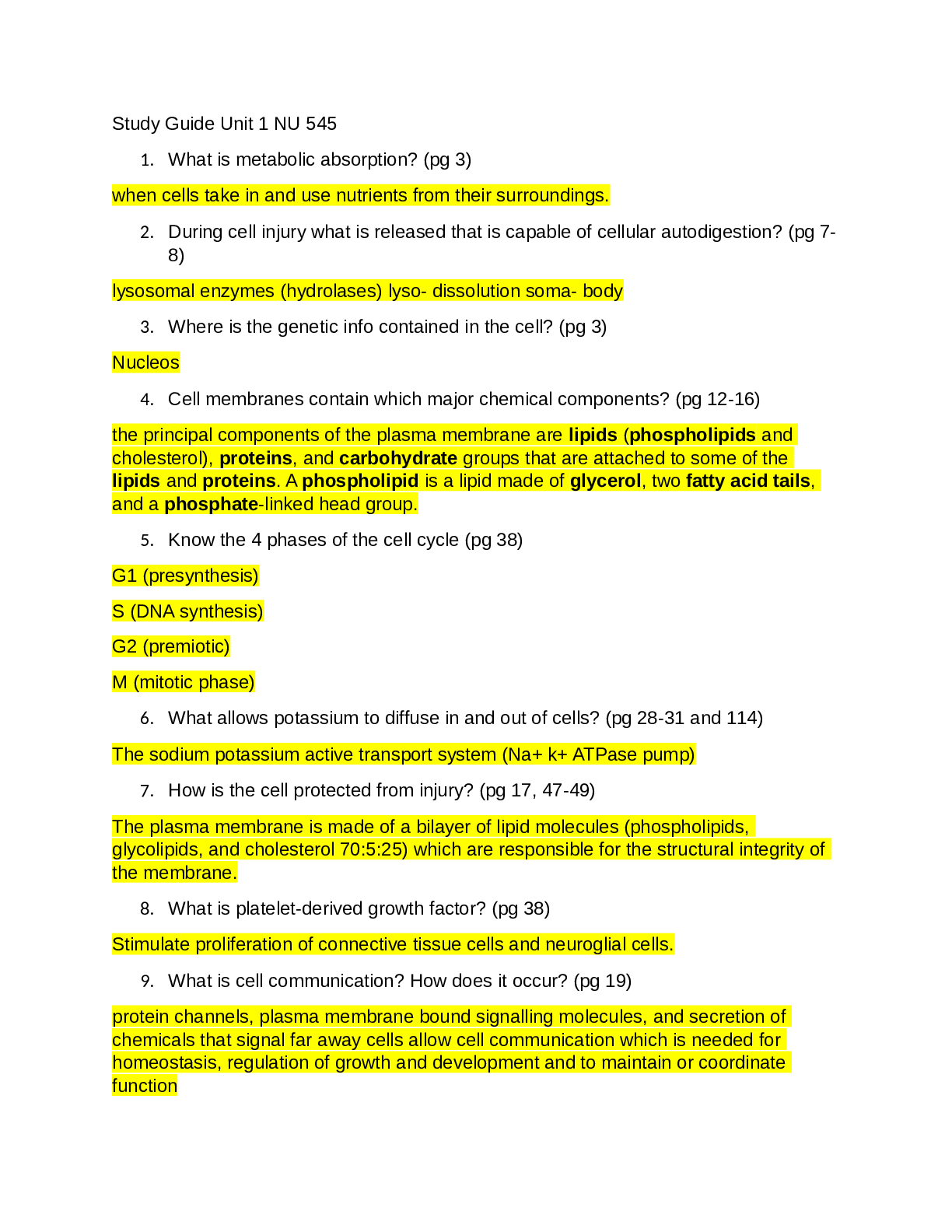
NU 545 Chapter 01: Cellular Biology Test Bank | Questions and...

$18
20 Pages
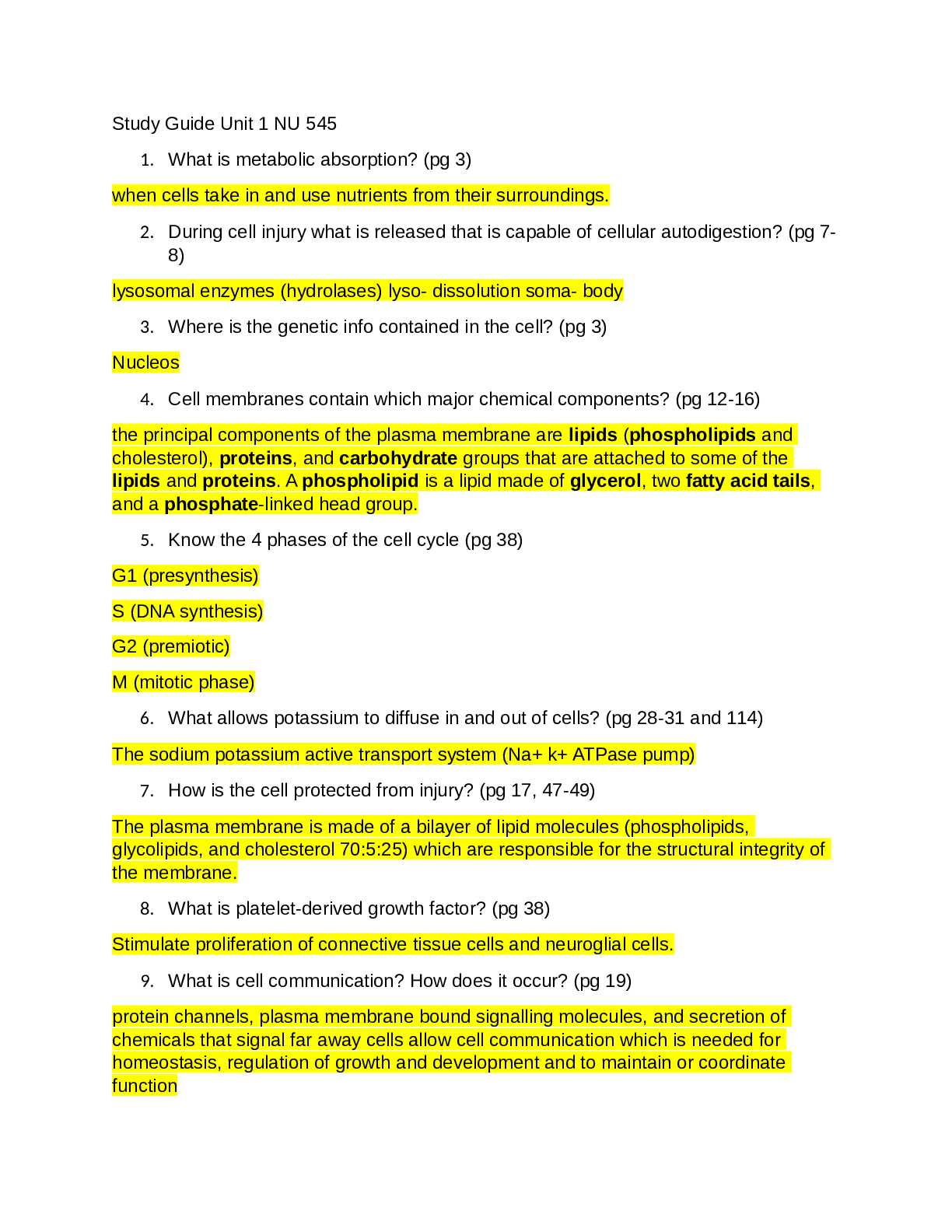
NU 545 Unit 1 Test Bank Questions and Answers- University of S...
$7
13 Pages
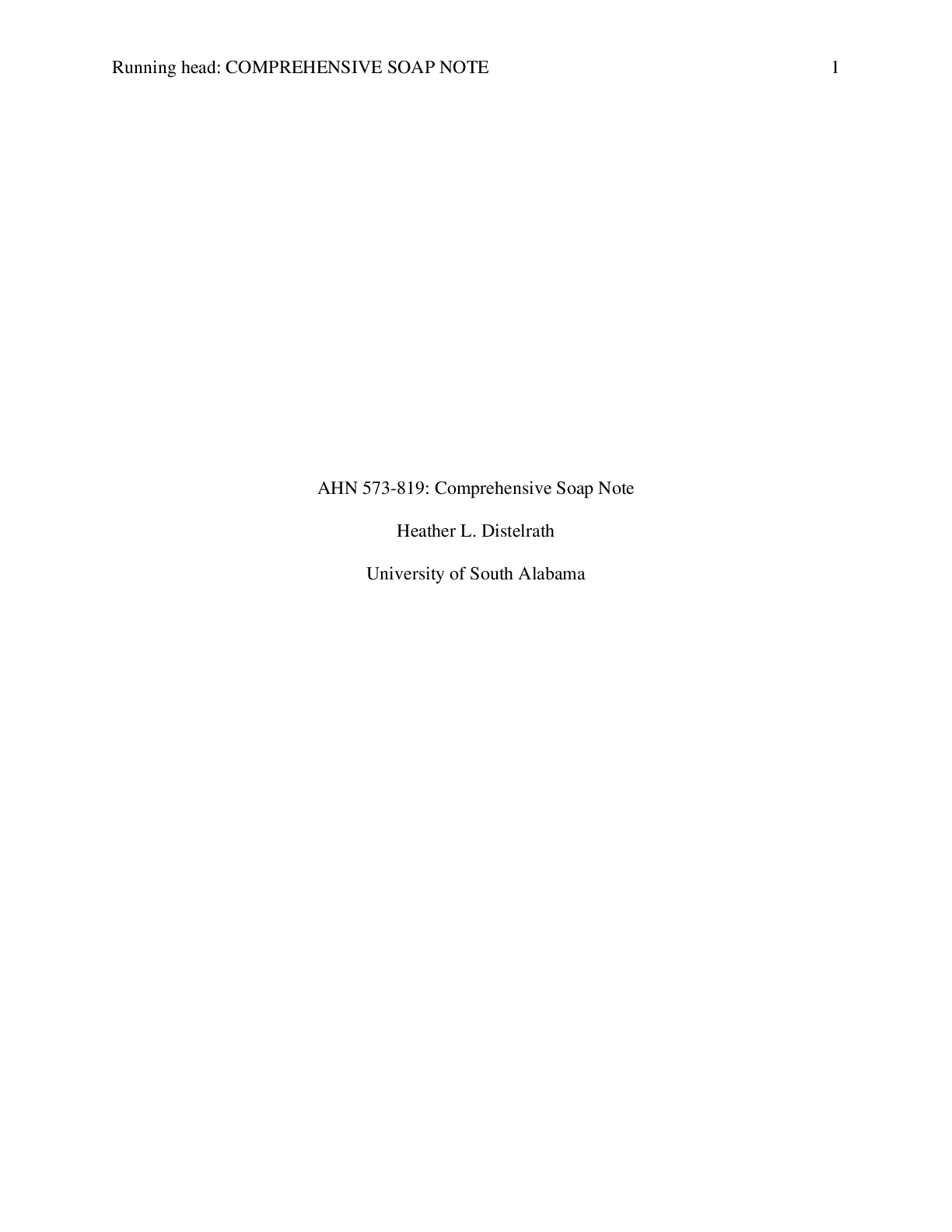
University of South AlabamaNU nu 545AHN 573-819, Comprehensive...

$18
18 Pages
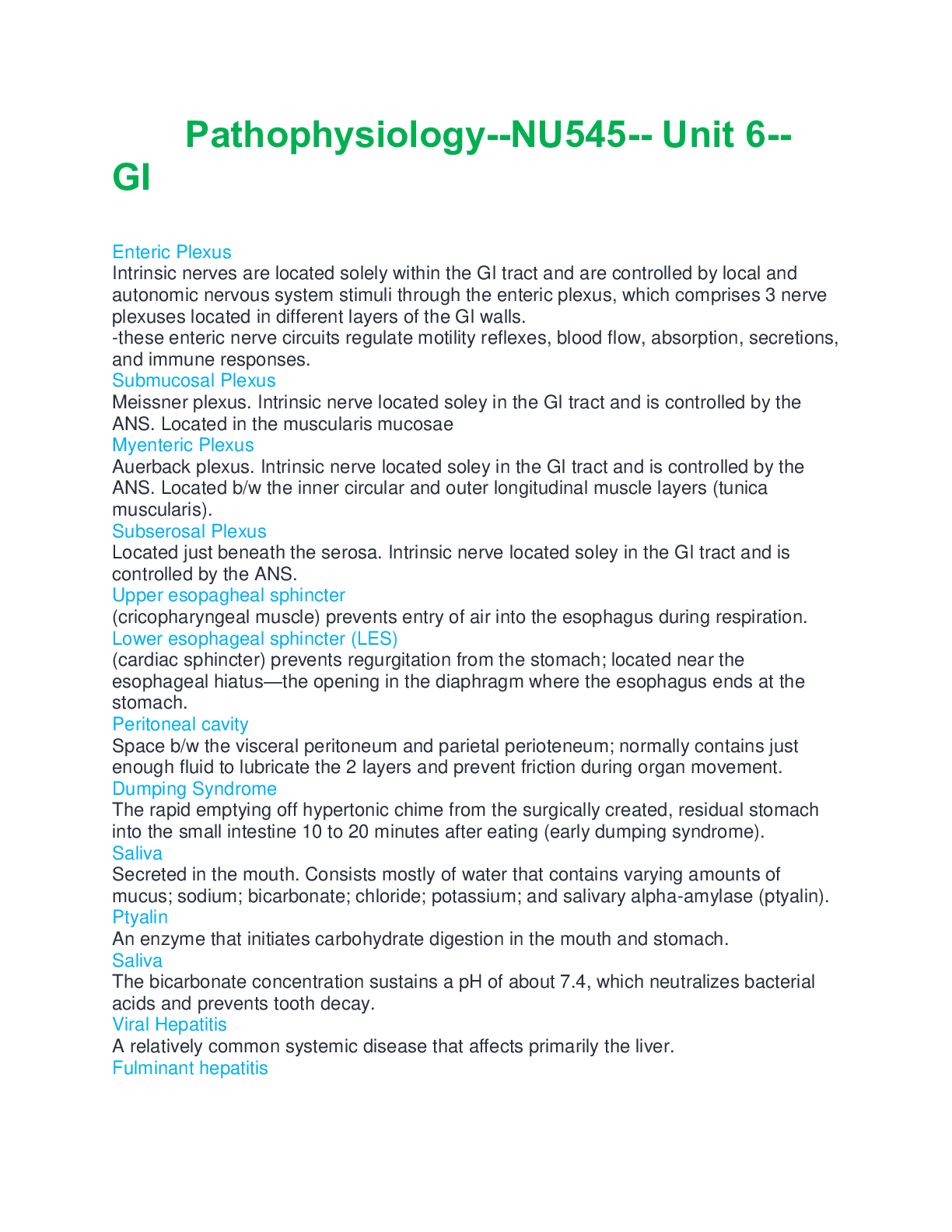
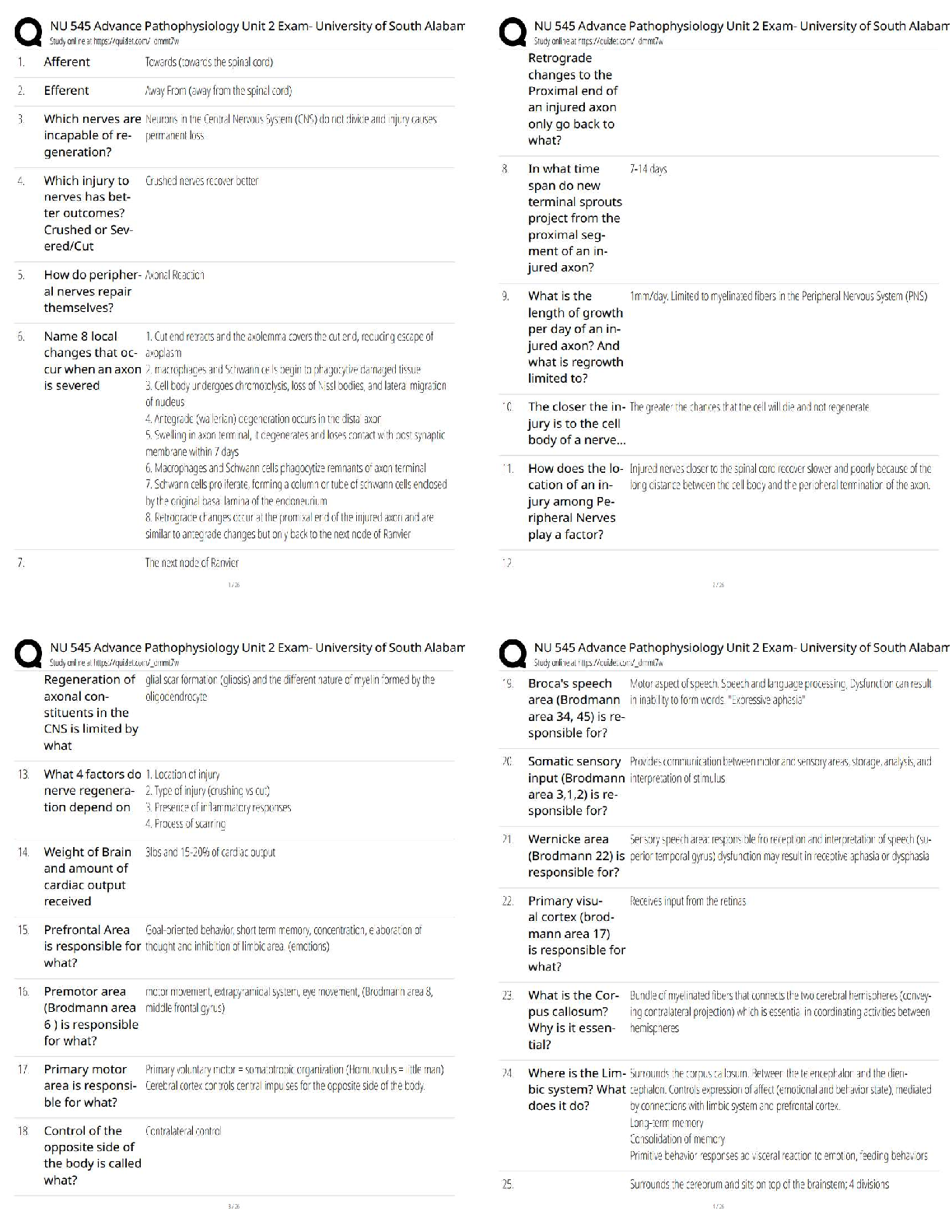
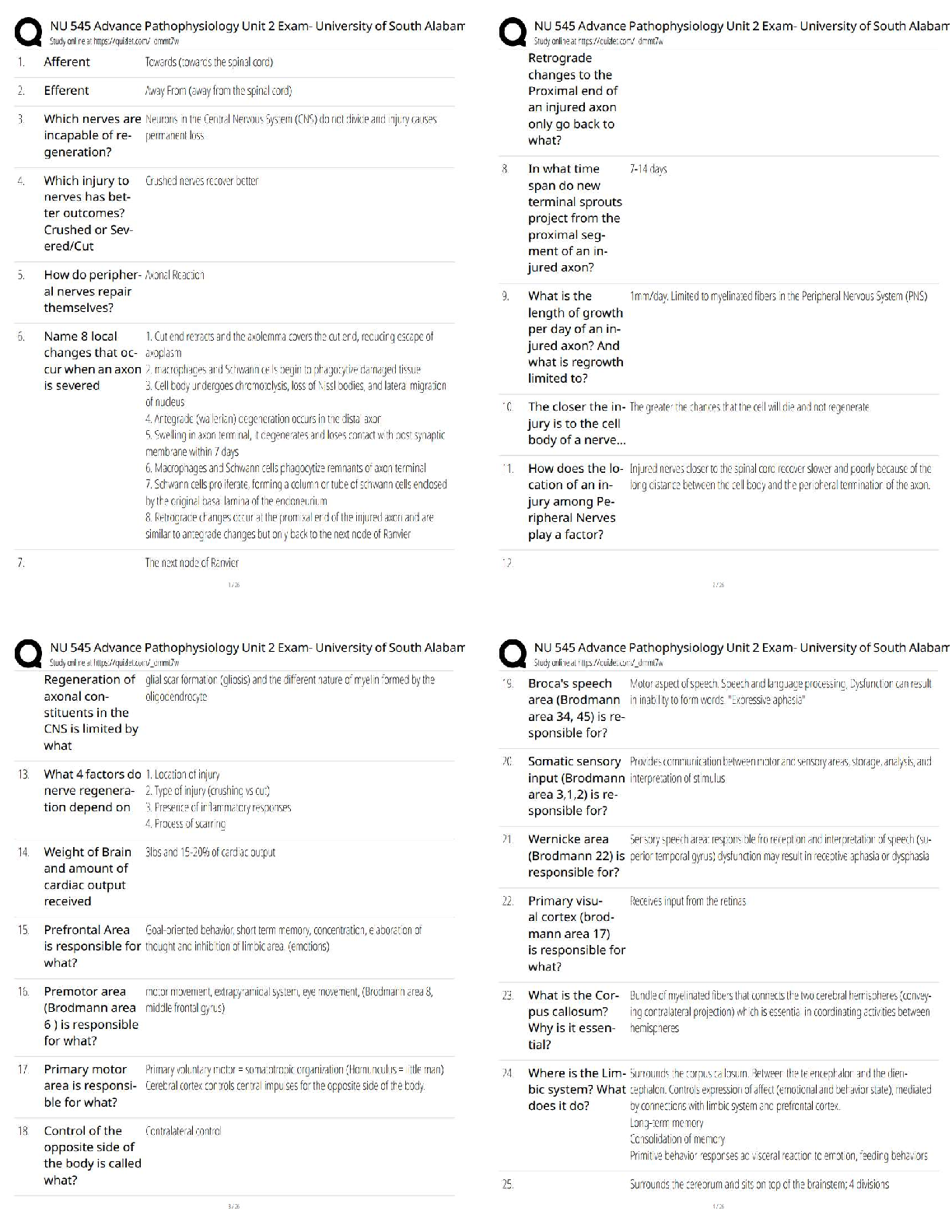
NU545 Unit 2 Study blue Questions And Answers Latest Update

.png)
$67.5
424 Pages
NCLEX RN ACTUAL TEST NCLEX RN P1 WITH VERIFIED ANSWERS (ALL CH...
More related documents below


.png)