Women Studies > TEST BANKS > Introduction To Womens Gender Sexuality Studies Interdisciplinary And Intersectional Approaches 2nd (All)
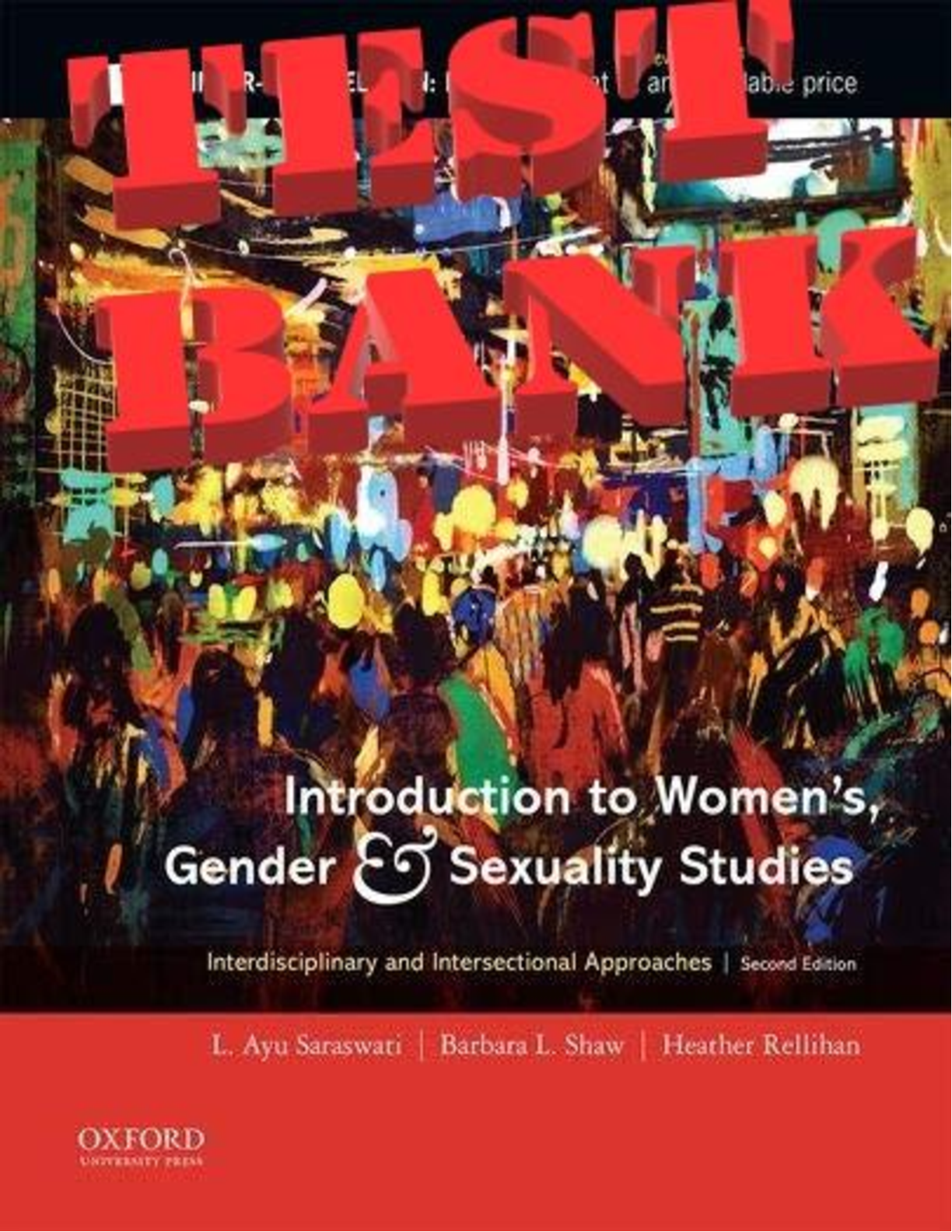
Introduction To Womens Gender Sexuality Studies Interdisciplinary And Intersectional Approaches 2nd Edition L. Ayu. Saraswati, Barbara L. Shaw, Heather Rellihan TEST BANK
Document Content and Description Below
Last updated: 1 year ago
Preview 1 out of 67 pages
Instant download
Buy this Document to get the Full Access Instantly
Provided by Students Who Aced it
We Verify Document Content to Gurantee Accuracy
Reviews( 0 )
Document information
Connected school, study & course
About the document
Uploaded On
Jun 01, 2025
Number of pages
67
Written in
All

Additional information
This document has been written for:
Uploaded
Jun 01, 2025
Downloads
0
Views
110
Topic Tags
Recommended For You
Get more on TEST BANKS »
Introduction to Women's, Gender and Sexuality Studies: Interdi...
Womens Gynecologic Health 3rd Edition By Kerri D Schuiling, Fr...
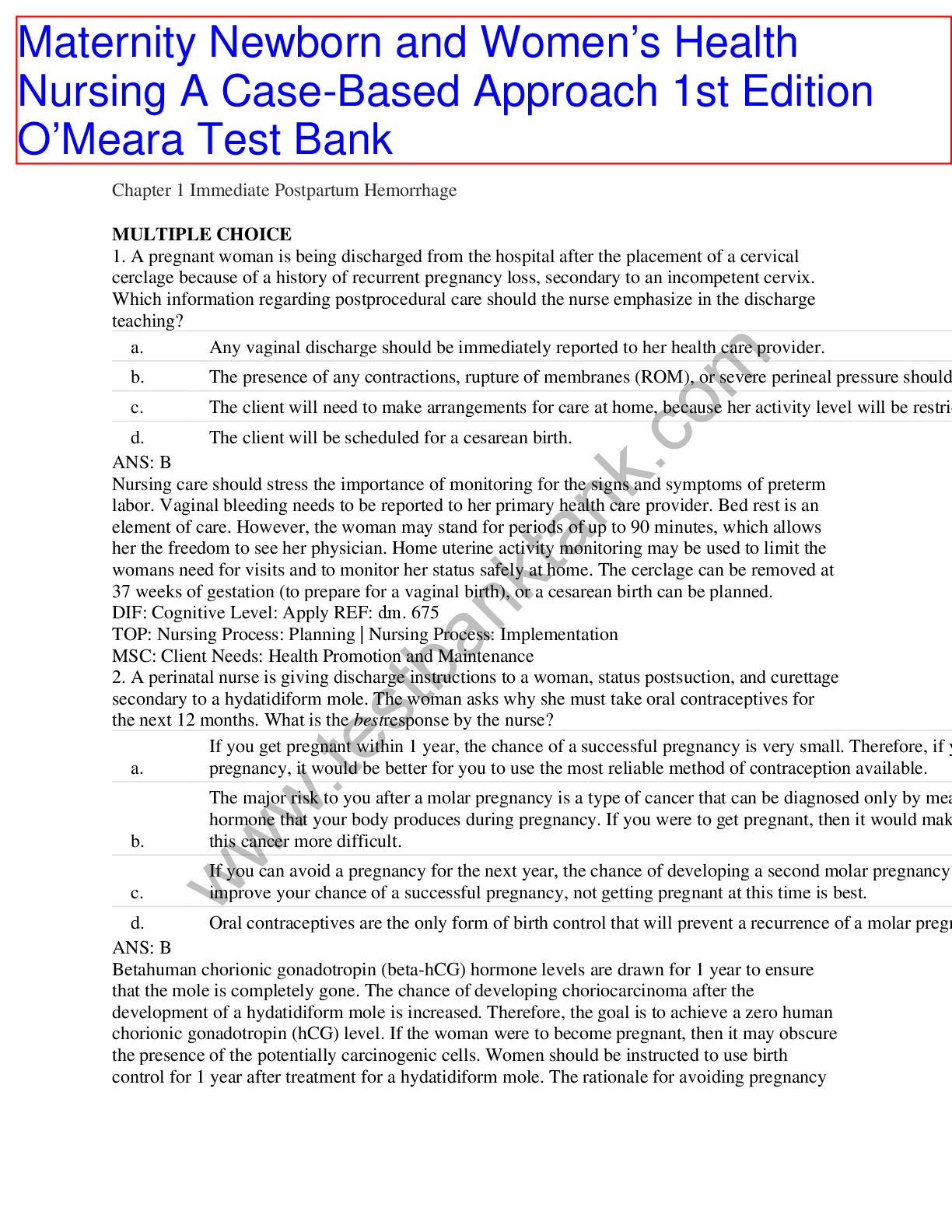
Maternity Newborn And Women’s Health Nursing A Case Based Appr...
Test Bank For Maternity and Women's Health Care 13th Edition L...
Test Bank for An Introduction to Management Science Quantitati...
COMPLETE Test Bank for Anatomy and Physiology Openstax 2nd Edi...
Test Bank for Foundations of Strategy, 2nd Edition by Robert G...

TEST BANK for Cultural Anthropology: An Applied Perspective 11...
Test bank for Microbiology for the Healthcare Professional 3rd...

Test Bank for Strategic Management Concepts and Cases, 4th Edi...

TEST BANK for Davis Advantage for Psychiatric Mental Health Nu...

Test Bank for Police Administration, 11th Edition by Gary Cord...
Test Bank for The Economics of Farm Management A Global Perspe...
.png)
Test Bank for Hospitality Management Accounting 9th Edition by...

Test Bank For Fundamentals of Nursing 11th Edition Potter Perr...
.png)
Test Bank for Operations Management, 14th Edition by William S...