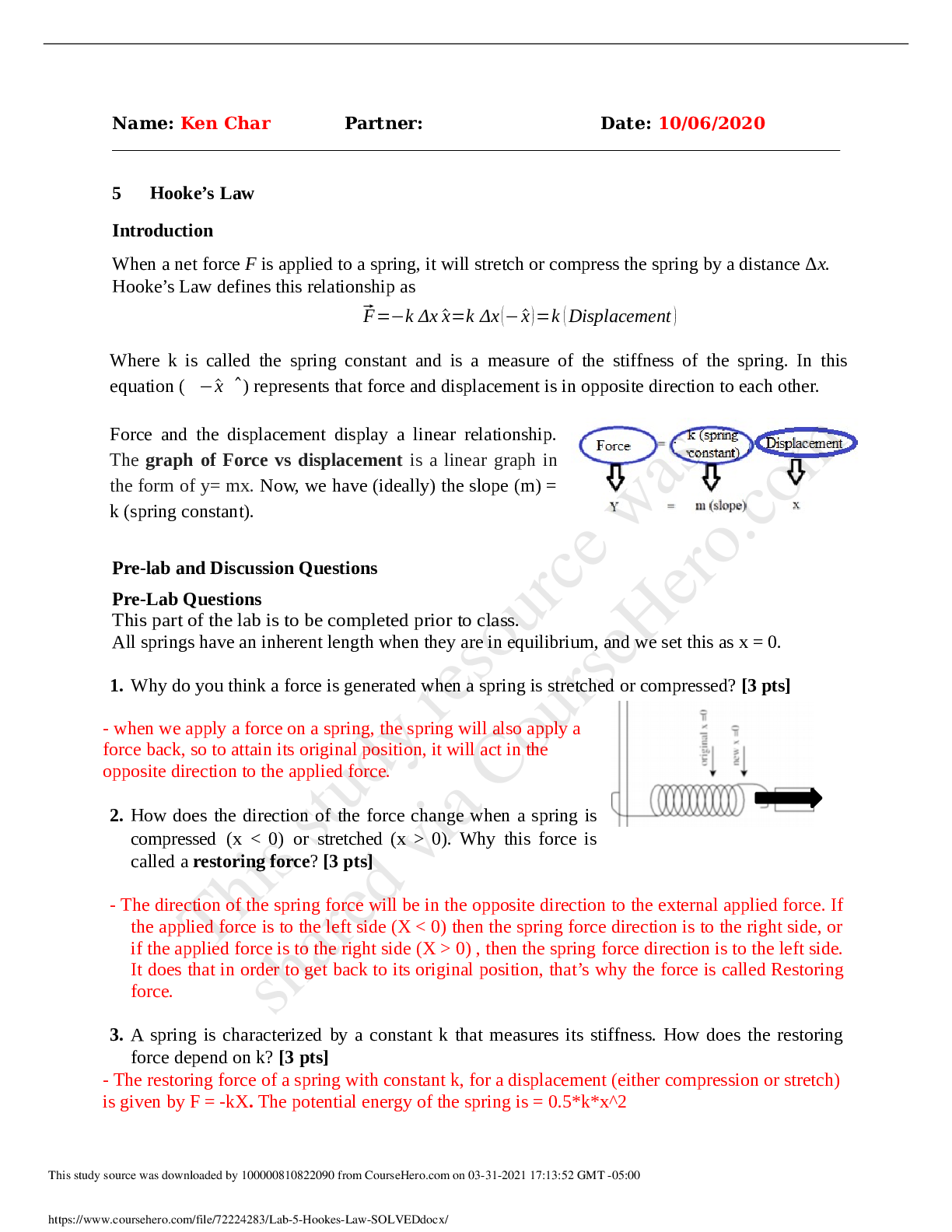
Management Information Systems (MIS) > STUDY GUIDE > Virginia Commonwealth University - PHYSICS 201Lab 5_ Hookes Law SOLVED (All)
Virginia Commonwealth University - PHYSICS 201Lab 5_ Hookes Law SOLVED
Document Content and Description Below
Last updated: 3 years ago
Preview 1 out of 8 pages
Instant download
Buy this Document to get the Full Access Instantly
Provided by Students Who Aced it
We Verify Document Content to Gurantee Accuracy
Reviews( 0 )
Document information
Connected school, study & course
About the document
Uploaded On
Mar 31, 2021
Number of pages
8
Written in
All

Additional information
This document has been written for:
Uploaded
Mar 31, 2021
Downloads
0
Views
99
Topic Tags
Related Subjects & Courses
Explore similar study resources and related concepts.
Recommended For You
Get more on STUDY GUIDE »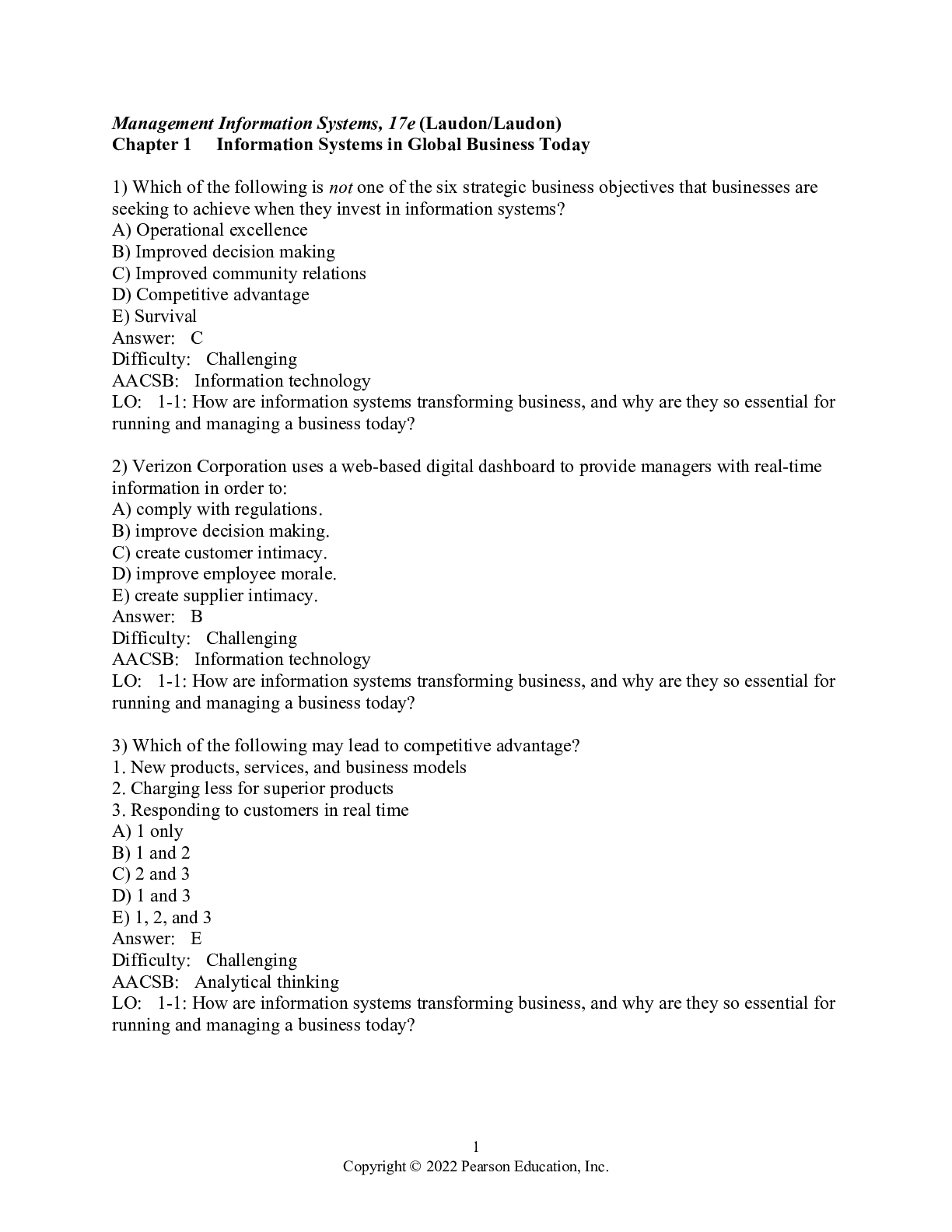
TEST BANK for Management Information Systems Managing the Digi...

Modern Systems Analysis and Design, 9th Edition by Valacich TE...

Management of Information Security, 6th Edition by Michael Whi...
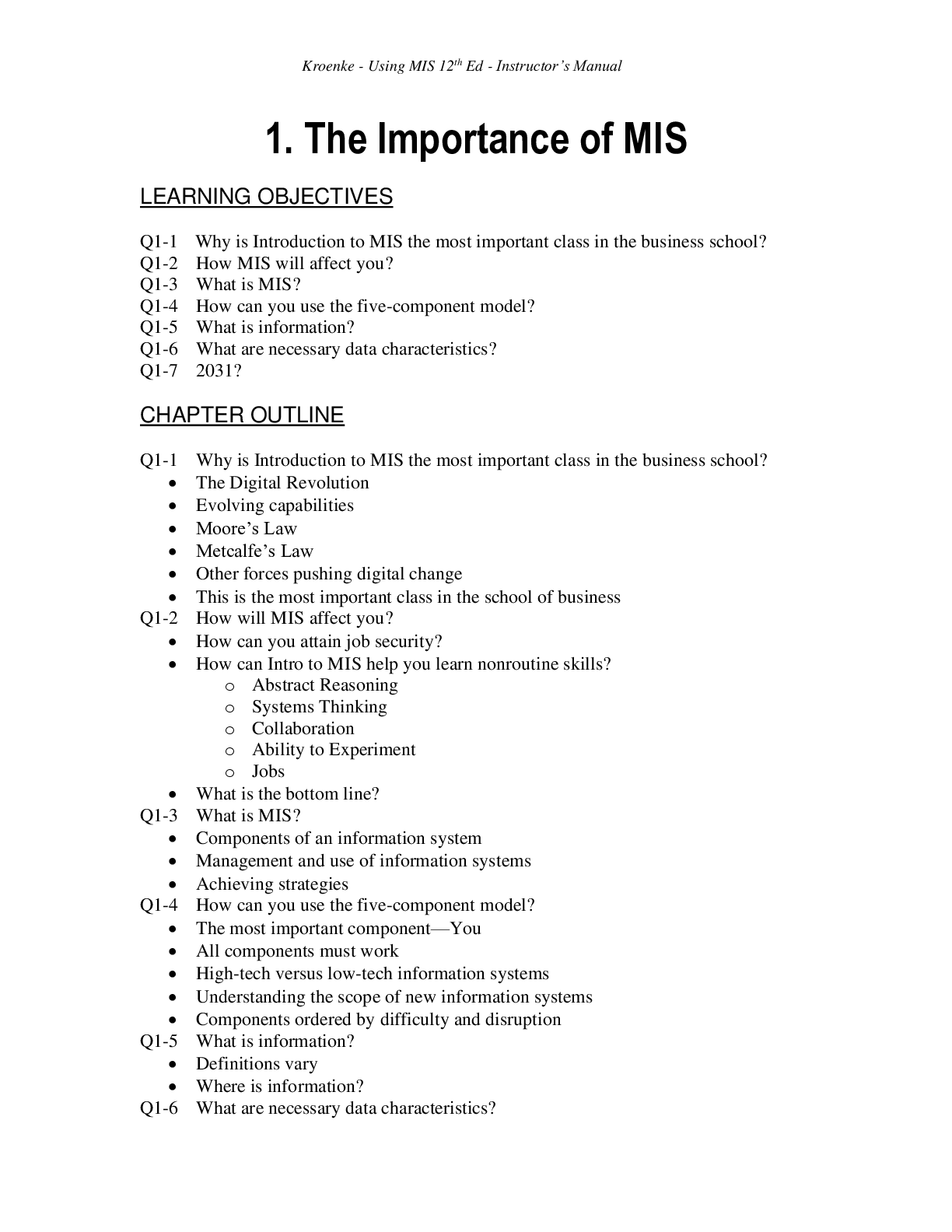
Using MIS, 12e David Kroenke, Randall Boyle (Solution Manual)


Experiencing MIS, 5th Canadian Edition, 5e David Kroenke, And...
Test Bank for MIS (Management Information Systems), 10th Editi...

Solution Manual for Management Information Systems, Managing t...
Solution Manual for Using MIS 11th Edition by David Kroenke &...
Solution Manual for Using MIS 12th Edition by David Kroenke &...

Using MIS 2nd Edition David Kroenke | The Accompanying Lecture...

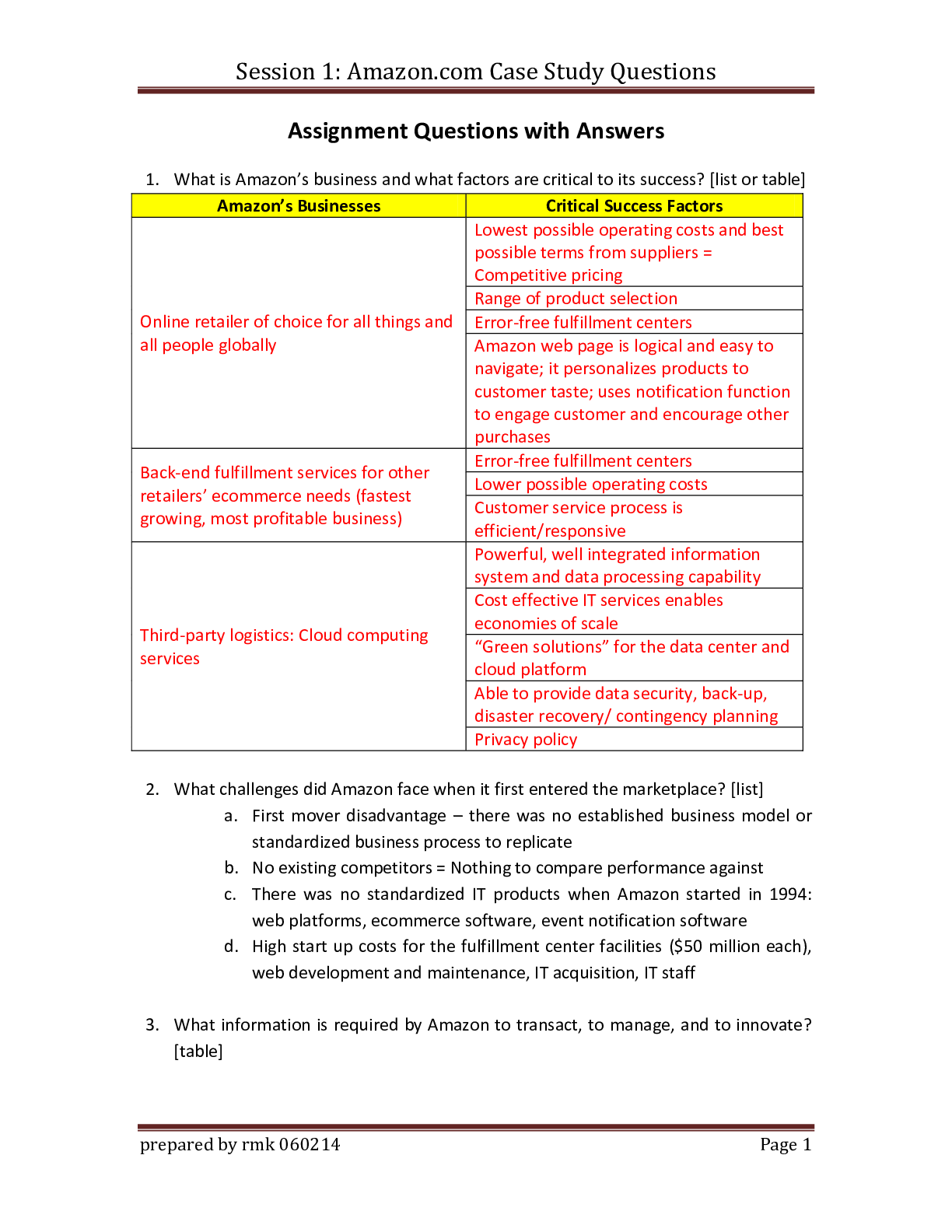
MISM 2301MISM 2301 Amazon Session 1: Amazon.com Case Study Que...


Fundamentals Mgt Info Systems MIS 200 Exam 2 – MIS 200-001 ve...

C857 Pre-Assessment Questions with rationale answers. Graded A...

Management Information Systems, 11th Edition by Hossein Bidgol...




.png)