Physics > STUDY GUIDE > TAM 212 Worksheet 9: Cornering and banked turns (All)
TAM 212 Worksheet 9: Cornering and banked turns
Document Content and Description Below
Last updated: 5 months ago
Preview 1 out of 9 pages
Instant download

Buy this Document to get the Full Access Instantly
Provided by Students Who Aced it
We Verify Document Content to Gurantee Accuracy
Reviews( 0 )
Document information
Connected school, study & course
About the document
Uploaded On
Apr 01, 2021
Number of pages
9
Written in
All

Additional information
This document has been written for:
Uploaded
Apr 01, 2021
Downloads
0
Views
224
Topic Tags
Related Subjects & Courses
Explore similar study resources and related concepts.
Recommended For You
Get more on STUDY GUIDE »
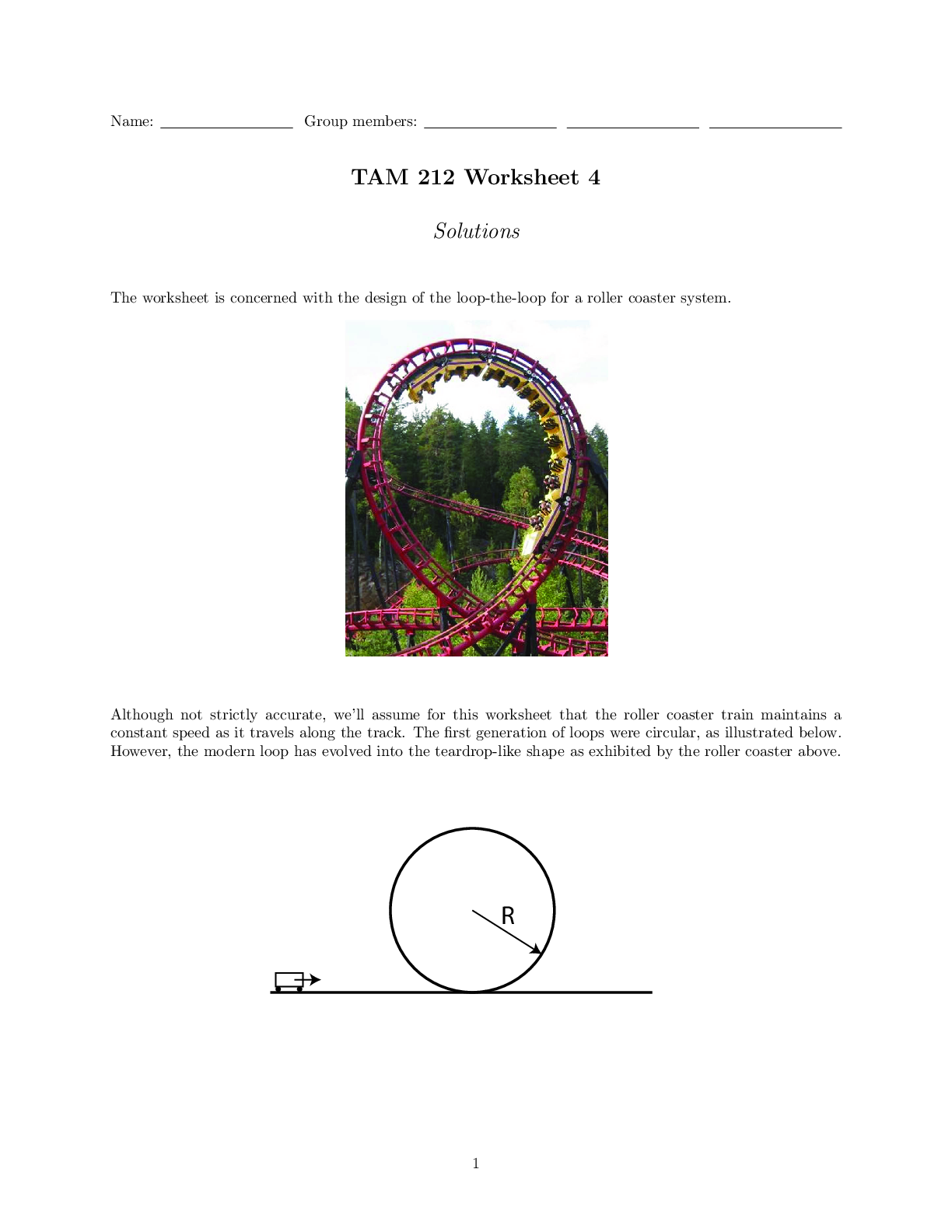
University of Illinois, Urbana Champaign - TAM 212worksheet_09...

University of Illinois, Urbana Champaign - TAM 212worksheet_10...

University of Illinois, Urbana ChampaignTAM 212worksheet_11
Test Bank for Physics for Scientists and Engineers A Strategic...

Plasma Physics, 2e by Richard Fitzpatrick (Solutions Manual)

College Physics, 3e Roger Freedman, Todd Ruskell, Philip Keste...

A Concise Introduction to Thermodynamics for Physicists, 1e by...
Physics for Scientists and Engineers by Raymond Serway | SOLUT...
SOLUTIONS MANUAL for Physics for Scientists and Engineers by R...



.png)