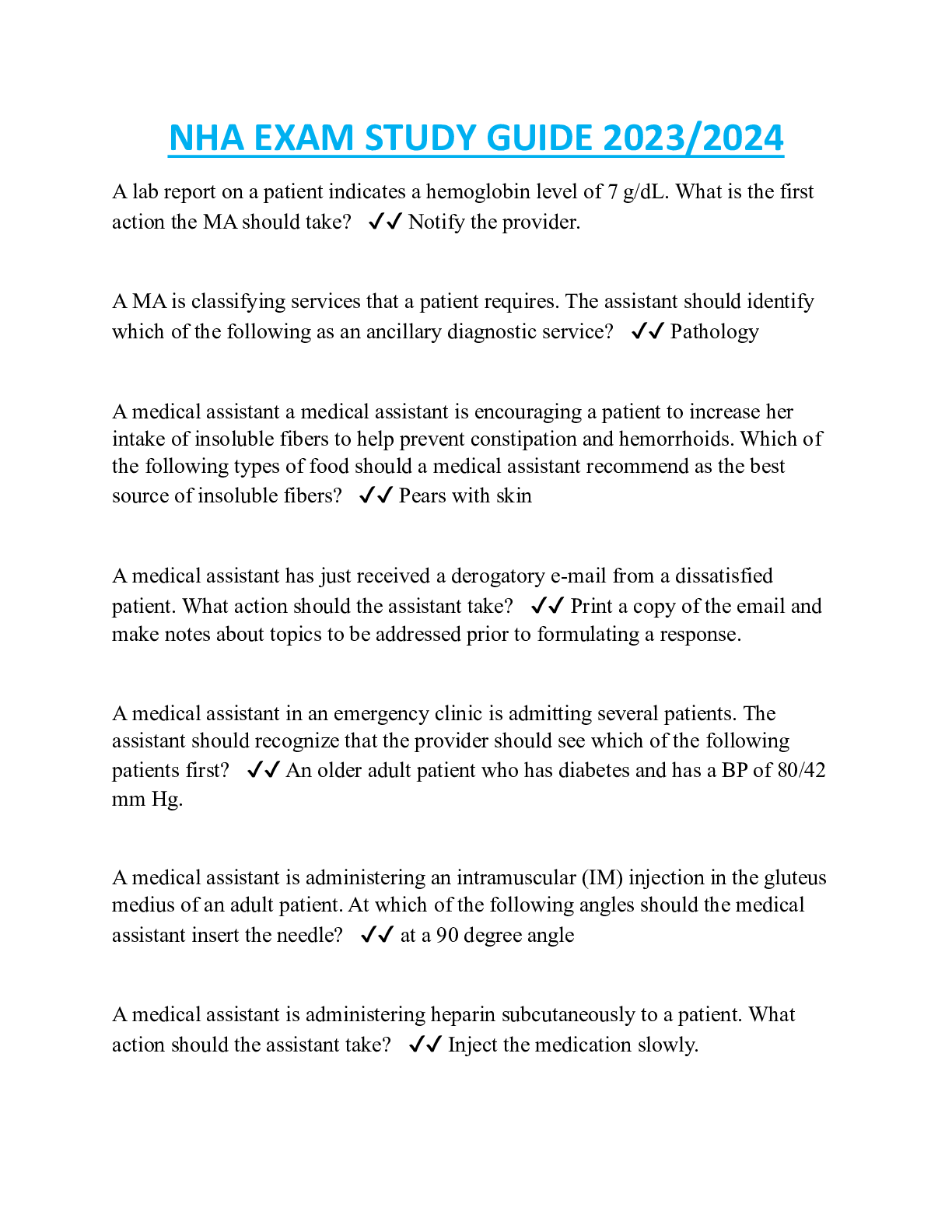
ATI Comprehensive Medical Surgical Proctored Exam Blueprint� TESTBANK
Document Content and Description Below
ATI Comprehensive Medical Surgical Proctored Exam Blueprint
Physical – able to perform activities of daily living
Emotional – adapts to stress; expresses and identifies emotions
Social – interacts successfully with
...
[Show More]
Last updated: 4 years ago
Preview 1 out of 61 pages
Instant download
.png)
Buy this Document to get the Full Access Instantly
Provided by Students Who Aced it
We Verify Document Content to Gurantee Accuracy
Reviews( 0 )
Document information
Connected school, study & course
About the document
Uploaded On
Apr 02, 2021
Number of pages
61
Written in
All

Additional information
This document has been written for:
Uploaded
Apr 02, 2021
Downloads
0
Views
132
Topic Tags
Recommended For You
Get more on EXAM »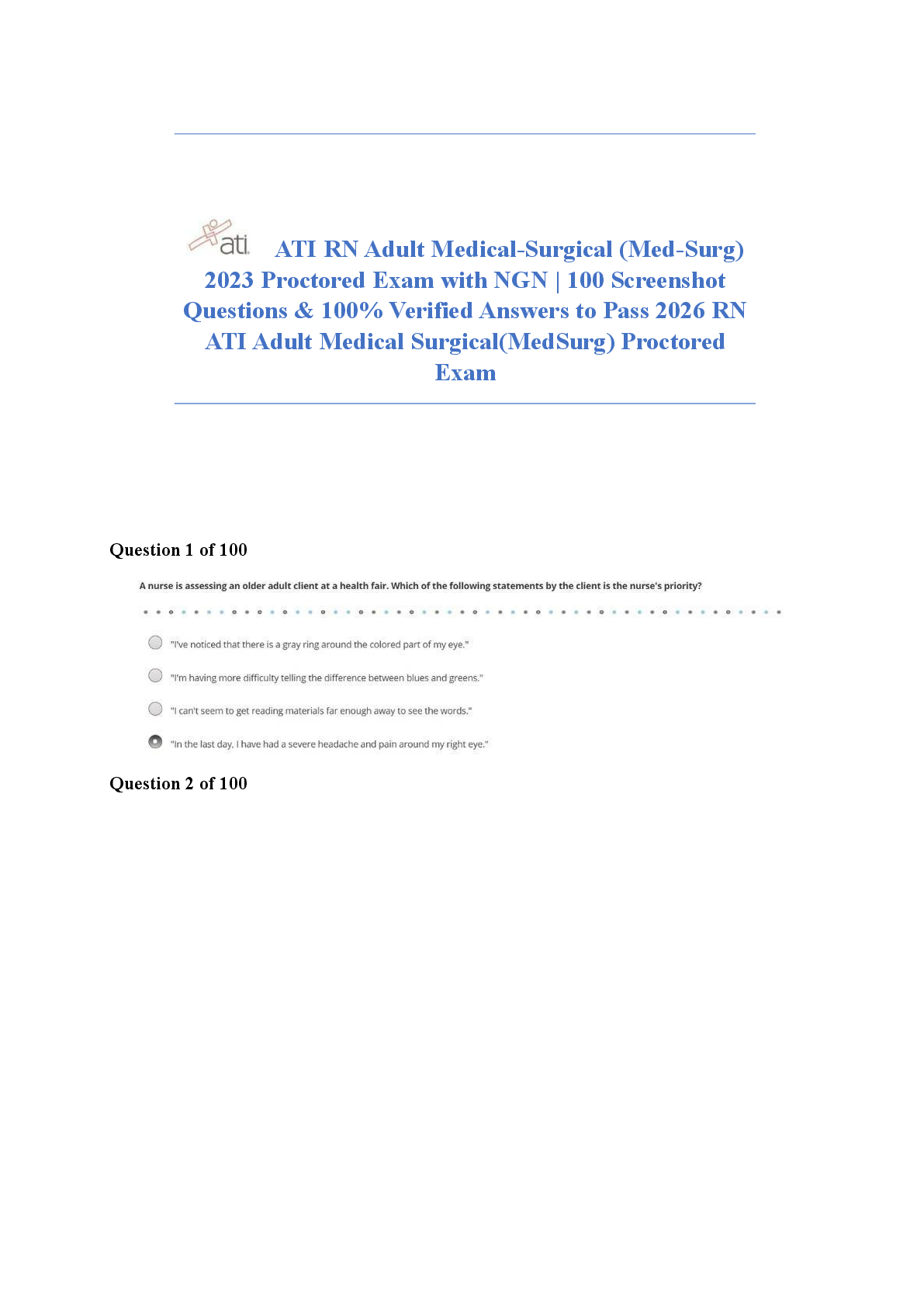
$80
29 Pages
ATI RN Medical Surgical Nursing 2025 Proctored Exam with NGN 7...

$80
275 Pages
Just Released ATI RN Medical Surgical Nursing 2023 Proctored E...
$21
22 Pages
ATI MEDICAL SURGICAL PROCTORED RETAKE EXAM 2023 WITH NGN QU...
$13
43 Pages
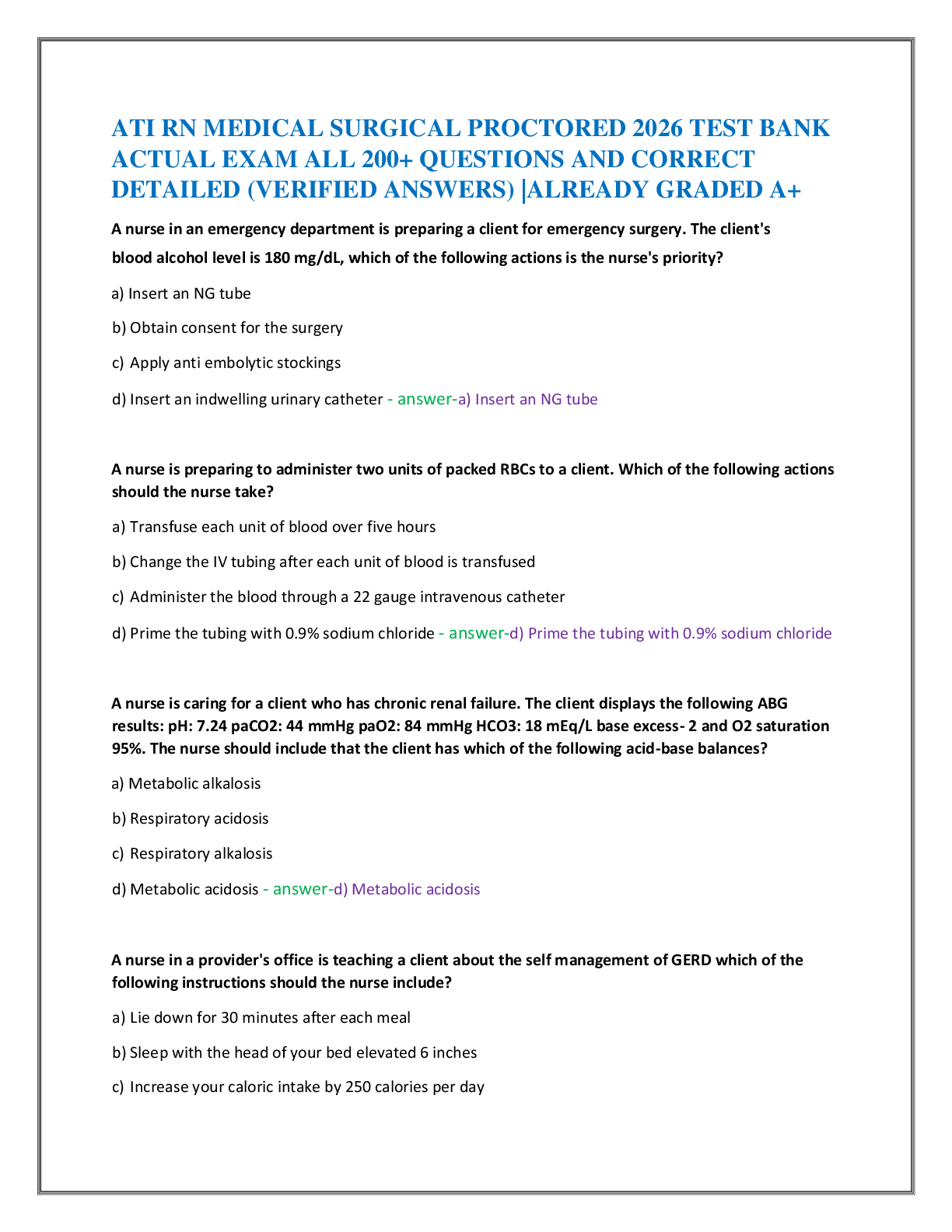
ATI RN MEDICAL SURGICAL PROCTORED 2026 TEST BANK ACTUAL EXAM...
$14
45 Pages
ATI RN MEDICAL SURGICAL PROCTORED 2026 TEST BANK ACTUAL EXAM...
$50.5
17 Pages
RN ATI Advanced Medical Surgical Proctored Exam with NGN (Adva...
.png)
$18.5
32 Pages
ATI RN ADULT MEDICAL SURGICAL PROCTORED EXAM 2026 BANK COMPLET...


$15.5
62 Pages
ATI MEDICAL SURGICAL RETAKE EXAM TEST BANK NEWEST 2025/2026 A...
$25
416 Pages
Basic Geriatric Nursing, 8th Edition By Patricia Williams [PDF...

$10
14 Pages
NURS 4325 Maternal-Child Nursing | Healthy Newborn, Infant Car...
$15
257 Pages
HESI A2 REVIEW Anatomy and Physiology, HESI A2 Science, HESI A...

$25
340 Pages
Test Bank for Community Health Nursing A Canadian Perspective...
More related documents below