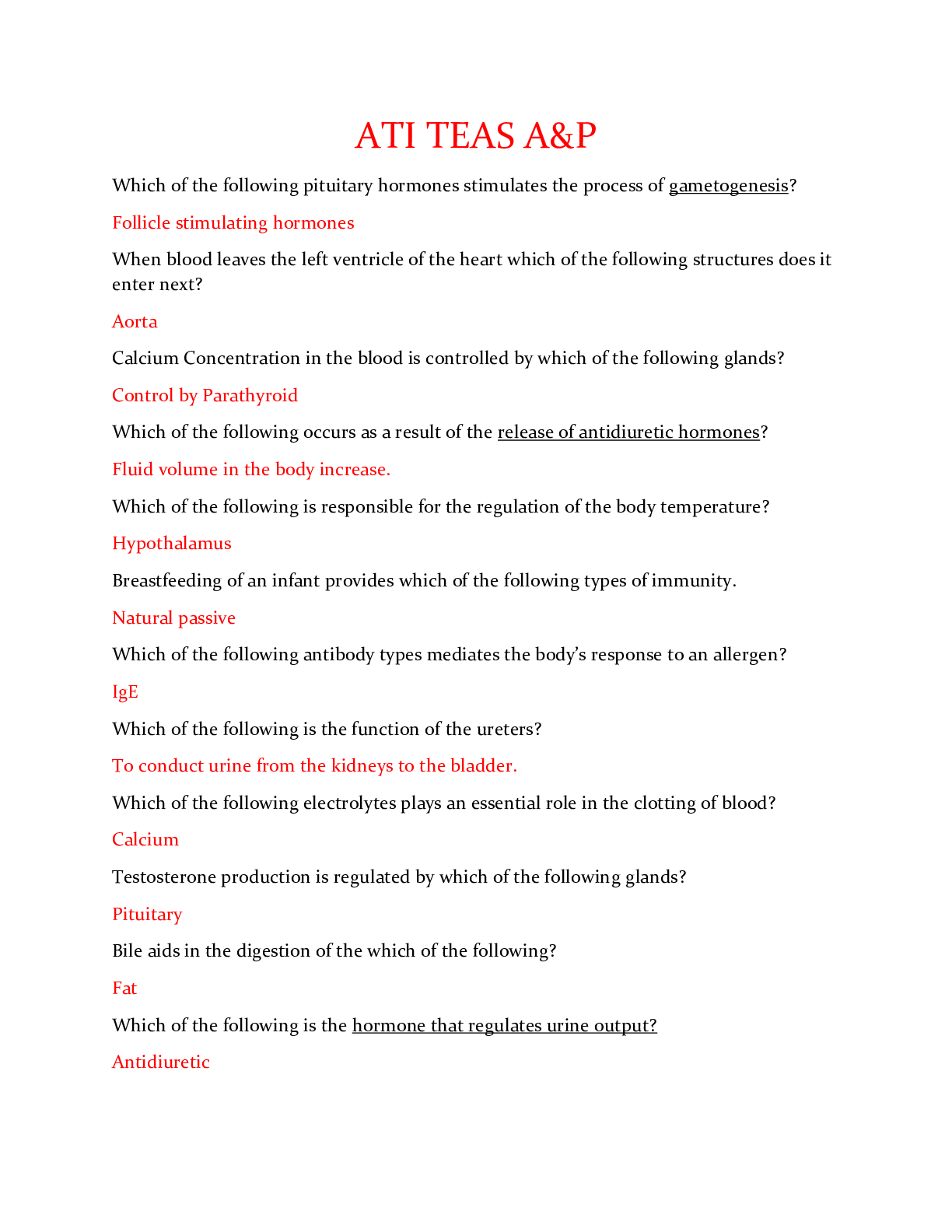
NURSING > QUESTIONS and ANSWERS > 1.ATI-TEAS Crash Course PLUS Description Q&A -Pg 145-211 (All)
1.ATI-TEAS Crash Course PLUS Description Q&A -Pg 145-211
Document Content and Description Below
Last updated: 3 years ago
Preview 1 out of 67 pages
Instant download

Buy this Document to get the Full Access Instantly
Provided by Students Who Aced it
We Verify Document Content to Gurantee Accuracy
Reviews( 0 )
Document information
Connected school, study & course
About the document
Uploaded On
Apr 02, 2021
Number of pages
67
Written in
All

Additional information
This document has been written for:
Uploaded
Apr 02, 2021
Downloads
0
Views
103
Topic Tags
Recommended For You
Get more on QUESTIONS and ANSWERS »
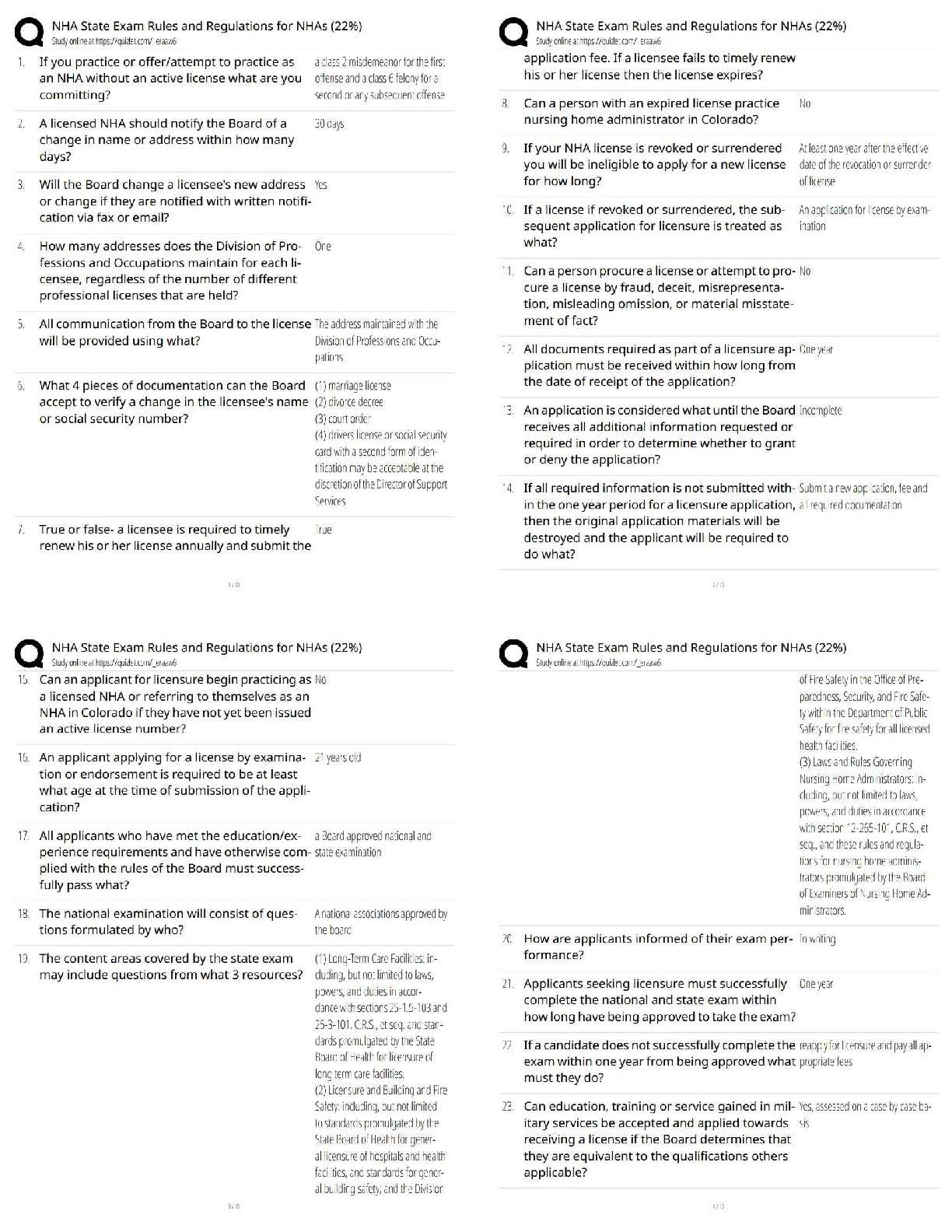
NHA State Exam Rules and Regulations for NHAs (22%) New Vers...

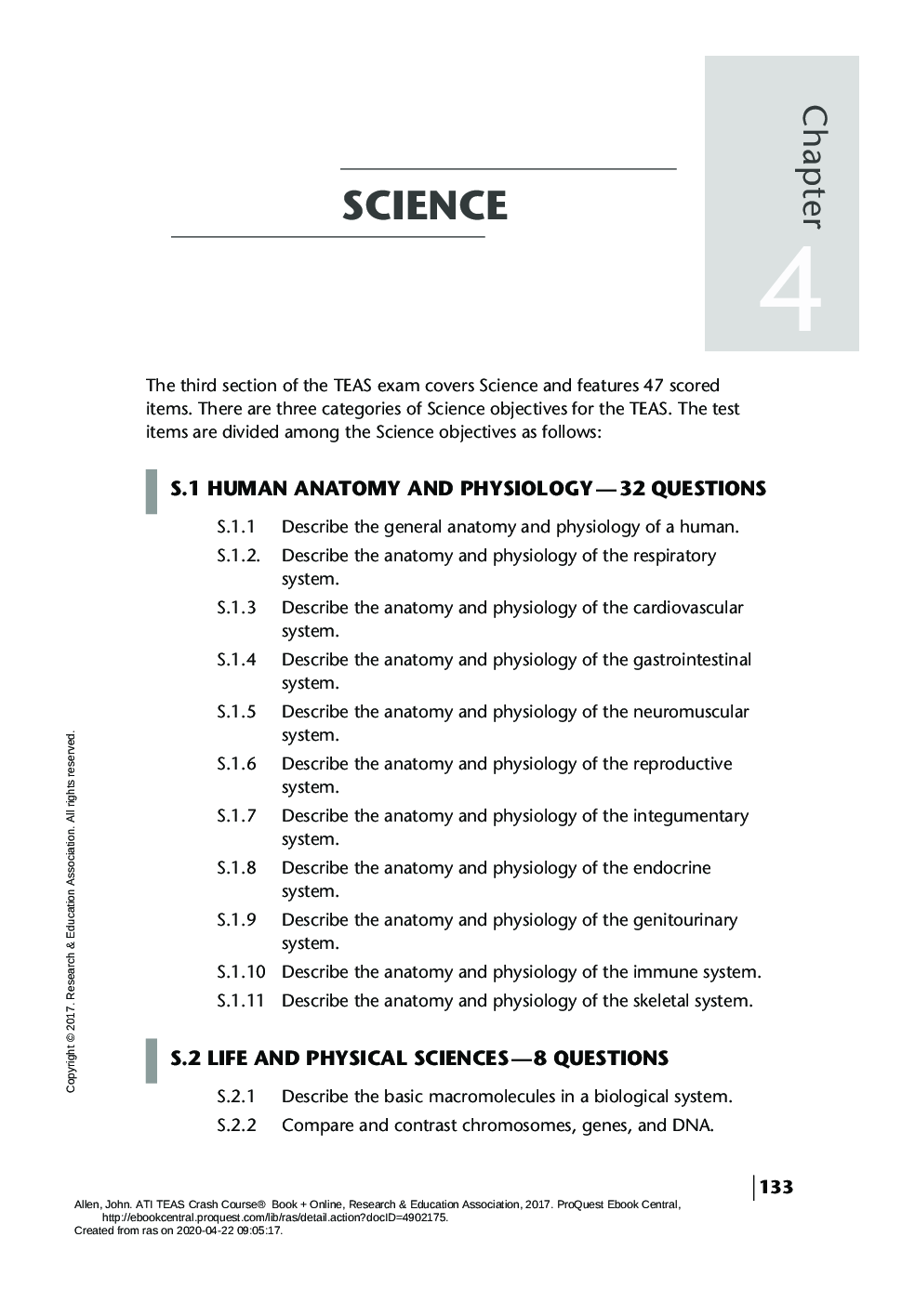
ATI TEAS Crash Course Book & Online_latest Fall 2020 Complete...

ATI LEADERSHIP. Leadership - Proctored (Complete). ALL THE QUE...
ATI TEAS Crash Course Book & Online_latest Fall Complete solut...

ATI TEAS 7 | 4 Versions for Reading, Math, Science, English, A...
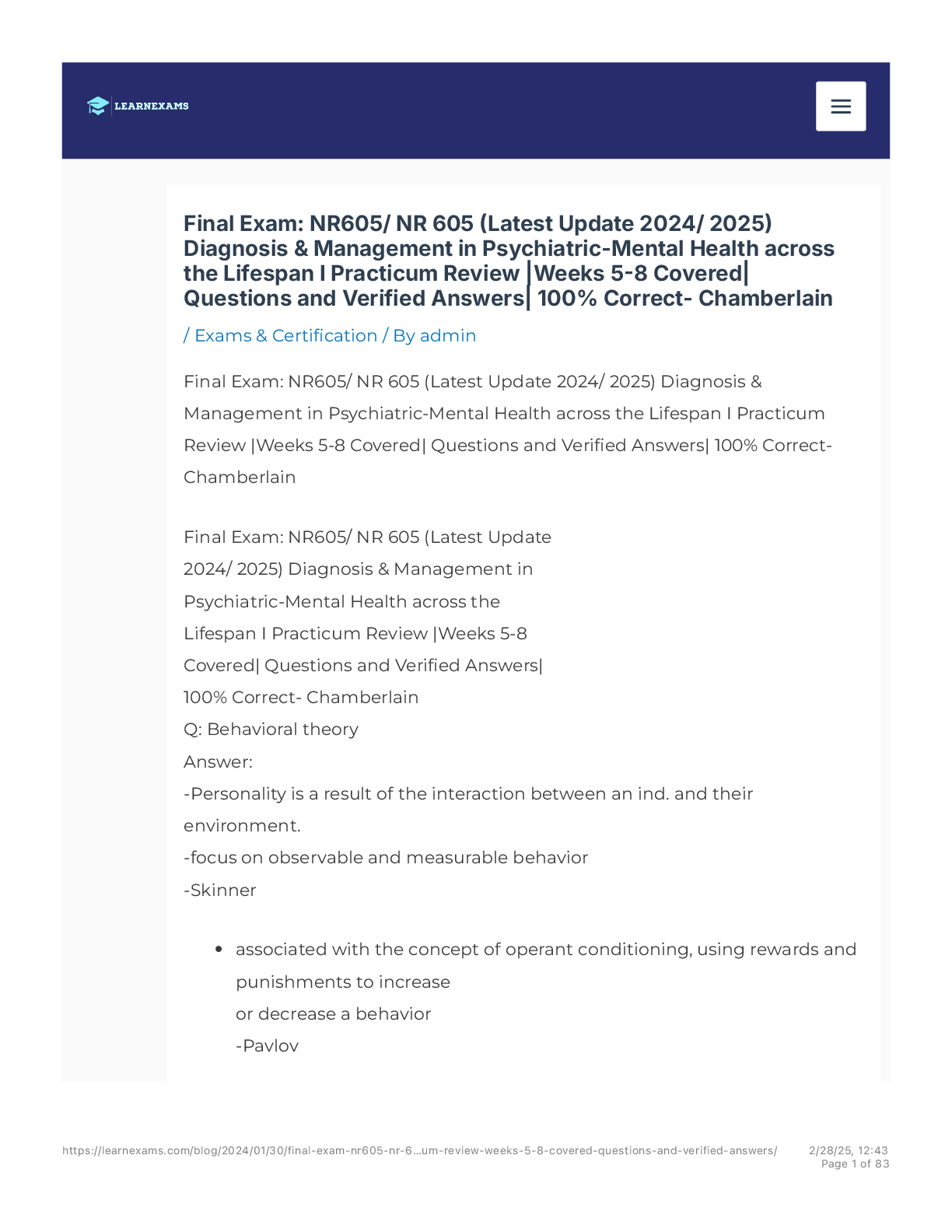
Test Bank For Community Public Health Nursing Promoting the He...