NURSING > STUDY GUIDE > N5315 / N5315 Advanced Pathophysiology Module 7 Study Guide (Latest Update) - University of Texas at (All)
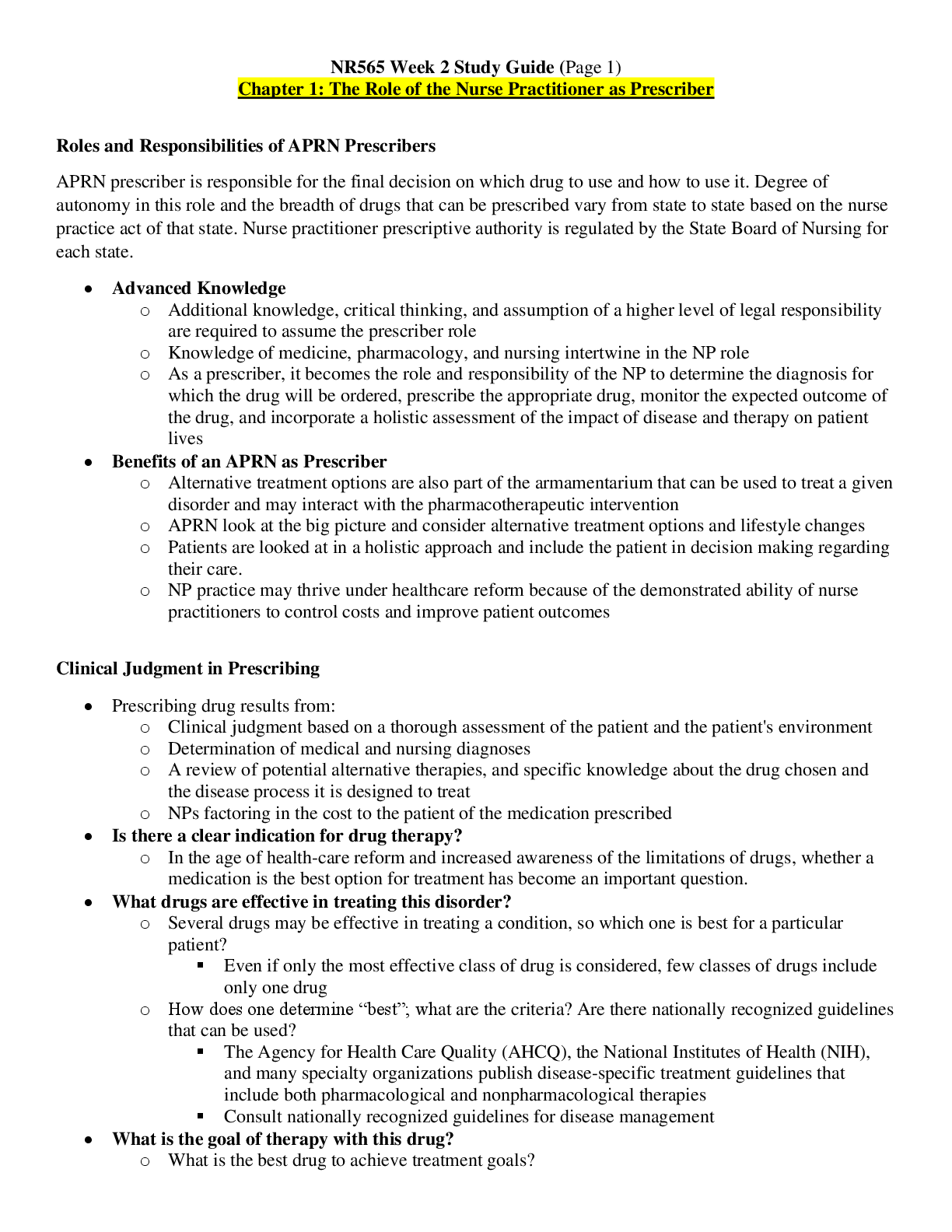
N5315 / N5315 Advanced Pathophysiology Module 7 Study Guide (Latest Update) - University of Texas at Arlington
Document Content and Description Below
Last updated: 8 months ago
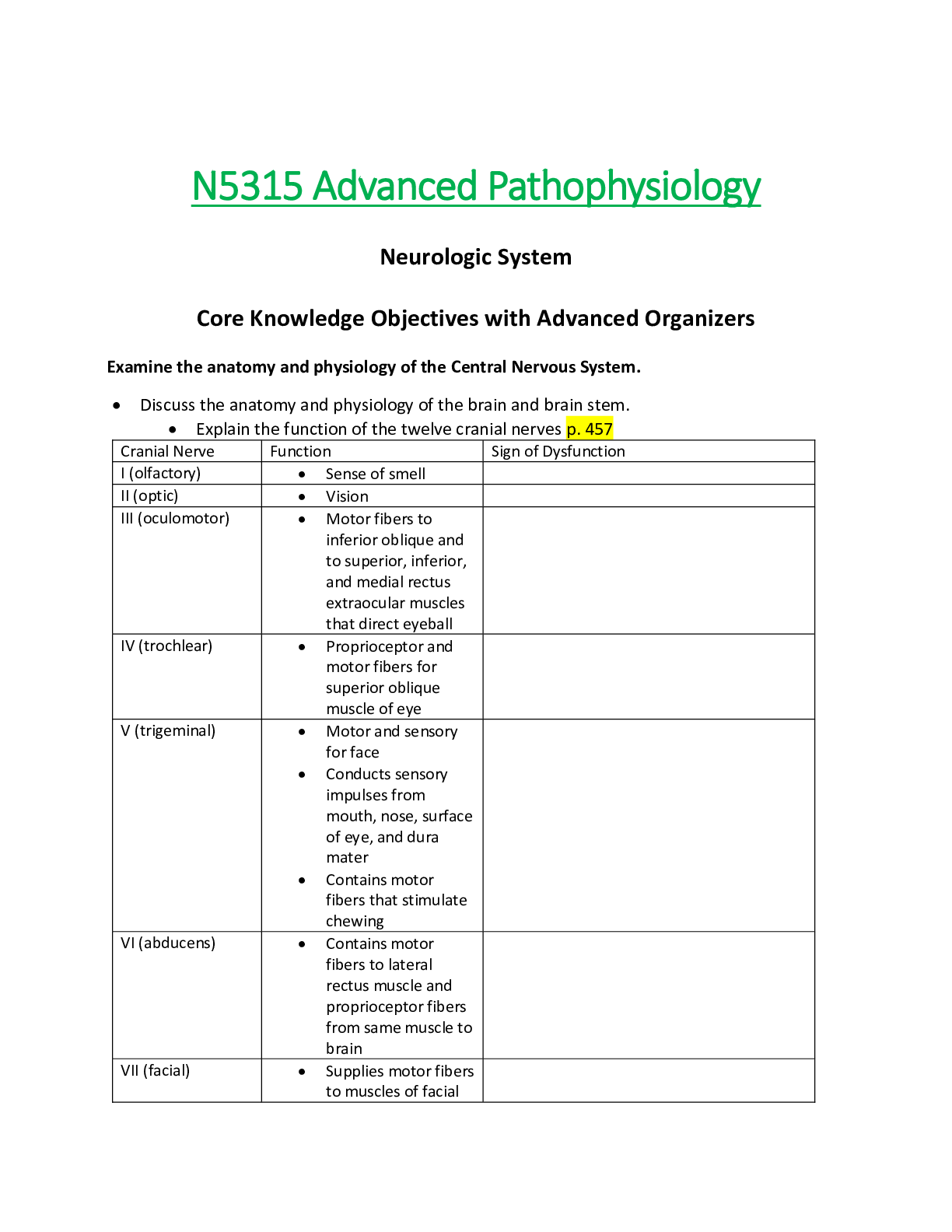
Preview 1 out of 40 pages
Instant download
Buy this Document to get the Full Access Instantly
Provided by Students Who Aced it
We Verify Document Content to Gurantee Accuracy
Reviews( 0 )
Document information
Connected school, study & course
About the document
Uploaded On
Apr 02, 2021
Number of pages
40
Written in
All

Additional information
This document has been written for:
Uploaded
Apr 02, 2021
Downloads
0
Views
147
Topic Tags
Recommended For You
Get more on STUDY GUIDE »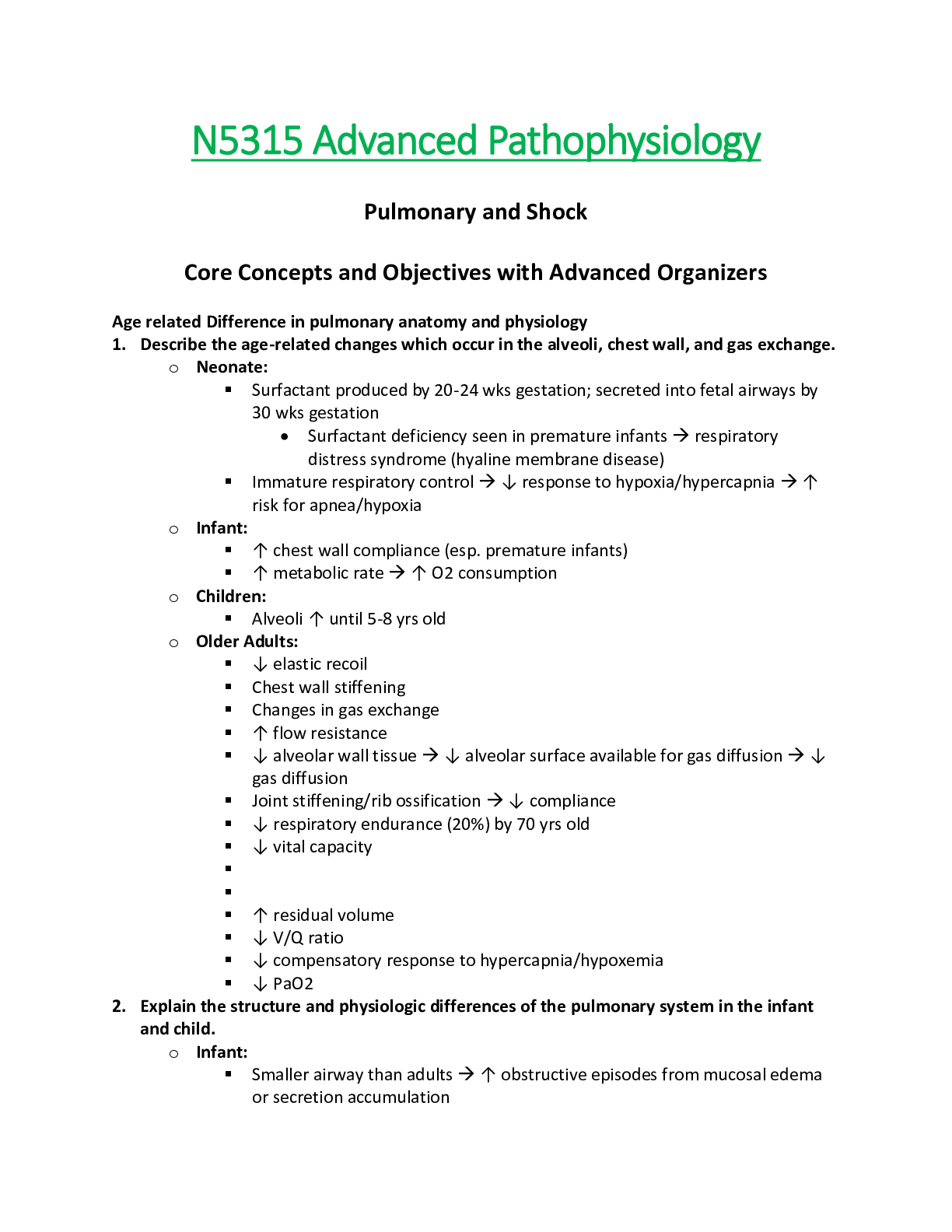
N5315 / N5315 Advanced Pathophysiology Module 6 Study Guide (L...
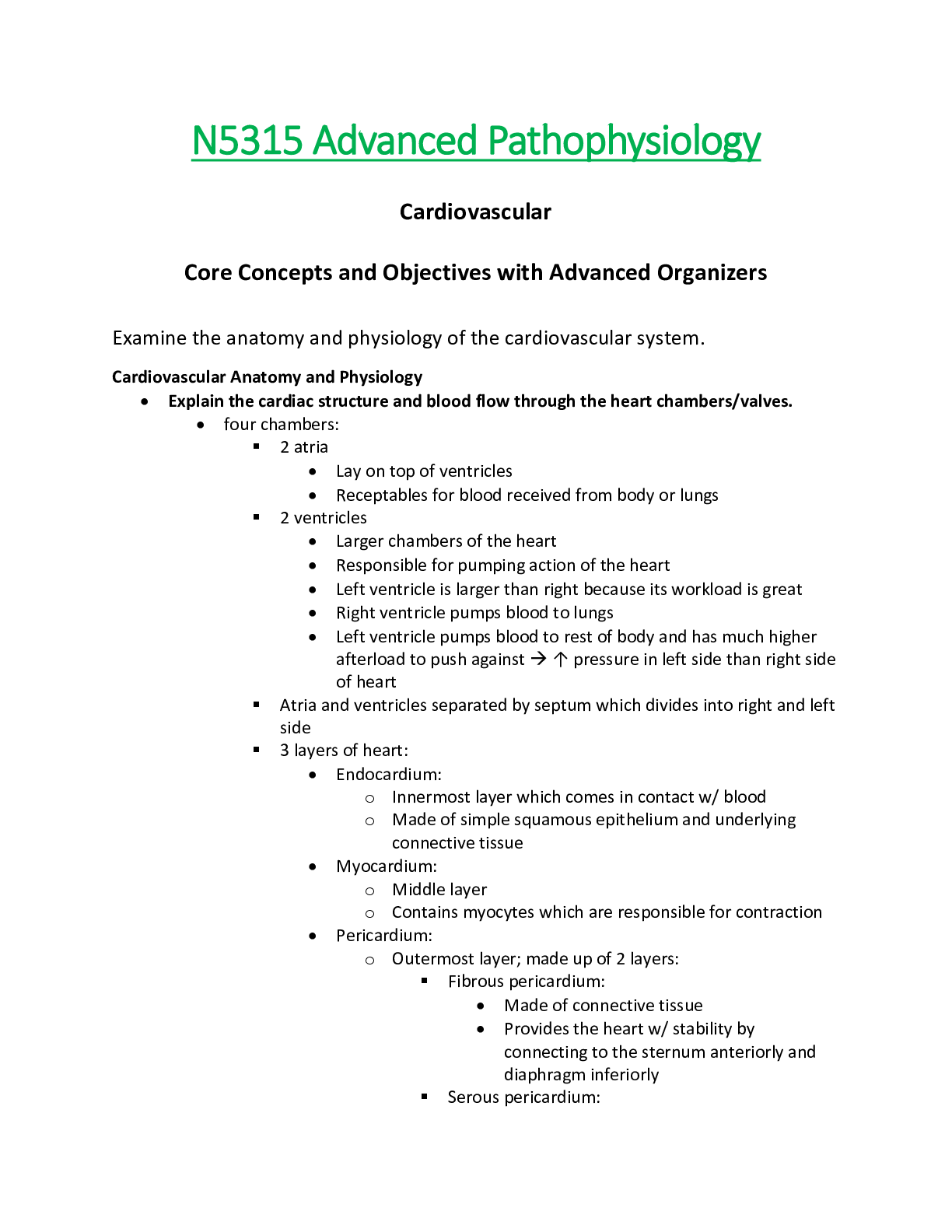
N5315 / N5315 Advanced Pathophysiology Module 5 Study Guide (L...
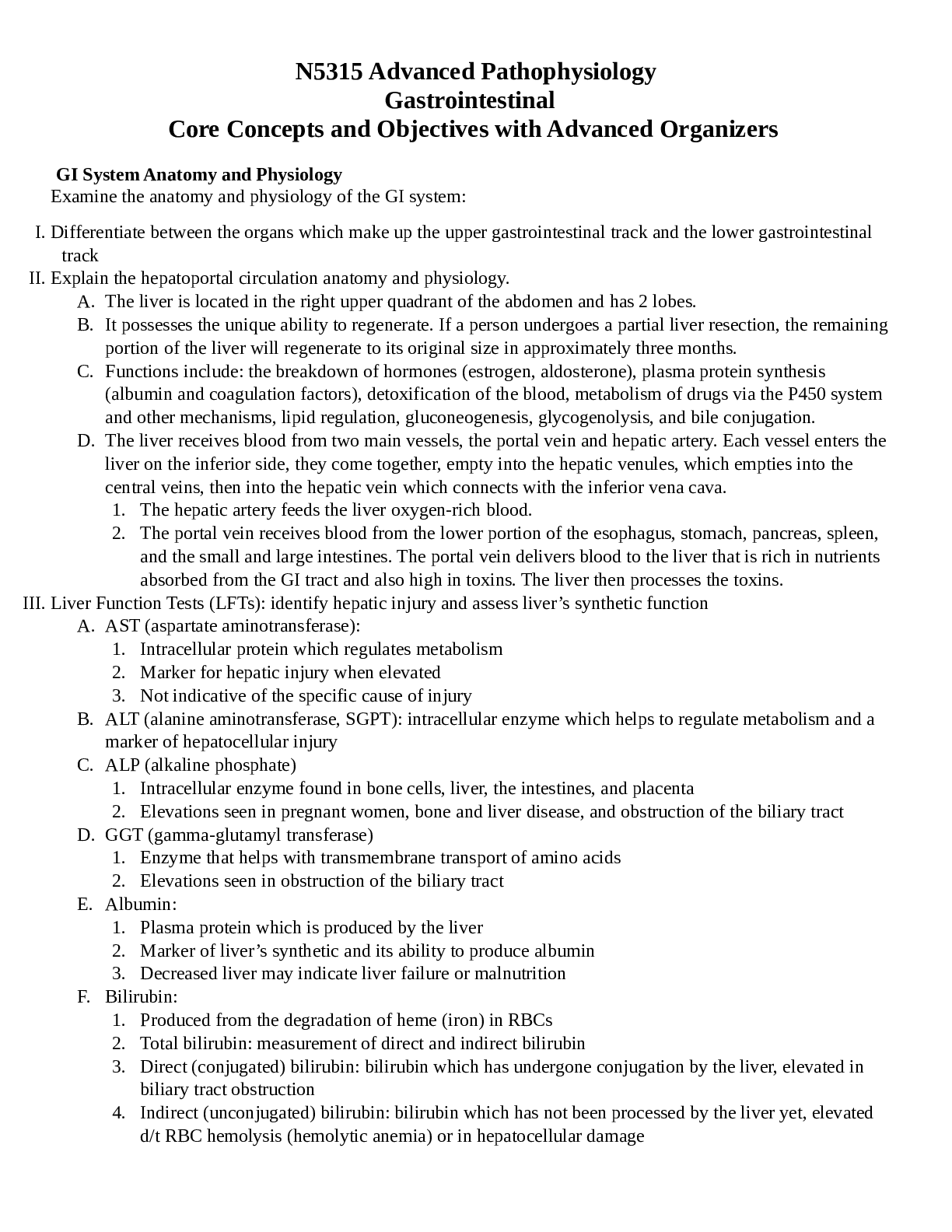
N5315 Advanced Pathophysiology Gastrointestinal Best Study Gu...

N5315 Advanced Pathophysiology Renal and Urologic System Core...
.png)
N5315 Advanced Pathophysiology Gastrointestinal Latest Updated...

N5315 Advanced Pathophysiology Cardiovascular Core Concepts an...

N5315 Advanced Pathophysiology Gastrointestinal (M 9) Core Con...
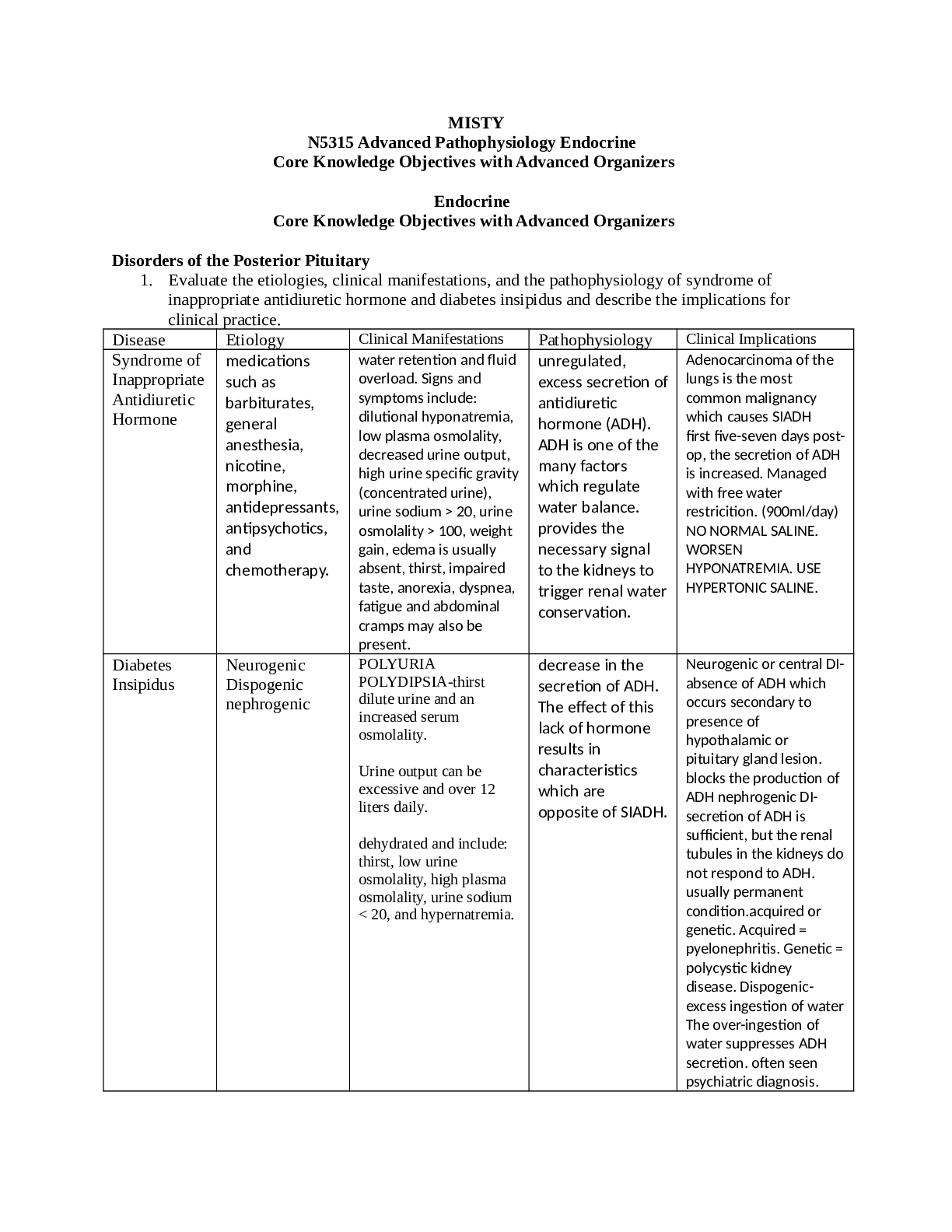
N5315 Advanced Pathophysiology Endocrine Core Knowledge Objec...

N5315 Advanced Pathophysiology Cardiovascular Core Concepts an...

N5315 Advanced Pathophysiology Inflammation, Altered Immunity...
HESI A2 REVIEW Anatomy and Physiology, HESI A2 Science, HESI A...
NSG 3500 Exam 3 Testbank – Comprehensive Nursing Practice Ques...

NR566 Week 5 Study Guide Chapter 18: Drugs Affecting the Hemat...
NUR 265 Final Exam – Comprehensive Medical-Surgical Nursing Qu...
NR 507 Advanced Pathophysiology (NR-507) Week 4 Midterm Exam P...

Test Bank for Community Health Nursing A Canadian Perspective...


.png)
.png)