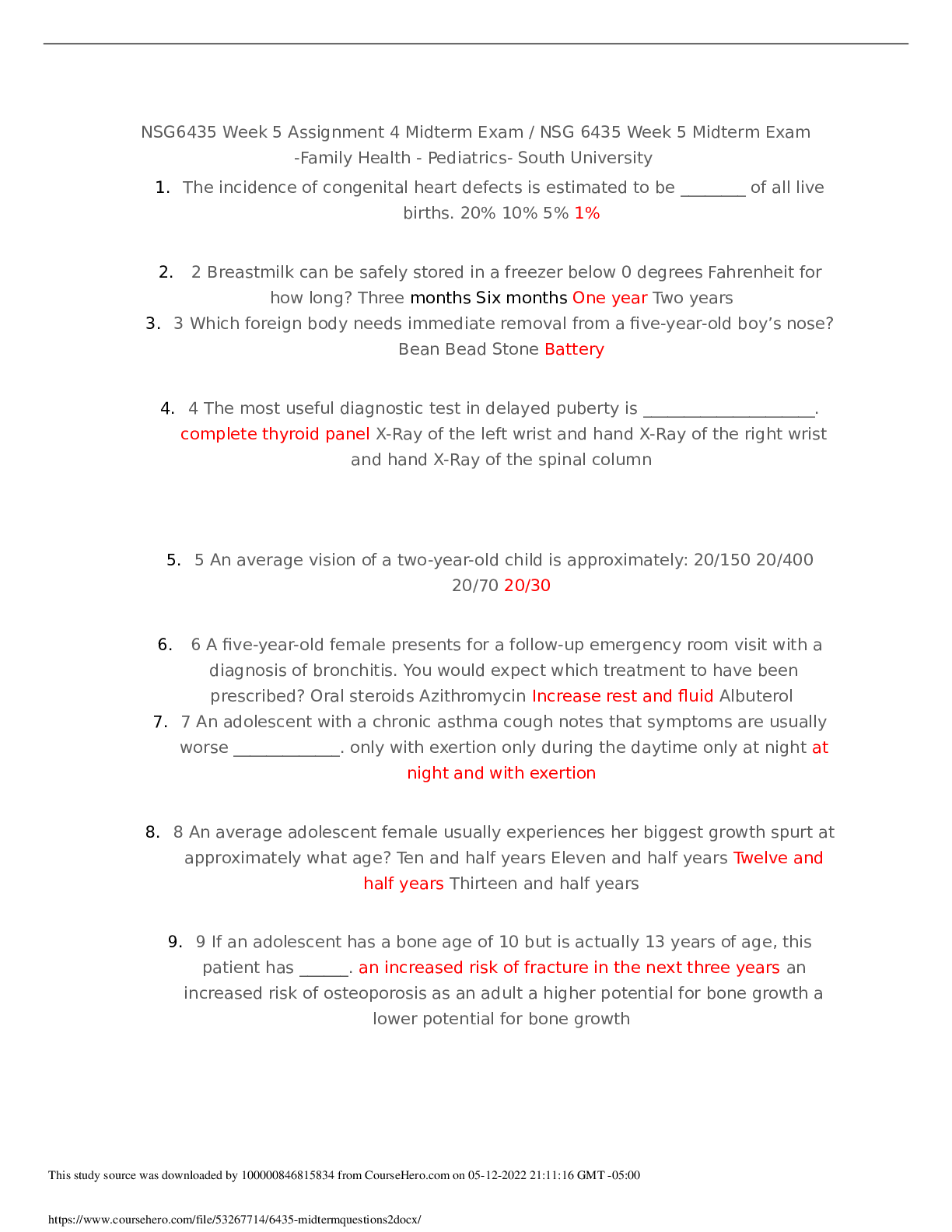
NURSING > QUESTIONS & ANSWERS > latest 100% correct /Medical-Surgical Practice Exam QUESTIONS (All)
latest 100% correct /Medical-Surgical Practice Exam QUESTIONS
Document Content and Description Below
Last updated: 3 years ago
Preview 1 out of 26 pages
Instant download

Buy this Document to get the Full Access Instantly
Provided by Students Who Aced it
We Verify Document Content to Gurantee Accuracy
Reviews( 0 )
Document information
Connected school, study & course
About the document
Uploaded On
Apr 04, 2021
Number of pages
26
Written in
All

Additional information
This document has been written for:
Uploaded
Apr 04, 2021
Downloads
0
Views
64
Topic Tags
Related Subjects & Courses
Explore similar study resources and related concepts.
Recommended For You
Get more on QUESTIONS & ANSWERS »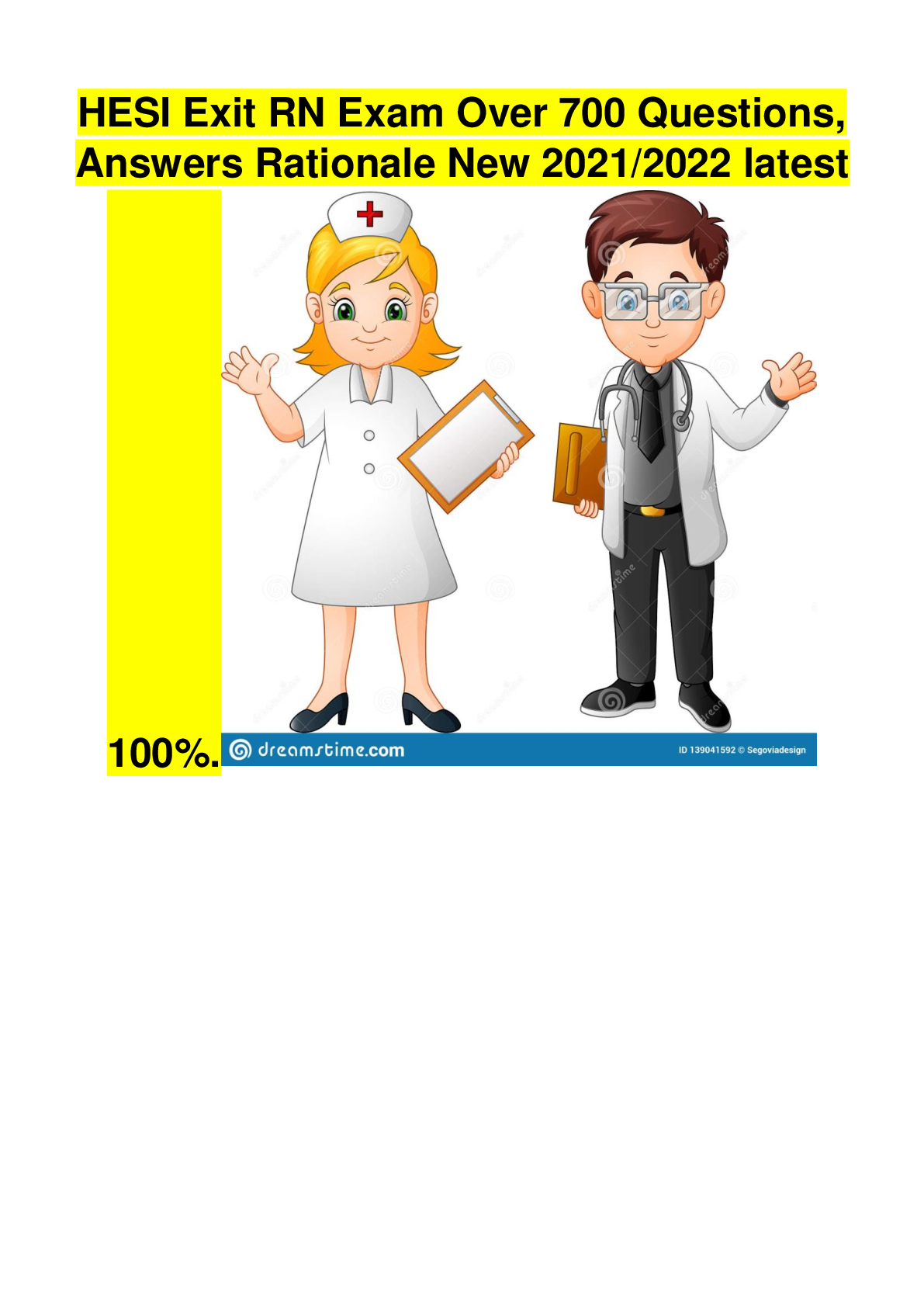
RN EXIT Exam Over 700 Questions, Answers Rationale New 2019/20...
HESI Exit RN Exam Over 700 Questions, Answers Rationale New 20...

HESI Exit RN Exam Over 700 Questions & Answers new & Updated V...

HESI Exit RN Exam Over 700 Questions, Answers Rationale lates...
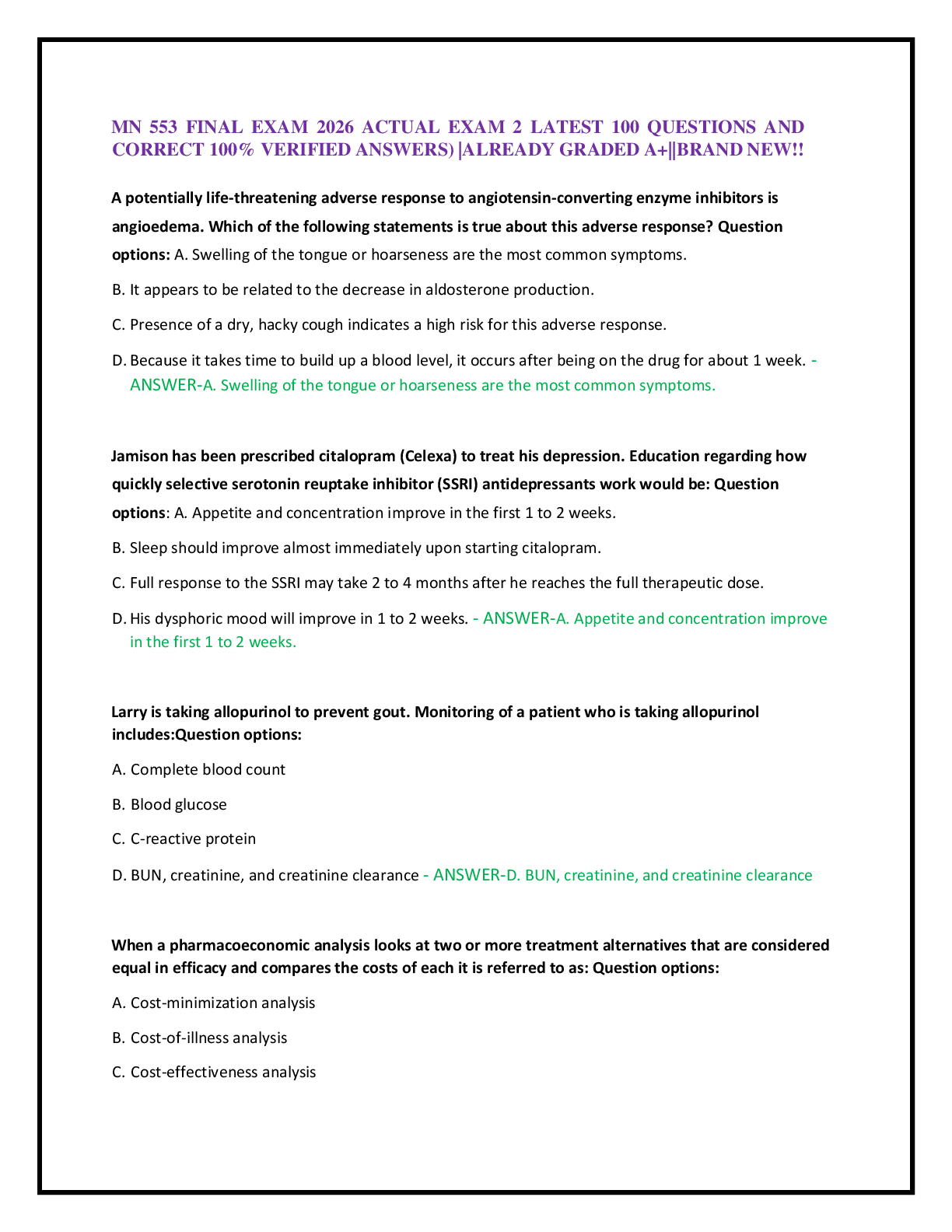
RELIAS RN PHARMACOLOGY TESTBANK A ACTUAL EXAM LATEST 100 % 20...

ATI RN MEDSURG PROCTORED EXAM- LATEST 100% CORRECT STUDY GUIDE...
ATI RN MEDSURG 2020/2021 PROCTORED EXAM- LATEST 100% CORRECT S...

HESI Exit RN Test bank Over 700 Questions, Answers Rationale N...

MATERNITY AND PEDIATRIC NURSING 3Ed. by RICCI TEST BANK|LATEST...
ATI RN MEDSURG 2020/2021 PROCTORED EXAM- LATEST 100% CORRECT S...

NR 509 Midterm Study Guide Week 3 ALL SOLUTION SPRING-FALL 202...


NR507 FINAL EXAM STUDY GUIDE (3) ALL SOLUTION FALL 2022 LATEST...

American Red Cross Lifeguarding Test (CPR/First Aid) (Cardiopu...

ATI RN CAPSTONE PHARMACOLOGY STUDY GUIDELATEST 100% CORRECT GU...
ATI PEDS PROCTORED REVISION GUIDE-LATEST 100% CORRECT GUIDE