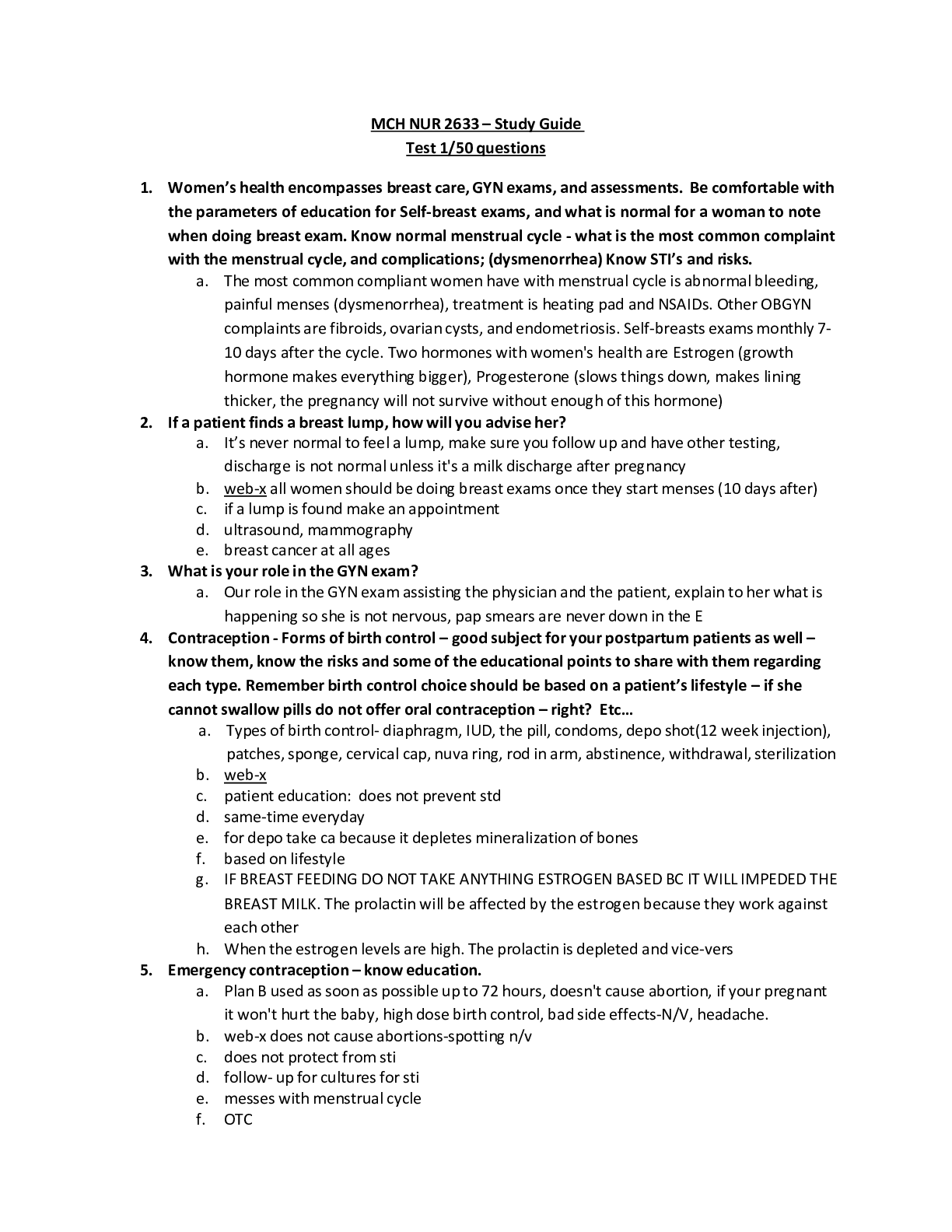
Pathophysiology > STUDY GUIDE > WEEK 10 Pathophysiology Latest complete study guide (All)
WEEK 10 Pathophysiology Latest complete study guide
Document Content and Description Below
Last updated: 3 years ago
Preview 1 out of 11 pages
Instant download
Buy this Document to get the Full Access Instantly
Provided by Students Who Aced it
We Verify Document Content to Gurantee Accuracy
Reviews( 0 )
Document information
Connected school, study & course
About the document
Uploaded On
Apr 04, 2021
Number of pages
11
Written in
All

Additional information
This document has been written for:
Uploaded
Apr 04, 2021
Downloads
0
Views
100
Topic Tags
Related Subjects & Courses
Explore similar study resources and related concepts.
Recommended For You
Get more on STUDY GUIDE »
NSG5003 / NSG 5003: Advanced Pathophysiology Final Exam Week 1...

NSG 5003 QUESTION BANK FOR WEEK 1 TO WEEK 10 QUIZ, MIDTERM, FI...

NURS 6501 / NURS6501: Advanced Pathophysiology Week 10 Quiz Gr...

NSG6435 / NSG 6435 Final Exam Week 10 (Latest Update): Practic...
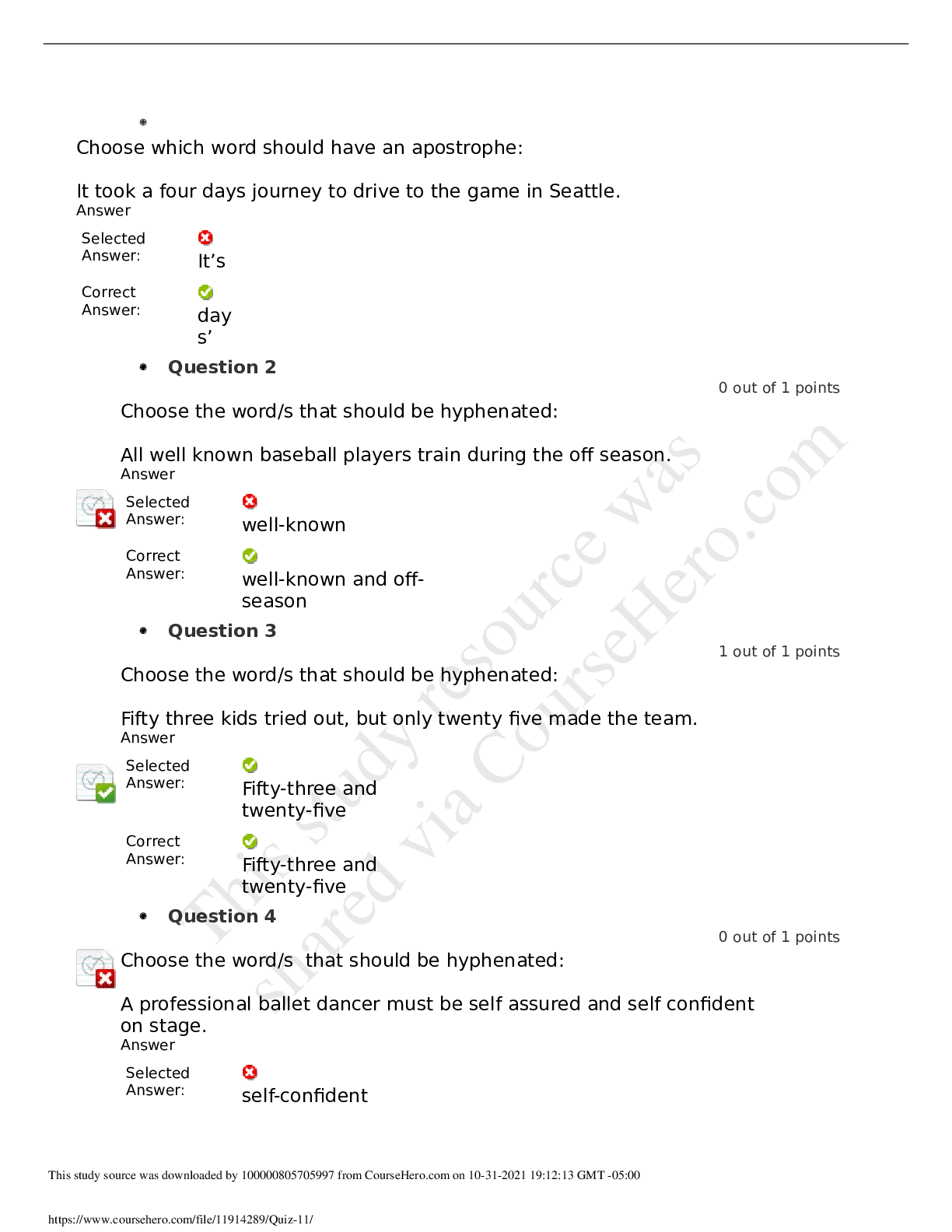

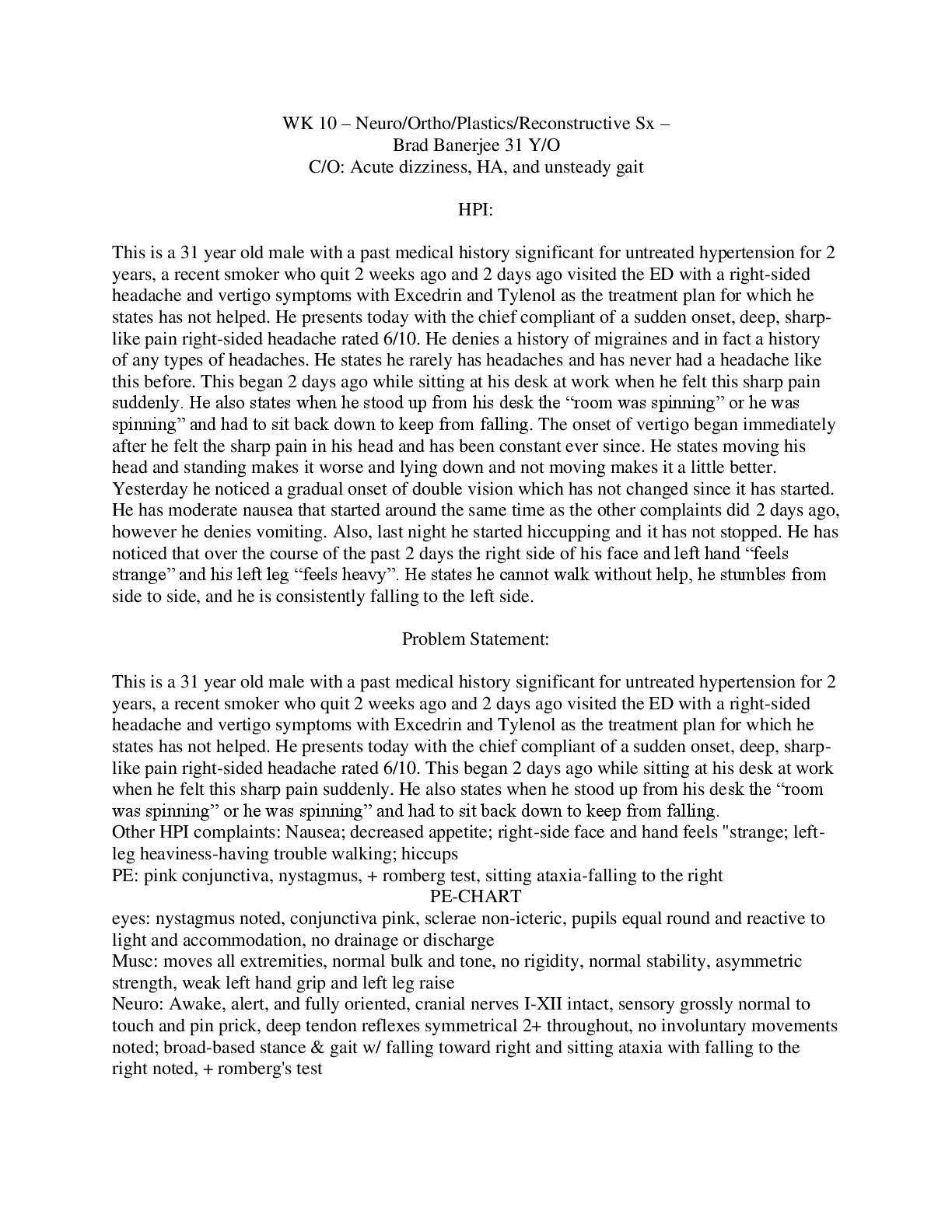
Brad Banerjee 31 year old Acute dizziness, HA, and unsteady ga...
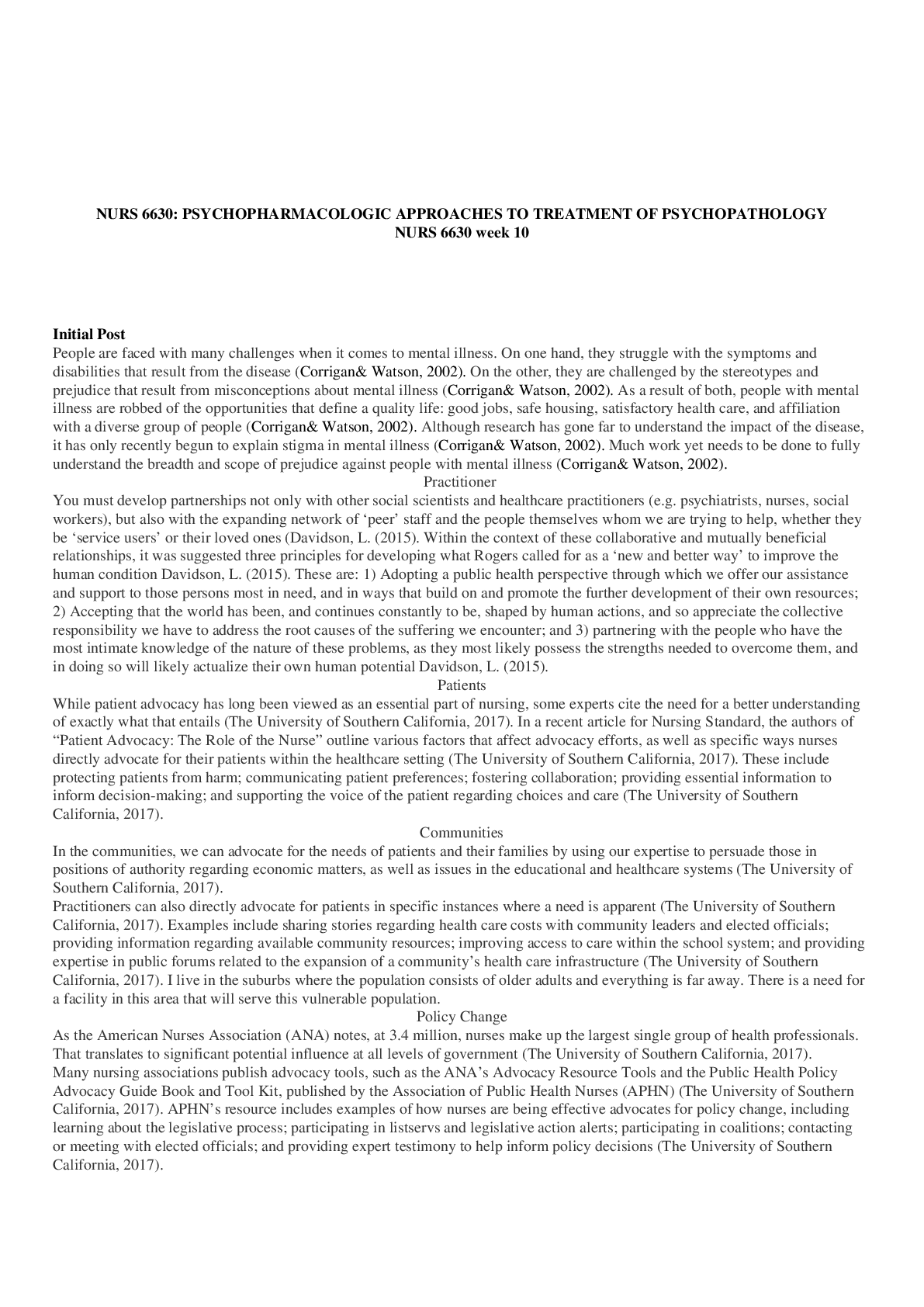
NURS 6630 week 10 / NURS 6630: PSYCHOPHARMACOLOGIC APPROACHES...

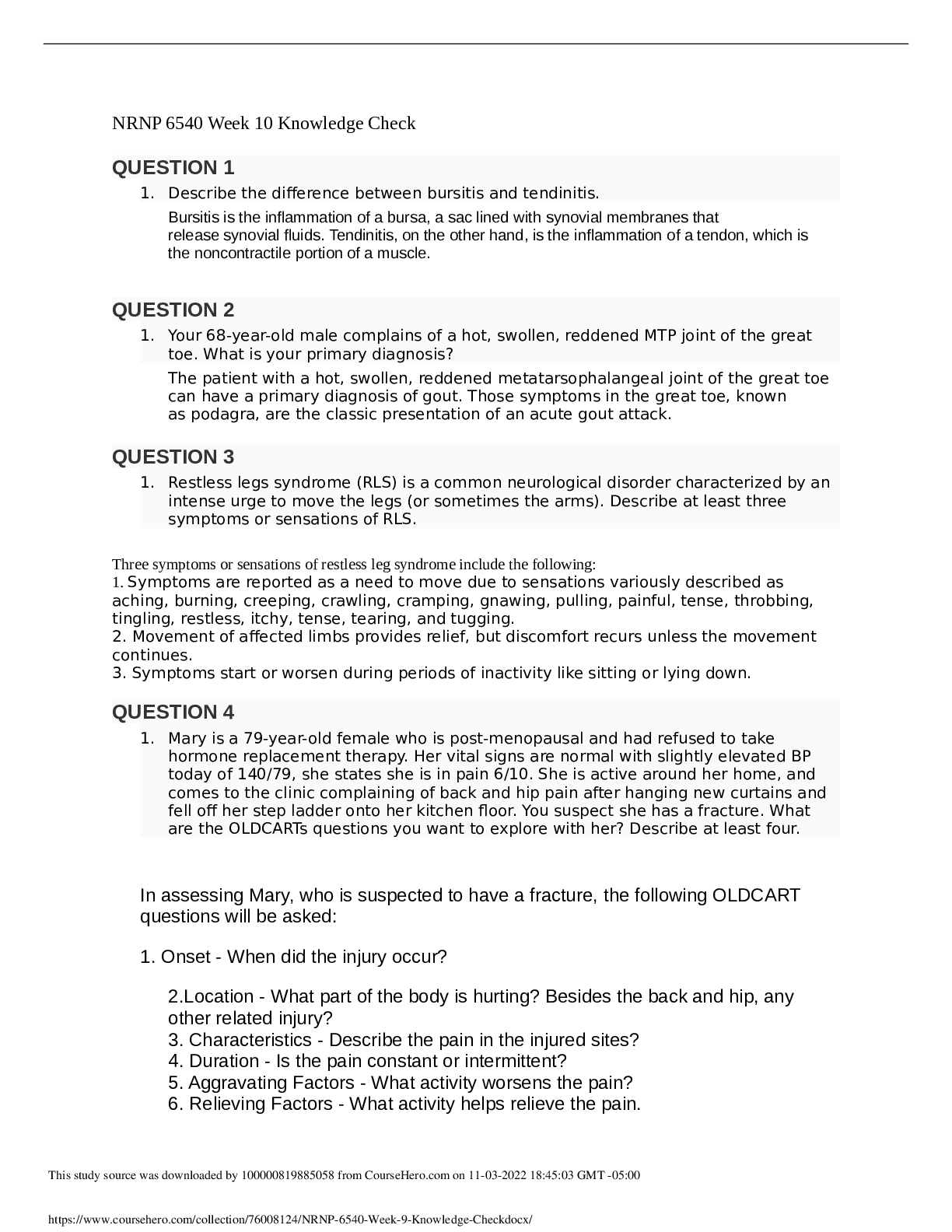

MATH 101, Section 212 (CSP) Week 10: Marked Homework Solutions...
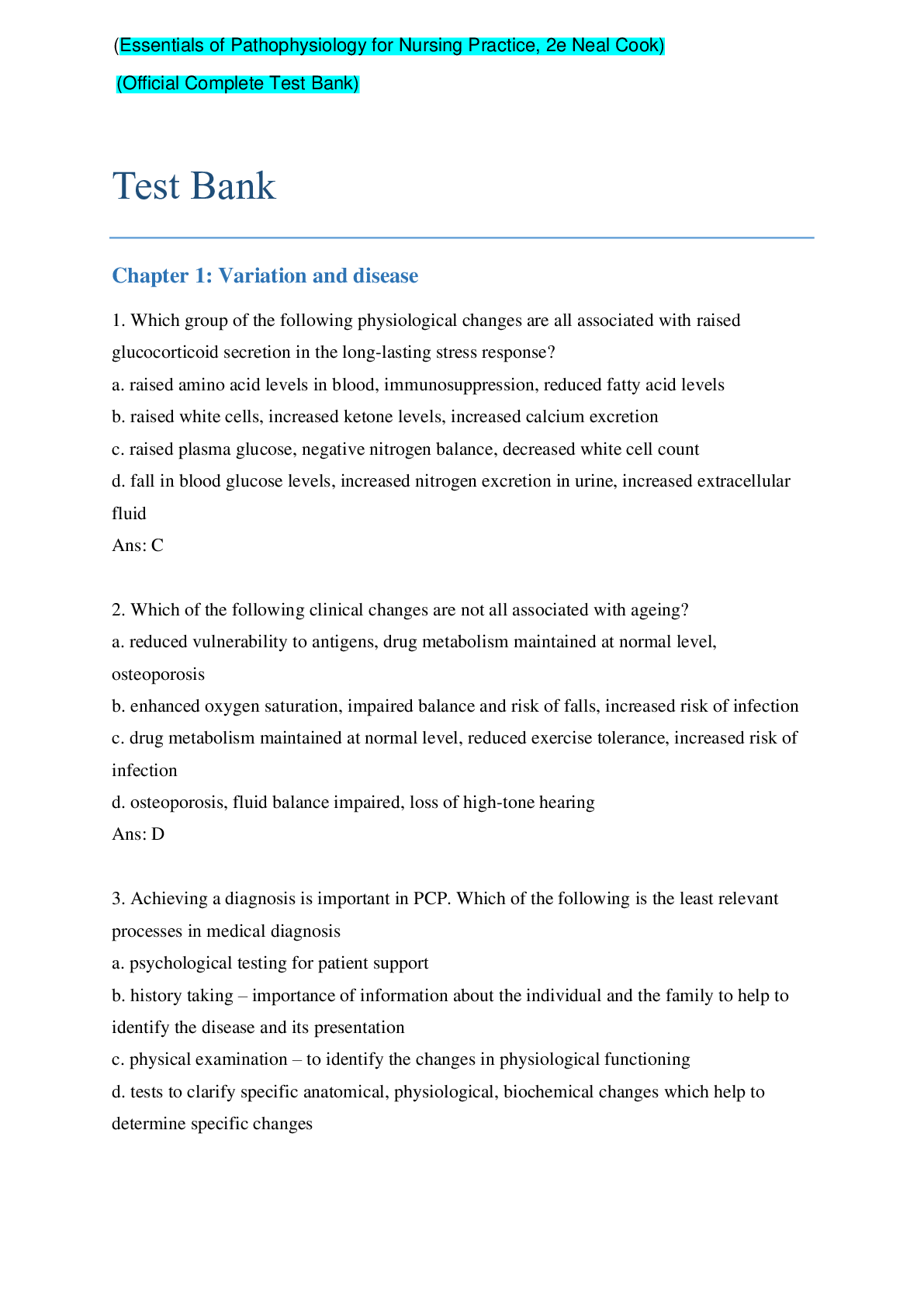
Essentials of Pathophysiology for Nursing Practice 2nd Edition...
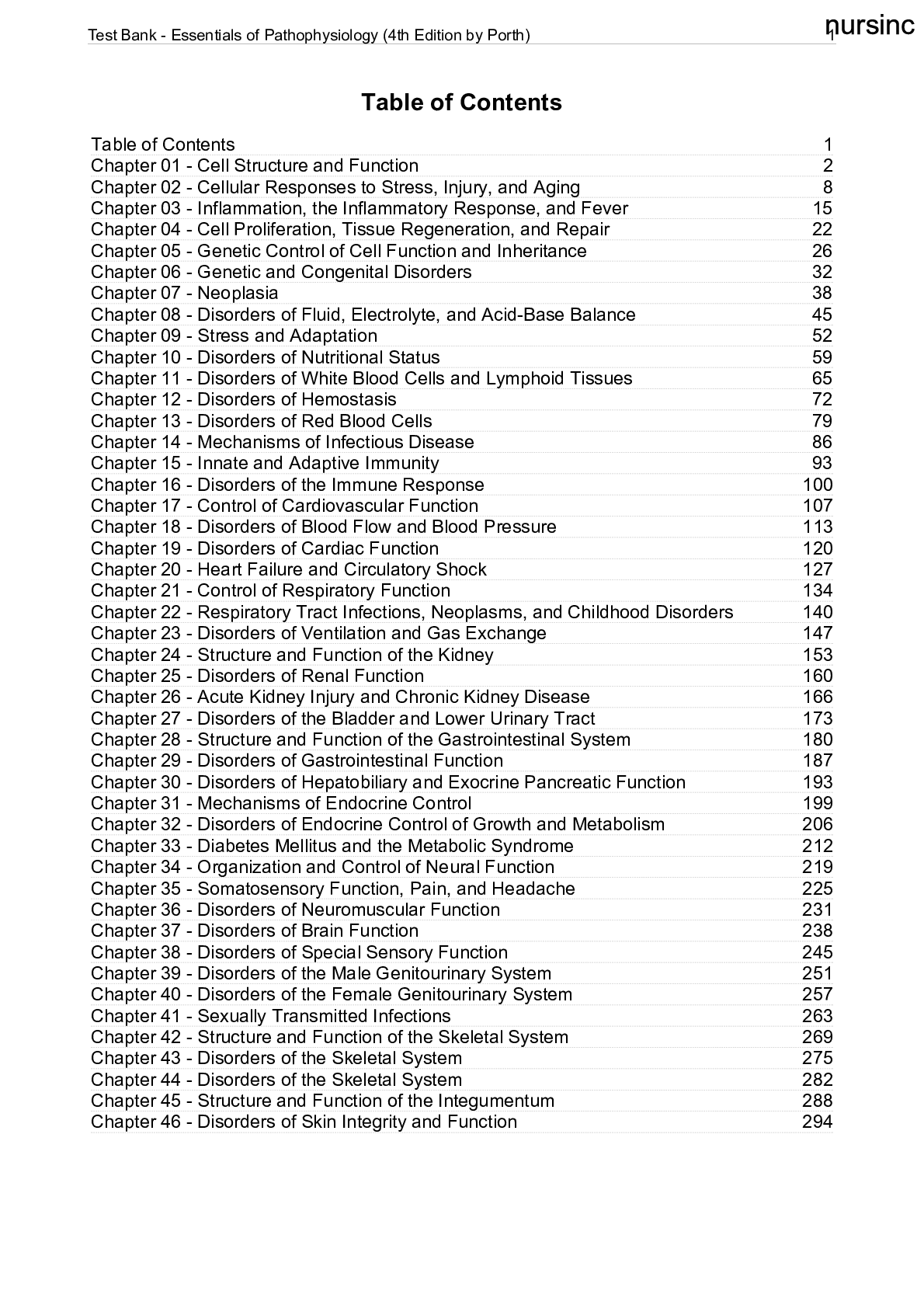
Test Bank - Essentials of Pathophysiology (4th Edition by Port...

Applied Pathophysiology A Conceptual Approach to the Mechanism...

Pathophysiology Introductory Concepts and Clinical Perspective...

Sue E. Huether, Kathryn L. McCance - Test Bank for Understandi...