Chapter 6: Introduction to Law revised 7.18.16
Every instance of a man’s suffering the penalty of the law, is an instance of the failure of that penalty in
effecting its purpose, which is to deter from transgression.
...
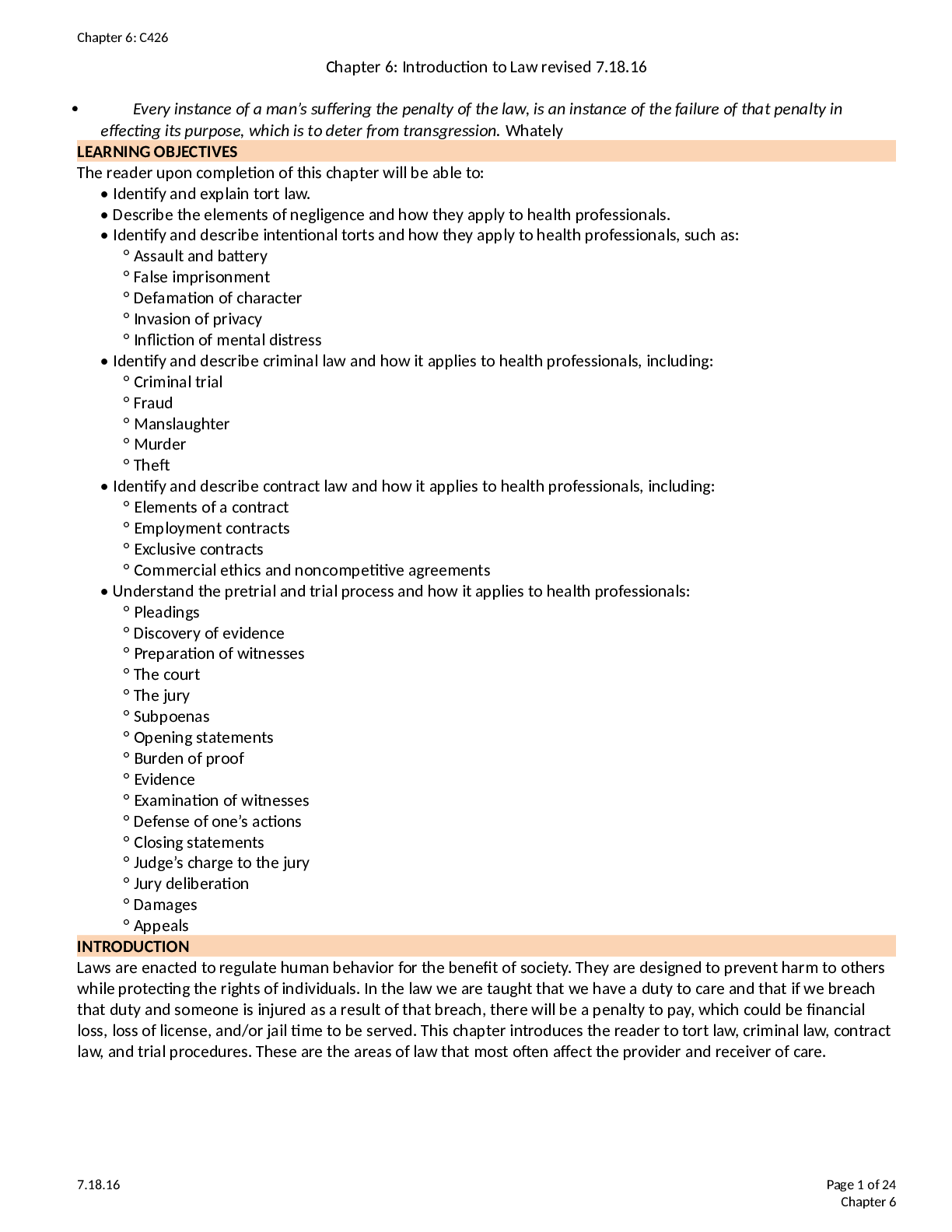
Chapter 6: Introduction to Law revised 7.18.16
Every instance of a man’s suffering the penalty of the law, is an instance of the failure of that penalty in
effecting its purpose, which is to deter from transgression. Whately
LEARNING OBJECTIVES
The reader upon completion of this chapter will be able to:
• Identify and explain tort law.
• Describe the elements of negligence and how they apply to health professionals.
• Identify and describe intentional torts and how they apply to health professionals, such as:
° Assault and battery
° False imprisonment
° Defamation of character
° Invasion of privacy
° Infliction of mental distress
• Identify and describe criminal law and how it applies to health professionals, including:
° Criminal trial
° Fraud
° Manslaughter
° Murder
° Thef
• Identify and describe contract law and how it applies to health professionals, including:
° Elements of a contract
° Employment contracts
° Exclusive contracts
° Commercial ethics and noncompetitive agreements
• Understand the pretrial and trial process and how it applies to health professionals:
° Pleadings
° Discovery of evidence
° Preparation of witnesses
° The court
° The jury
° Subpoenas
° Opening statements
° Burden of proof
° Evidence
° Examination of witnesses
° Defense of one’s actions
° Closing statements
° Judge’s charge to the jury
° Jury deliberation
° Damages
° Appeals
INTRODUCTION
Laws are enacted to regulate human behavior for the benefit of society. They are designed to prevent harm to others
while protecting the rights of individuals. In the law we are taught that we have a duty to care and that if we breach
that duty and someone is injured as a result of that breach, there will be a penalty to pay, which could be financial
loss, loss of license, and/or jail time to be served. This chapter introduces the reader to tort law, criminal law, contract
law, and trial procedures. These are the areas of law that most ofen affect the provider and receiver of care.
[Show More]