NR224 / NR 224 Exam 2 (Latest Update) Fundamentals - Chamberlain
Document Content and Description Below
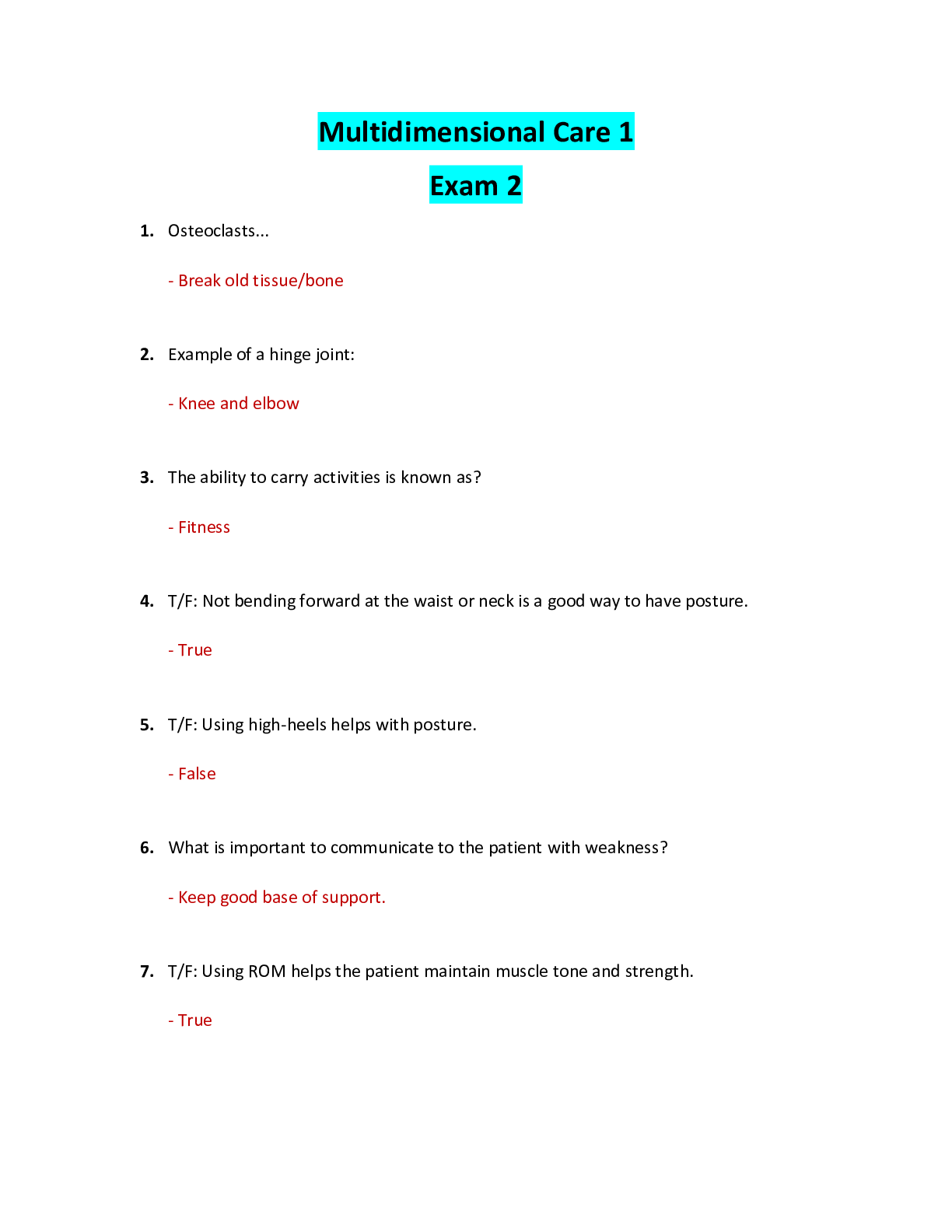
NR-224 Fundamentals Exam 2 (Chapters 28 – Immobility, Activity & Exercise)
Activity & Exercise
ACTIVITY AND EXERCISE
- Patterns of exercise, activity, leisure, and recreation
Nursing principles of body mechan
...
[Show More]
Last updated: 8 months ago
Preview 1 out of 28 pages
Instant download
 A21.png)
Buy this Document to get the Full Access Instantly
Provided by Students Who Aced it
We Verify Document Content to Gurantee Accuracy
Reviews( 0 )
Document information
Connected school, study & course
About the document
Uploaded On
Apr 06, 2021
Number of pages
28
Written in
All

Additional information
This document has been written for:
Uploaded
Apr 06, 2021
Downloads
0
Views
99
Topic Tags
Recommended For You
Get more on EXAM »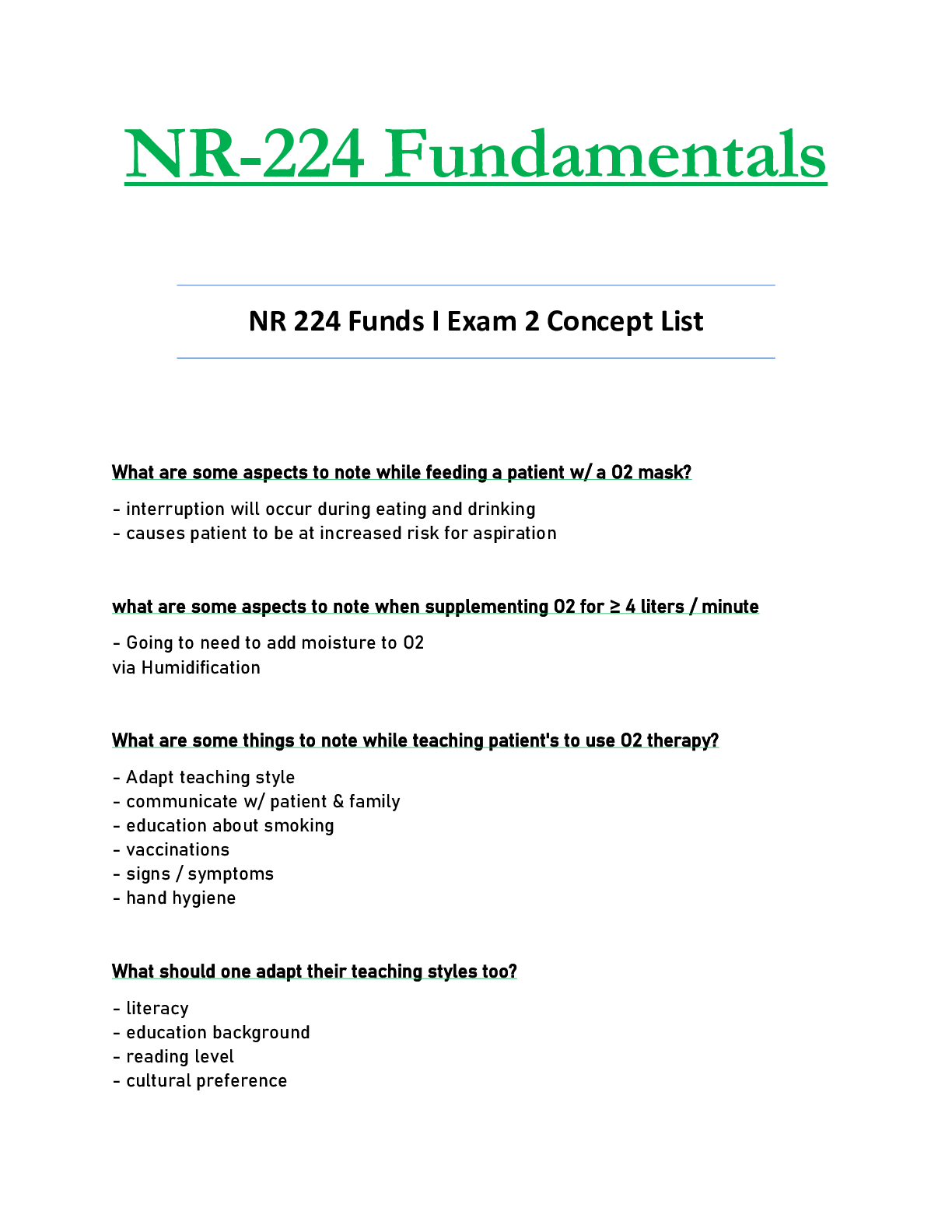
$9
55 Pages
NR224 / NR 224 Exam 2 Concept List Updated Fundamentals - Cham...

$9
36 Pages
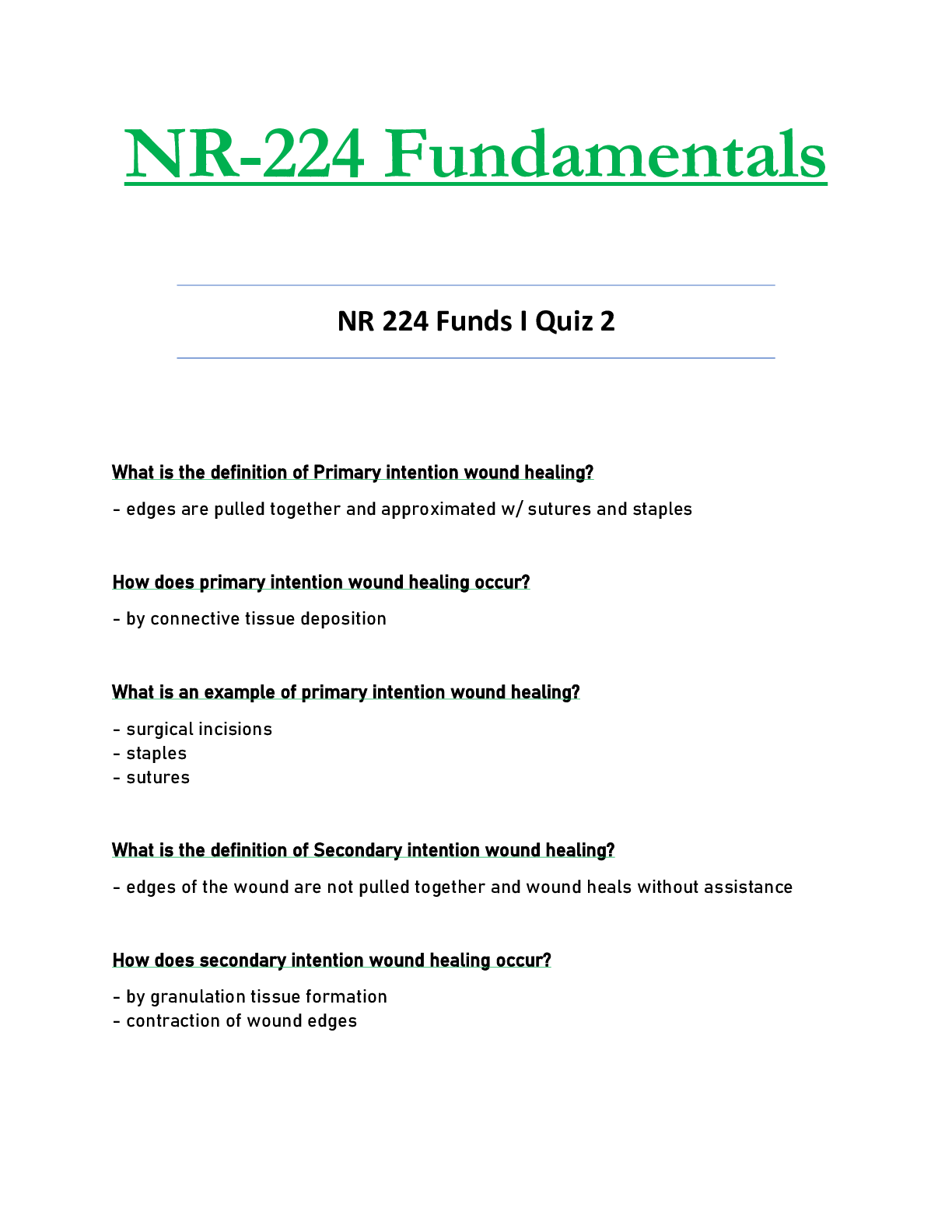
NR224 / NR 224 Exam 1 Concept List Updated Fundamentals - Cham...
$12.5
29 Pages
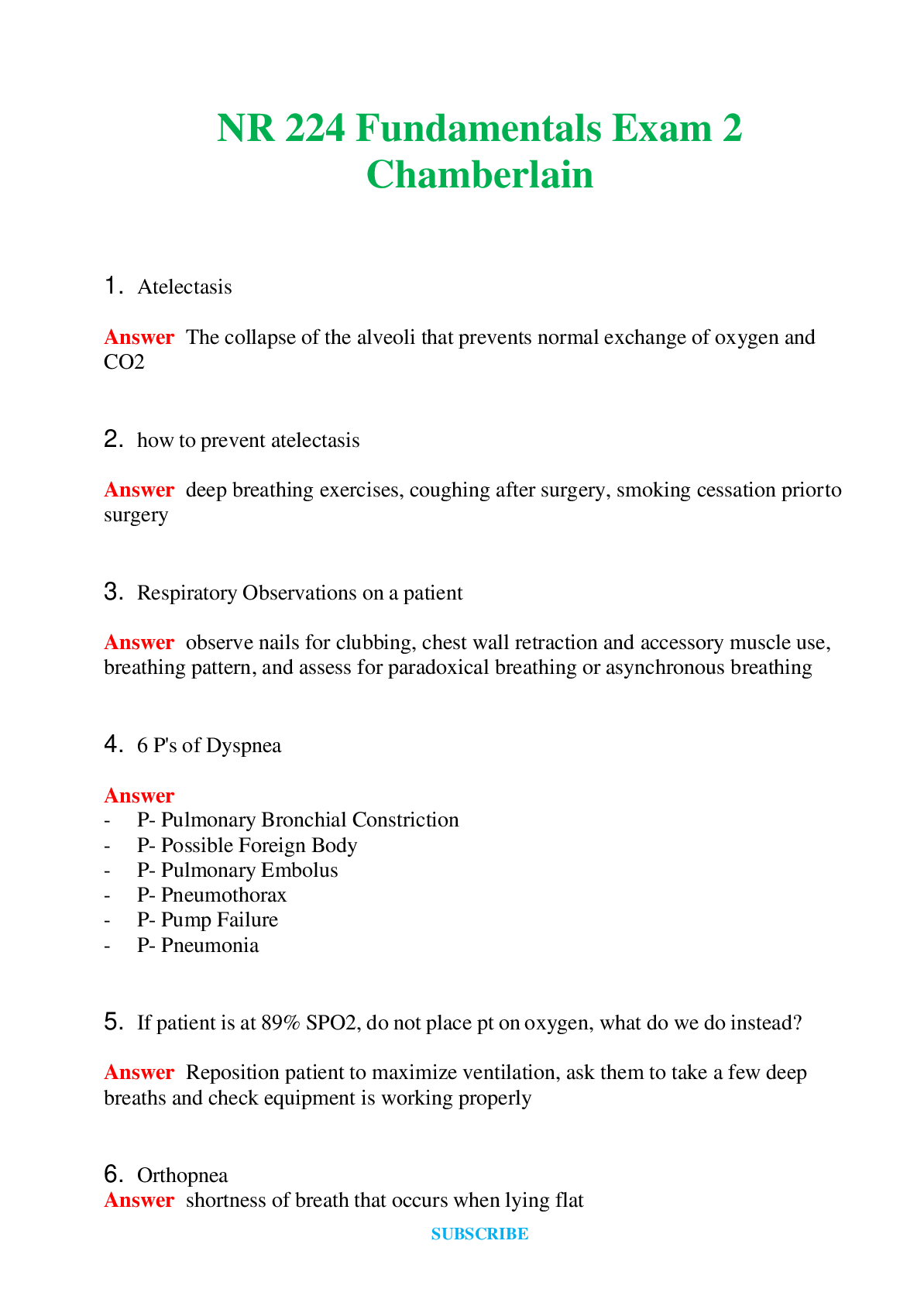
NR 224 Fundamentals Exam 2 Chamberlain Questions and Answer...
$8.5
62 Pages
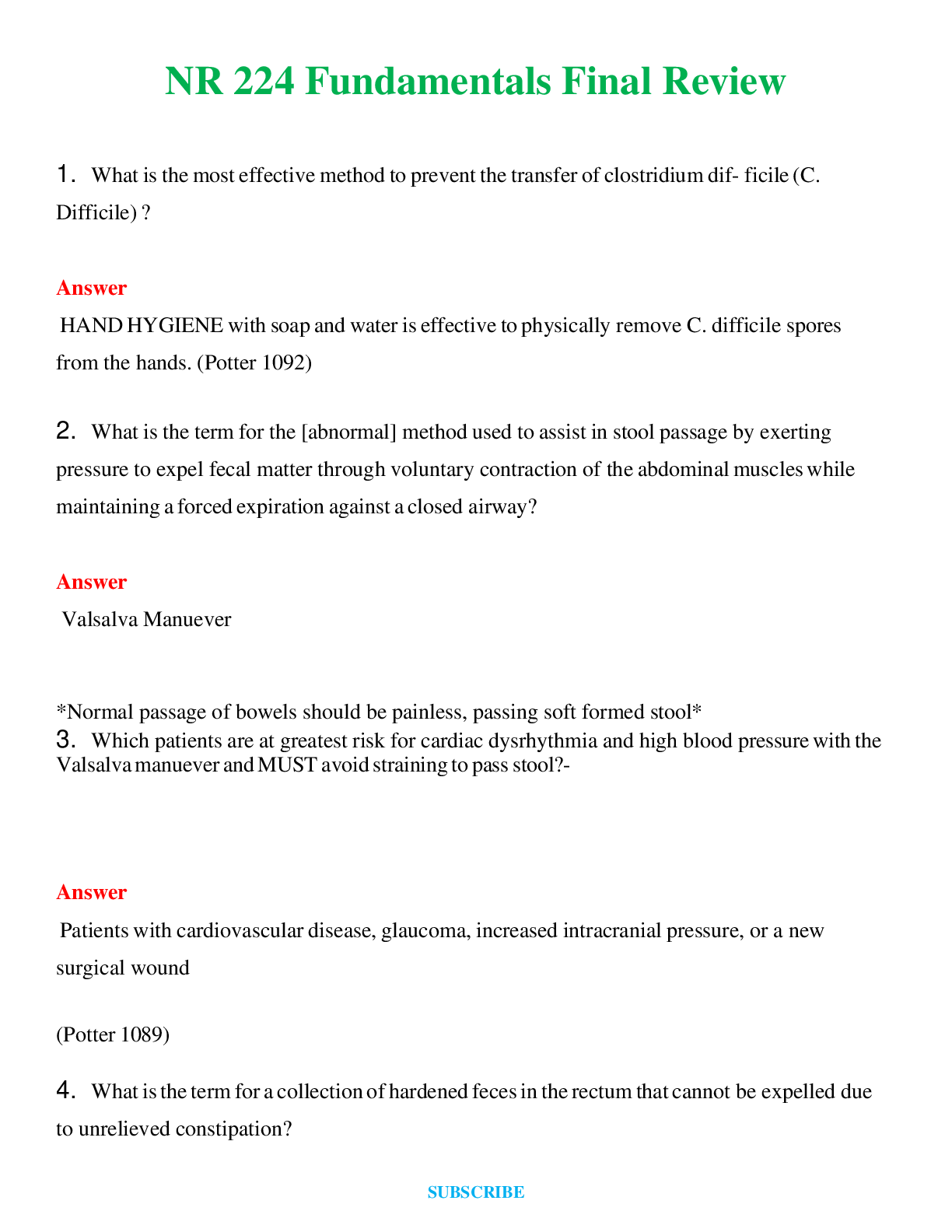
NR 224 Fundamentals Final Review Questions and Answers (Ver...

$19.5
86 Pages
NR 224 Fundamentals Week 3-5 Exams Review Test Bank 2026 - a...
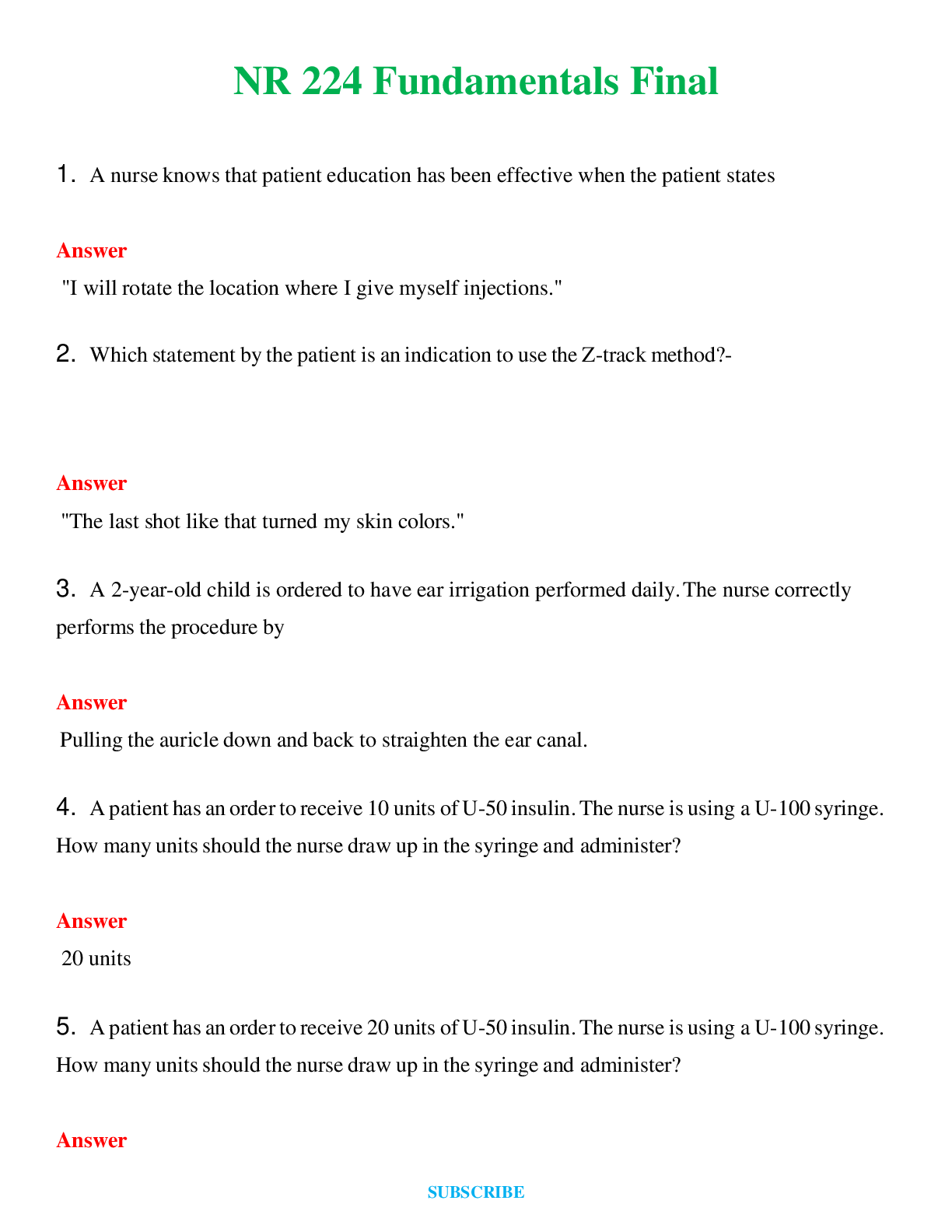
$8.5
31 Pages
NR 224 Fundamentals Final Questions and Answers (Verified A...
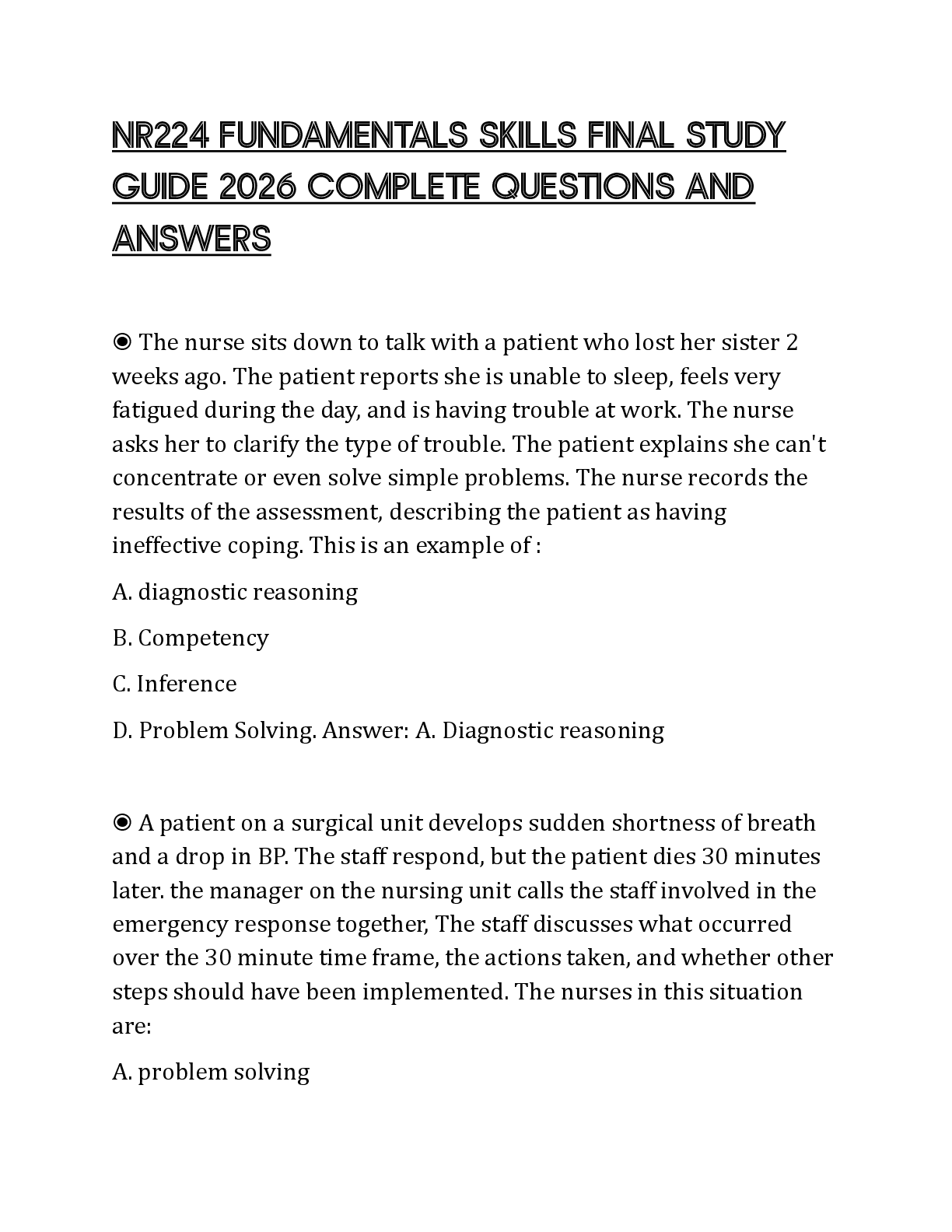
$10
42 Pages
NR224 FUNDAMENTALS SKILLS FINAL STUDY GUIDE 2026 COMPLETE QUES...
$15
257 Pages
HESI A2 REVIEW Anatomy and Physiology, HESI A2 Science, HESI A...

$25
340 Pages
Test Bank for Community Health Nursing A Canadian Perspective...
$25
776 Pages
Test Bank For High-Acuity Nursing 7th Edition By Kathleen Wagn...
$25
865 Pages
Test Bank For Health & Physical Assessment in Nursing 4th Edit...

$22
607 Pages
TEST BANK for ROACHS INTRODUCTORY CLINICAL PHARMACOLOGY, 11TH...


$10
14 Pages
NURS 4325 Maternal-Child Nursing | Healthy Newborn, Infant Car...

$5
3 Pages
Brian Foster: Final Diagnosis Conditions of the cardiovascular...
$10
132 Pages
NURS 492 Clinical Synthesis for RNs Drug Guide Prototype | Dru...
$10
157 Pages
MEDICAL SURGICAL NURSING Management of Care | Feuer Nursing Re...
More related documents below



.png)


