Genitourinary, gynecologic, renal and acid/base conditions
o Carcinoma of the Cervix
Increased risk in women who smoke and those with HIV or high-risk HPV types.
Considered a sexually transmitted disease as both s
...
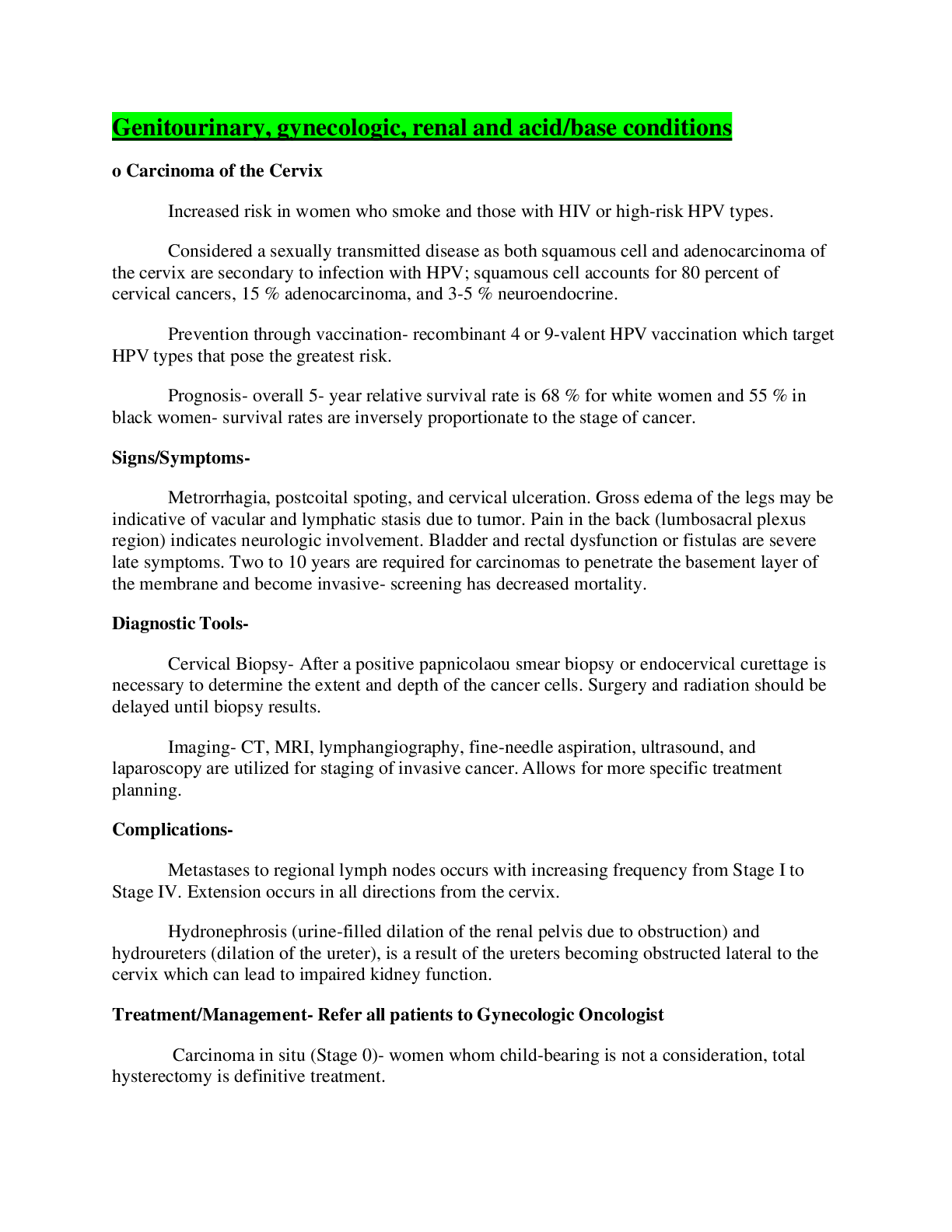
Genitourinary, gynecologic, renal and acid/base conditions
o Carcinoma of the Cervix
Increased risk in women who smoke and those with HIV or high-risk HPV types.
Considered a sexually transmitted disease as both squamous cell and adenocarcinoma of the cervix are secondary to infection with HPV; squamous cell accounts for 80 percent of cervical cancers, 15 % adenocarcinoma, and 3-5 % neuroendocrine.
Prevention through vaccination- recombinant 4 or 9-valent HPV vaccination which target HPV types that pose the greatest risk.
Prognosis- overall 5- year relative survival rate is 68 % for white women and 55 % in black women- survival rates are inversely proportionate to the stage of cancer.
Signs/Symptoms-
Metrorrhagia, postcoital spoting, and cervical ulceration. Gross edema of the legs may be indicative of vacular and lymphatic stasis due to tumor. Pain in the back (lumbosacral plexus region) indicates neurologic involvement. Bladder and rectal dysfunction or fistulas are severe late symptoms. Two to 10 years are required for carcinomas to penetrate the basement layer of the membrane and become invasive- screening has decreased mortality.
Diagnostic Tools-
Cervical Biopsy- After a positive papnicolaou smear biopsy or endocervical curettage is necessary to determine the extent and depth of the cancer cells. Surgery and radiation should be delayed until biopsy results.
Imaging- CT, MRI, lymphangiography, fine-needle aspiration, ultrasound, and laparoscopy are utilized for staging of invasive cancer. Allows for more specific treatment planning.
....................................................CONTINUED.................................
[Show More]