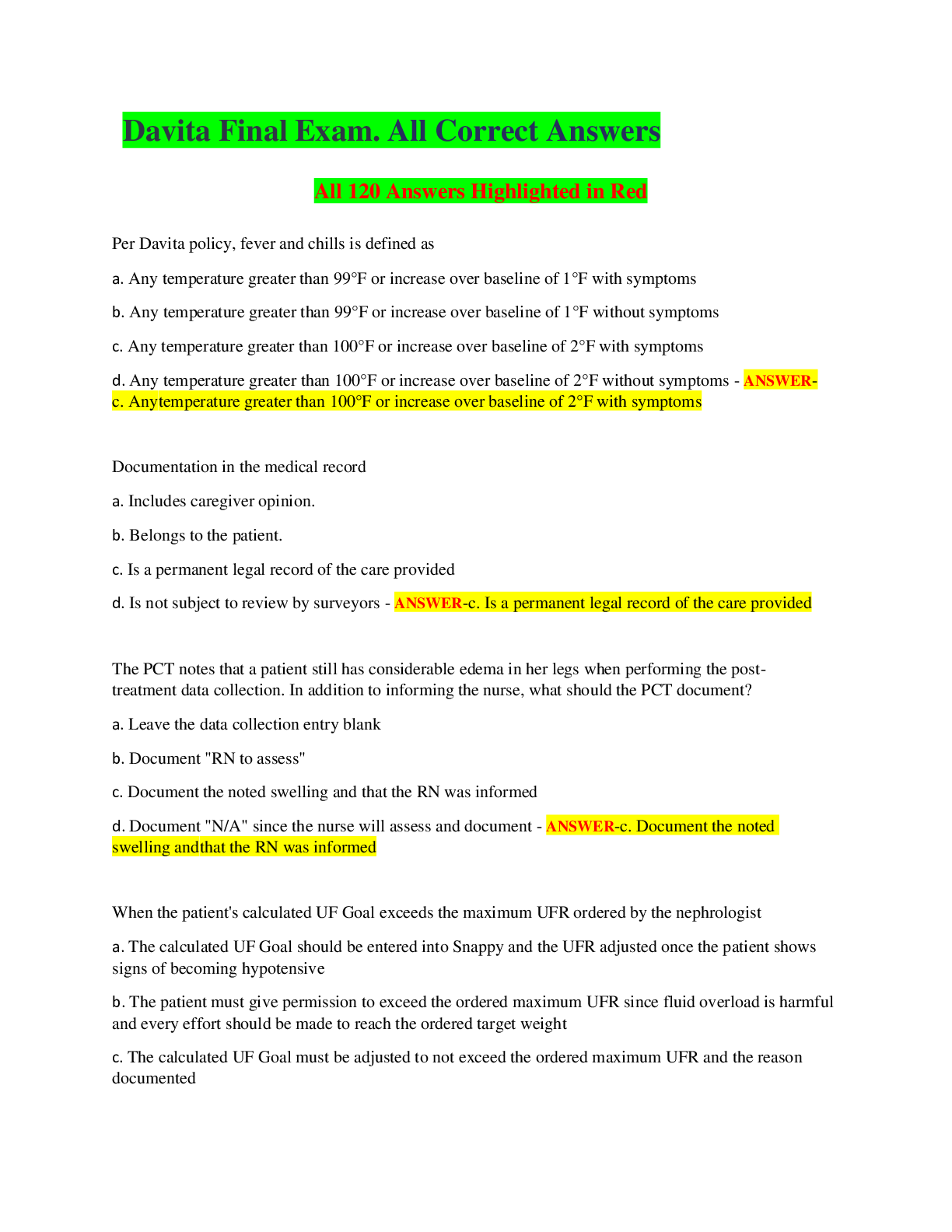
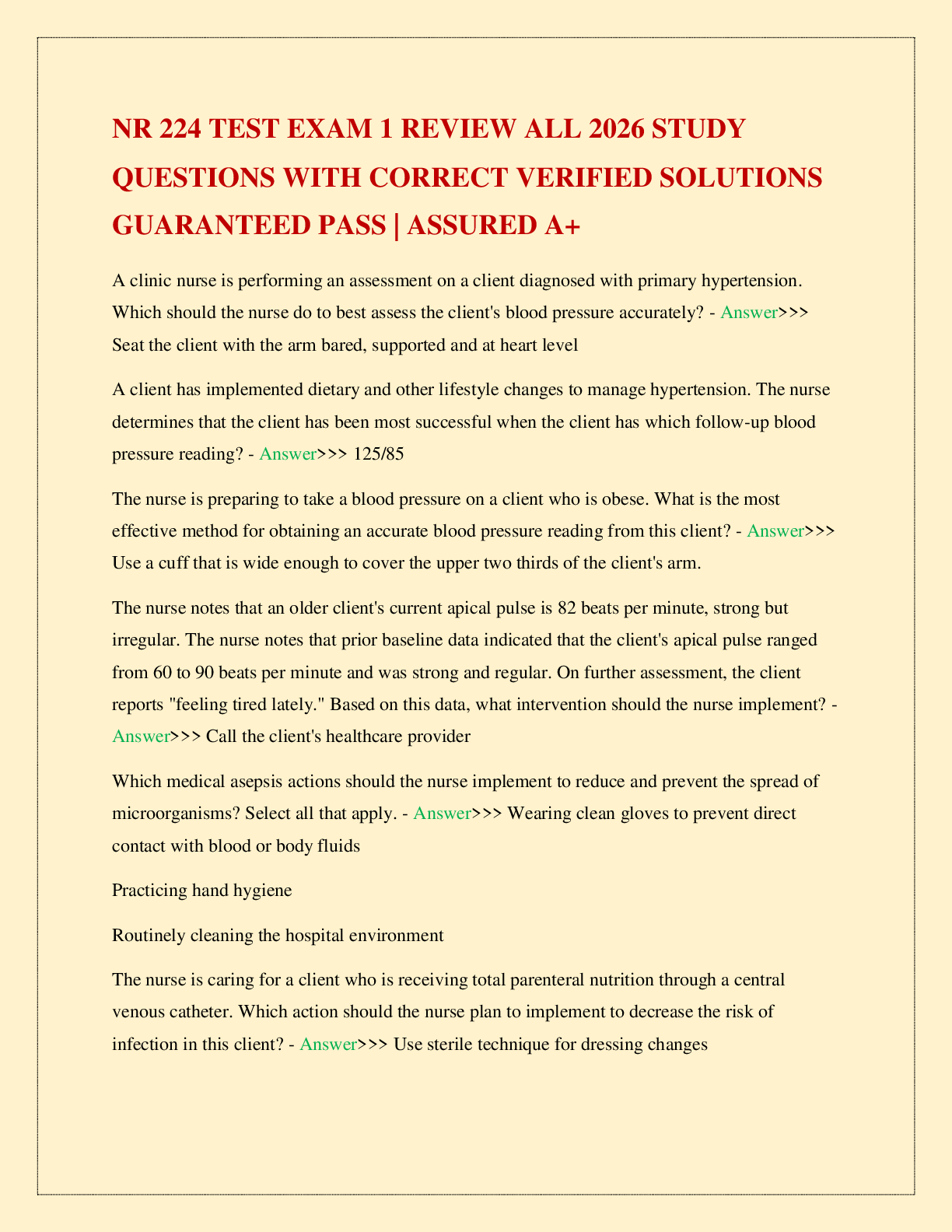
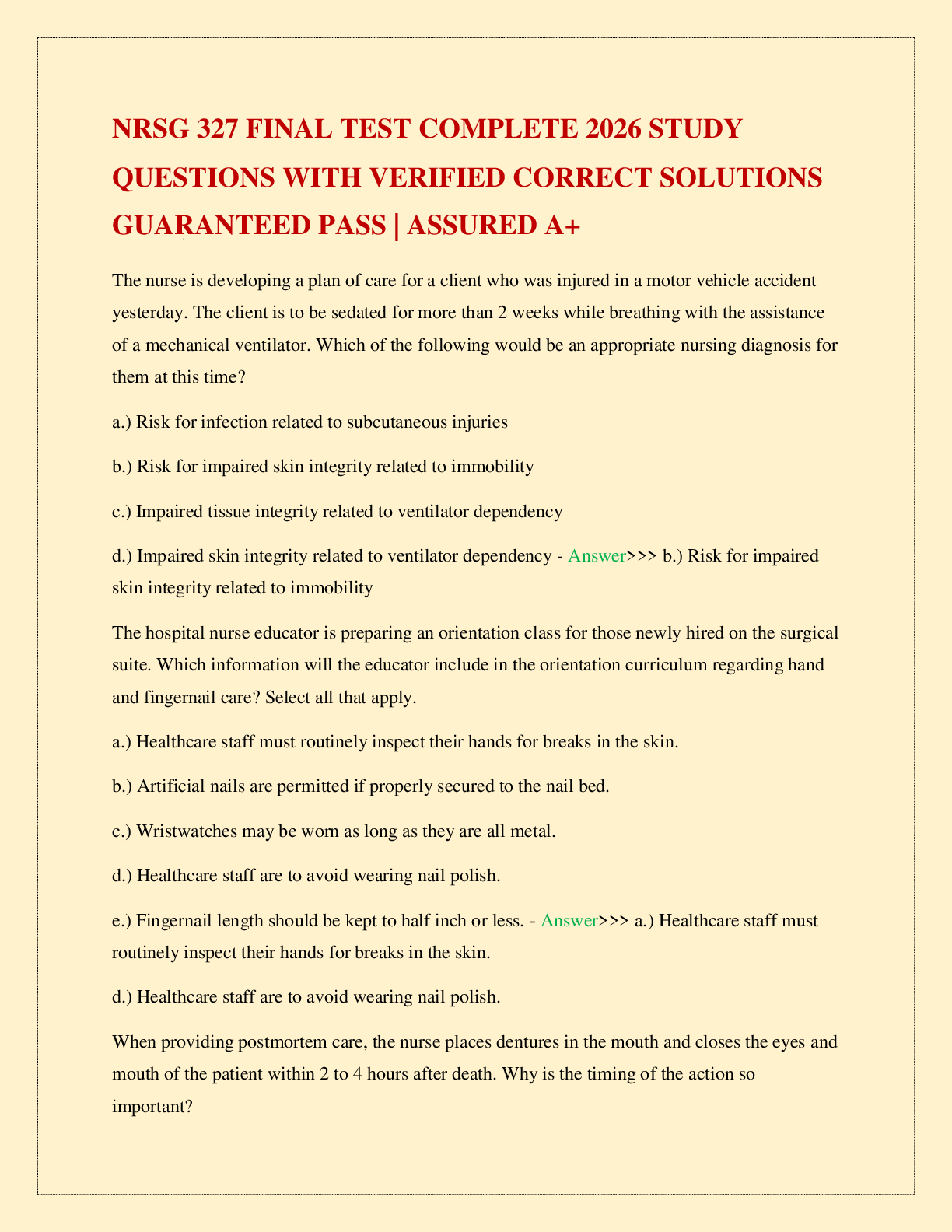
Nursing Exam I - Practice Questions with Rationales
Document Content and Description Below
EVERYTHING CORRECT.1.The following clients are seen in the emergency department. The psychiatric unit has
one bed. The advanced practice nurse acting as admitting officer should recommend for
admission the client who
...
[Show More]
Last updated: 3 years ago
Preview 1 out of 4 pages
Instant download

Buy this Document to get the Full Access Instantly
Provided by Students Who Aced it
We Verify Document Content to Gurantee Accuracy
Reviews( 0 )
Document information
Connected school, study & course
About the document
Uploaded On
Apr 08, 2021
Number of pages
4
Written in
All

Additional information
This document has been written for:
Uploaded
Apr 08, 2021
Downloads
0
Views
140
Topic Tags
Related Subjects & Courses
Explore similar study resources and related concepts.
Recommended For You
Get more on EXAM »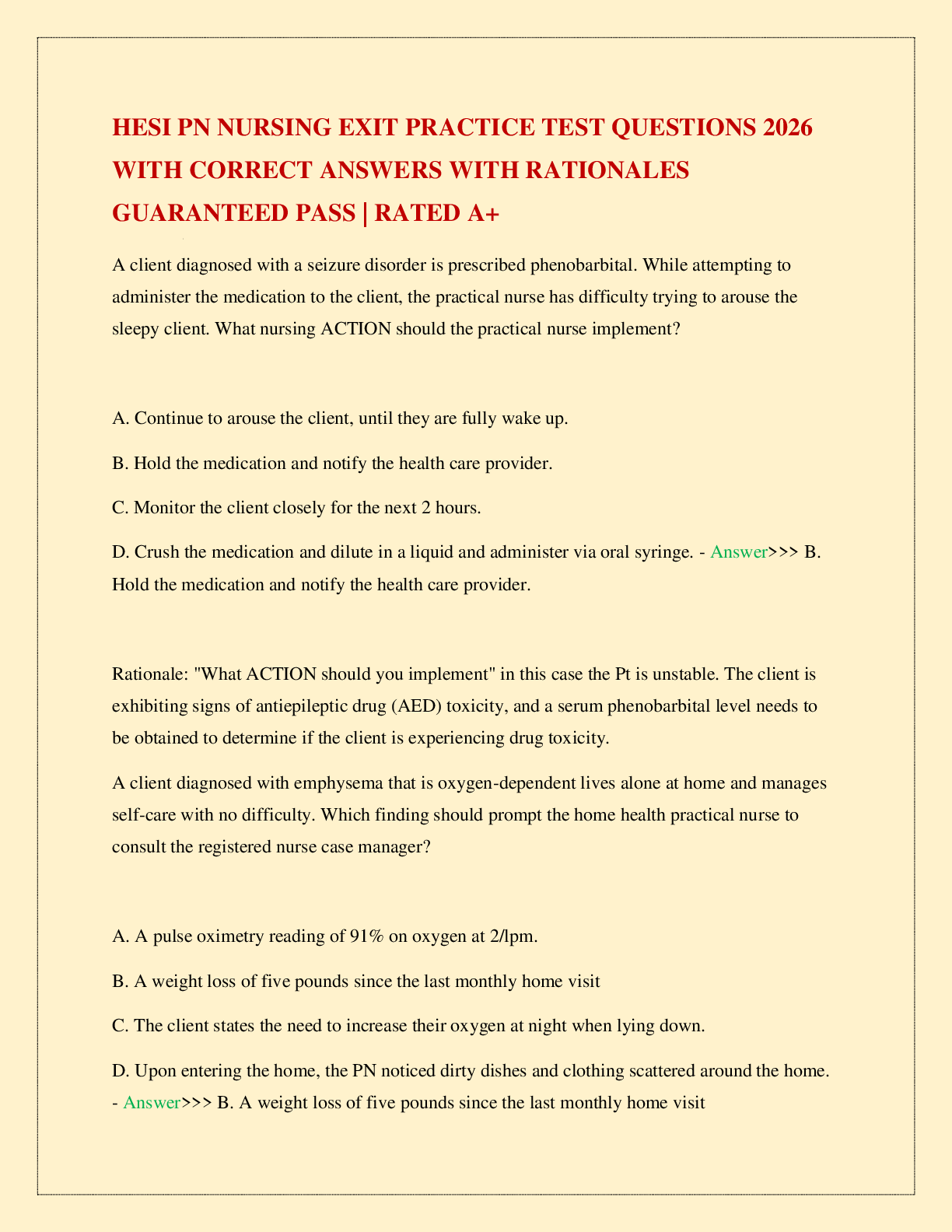
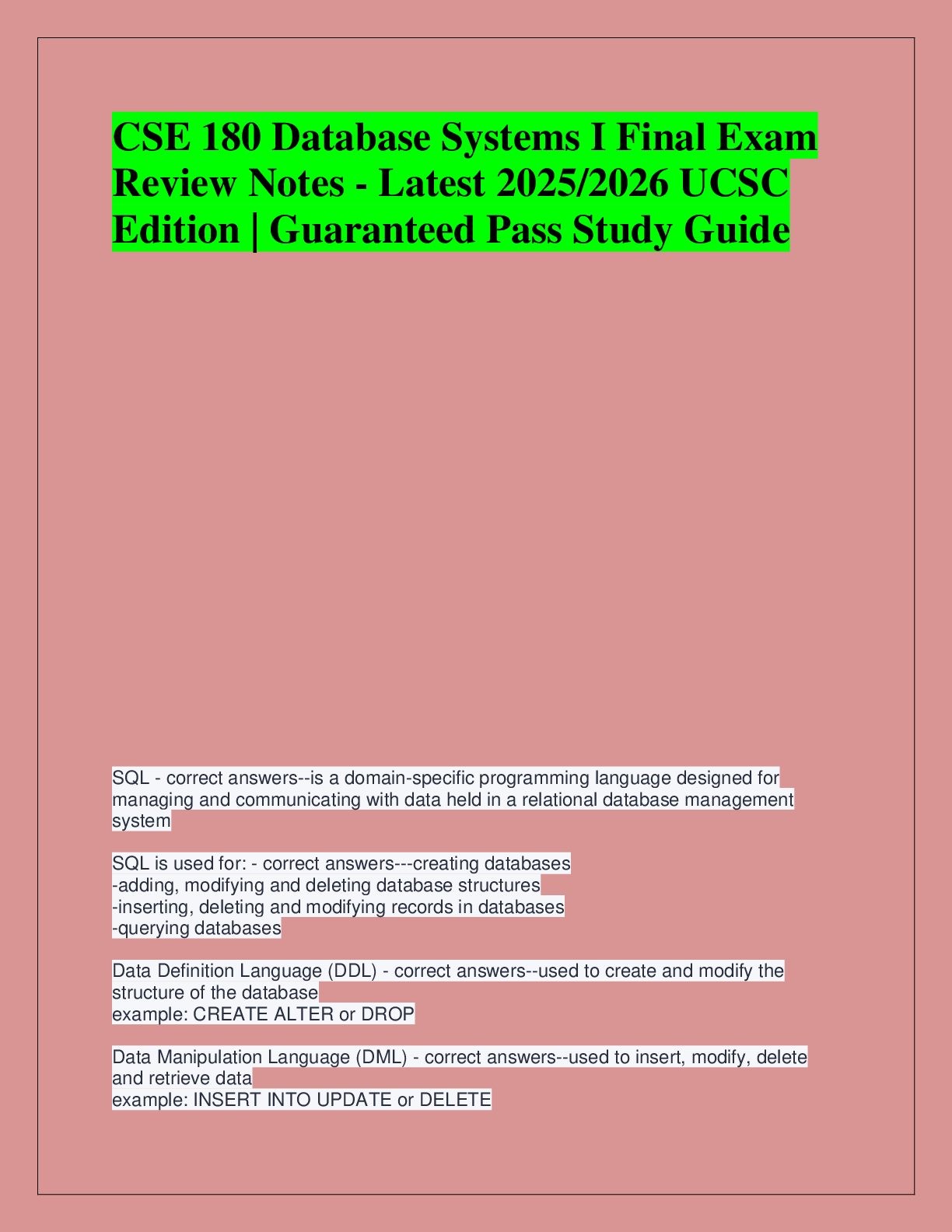
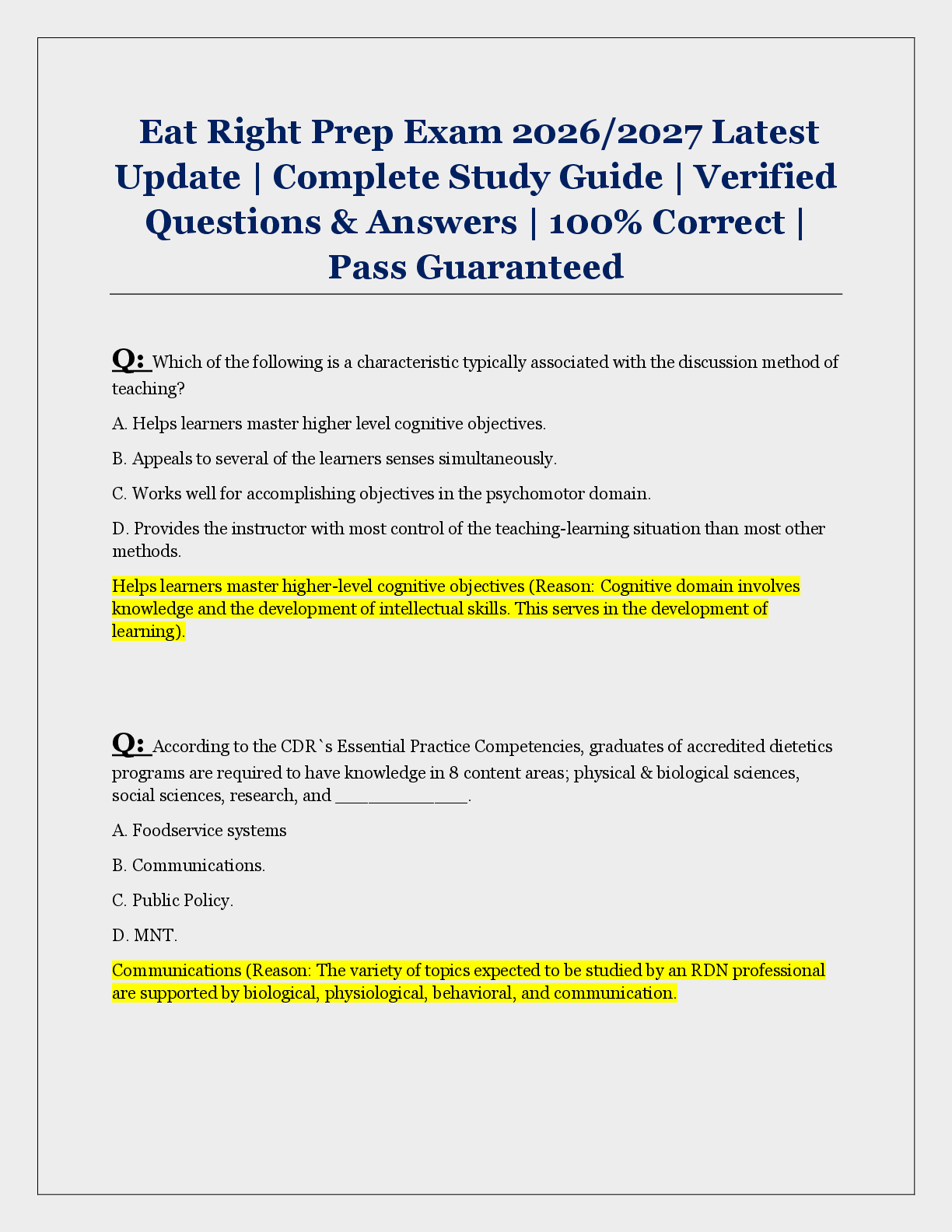
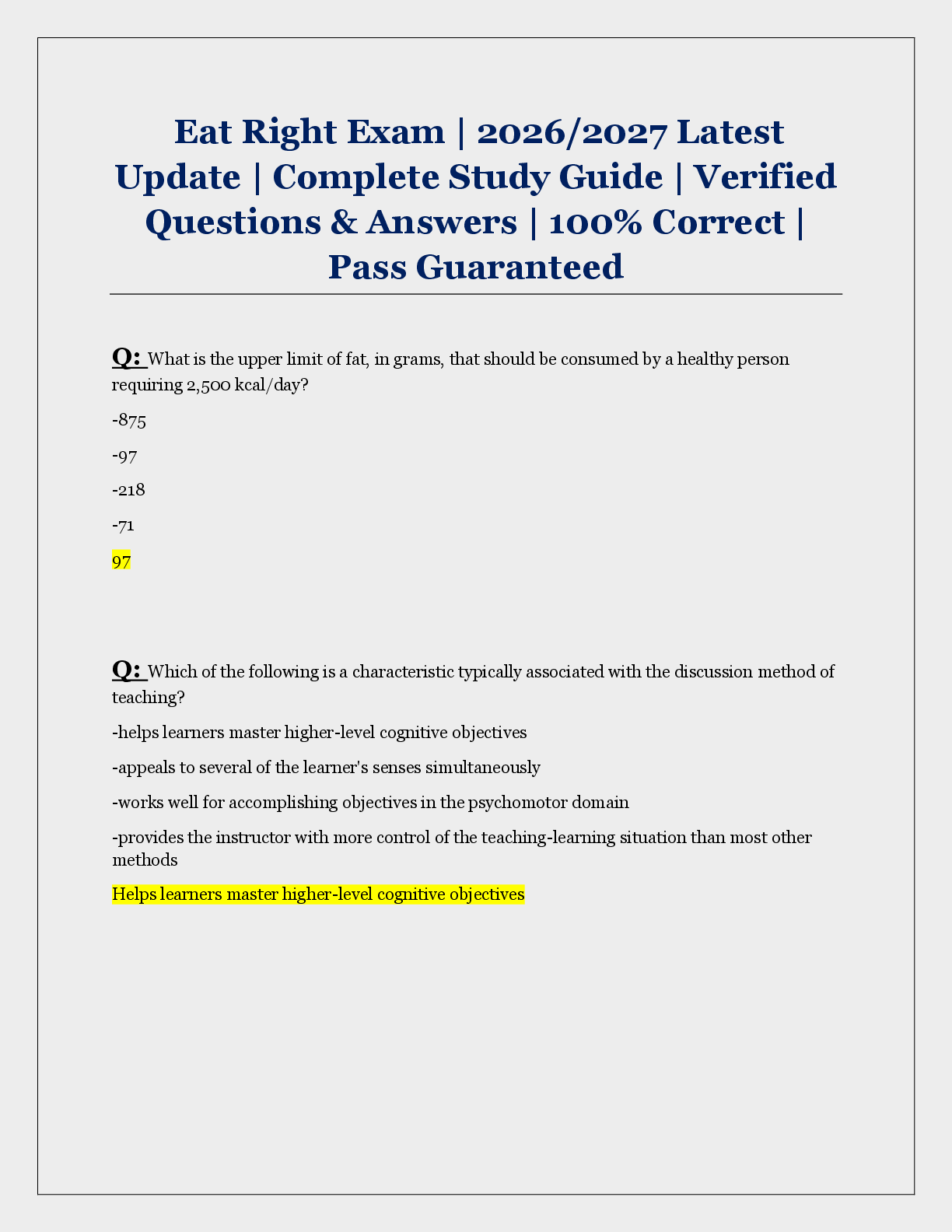
$19
553 Pages
Essentials of Psychiatric Nursing 2nd Edition Boyd TEST BANK
$15
554 Pages
Test Bank for Essentials of Psychiatric Nursing 2nd Edition by...

$19
343 Pages
Test Bank for Essentials of Psychiatric Nursing 2nd Edition B...
$14.5
345 Pages
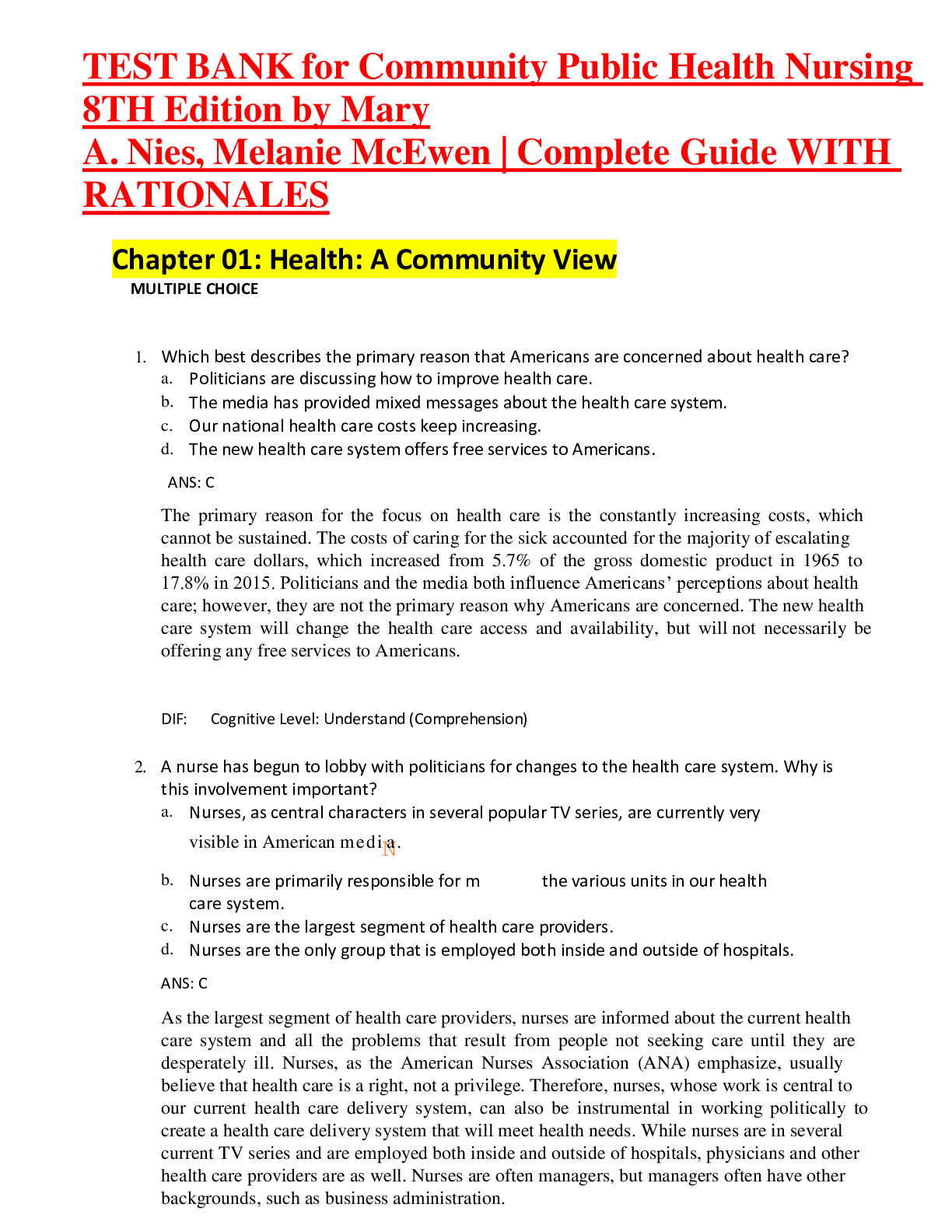
Complete Test Bank For Community Public Health Nursing Promoti...
More related documents below