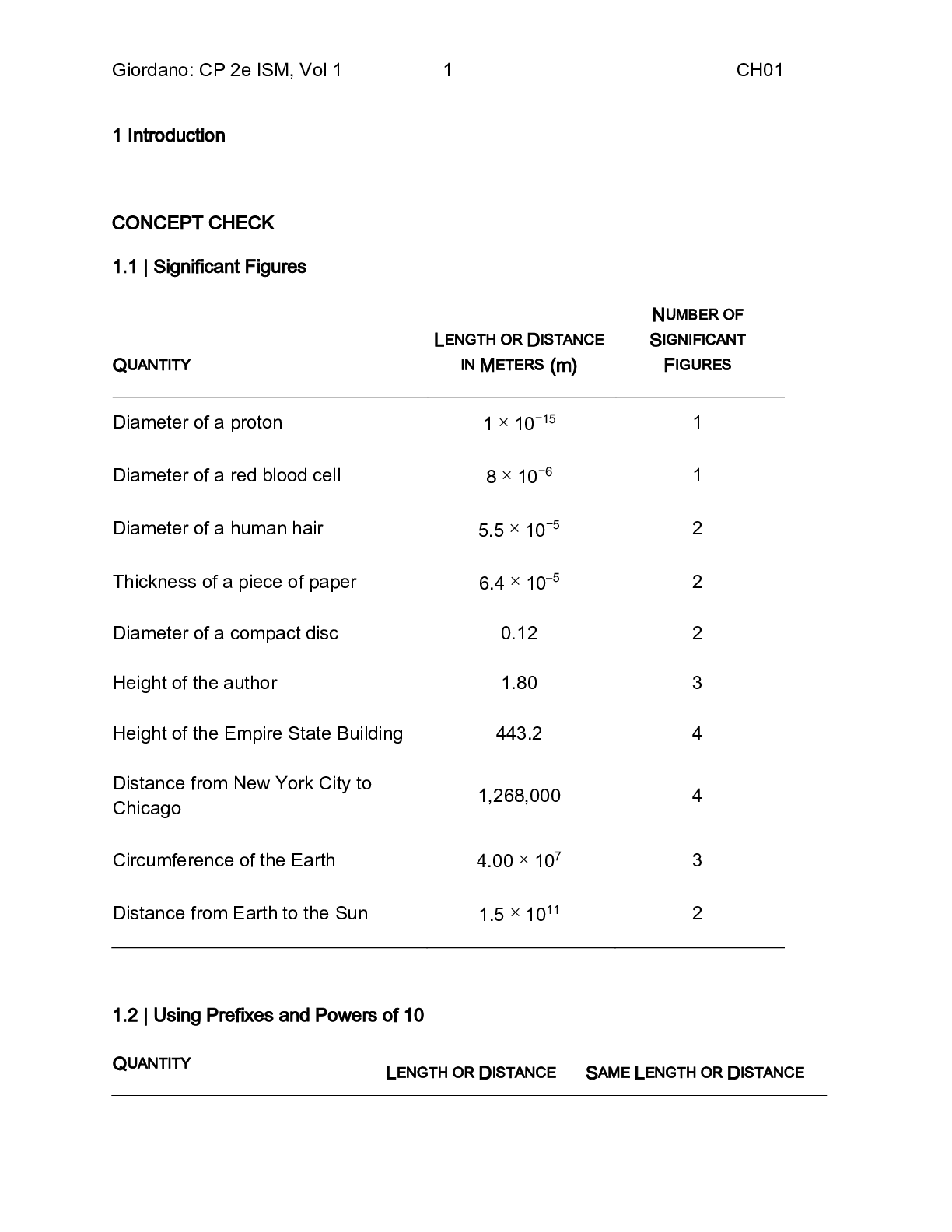
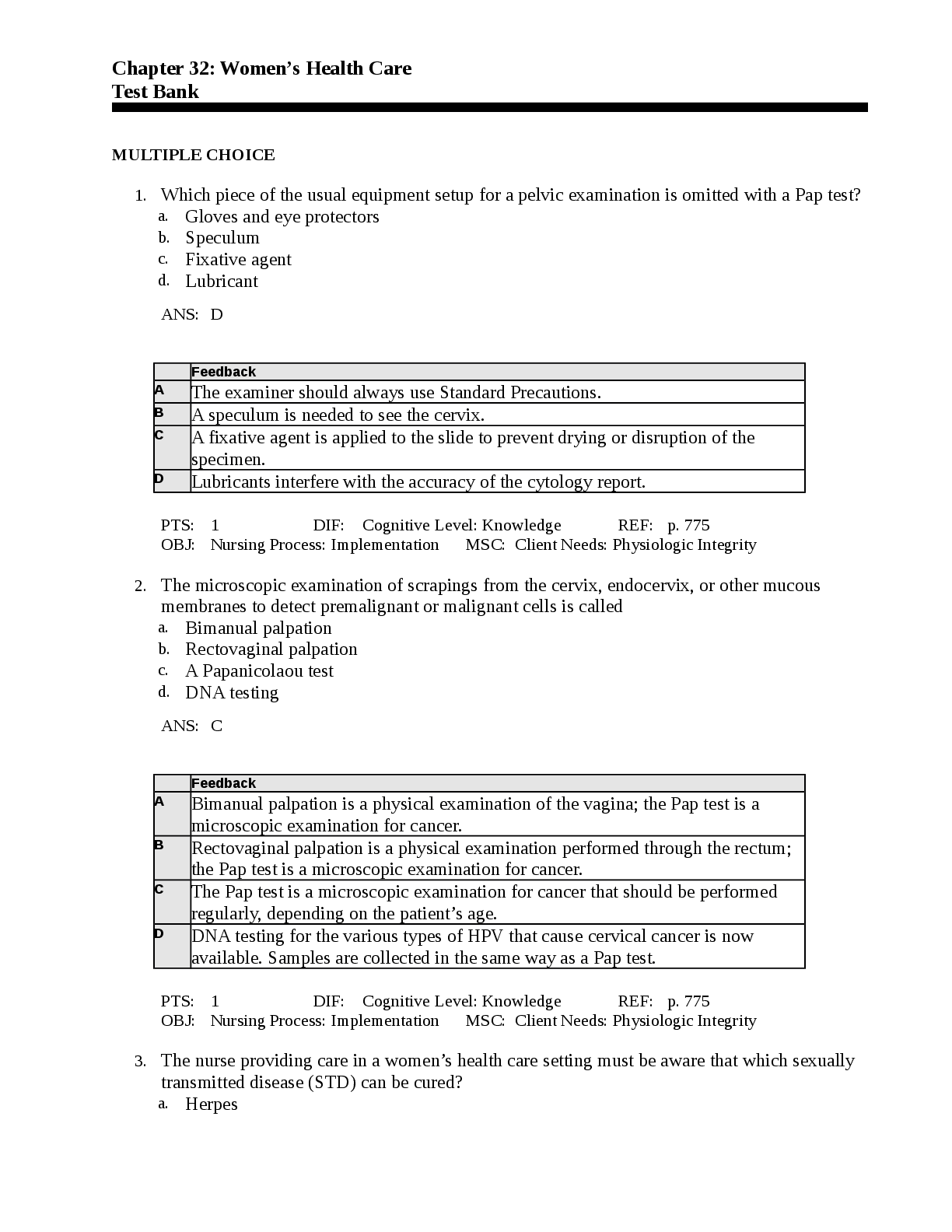
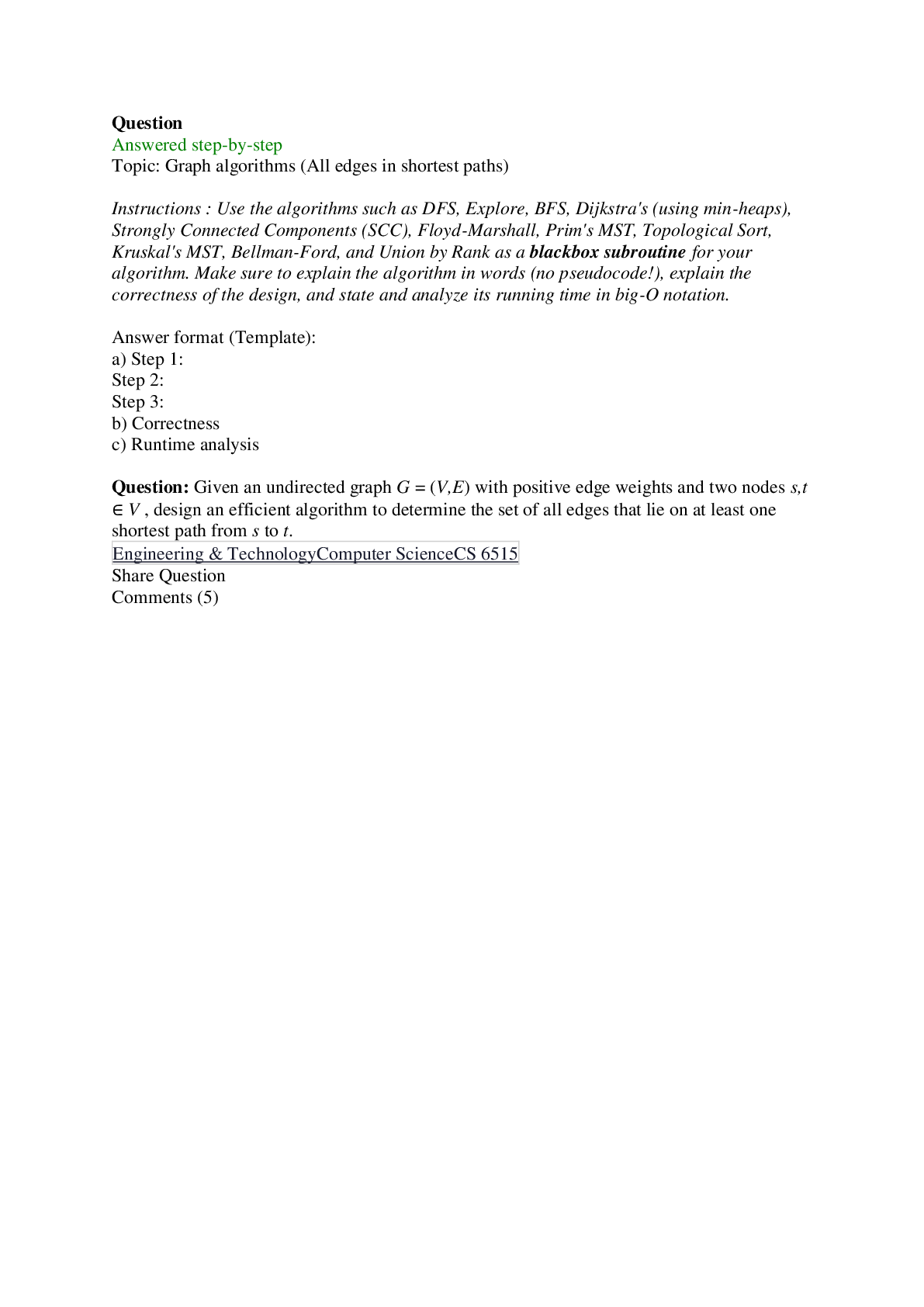
Physics > QUESTIONS & ANSWERS > Monash University - CHE 4162Set 2-Solutions - Ch1 Part Size analysis. (All)
Monash University - CHE 4162Set 2-Solutions - Ch1 Part Size analysis.
Document Content and Description Below
Last updated: 3 years ago
Preview 1 out of 13 pages
Instant download

Buy this Document to get the Full Access Instantly
Provided by Students Who Aced it
We Verify Document Content to Gurantee Accuracy
Reviews( 0 )
Document information
Connected school, study & course
About the document
Uploaded On
Apr 09, 2021
Number of pages
13
Written in
All

Additional information
This document has been written for:
Uploaded
Apr 09, 2021
Downloads
0
Views
69
Topic Tags
Related Subjects & Courses
Explore similar study resources and related concepts.
Recommended For You
Get more on QUESTIONS & ANSWERS »
Test Bank for Physics for Scientists and Engineers A Strategic...

Plasma Physics, 2e by Richard Fitzpatrick (Solutions Manual)

College Physics, 3e Roger Freedman, Todd Ruskell, Philip Keste...

A Concise Introduction to Thermodynamics for Physicists, 1e by...
.png)
How Things Work The Physics of Everyday Life, 6e Louis Bloomfi...
.png)
How Things Work The Physics of Everyday Life, 6e Louis Bloomfi...
An Introduction to Applied Electromagnetics and Optics 1st Edi...
Solution Manual for Principles & Practice of Physics 2nd Editi...
Principles & Practice of Physics, 2e Eric Jr. Ma (Solution Man...
Applied Physics, 11e Dale Ewen, Neill Schurter, Erik Gundersen...
Principles & Practice of Physics (Global Edition), 2e Eric Jr....
College Physics Reasoning and Relationships, 2e (Volum1+ 2) By...

College Physics Reasoning and Relationships, 2e (Volume 1) By...

College Physics, 11th Edition Raymond Serway, Chris Vuille (So...
College Physics Reasoning and Relationships, 2e (Volume 2) By...
College Physics Reasoning and Relationships, 2e (Volum1+ 2) By...
College Physics Reasoning and Relationships, 2e (Volume 2) By...