NURSING > QUESTIONS & ANSWERS > NR 304 / NR304 MIDTERM EXAM CHAPTER 8 JARVIS 7TH EDITION. QUESTIONS WITH WELL EXPLAINED ANSWERS (All)
NR 304 / NR304 MIDTERM EXAM CHAPTER 8 JARVIS 7TH EDITION. QUESTIONS WITH WELL EXPLAINED ANSWERS
Document Content and Description Below
Last updated: 4 years ago
Preview 1 out of 12 pages
Instant download

Buy this Document to get the Full Access Instantly
Provided by Students Who Aced it
We Verify Document Content to Gurantee Accuracy
Reviews( 0 )
Document information
Connected school, study & course
About the document
Uploaded On
Apr 10, 2021
Number of pages
12
Written in
All

Additional information
This document has been written for:
Uploaded
Apr 10, 2021
Downloads
0
Views
217
Topic Tags
Recommended For You
Get more on QUESTIONS & ANSWERS »

NR304 / NR-304: Health Assessment II FINAL EXAM REVIEW Chamber...
 Exam 2 Concept List MY21.png)
NR304 / NR-304 Exam 2 Concept List Updated: Health Assessment...
 Quiz 1 Concept List MY21.png)
NR304 / NR-304 Quiz 1 Concept List : Health Assessment II - C...
NR 304 Final Exam - Chamberlain Questions and Answers (Ve...
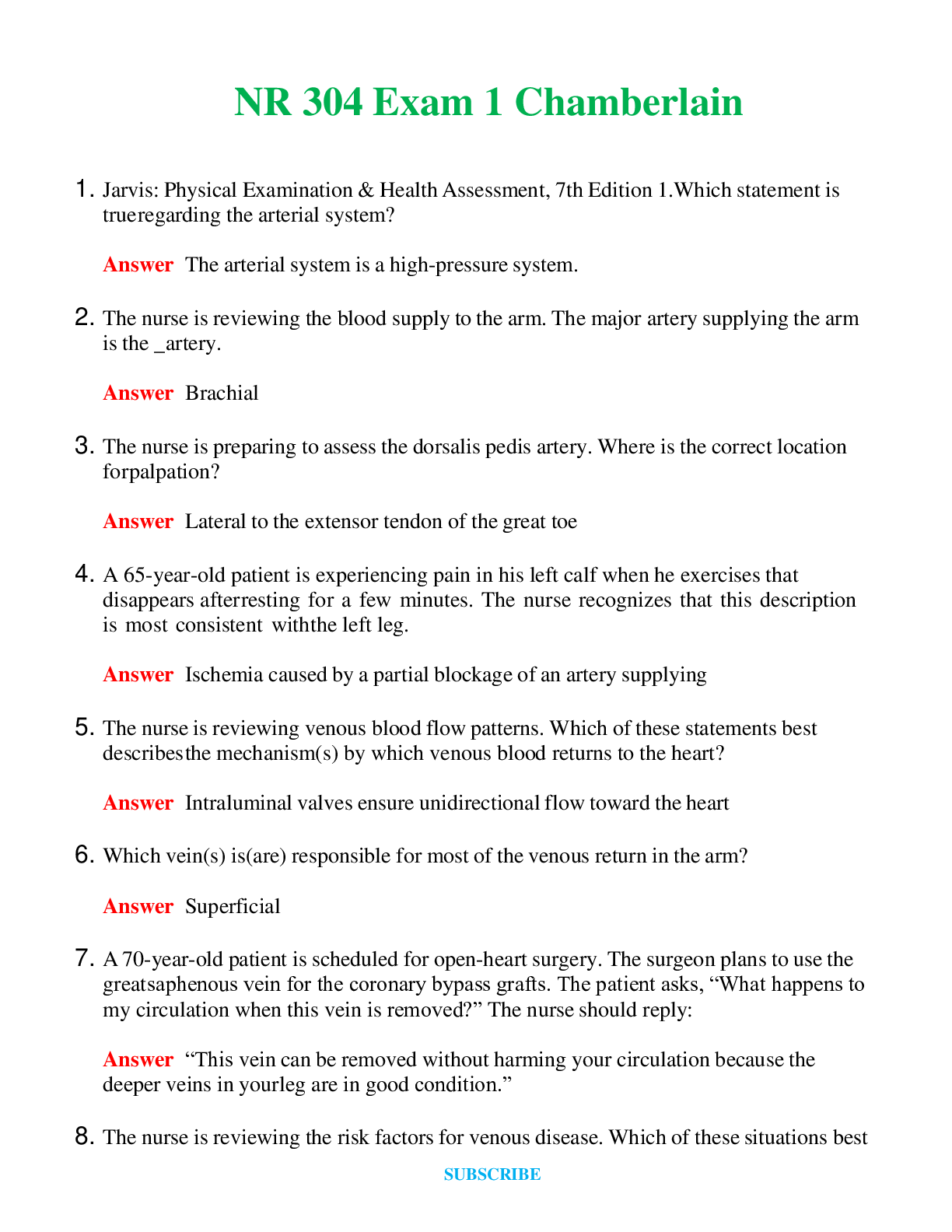
NR 304 Exam 1 Chamberlain Questions and Answers (Verified A...
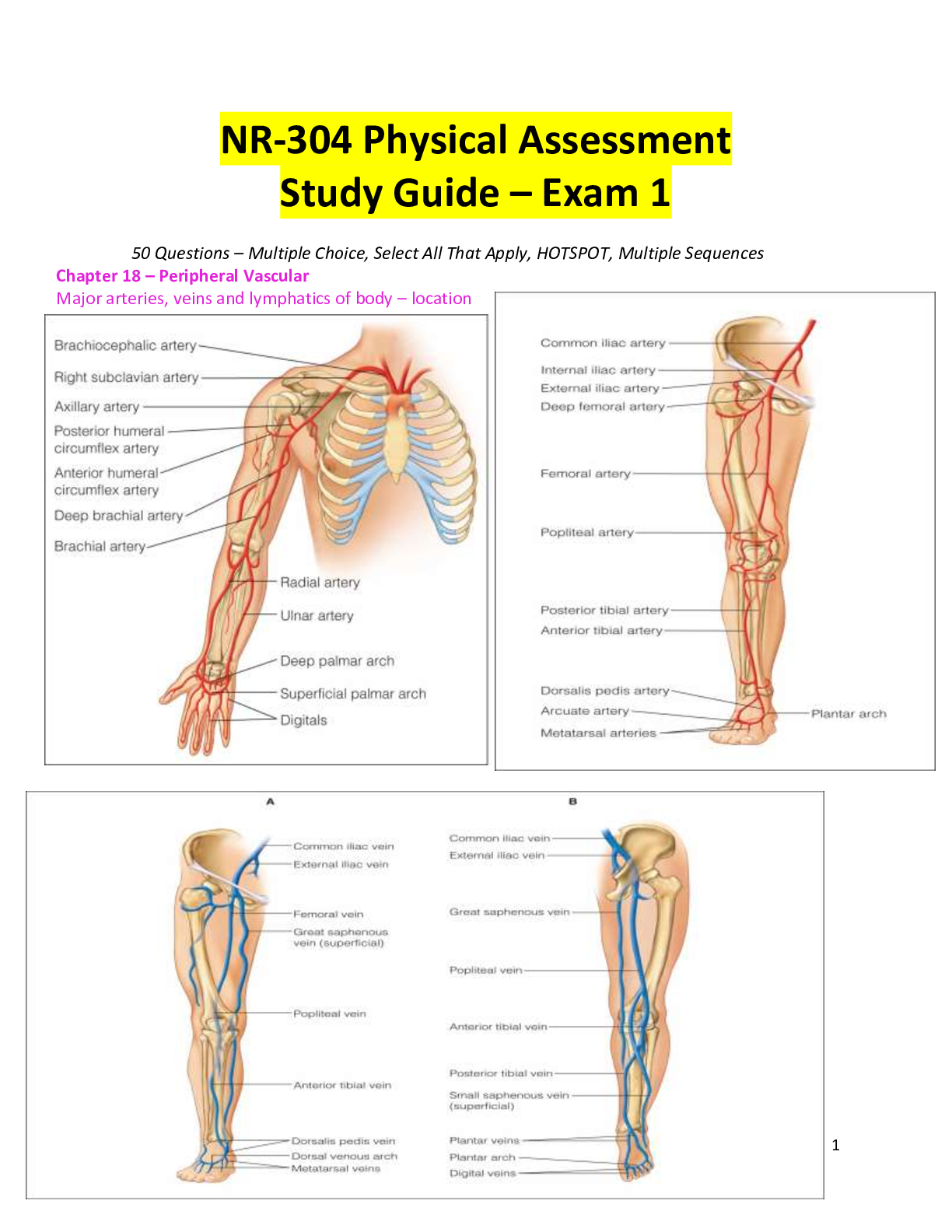
NR 304 Exam 1 Study Guide / NR304 Exam 1 Study Guide (Latest,2...
.png)
NR 304 EXAM 2 STUDY GUIDE / NR304 EXAM 2 STUDY GUIDE VERSION 1...

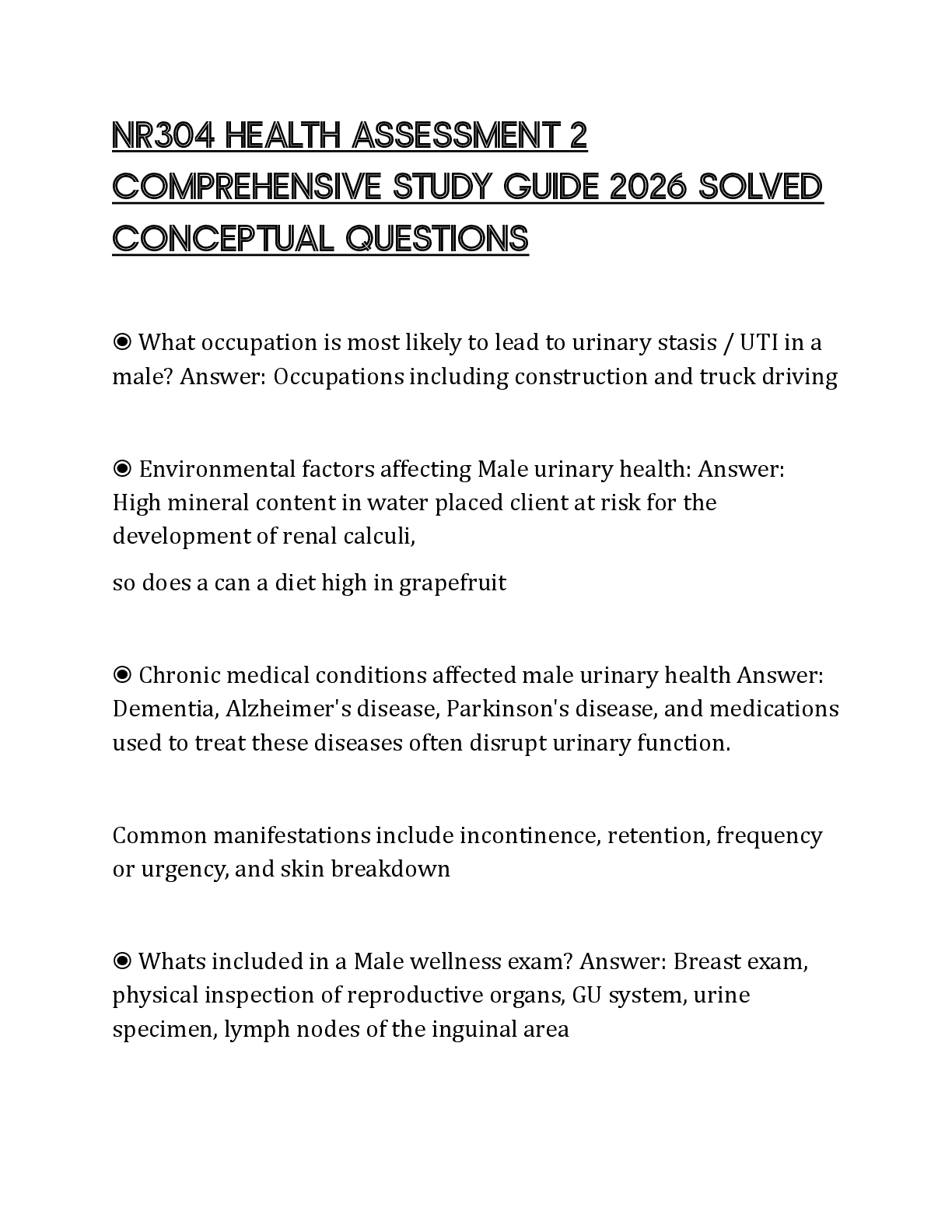
NR304 HEALTH ASSESSMENT 2 COMPREHENSIVE STUDY GUIDE 2026 SOLVE...
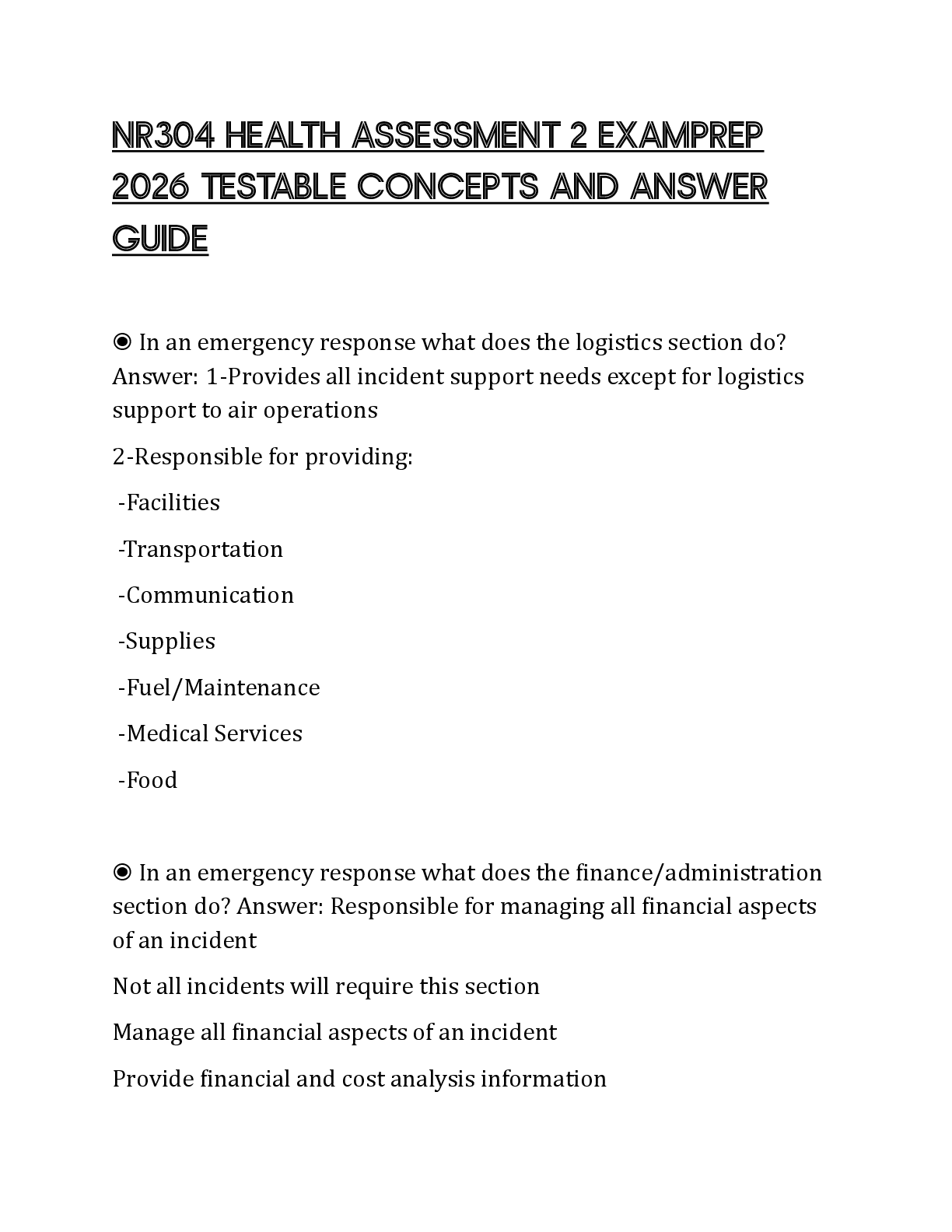
NR304 HEALTH ASSESSMENT 2 EXAMPREP 2026 TESTABLE CONCEPTS AND...
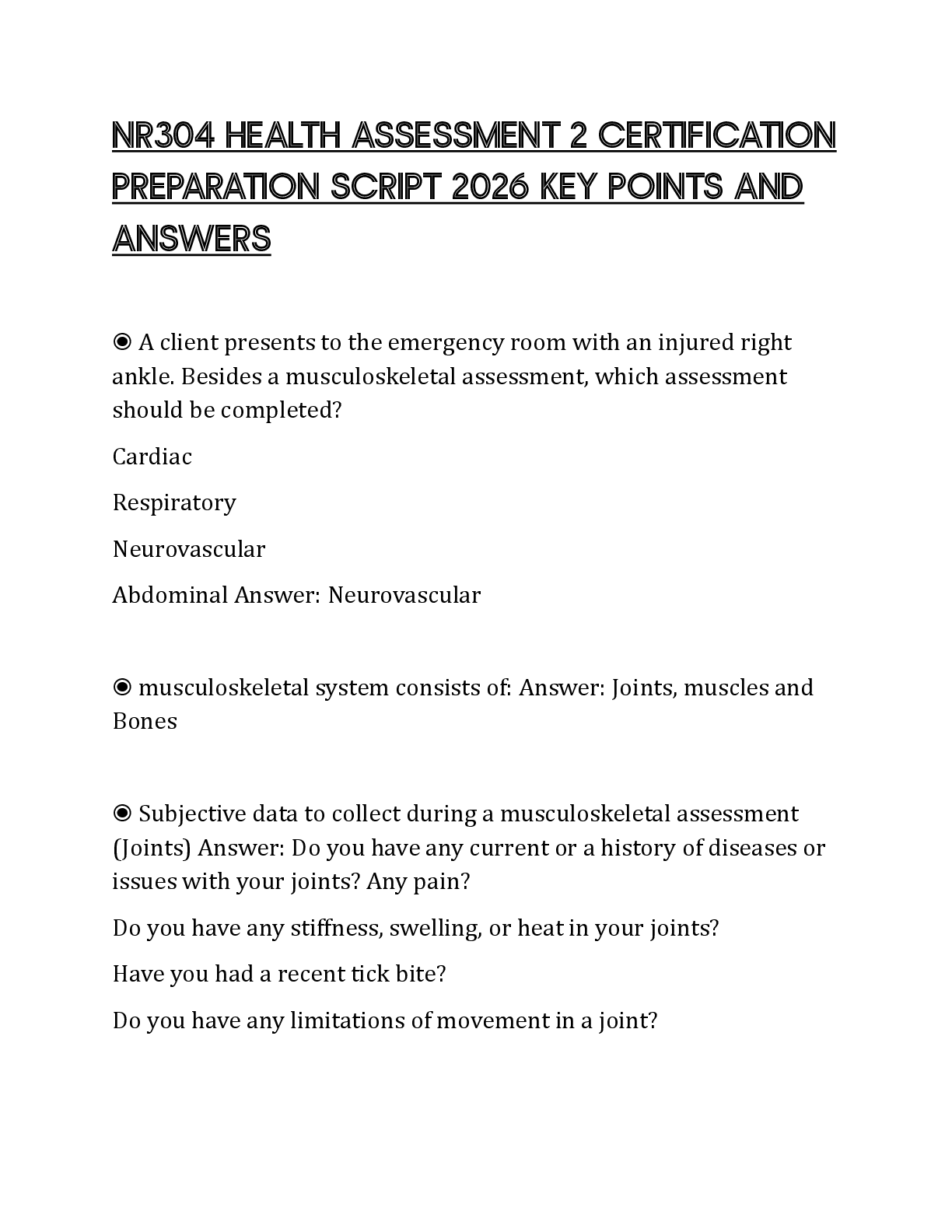
NR304 HEALTH ASSESSMENT 2 CERTIFICATION PREPARATION SCRIPT 202...
Test Bank For High-Acuity Nursing 7th Edition By Kathleen Wagn...
HESI A2 REVIEW Anatomy and Physiology, HESI A2 Science, HESI A...

Test Bank for Community Health Nursing A Canadian Perspective...
Test Bank For Health & Physical Assessment in Nursing 4th Edit...



.png)