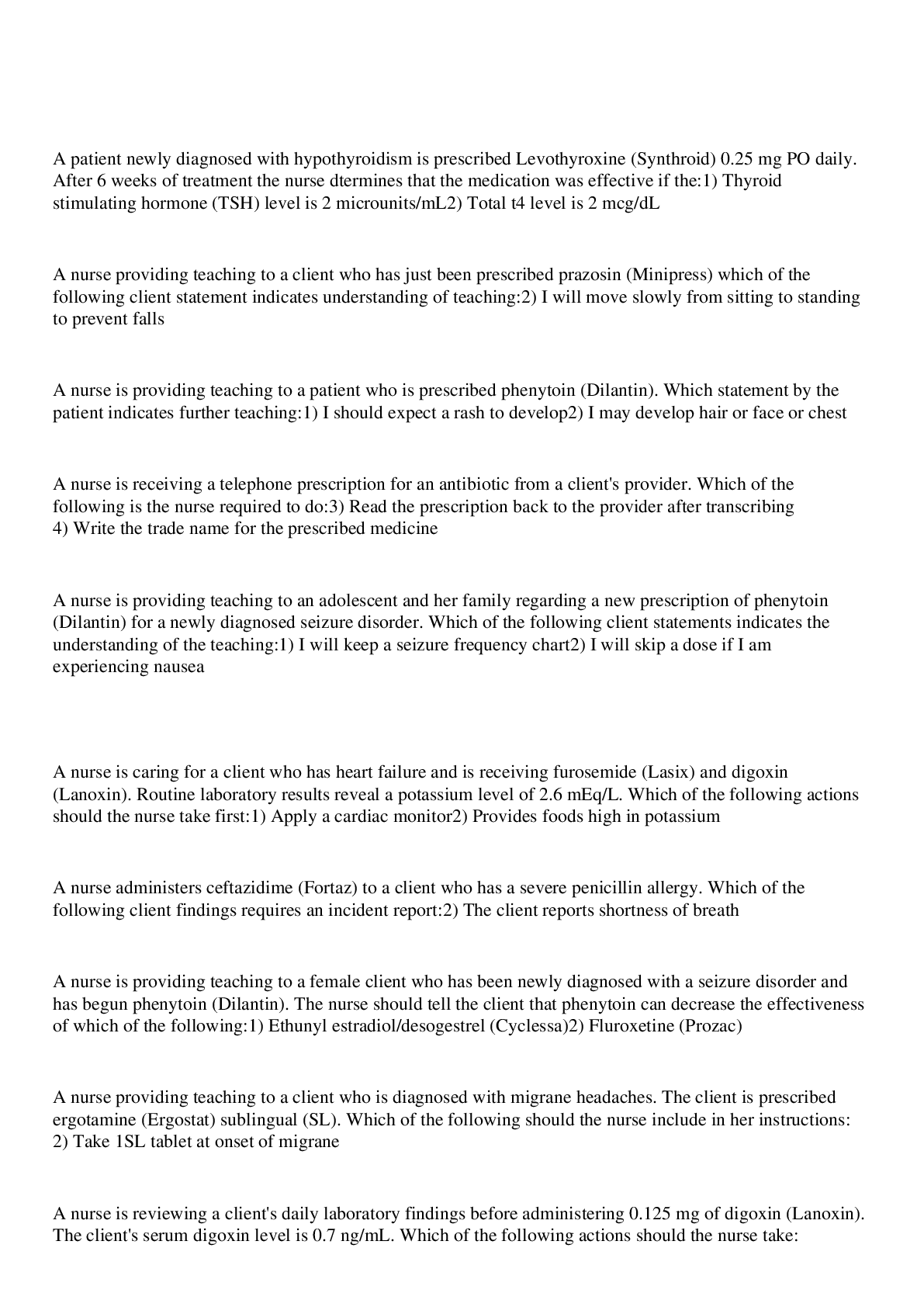
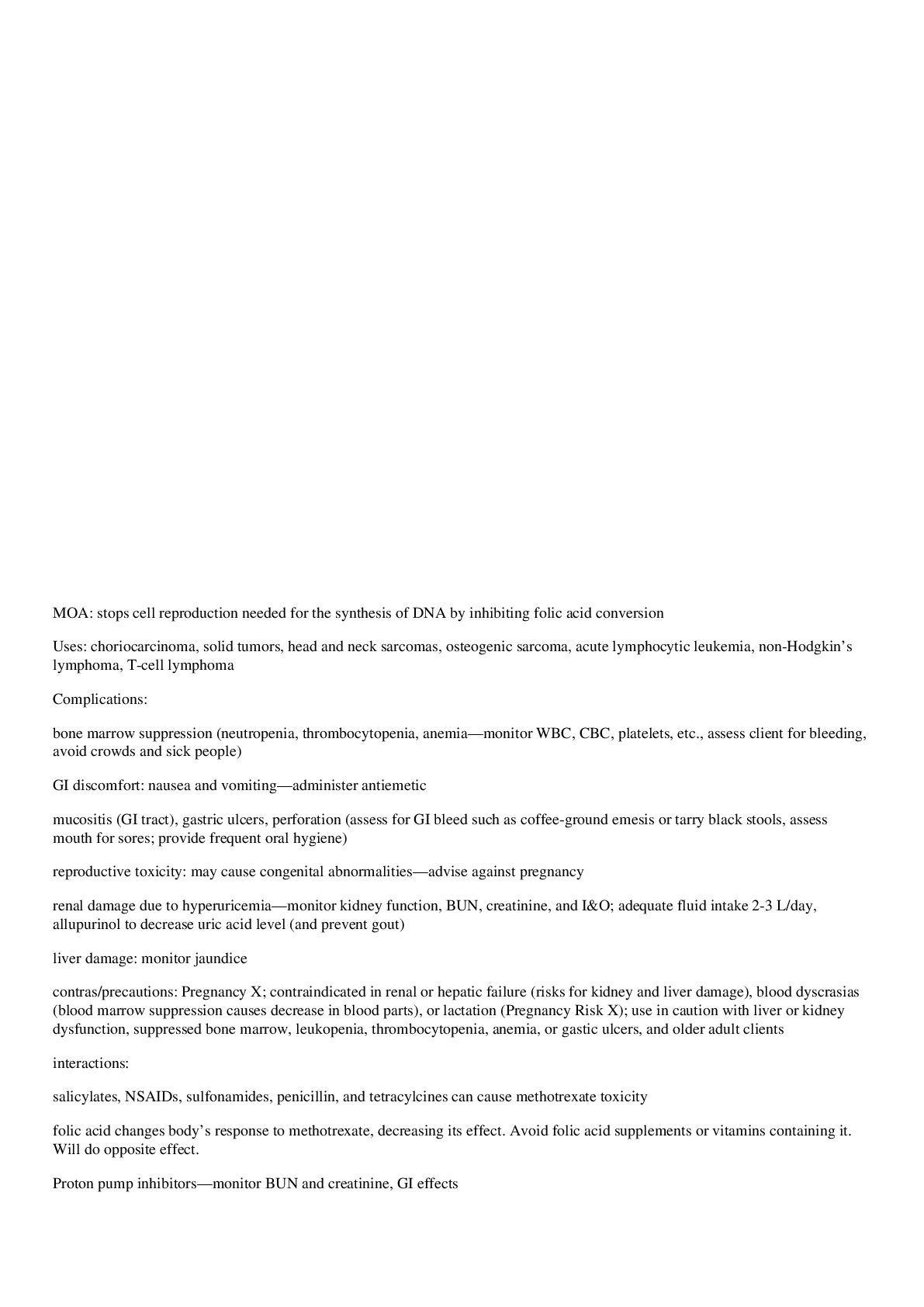
NURSING > EXAM REVIEW > NUR 176 Exam 2 Review -latest-with-well-explained-answers-2020graded-A (All)
NUR 176 Exam 2 Review -latest-with-well-explained-answers-2020graded-A
Document Content and Description Below
Last updated: 4 years ago
Preview 1 out of 15 pages
Instant download

Buy this Document to get the Full Access Instantly
Provided by Students Who Aced it
We Verify Document Content to Gurantee Accuracy
Reviews( 0 )
Document information
Connected school, study & course
About the document
Uploaded On
Apr 10, 2021
Number of pages
15
Written in
All

Additional information
This document has been written for:
Uploaded
Apr 10, 2021
Downloads
0
Views
225
Topic Tags
Recommended For You
Get more on EXAM REVIEW »
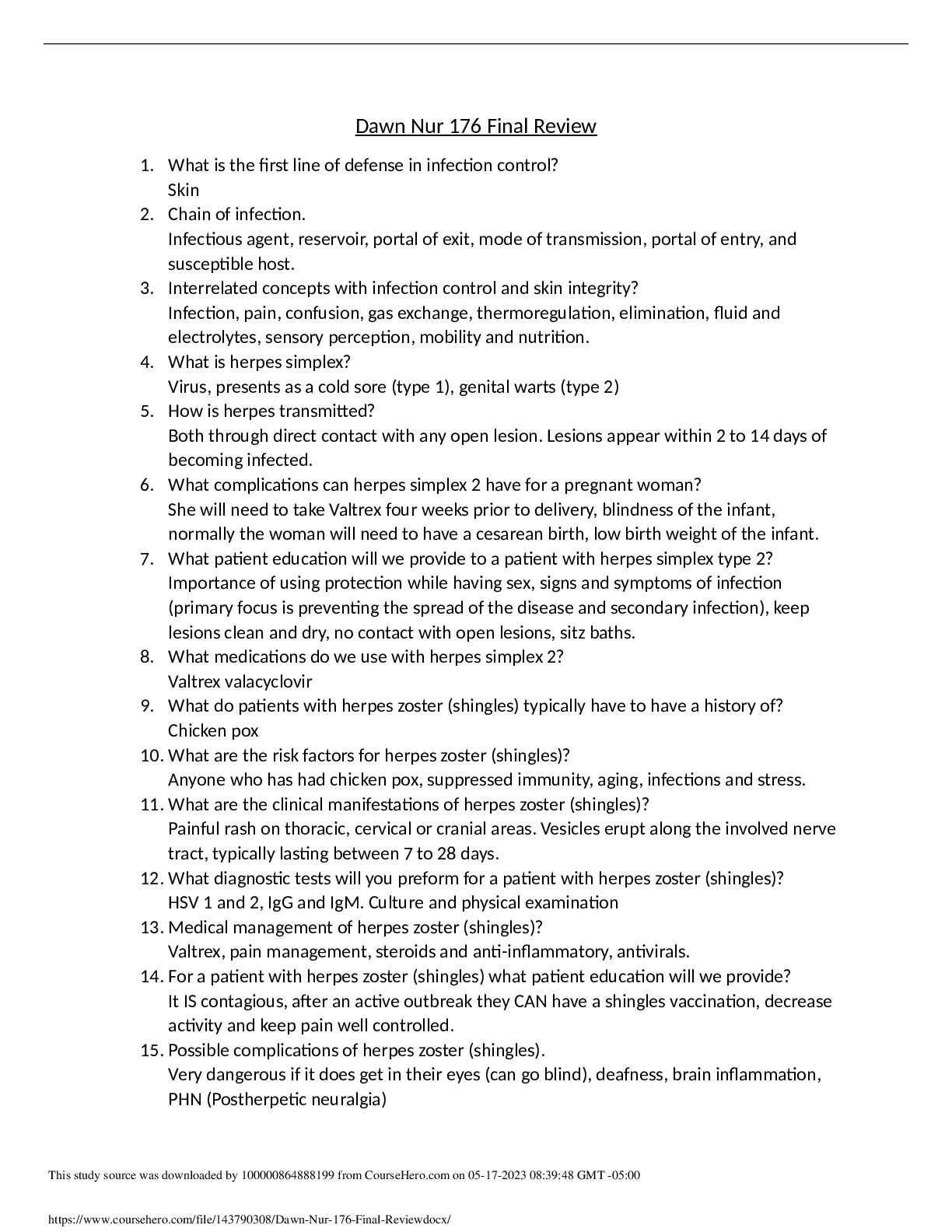
NUR 176 Final Review Hondros Questions And Answers 2023/2024
NUR176 Final Exam Study Guide | Adult Health Nursing Concepts...
NCLEX-RN Test Bank 2026: Master the NGN Exam with Verified Q...
Macroeconomics, 7th Edition by Paul Krugman and Robin Wells...
HESI A2 REVIEW Anatomy and Physiology, HESI A2 Science, HESI A...

Test Bank for Community Health Nursing A Canadian Perspective...
Test Bank For High-Acuity Nursing 7th Edition By Kathleen Wagn...
Test Bank For Health & Physical Assessment in Nursing 4th Edit...
WGU PHYSICAL ASSESSMENT FINAL PAPER 2026 FULL Q&A STUDY GUIDE...
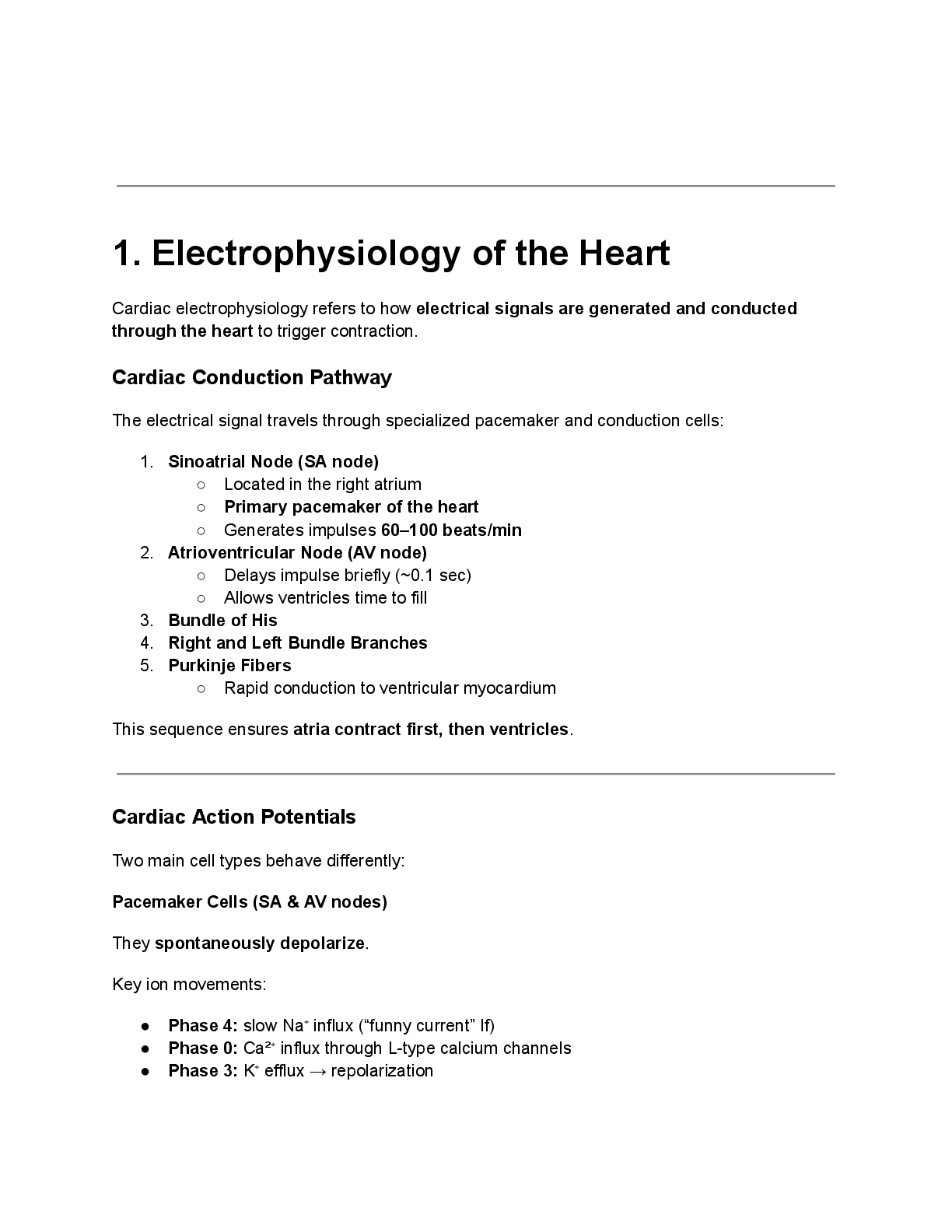
NURS 531 Advanced Pharmacotherapeutics Cardiac and Renal Patho...

Brian Foster: Final Diagnosis Conditions of the cardiovascular...