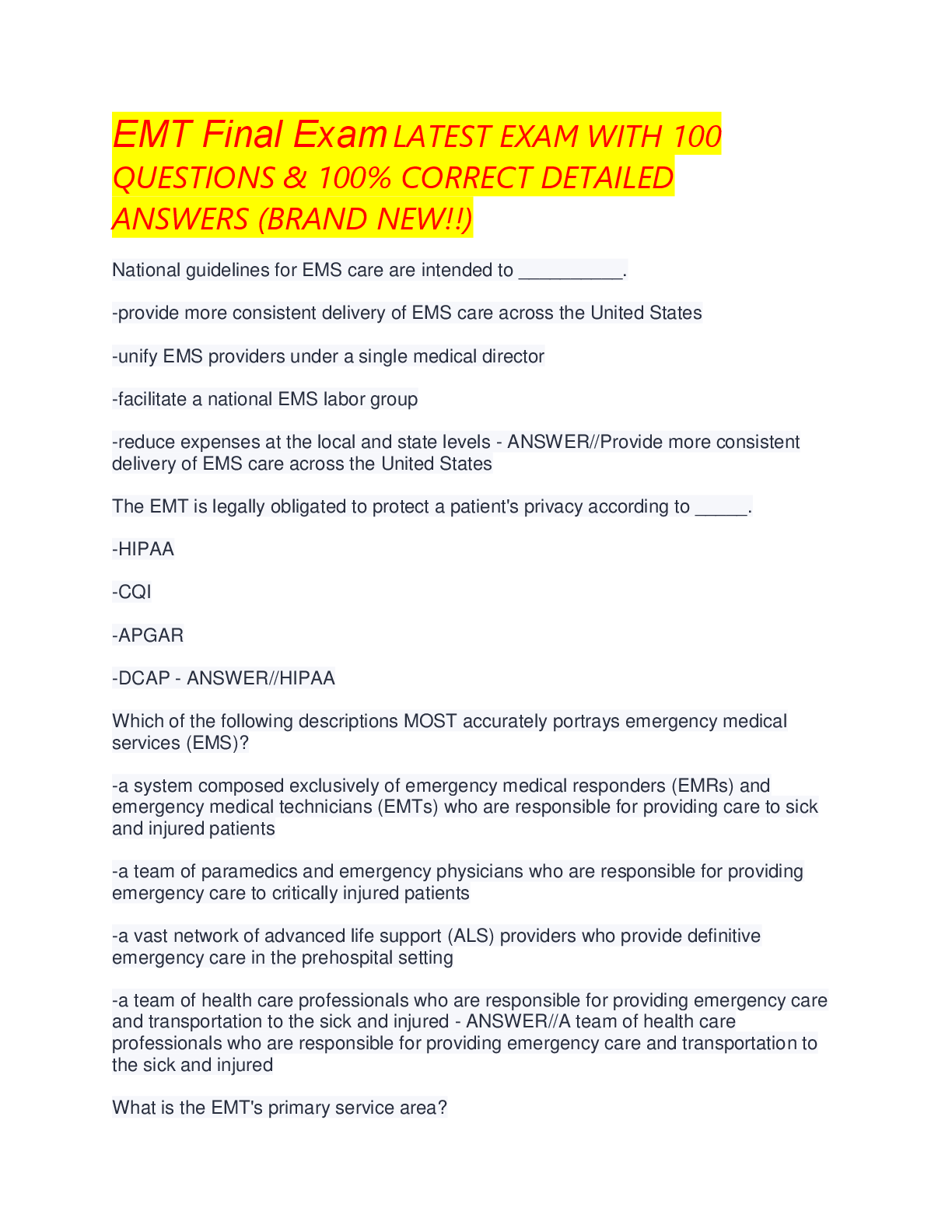
EMT-B - Emergency Medical Technician - Basic > EXAM > EMT FINAL LATEST WRITTEN EXAM 2025/2026 LATEST STUDY QUESTIONS WITH CORRECT ANSWERS GUARANTEED PASS (All)
EMT FINAL LATEST WRITTEN EXAM 2025/2026 LATEST STUDY QUESTIONS WITH CORRECT ANSWERS GUARANTEED PASS | RATED A+
Document Content and Description Below
Last updated: 1 year ago
Preview 5 out of 262 pages
Instant download

Loading document previews ...
Buy this Document to get the Full Access Instantly
Provided by Students Who Aced it
We Verify Document Content to Gurantee Accuracy
Reviews( 0 )
Document information
Connected school, study & course
About the document
Uploaded On
Aug 02, 2025
Number of pages
262
Written in
All

Additional information
This document has been written for:
Uploaded
Aug 02, 2025
Downloads
0
Views
51
Topic Tags
Recommended For You
Get more on EXAM »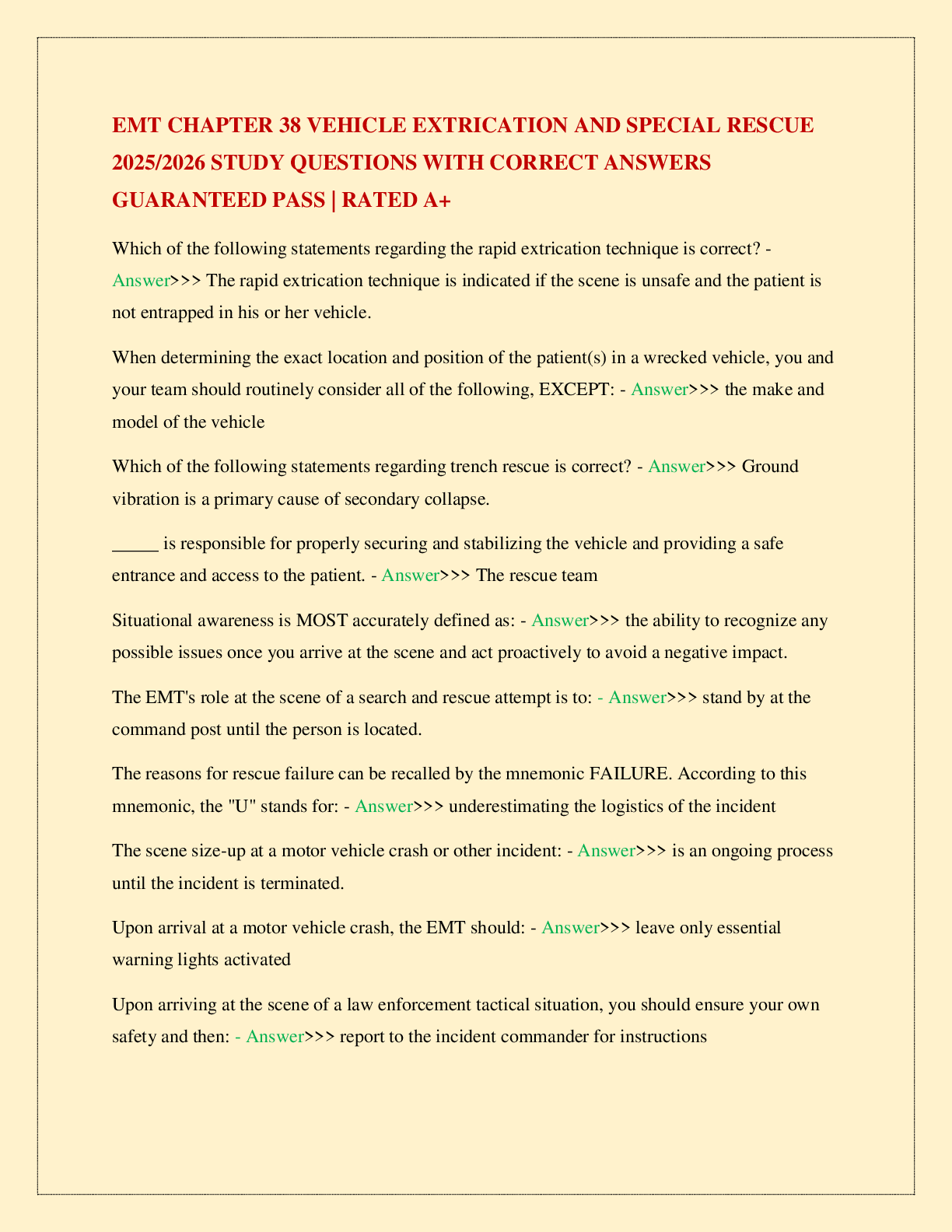
EMT CHAPTER 38 VEHICLE EXTRICATION AND SPECIAL RESCUE 2025/202...
WEST COAST EMT FINAL 2024/2025 COMPLETE QUESTIONS AND EXPERT A...
WEST COAST EMT BLOCK EXAM #2 QUESTION BANK 2024 (140 PAGES) WI...
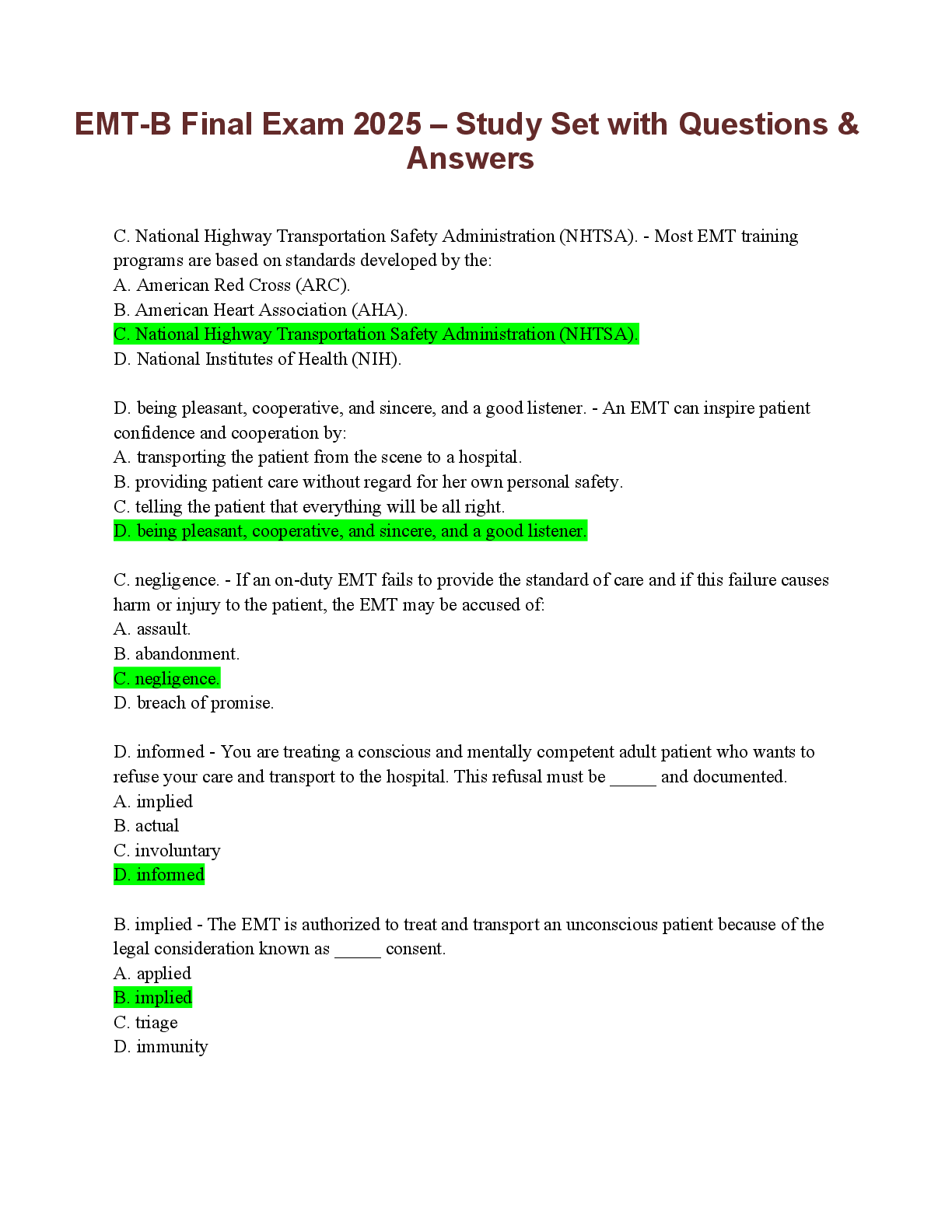
🚑 EMT-B Final Exam 2025 – Study Set with Questions & Answers...
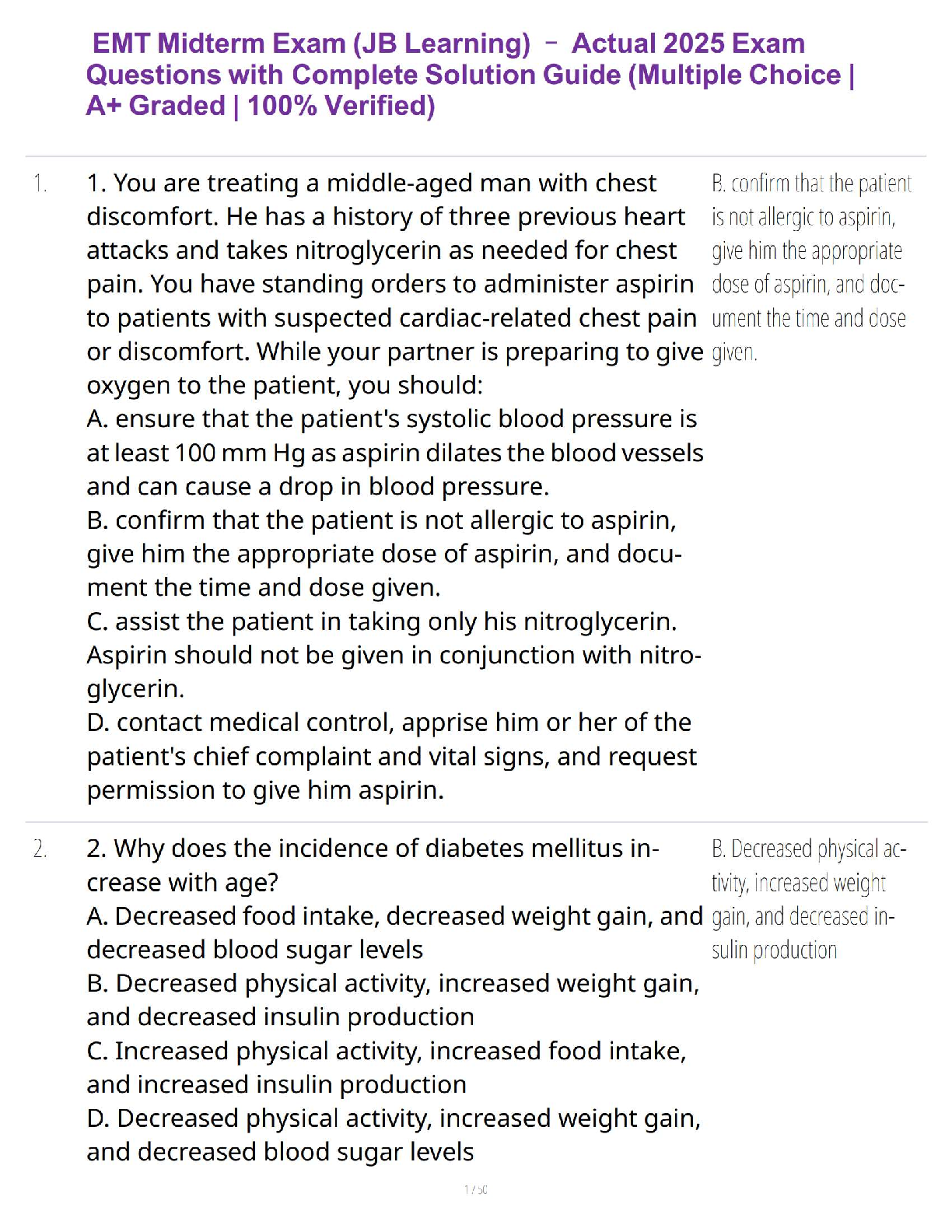
EMT Midterm Exam (JB Learning) – Actual 2025 Exam Questions wi...
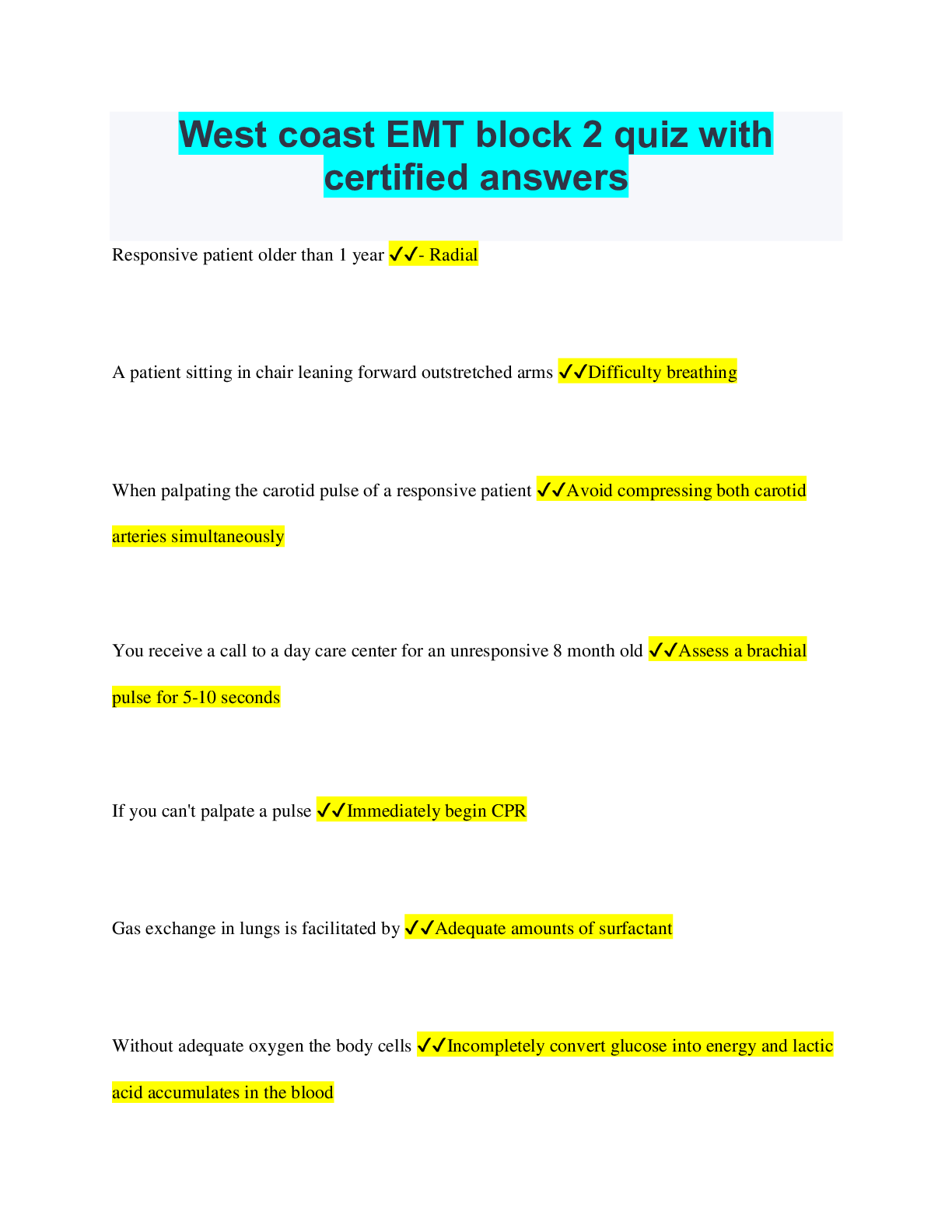

EMT Final Exam Questions & Answers – Question Bank/Test Bank....
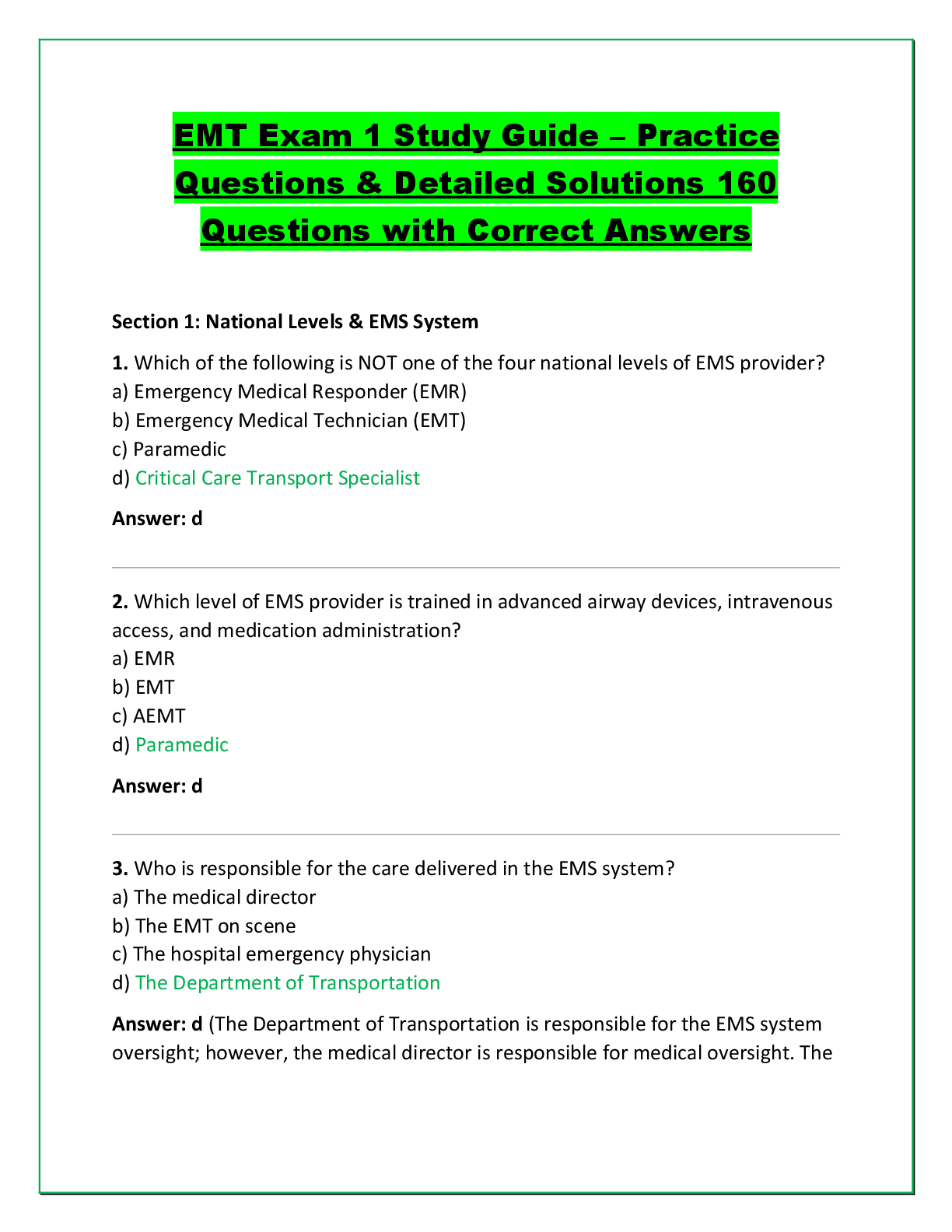

NREMT Practice Test Bank - Multiple Choice Questions and Answe...
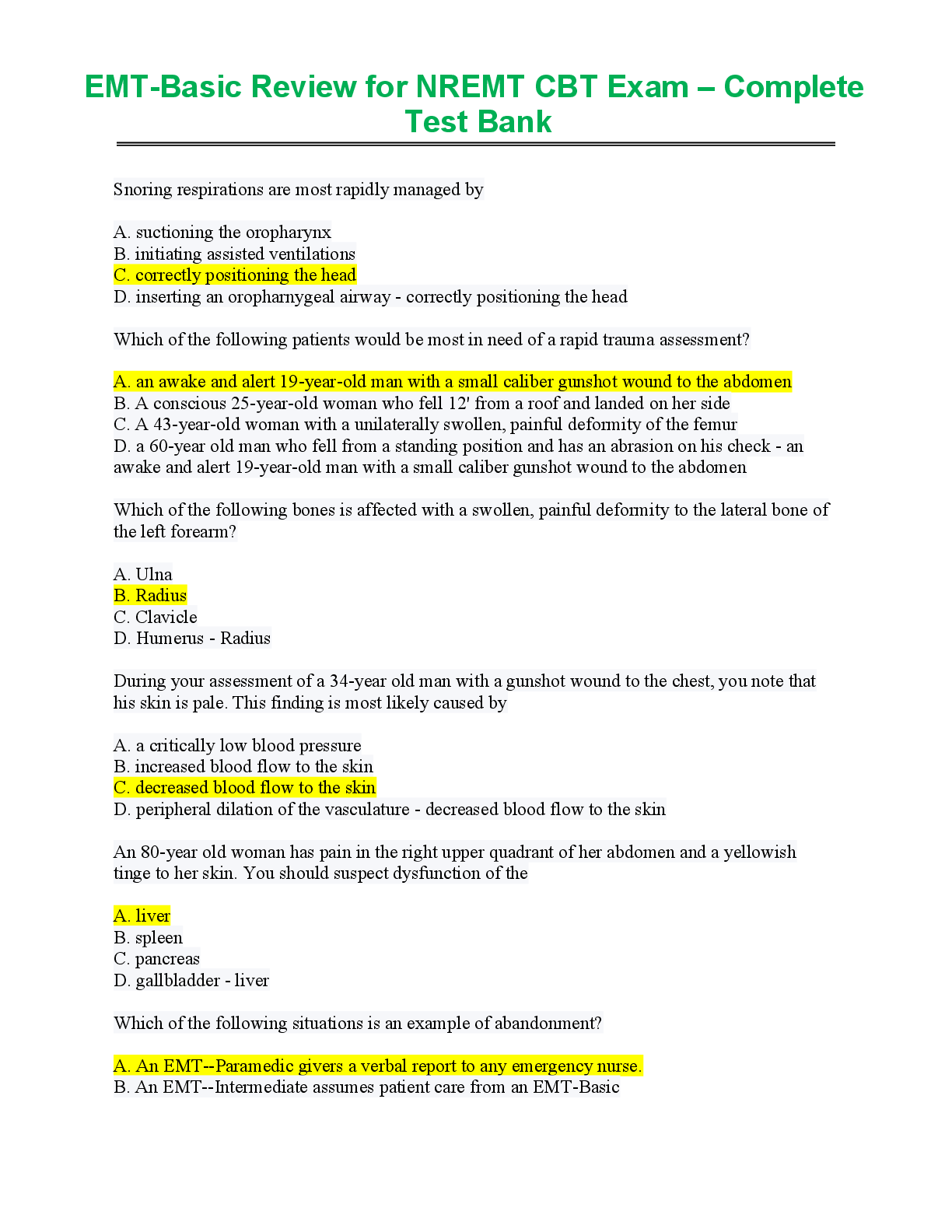
🚑 EMT-Basic Review for NREMT CBT Exam – Complete Test Bank 🚑

Advanced Medical Life Support Exams with correct Answers 2022/...

West Coast EMT Chapter 17 -- Neurologic Emergencies (2022/2023...
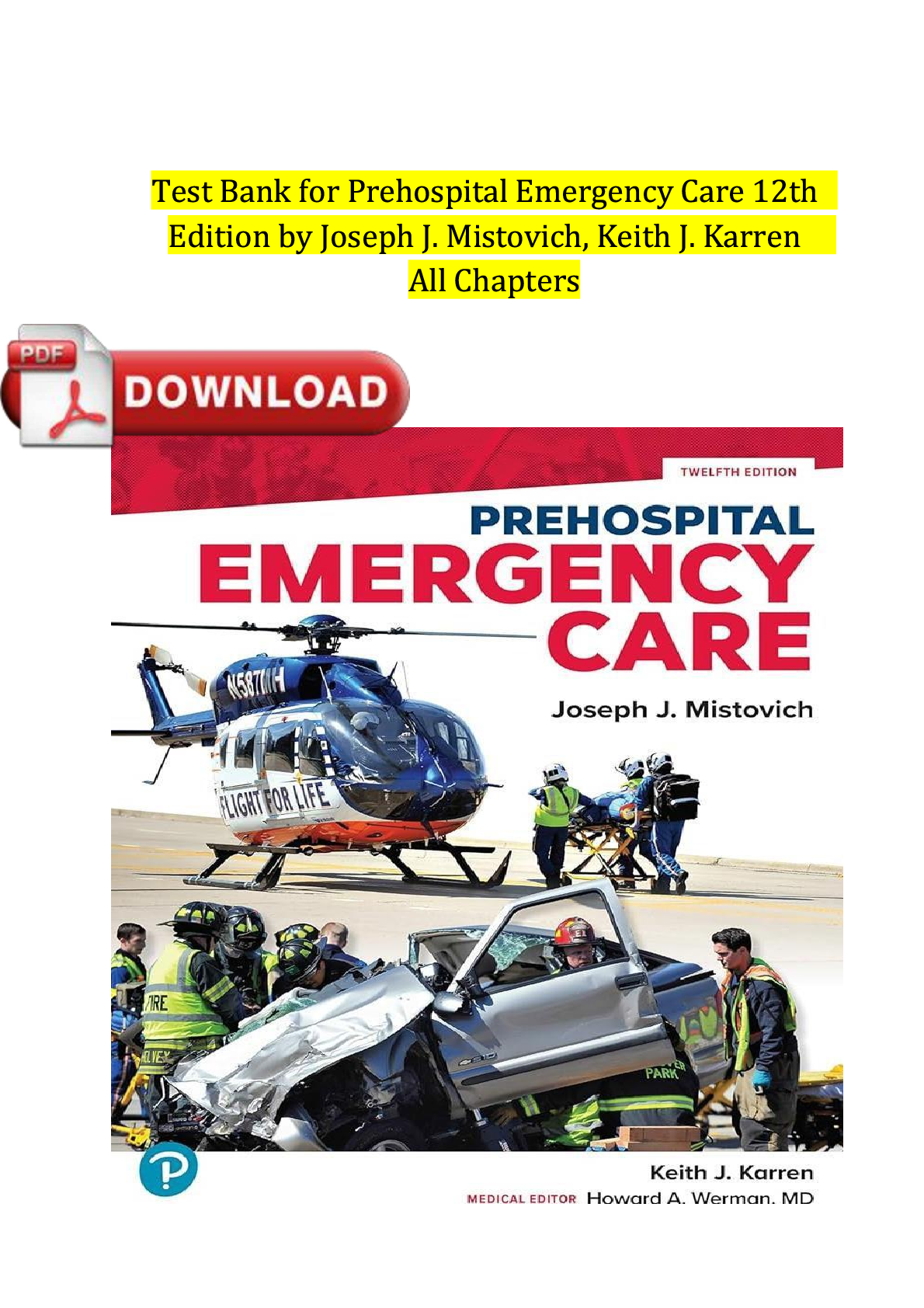
Test Bank for Prehospital Emergency Care 12th Edition by Misto...
TEST BANK Basic & Applied Concepts of Blood Banking and Transf...