Maternity HESI 1
Document Content and Description Below
The nurse should encourage the laboring client to begin
pushing when... the cervix is completely dilated.
Pushing begins with the second stage of labor, i.e., when the cervix is completely dilated at 10 cm (C). If pu
...
[Show More]
Last updated: 3 years ago
Preview 1 out of 76 pages
Instant download

Buy this Document to get the Full Access Instantly
Provided by Students Who Aced it
We Verify Document Content to Gurantee Accuracy
Reviews( 0 )
Document information
Connected school, study & course
About the document
Uploaded On
Apr 14, 2021
Number of pages
76
Written in
All

Additional information
This document has been written for:
Uploaded
Apr 14, 2021
Downloads
0
Views
146
Topic Tags
Recommended For You
Get more on HESI » Questions, Answers & Rationale, A+ Guide.png)

$25.5
396 Pages
NGN Nursing Med-Surg HESI Exit Exam – Latest 2025 Test Bank wi...
$20.5
84 Pages
HESI PATHOPHYSIOLOGY EXIT EXAM COMPLETE QUESTIONS || TEST BANK...
.png)

$18.5
93 Pages
HESI RN 2025 Exit NGN Exam – Verified Questions & Answers Upda...
.png)
$13
28 Pages
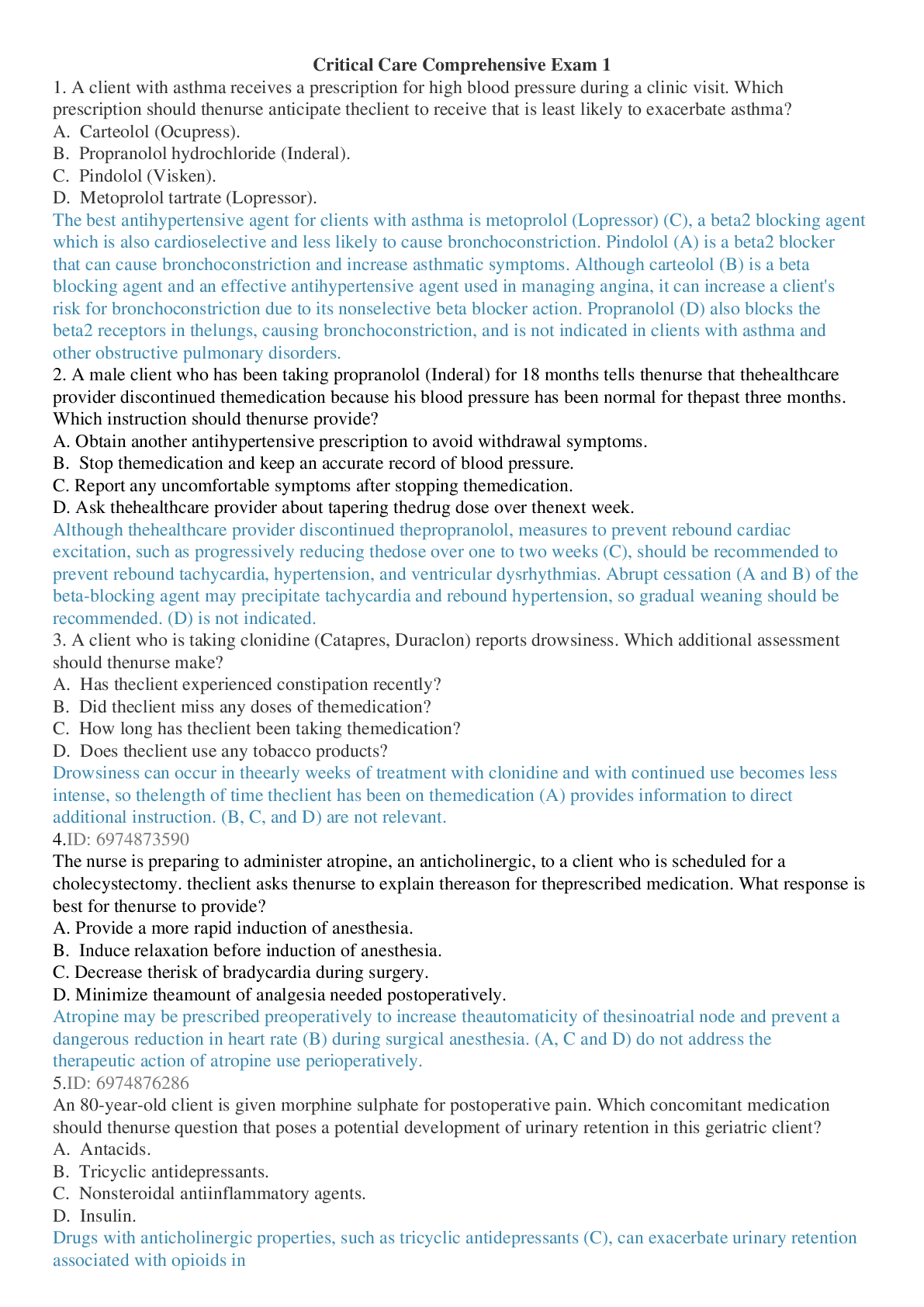
NURS 4345 HESI Critical Care Comprehensive Exam 1 Questions an...

$13
13 Pages
NURS 306 ATI practice asssessment maternal new born ATI Matern...

$22.5
307 Pages
TEST BANK for Davis Advantage for Psychiatric Mental Health Nu...
$17
588 Pages
Test Bank For Fundamentals of Nursing 11th Edition Potter Perr...
$16
496 Pages
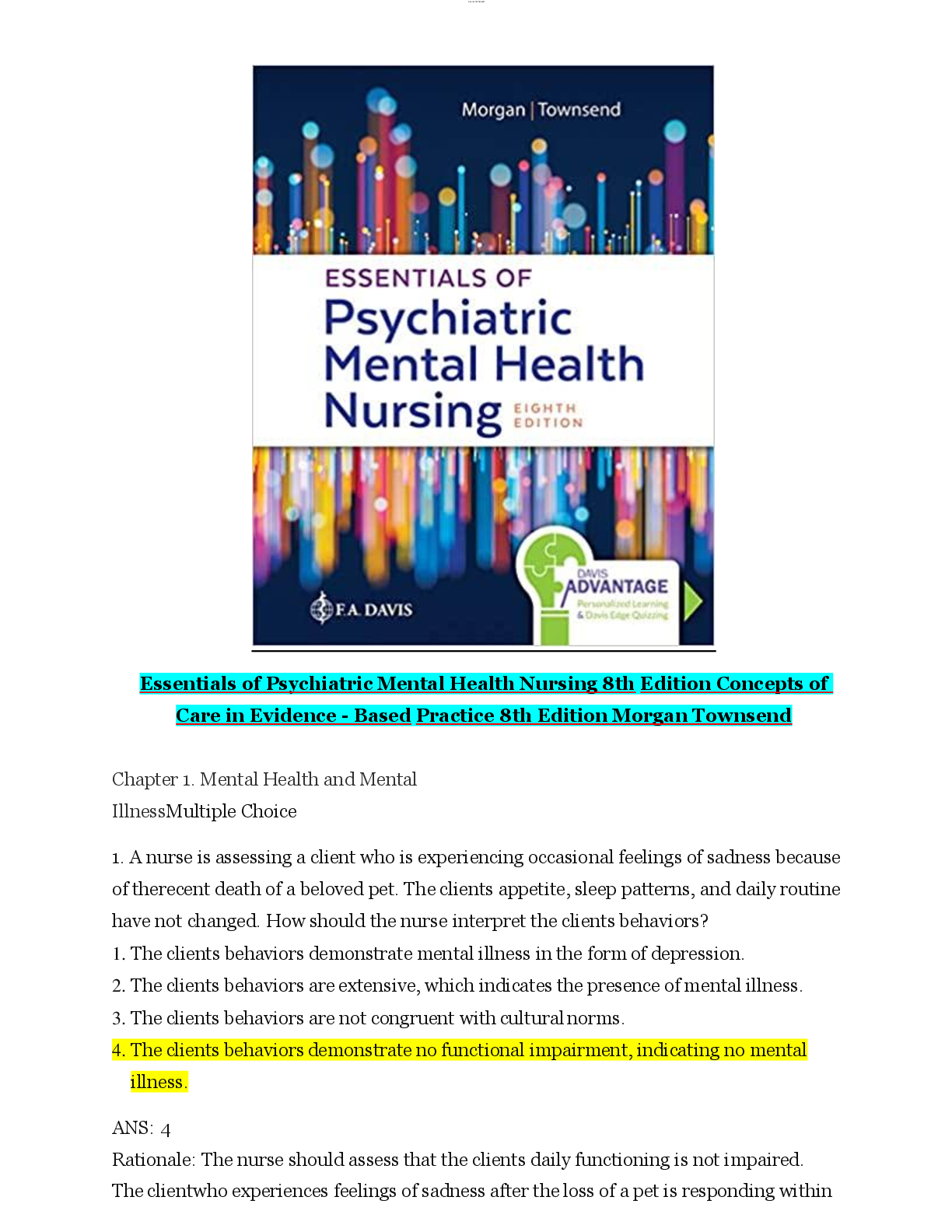
TEST BANK for Essentials of Psychiatric Mental Health Nursing:...


$16
276 Pages
.png)


_removed.png)
_removed.png)
_removed.png)

.png)


.png)

