*NURSING > STUDY GUIDE > Study Guide Exam 3 NURSING NR 283 (All)
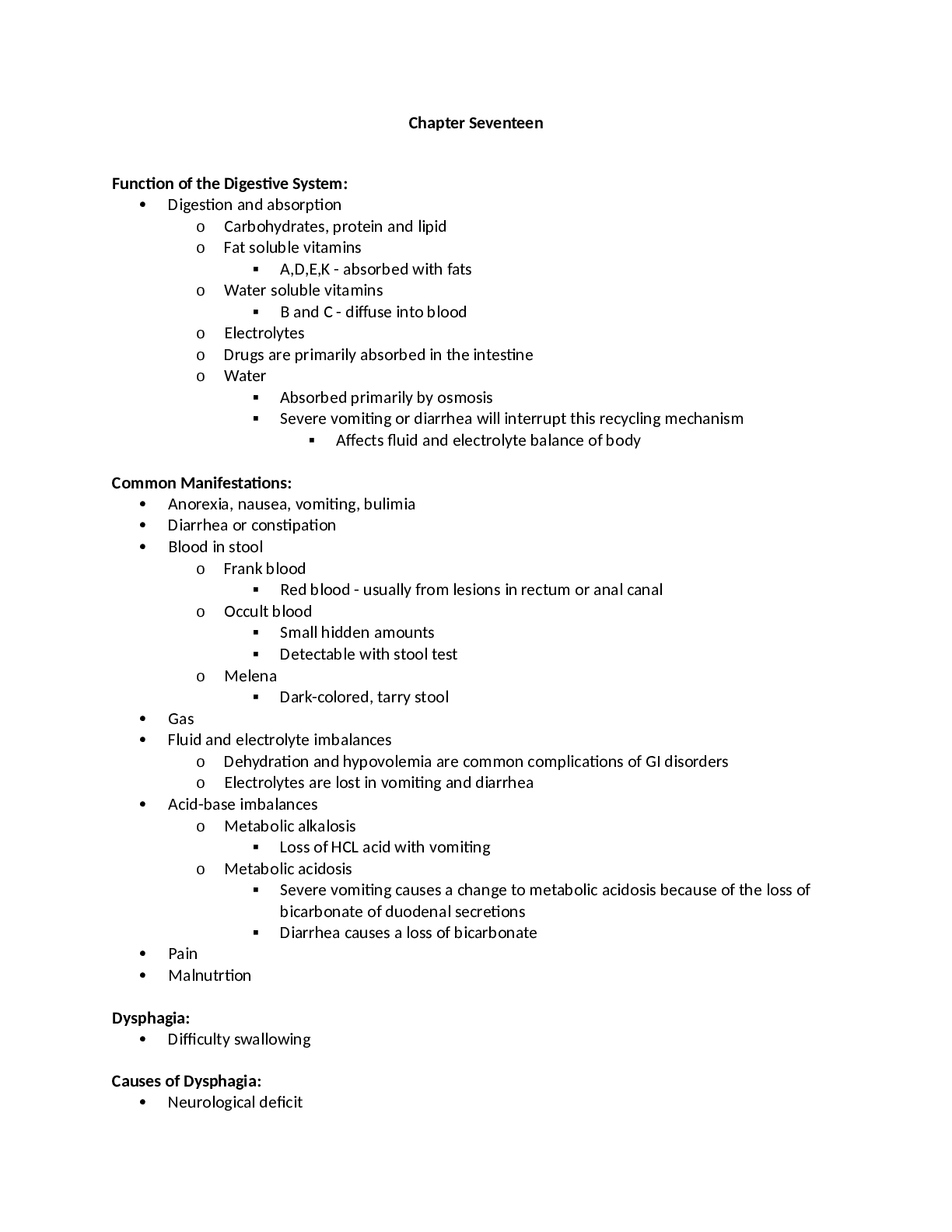
Chapter Seventeen Function of the Digestive System: • Digestion and absorption o Carbohydrates, protein and lipid o Fat soluble vitamins ▪ A,D,E,K - absorbed with fats o Water soluble vi ... tamins ▪ B and C - diffuse into blood o Electrolytes o Drugs are primarily absorbed in the intestine o Water ▪ Absorbed primarily by osmosis ▪ Severe vomiting or diarrhea will interrupt this recycling mechanism ▪ Affects fluid and electrolyte balance of body Common Manifestations: • Anorexia, nausea, vomiting, bulimia • Diarrhea or constipation • Blood in stool o Frank blood ▪ Red blood - usually from lesions in rectum or anal canal o Occult blood ▪ Small hidden amounts ▪ Detectable with stool test o Melena ▪ Dark-colored, tarry stool • Gas • Fluid and electrolyte imbalances o Dehydration and hypovolemia are common complications of GI disorders o Electrolytes are lost in vomiting and diarrhea • Acid-base imbalances o Metabolic alkalosis ▪ Loss of HCL acid with vomiting o Metabolic acidosis ▪ Severe vomiting causes a change to metabolic acidosis because of the loss of bicarbonate of duodenal secretions ▪ Diarrhea causes a loss of bicarbonate • Pain • Malnutrtion Dysphagia: • Difficulty swallowing Causes of Dysphagia: • Neurological deficit o Stroke, brain damage, achalasia • Muscular disorder o Impairment from muscular dystrophy • Mechanical obstruction o Congenital atresia ▪ Developmental anomaly o Stenosis ▪ Narrowing of the esophagus ▪ May be secondary to fibrosis, chronic inflammation, ulceration, radiation or scar tissue o Esophageal diverticula o Tumors Hiatal Hernia: • Part of the stomach protrudes into the thoracic cavity Sliding Hernia: • Portions of the stomach and gastroesophageal junction slide up above the diaphragm Rolling or Paraesophageal Hernia: • Part of the fundus of the stomach moves up through an enlarged or weak hiatus in the diaphragm and may become trapped Signs and Symptoms of Hiatal Hernia: • Heartburn or belching • Increased discomfort when lying down after eating, bending over or coughing Gastroesophageal Reflux Disease: • Periodic reflux of gastric contents into distal esophagus causes erosion and inflammation • Decrease lower esophageal sphincter (LES) or increase intra-abdominal pressure allows more of the gastric contents to reflux back into the esophagus • Severity depends on competence of the lower esophageal sphincter • Factor reduce LEs o Caffeine, fatty and spicy foods, alcohol, smoking, certain drugs • Heartburn frequently occurs 30 to 60 minutes after eating or at night Acute Gastritis: • Gastric mucosa is inflamed, may be ulcerated and bleeding Etiology of Acute Gastritis: • Infection by microorganisms • Chemical substances: NSAIDS, alcohol, etc… Effects of Acute Gastritis: • Basic signs of gastrointestinal irritation • Anorexia, nausea, vomiting, epigastric pain, cramps or general discomfort • Hematemesis caused by bleeding • With infection, diarrhea may develop Chronic Gastritis: • Atrophy of stomach mucosa ......................................................................CONTINUED................................................................................ [Show More]
Last updated: 3 years ago
Preview 1 out of 31 pages
Buy this document to get the full access instantly
Instant Download Access after purchase
Buy NowInstant download
We Accept:
Can't find what you want? Try our AI powered Search
Connected school, study & course
About the document
Uploaded On
Apr 15, 2021
Number of pages
31
Written in
All
This document has been written for:
Uploaded
Apr 15, 2021
Downloads
0
Views
54
Scholarfriends.com Online Platform by Browsegrades Inc. 651N South Broad St, Middletown DE. United States.
We're available through e-mail, Twitter, and live chat.
FAQ
Questions? Leave a message!
Copyright © Scholarfriends · High quality services·