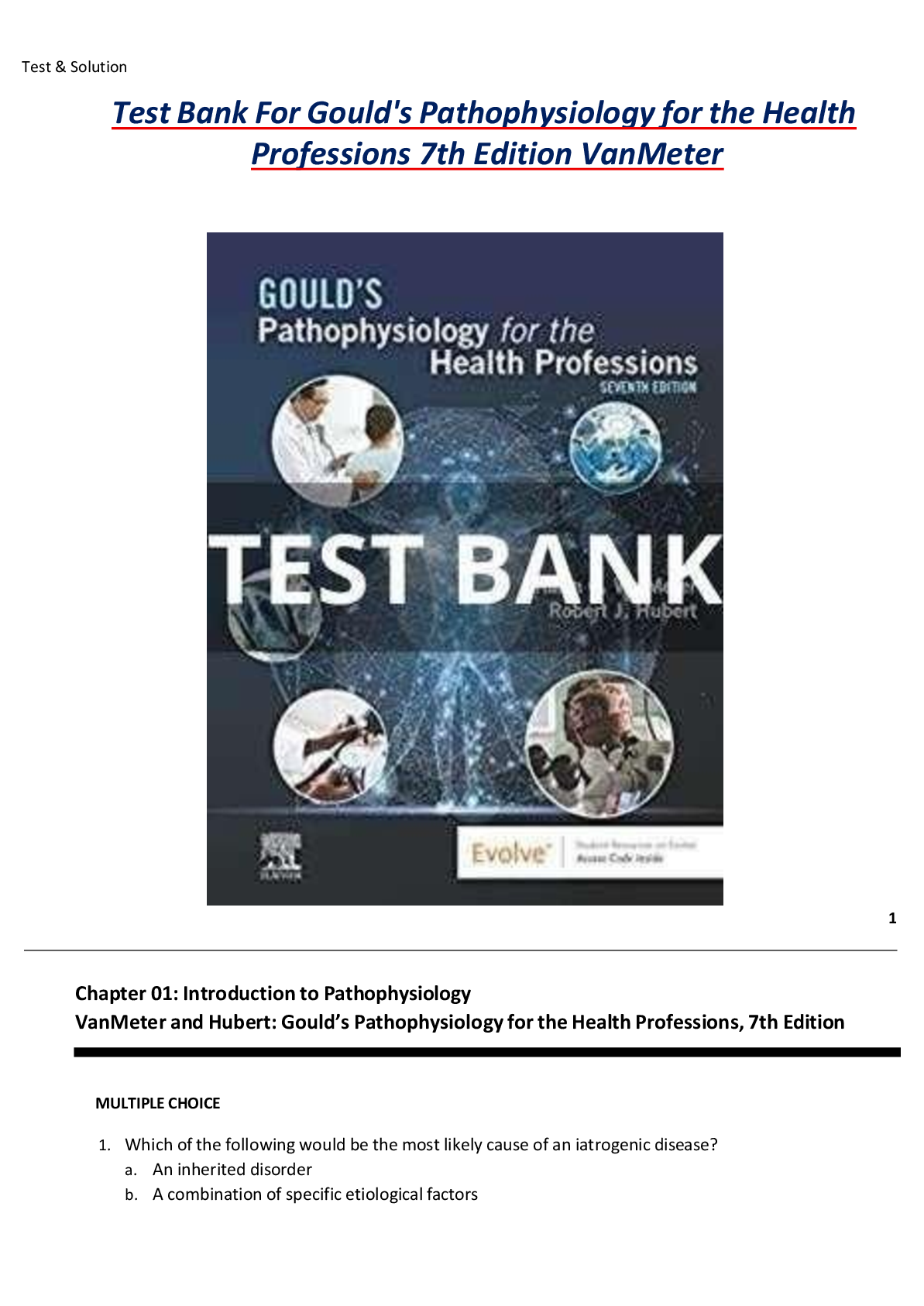
Test Bank for Gould s Pathophysiology for the Health Professions 7th Edition Chapter 01:Introduction to Pathophysiology
VanMeter and Hubert: Gould’s Pathophysiology for the Health Professions, 7th Edition
MULTIPLE C
...
Test Bank for Gould s Pathophysiology for the Health Professions 7th Edition Chapter 01:Introduction to Pathophysiology
VanMeter and Hubert: Gould’s Pathophysiology for the Health Professions, 7th Edition
MULTIPLE CHOICE
1. Which of the following would be the most likely cause of an
iatrogenic disease?
a. An inherited disorder
b. A combination ofspecific etiological factors
c. An unwanted effect of a prescribed drug
d. Prolonged exposure to toxic chemicals in the environment
ANS: C
2. The manifestations of a disease are best defined as the
a. subjective feelings of discomfort during a chronic illness.
b. signs and symptoms of a disease.
c. factorsthat precipitate an acute episode of a chronic illness.
d. early indicators of the prodromalstage of infection.
ANS: B
3. The best definition of the term prognosis is the
a. precipitating factors causing an acute episode.
b. number of remissions to be expected during the course of a chronic illness.
c. predicted outcome or likelihood of recovery from a specific disease.
d. exacerbations occurring during chronic illness.
ANS: C
4. Which of the following is considered a systemic sign of disease?
a. Swelling of the knee
b. Fever
c. Pain in the neck
d. Red rash on the face
ANS: B
5. Etiology is defined as the studyof the
a. causes of a disease.
b. course of a disease.
c. expected complications of a disease.
d. manifestations of a disease.
ANS: A
6. A type of cellular adaptation in which there is a decrease in cell size is referred to as
a. hypertrophy.
b. metaplasia.
c. anaplasia.
d. atrophy.
ANS: D
7. A change in a tissue marked by cells that vary in size and shape and show increased mitotic
figures would be called
https://www.stuvia.com/user/angelinas
a. metaplasia.
b. atrophy.
c. dysplasia.
d. hypertrophy.
ANS: C
8. A deficit of oxygen in the cells usually due to respiratory or circulatory problems is called
a. apoptosis.
b. ischemia.
c. hypertrophy.
d. necrosis.
ANS: B
9. When a group of cells in the body dies, the change is called
a. ischemia.
b. gangrene.
c. hypoxia.
d. necrosis.
ANS: D
10. Rigorous weightlifting/body building regimens may result in the skeletal muscle cells
undergoing
a. hypertrophy.
b. dysplasia.
c. atrophy.
d. regeneration.
ANS: A
11. The term cancer refers to
a. dysplasia.
b. hyperplasia.
c. metaplasia.
d. malignant neoplasm.
ANS: D
12. To which of the following does the term apoptosis refer?
a. Increased rate of mitosis by certain cells
b. Ischemic damage to cells
c. Liquefaction of necrotic tissue
d. Preprogrammed cellself-destruction
ANS: D
13. Which of the following statements is TRUE?
a. Alteration of DNA does not change cell function.
b. Damaged cells may be able to repair themselves.
c. All types of cells die at the same rate.
d. Mild ischemia causes immediate cell death.
ANS: B
14. Caseation necrosis refers to an area whereChapter 01:Introduction to Pathophysiology
VanMeter and Hubert: Gould’s Pathophysiology for the Health Professions, 7th Edition
MULTIPLE CHOICE
1. Which of the following would be the most likely cause of an
iatrogenic disease?
a. An inherited disorder
b. A combination ofspecific etiological factors
c. An unwanted effect of a prescribed drug
d. Prolonged exposure to toxic chemicals in the environment
ANS: C
2. The manifestations of a disease are best defined as the
a. subjective feelings of discomfort during a chronic illness.
b. signs and symptoms of a disease.
c. factorsthat precipitate an acute episode of a chronic illness.
d. early indicators of the prodromalstage of infection.
ANS: B
3. The best definition of the term prognosis is the
a. precipitating factors causing an acute episode.
b. number of remissions to be expected during the course of a chronic illness.
c. predicted outcome or likelihood of recovery from a specific disease.
d. exacerbations occurring during chronic illness.
ANS: C
4. Which of the following is considered a systemic sign of disease?
a. Swelling of the knee
b. Fever
c. Pain in the neck
d. Red rash on the face
ANS: B
5. Etiology is defined as the studyof the
a. causes of a disease.
b. course of a disease.
c. expected complications of a disease.
d. manifestations of a disease.
ANS: A
6. A type of cellular adaptation in which there is a decrease in cell size is referred to as
a. hypertrophy.
b. metaplasia.
c. anaplasia.
d. atrophy.
ANS: D
7. A change in a tissue marked by cells that vary in size and shape and show increased mitotic
figures would be called
https://www.stuvia.com/user/angelinas
a. metaplasia.
b. atrophy.
c. dysplasia.
d. hypertrophy.
ANS: C
8. A deficit of oxygen in the cells usually due to respiratory or circulatory problems is called
a. apoptosis.
b. ischemia.
c. hypertrophy.
d. necrosis.
ANS: B
9. When a group of cells in the body dies, the change is called
a. ischemia.
b. gangrene.
c. hypoxia.
d. necrosis.
ANS: D
10. Rigorous weightlifting/body building regimens may result in the skeletal muscle cells
undergoing
a. hypertrophy.
b. dysplasia.
c. atrophy.
d. regeneration.
ANS: A
11. The term cancer refers to
a. dysplasia.
b. hyperplasia.
c. metaplasia.
d. malignant neoplasm.
ANS: D
12. To which of the following does the term apoptosis refer?
a. Increased rate of mitosis by certain cells
b. Ischemic damage to cells
c. Liquefaction of necrotic tissue
d. Preprogrammed cellself-destruction
ANS: D
13. Which of the following statements is TRUE?
a. Alteration of DNA does not change cell function.
b. Damaged cells may be able to repair themselves.
c. All types of cells die at the same rate.
d. Mild ischemia causes immediate cell death.
ANS: B
14. Caseation necrosis refers to an area where Chapter 01:Introduction to Pathophysiology
VanMeter and Hubert: Gould’s Pathophysiology for the Health Professions, 7th Edition
MULTIPLE CHOICE
1. Which of the following would be the most likely cause of an
iatrogenic disease?
a. An inherited disorder
b. A combination ofspecific etiological factors
c. An unwanted effect of a prescribed drug
d. Prolonged exposure to toxic chemicals in the environment
ANS: C
2. The manifestations of a disease are best defined as the
a. subjective feelings of discomfort during a chronic illness.
b. signs and symptoms of a disease.
c. factorsthat precipitate an acute episode of a chronic illness.
d. early indicators of the prodromalstage of infection.
ANS: B
3. The best definition of the term prognosis is the
a. precipitating factors causing an acute episode.
b. number of remissions to be expected during the course of a chronic illness.
c. predicted outcome or likelihood of recovery from a specific disease.
d. exacerbations occurring during chronic illness.
ANS: C
4. Which of the following is considered a systemic sign of disease?
a. Swelling of the knee
b. Fever
c. Pain in the neck
d. Red rash on the face
ANS: B
5. Etiology is defined as the studyof the
a. causes of a disease.
b. course of a disease.
c. expected complications of a disease.
d. manifestations of a disease.
ANS: A
6. A type of cellular adaptation in which there is a decrease in cell size is referred to as
a. hypertrophy.
b. metaplasia.
c. anaplasia.
d. atrophy.
ANS: D
7. A change in a tissue marked by cells that vary in size and shape and show increased mitotic
figures would be called
https://www.stuvia.com/user/angelinas
a. metaplasia.
b. atrophy.
c. dysplasia.
d. hypertrophy.
ANS: C
8. A deficit of oxygen in the cells usually due to respiratory or circulatory problems is called
a. apoptosis.
b. ischemia.
c. hypertrophy.
d. necrosis.
ANS: B
9. When a group of cells in the body dies, the change is called
a. ischemia.
b. gangrene.
c. hypoxia.
d. necrosis.
ANS: D
10. Rigorous weightlifting/body building regimens may result in the skeletal muscle cells
undergoing
a. hypertrophy.
b. dysplasia.
c. atrophy.
d. regeneration.
ANS: A
11. The term cancer refers to
a. dysplasia.
b. hyperplasia.
c. metaplasia.
d. malignant neoplasm.
ANS: D
12. To which of the following does the term apoptosis refer?
a. Increased rate of mitosis by certain cells
b. Ischemic damage to cells
c. Liquefaction of necrotic tissue
d. Preprogrammed cellself-destruction
ANS: D
13. Which of the following statements is TRUE?
a. Alteration of DNA does not change cell function.
b. Damaged cells may be able to repair themselves.
c. All types of cells die at the same rate.
d. Mild ischemia causes immediate cell death.
ANS: B
14. Caseation necrosis refers to an area where a. cell proteins have been denatured. b. cells are liquefied byenzymes.
c. dead cells form a thick cheesy substance.
d. bacterial invasion has occurred.
ANS: C
[Show More]