Emergency Preparedness & Management > EXAM > EMERGENCY RESPONDER TRAINING 2 NEWEST EXAM 2026 STUDY QUESTIONS WITH CORRECT VERIFIED ANSWERS GUARAN (All)
EMERGENCY RESPONDER TRAINING 2 NEWEST EXAM 2026 STUDY QUESTIONS WITH CORRECT VERIFIED ANSWERS GUARANTEED PASS | RATED A+
Document Content and Description Below
Last updated: 1 year ago
Preview 5 out of 57 pages
Instant download

Loading document previews ...
Buy this Document to get the Full Access Instantly
Provided by Students Who Aced it
We Verify Document Content to Gurantee Accuracy
Reviews( 0 )
Document information
Connected school, study & course
About the document
Uploaded On
Sep 28, 2025
Number of pages
57
Written in
All

Additional information
This document has been written for:
Uploaded
Sep 28, 2025
Downloads
0
Views
75
Topic Tags
Recommended For You
Get more on EXAM »
FEMA 800 Complete Actual Exam / Newest Updated 2025/2026 / Ac...


PADI OPEN WATER - BEING A DIVER I EXAM WITH ALL CORRECT & VERI...


Practice Test JBL EMS Operations emergency medical services pr...

IS-700.b: An Introduction to the National Incident Management...


Test Bank For Introduction to Emergency Management 8th Edition...

TEST BANK for Emergency Care 13th Edition by Daniel Limmer, Mi...

TEST BANK - Nancy Caroline’s Emergency Care in the Streets, 8t...

Test Bank for Hazard Mitigation and Preparedness 3rd Edition

Test Bank For Prehospital Emergency Care, 12th Edition by Jose...

PADI OPEN WATER DIVER FINAL ASSESSMENT WITH ALL CORRECT & VERI...
Solution Manual for Fundamentals of Investments Valuation and...

EMR – Emergency Medical Responder Certification Test – Study G...

National Association for Search and Rescue SARTECH III Study G...
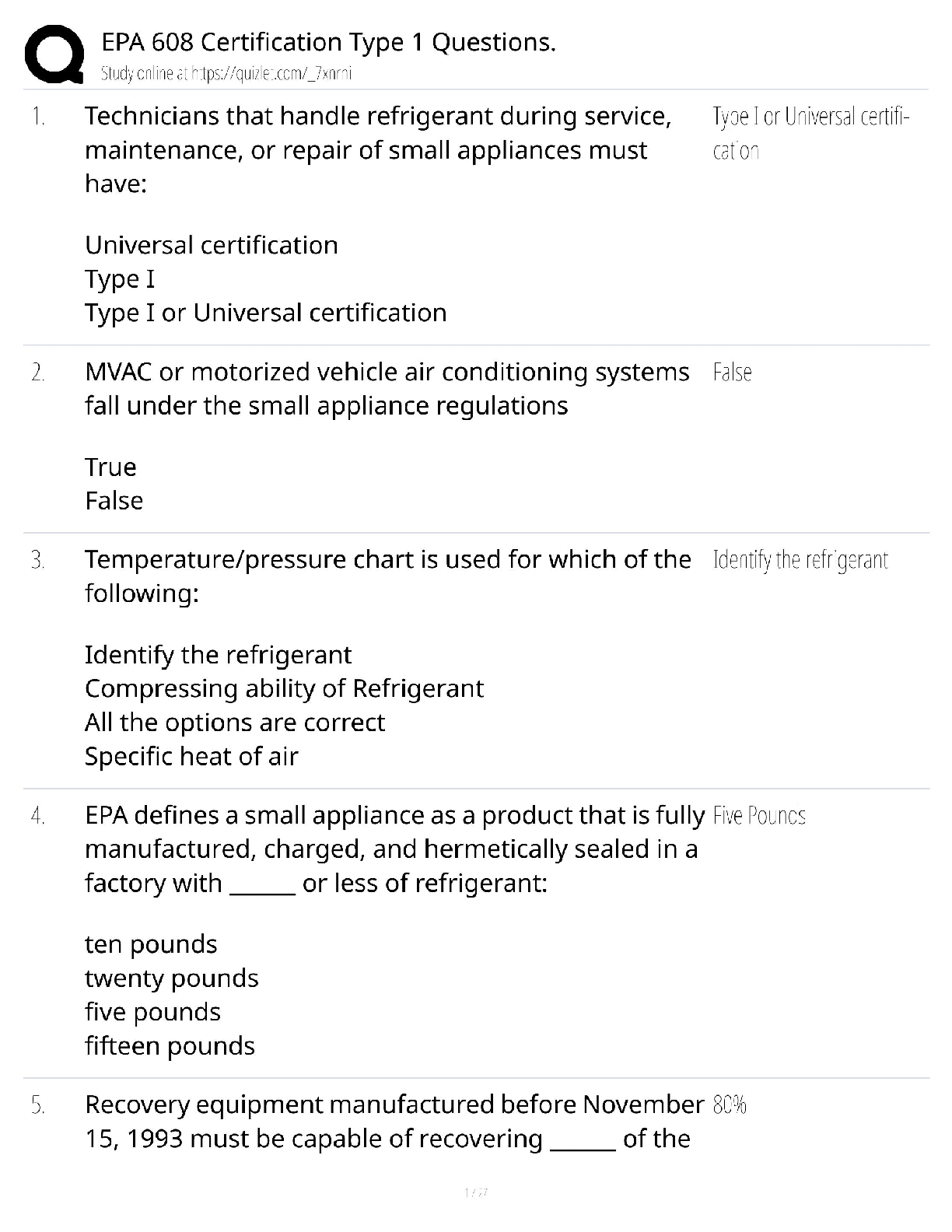
EPA 608 Certification / Type 1 Questions / Study Guide & Pract...