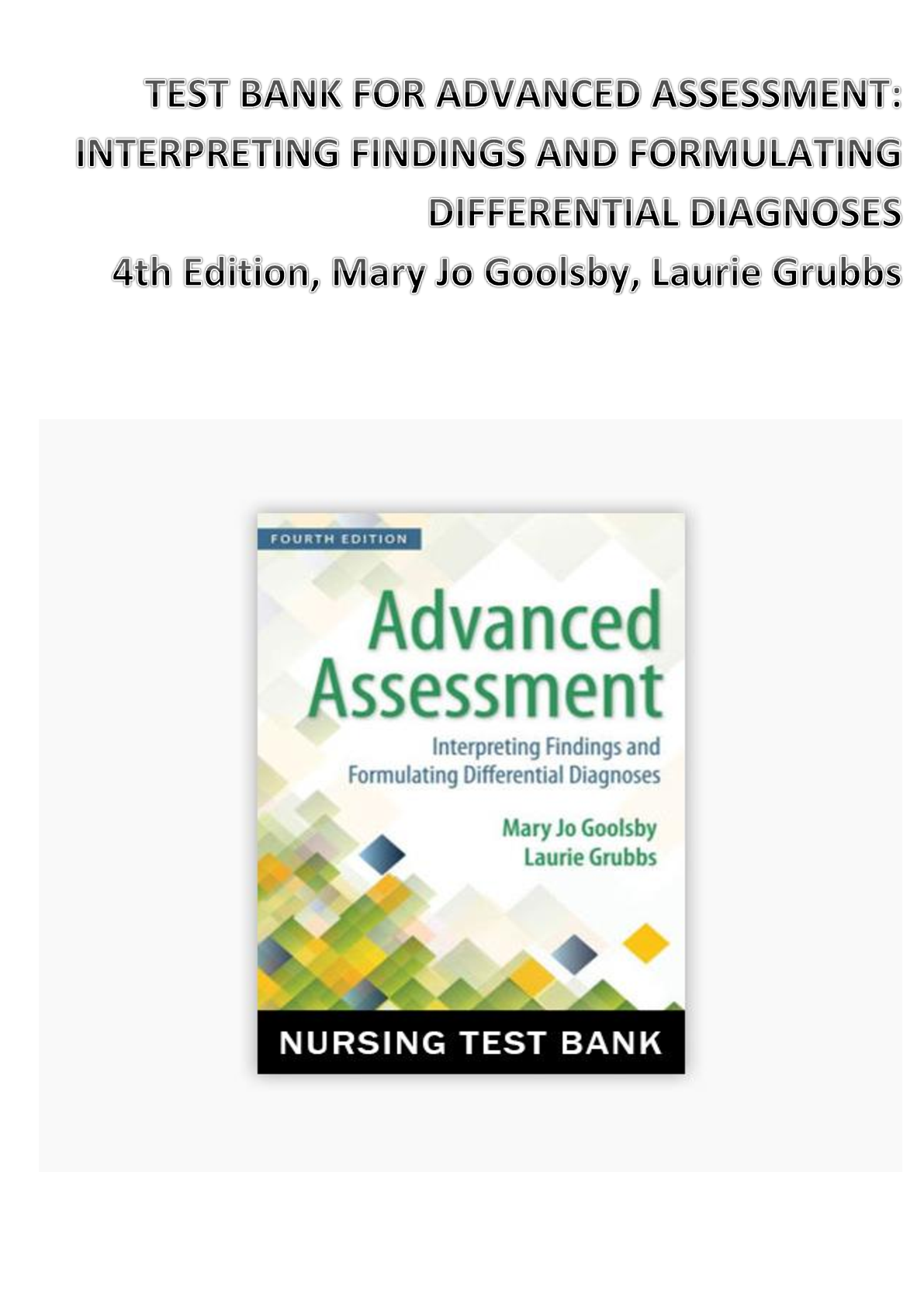
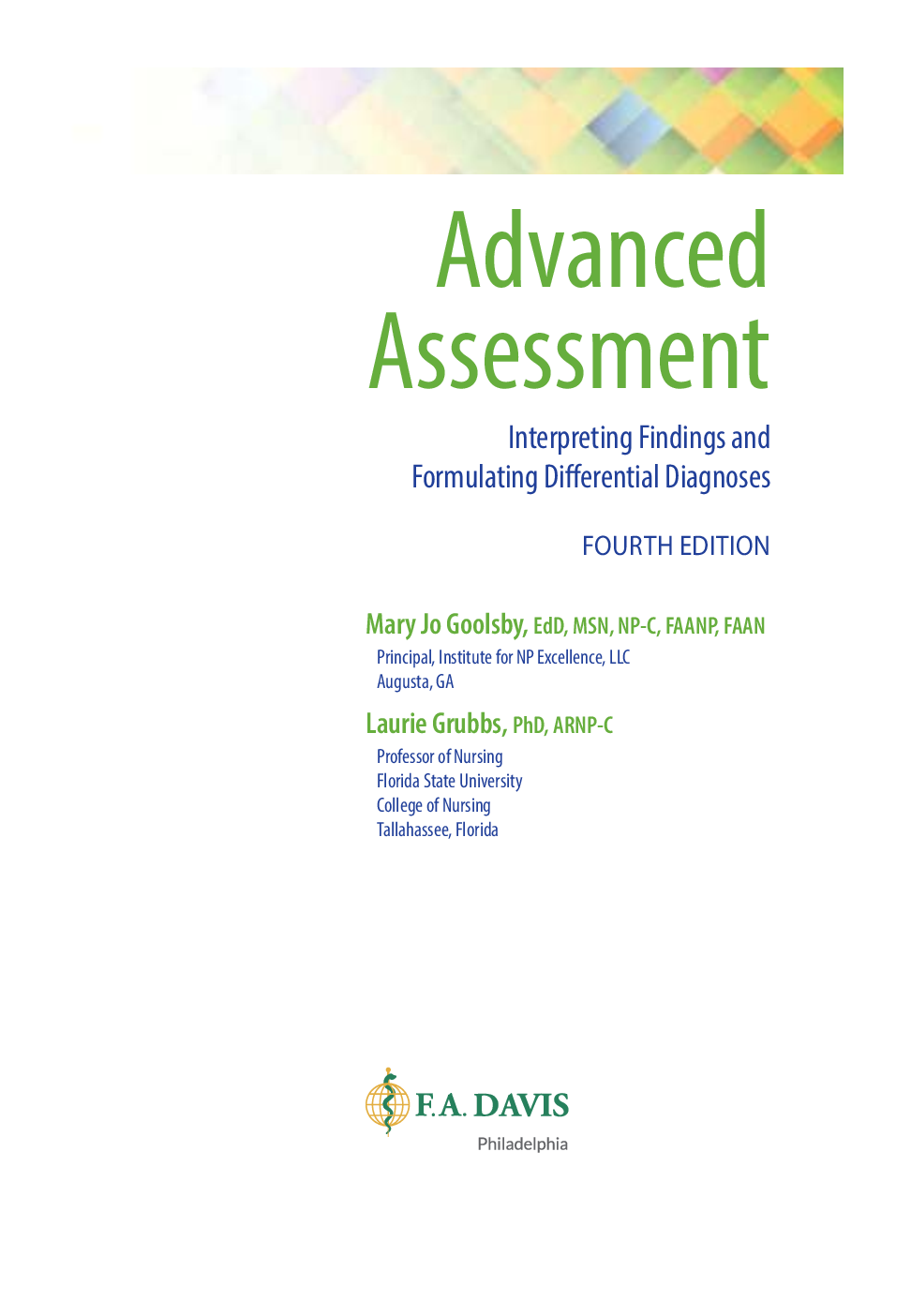
TEST BANK FOR Advanced Assessment Interpreting
Findings and Formulating Differential Diagnoses
4th Edition Goolsby Chapters 1 - 22 | Complete
Multiple G qChoice
Identify Gqthe Gqchoice Gqthat Gqbest GqcompletesGqthe Gqst
...
TEST BANK FOR Advanced Assessment Interpreting
Findings and Formulating Differential Diagnoses
4th Edition Goolsby Chapters 1 - 22 | Complete
Multiple G qChoice
Identify Gqthe Gqchoice Gqthat Gqbest GqcompletesGqthe Gqstatement GqorGqanswers GqtheGqquestion.
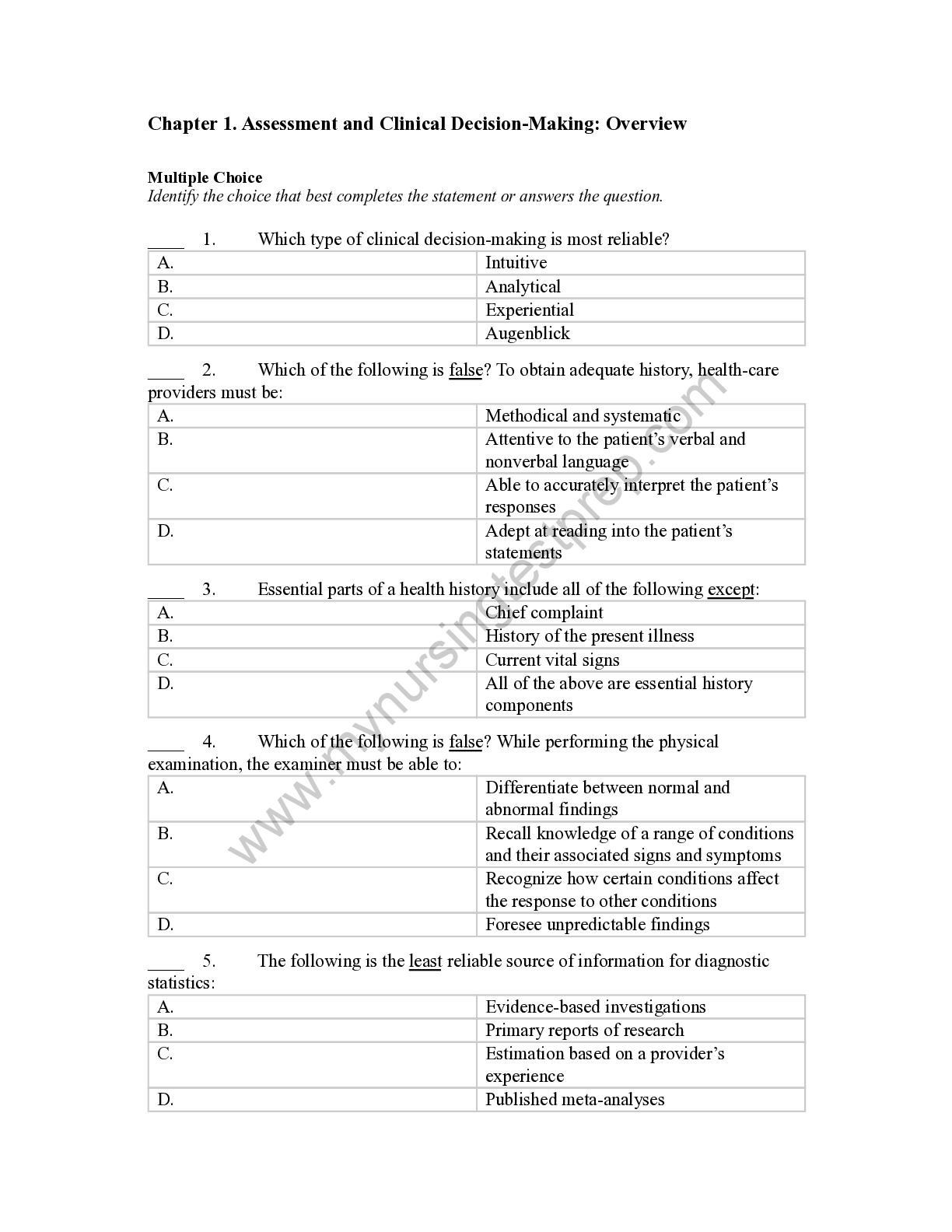
Gq 1. Which GqtypeGqof Gqclinical Gqdecision-makingGqis Gqmost Gqreliable?
A. Intuitive
B. Analytical
C. Experiential
D. Augenblick
Gq 2. Which GqofGqtheGqfollowing Gqis Gqfalse?GqTo GqobtainGqadequateGqhistory, Gqhealth-careGqproviders Gqmust Gqbe:
A. MethodicalGqandGqsystematic
B. AttentiveGqto GqtheGqpatient’sGqverbal Gqand Gqnonverbal
Gqlanguage
C. Able Gqto GqaccuratelyGqinterpret GqtheGqpatient’s Gqresponses
D. Adept Gqat Gqreading GqintoGqthe Gqpatient’sGqstatements
Gq 3. Essential GqpartsGqofGqa Gqhealth GqhistoryGqinclude Gqall Gqof Gqthe Gqfollowing Gqexcept:
A. Chief Gqcomplaint
B. HistoryGqof Gqthe Gqpresent Gqillness
C. CurrentGqvital Gqsigns
D. All Gqof GqtheGqabove GqareGqessential Gqhistory
Gqcomponents
Gq 4. Which GqofGqtheGqfollowing Gqis Gqfalse? GqWhileGqperforming GqtheGqphysical Gqexamination,GqtheGqexaminer Gqmust GqbeGqableGqto:
A. DifferentiateGqbetween Gqnormal Gqand Gqabnormal Gqfindings
B. RecallGqknowledge GqofGqaGqrangeGqofGqconditions GqandGqtheir Gqassociated Gqsigns Gqand
Gqsymptoms
C. RecognizeGqhowGqcertain GqconditionsGqaffect GqtheGqresponseGqto Gqother Gqconditions
D. ForeseeGqunpredictable Gqfindings
Gq 5. The GqfollowingGqis GqtheGqleast GqreliableGqsource Gqof Gqinformation Gqfor GqdiagnosticGqstatistics:
A. Evidence-based Gqinvestigations
B. PrimaryGqreports Gqof Gqresearch
C. Estimation Gqbased Gqon GqaGqprovider’s
Gqexperience
D. PublishedGqmeta-analyses
Gq 6. TheGqfollowing Gqcan GqbeGqused GqtoGqassist Gqin Gqsound Gqclinical Gqdecision-making:
A. AlgorithmGqpublished Gqin GqaGqpeer-reviewed Gqjournal
Gqarticle
B. ClinicalGqpractice Gqguidelines
C. Evidence-basedGqresearch
D. All Gqof GqtheGqabove
Gq 7. IfGqa GqdiagnosticGqstudyGqhas Gqhigh Gqsensitivity, Gqthis Gqindicates Gqa:
A. High Gqpercentage GqofGqpersons GqwithGqtheGqgiven Gqcondition Gqwill GqhaveGqan
Gqabnormal Gqresult
B. LowGqpercentage GqofGqpersons Gqwith GqtheGqgivenGqcondition Gqwill Gqhave Gqan
Gqabnormal Gqresult
C. LowGqlikelihood GqofGqnormal Gqresult Gqin Gqpersons Gqwithout Gqa Gqgiven Gqcondition
D. None Gqof GqtheGqabove
Gq 8. If Gqa GqdiagnosticGqstudyGqhas Gqhigh Gqspecificity, Gqthis Gqindicates Gqa:
A. LowGqpercentage Gqof GqhealthyGqindividuals Gqwill GqshowGqa Gqnormal Gqresult
B. High Gqpercentage GqofGqhealthyGqindividuals Gqwill GqshowGqaGqnormal Gqresult
C. High Gqpercentage GqofGqindividuals Gqwith GqaGqdisorder Gqwill GqshowGqaGqnormal
Gqresult
D. LowGqpercentage Gqof Gqindividuals Gqwith GqaGqdisorder Gqwill GqshowGqan
Gqabnormal Gqresult
Gq 9. AGqlikelihood Gqratio Gqabove Gq1 Gqindicates Gqthat GqaGqdiagnosticGqtest Gqshowing Gqa:
A. Positive GqresultGqis GqstronglyGqassociated Gqwith GqtheGqdisease
B. NegativeGqresult Gqis Gqstrongly Gqassociated Gqwith Gqabsence Gqof Gqthe
Gqdisease
C. Positive Gqresult Gqis GqweaklyGqassociated Gqwith GqtheGqdisease
D. NegativeGqresult Gqis GqweaklyGqassociated Gqwith Gqabsence Gqof Gqthe
Gqdisease
Gq 10. Which GqofGqtheGqfollowing GqclinicalGqreasoningGqtools Gqis Gqdefined Gqas Gqevidence-based Gqresource Gqbased Gqon Gqmathematical Gqmodeling
toGqexpress GqtheGqlikelihood GqofGqa Gqcondition GqinGqselect Gqsituations, Gqsettings, Gqand/orGqpatients?
A. Clinical Gqpractice
Gqguideline
B. Clinical Gqdecision Gqrule
C. Clinical Gqalgorithm
ChapterGq1:GqClinical Gqreasoning, GqdifferentialGqdiagnosis,Gqevidence-basedGqpractice,GqandGqsymptomGqana
Answer GqSection
MULTIPLEGqCHOICE
1. ANS: B
Croskerry Gq(2009) Gqdescribes Gqtwo Gqmajor Gqtypes Gqof Gqclinical Gqdiagnostic Gqdecision-making: Gqintuitive Gqand Gqanalytical.
GqIntuitive Gqdecision- Gqmaking Gq(similar Gqto GqAugenblink Gqdecision-making) Gqis Gqbased Gqon Gqthe Gqexperience Gqand Gqintuition Gqof
Gqthe Gqclinician Gqand Gqis Gqless Gqreliable GqandGqpaired Gqwith Gqfairly Gqcommon Gqerrors. GqIn Gqcontrast, Gqanalytical Gqdecision-making Gqis
Gqbased Gqon Gqcareful Gqconsideration Gqand Gqhas Gqgreater GqreliabilityGqwith Gqrare Gqerrors.
PTS: 1
2. ANS: D
To Gqobtain Gqadequate Gqhistory, Gqproviders Gqmust Gqbe Gqwell Gqorganized, Gqattentive Gqto Gqthe Gqpatient’s Gqverbal Gqand Gqnonverbal
Gqlanguage, Gqand GqableGqto Gqaccurately Gqinterpret Gqthe Gqpatient’s Gqresponses Gqto Gqquestions. GqRather Gqthan Gqreading Gqinto Gqthe
Gqpatient’s Gqstatements, Gqthey Gqclarify Gqany Gqareas Gqof Gquncertainty.
PTS: 1
3. ANS: C
VitalGqsigns GqareGqpart GqofGqtheGqphysical Gqexamination Gqportion GqofGqpatient Gqassessment, GqnotGqpart GqofGqthe Gqhealth Gqhistory.
PTS: 1
4. ANS: D
While Gqperforming Gqthe Gqphysical Gqexamination, Gqthe Gqexaminer Gqmust Gqbe Gqable Gqto Gqdifferentiate Gqbetween Gqnormal Gqand
Gqabnormal Gqfindings, Gqrecall Gqknowledge Gqof Gqa Gqrange Gqof Gqconditions, Gqincluding Gqtheir Gqassociated Gqsigns Gqand Gqsymptoms,
Gqrecognize GqhowGqcertain Gqconditions GqaffectGqtheGqresponse Gqto Gqother Gqconditions, Gqand Gqdistinguish Gqthe Gqrelevance Gqof Gqvaried
Gqabnormal Gqfindings.
PTS: 1
5. ANS: C
Sources Gqfor Gqdiagnostic Gqstatistics Gqinclude Gqtextbooks, Gqprimary Gqreports Gqof Gqresearch, Gqand Gqpublished Gqmeta-analyses.
GqAnother Gqsource GqofGqstatistics,GqtheGqoneGqthat Gqhas Gqbeen Gqmost GqwidelyGqused Gqand Gqavailable Gqfor Gqapplication GqtoGqtheGqreasoning
Gqprocess, Gqis GqtheGqestimation Gqbased GqonGqa Gqprovider’s Gqexperience, Gqalthough Gqthese Gqare Gqrarely Gqaccurate. GqOver Gqthe Gqpast
Gqdecade, Gqthe Gqavailability Gqof Gqevidence Gqon Gqwhich Gqto Gqbase Gqclinical GqreasoningGqis Gqimproving, Gqand GqthereGqis Gqan Gqincreasing
Gqexpectation Gqthat Gqclinical Gqreasoning GqbeGqbased Gqon Gqscientific Gqevidence.
Evidence-based Gqstatistics GqareGqalso GqincreasinglyGqbeing Gqused Gqto Gqdevelop Gqresources Gqto Gqfacilitate Gqclinical Gqdecision-making.
PTS: 1
6. ANS: D
To Gqassist Gqin Gqclinical Gqdecision-making, Gqa Gqnumber Gqof Gqevidence-based Gqresources Gqhave Gqbeen Gqdeveloped Gqto
Gqassist Gqthe Gqclinician.GqResources,Gqsuch Gqas GqalgorithmsGqand Gqclinical Gqpractice Gqguidelines, Gqassist Gqin Gqclinical
Gqreasoning Gqwhen GqproperlyGqapplied.
PTS: 1
7. ANS: A
The Gqsensitivity Gqof Gqa Gqdiagnostic Gqstudy Gqis GqtheGqpercentage Gqof Gqindividuals Gqwith Gqthe Gqtarget Gqcondition Gqwho GqshowGqan
Gqabnormal, Gqor Gqpositive,Gqresult. GqAGqhigh GqsensitivityGqindicatesGqthat GqaGqgreater Gqpercentage Gqof Gqpersons Gqwith GqtheGqgiven
Gqcondition Gqwill Gqhave Gqan Gqabnormal Gqresult.
PTS: 1
8. ANS: B
The Gqspecificity Gqof Gqa Gqdiagnostic Gqstudy Gqis Gqthe Gqpercentage Gqof Gqnormal, Gqhealthy Gqindividuals Gqwho Gqhave Gqa Gqnormal
Gqresult. GqThe Gqgreater GqtheGqspecificity, Gqthe Gqgreater Gqthe Gqpercentage Gqof Gqindividuals Gqwho Gqwill Gqhave Gqnegative, Gqor Gqnormal,
Gqresults Gqif Gqthey Gqdo Gqnot Gqhave Gqthe Gqtarget Gqcondition.
PTS: 1
9. ANS: A
The Gqlikelihood Gqratio Gqis Gqthe Gqprobability Gqthat Gqa Gqpositive Gqtest Gqresult Gqwill Gqbe Gqassociated Gqwith Gqa Gqperson Gqwho Gqhas Gqthe
Gqtarget Gqcondition Gqand GqaGqnegative Gqresult Gqwill Gqbe Gqassociated Gqwith Gqa Gqhealthy Gqperson. GqAGqlikelihood Gqratio Gqabove Gq1
Gqindicates Gqthat Gqa Gqpositive Gqresult Gqis Gqassociated GqwithGqtheGqdisease; GqaGqlikelihood GqratioGqless Gqthan Gq1 Gqindicates Gqthat Gqa
Gqnegative Gqresult Gqis Gqassociated Gqwith Gqan Gqabsence GqofGqtheGqdisease.
[Show More]