1. General Concepts in Geriatrics
Impact of physiological changes with aging: Kennedy Chapter 1.
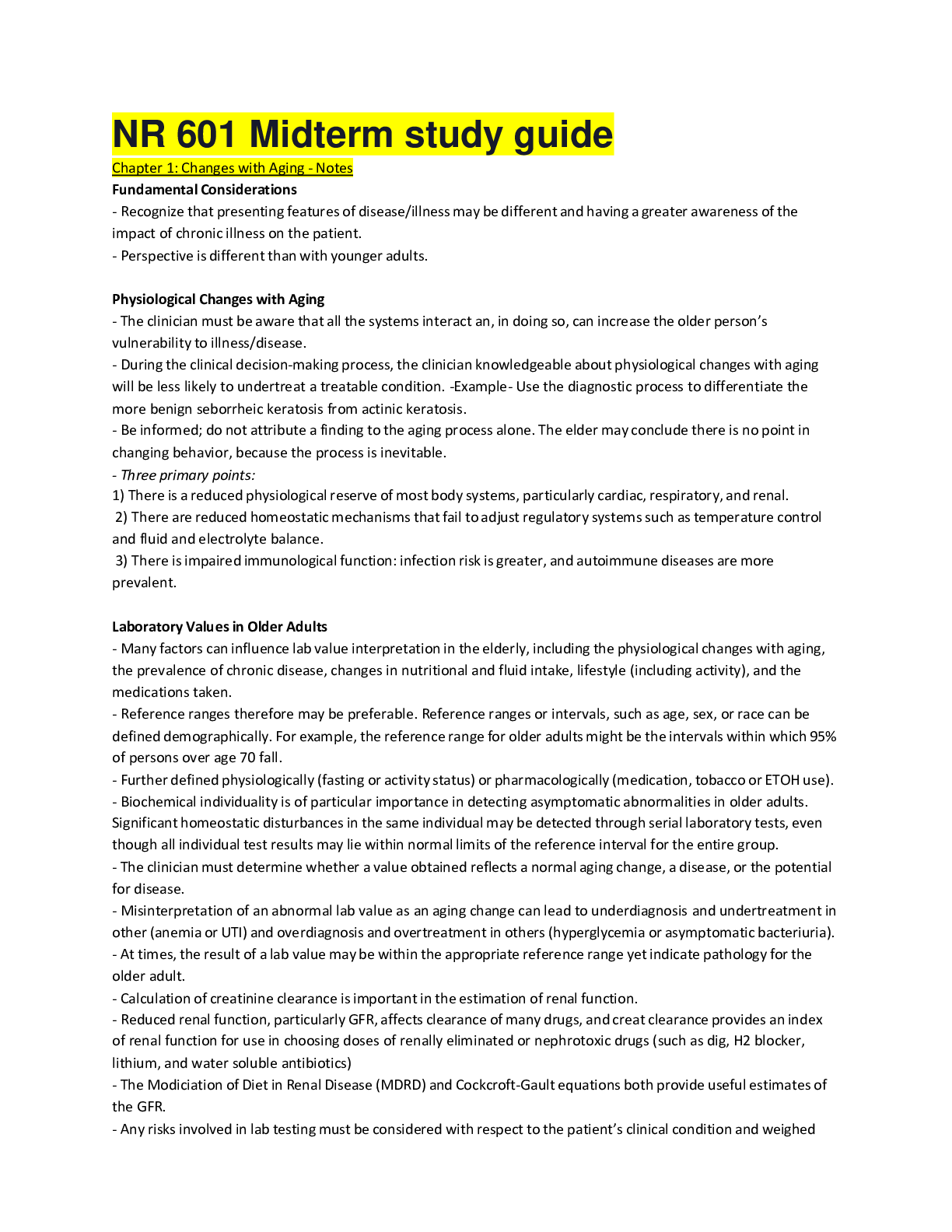
The major impact of all of these physiological changes can be highlighted with three primary points. First, there is a
...
1. General Concepts in Geriatrics
Impact of physiological changes with aging: Kennedy Chapter 1.
The major impact of all of these physiological changes can be highlighted with three primary points. First, there is a reduced physiological reserve of most body systems, particularly cardiac, respiratory, and renal. Second, there are reduced homeostatic mechanisms that fail to adjust regulatory systems such as temperature control and fluid and electrolyte balance. Third, there is impaired immunological function: infection risk is greater, and autoimmune diseases are more prevalent. Reduced renal function, particularly the glomerular filtration rate (GFR), affects the clearance of many drugs, and creatinine clearance provides an index of renal function for use in choosing doses of renally eliminated or nephrotoxic drugs (such as digoxin, H2 blockers, lithium, and water-soluble antibiotics).
Normal age related changes:
Changes in kidney function begin in the fourth decade of life and continue to decline with each subsequent decade. by age 70, an individual might reasonably have a 40% to 50% decrease in renal function, even in the absence of disease.
With advancing age, the ability of the liver to metabolize drugs does not decline. Although liver size and blood flow do decline with age, routine liver function test results are typically normal when no disease exists. Decreased liver size and blood flow can result in decreased first-pass metabolism.
Older adults often experience more sedation from central nervous system drugs than younger persons at the same concentration.
Signs and symptoms of depression:
Altered presentation is another common feature in older adults. The patient with depression may not present with a dysphoric mood but rather agitation and psychotic features.
Questions
The major impact of the physiological changes that occur with aging is:
Reduced physiological reserve Reduced homeostatic mechanisms Impaired immunological response All of the above
All of the following statements are true about laboratory values in older adults except
Reference ranges are preferable
Abnormal findings are often due to physiological aging Normal ranges may not be applicable for older adults Reference values are not necessarily acceptable values
Mini Mental Status: Buttaro Chapter 13
Geriatric specialists have multiple assessment tools, such as the Folstein Mini-Mental State Examination, the Mini-Cog screen for dementia, the Short Portable Mental Status Questionnaire, the AD8 Dementia Screening Interview, and the Montreal Cognitive Assessment (MoCa), to differentiate short-term memory loss from dementia and to observe the progression of cognitive impairment.
Questions
When prescribing medications to an 80-year-old patient, the provider will
a. begin with higher doses and decrease according to the patient’s response.
b. consult the Beers list to help identify potentially problematic drugs.
c. ensure that the patient does not take more than five concurrent medications.
d. review all patient medications at the annual health maintenance visit.
.......................................................CONTINUED.............................................
[Show More]