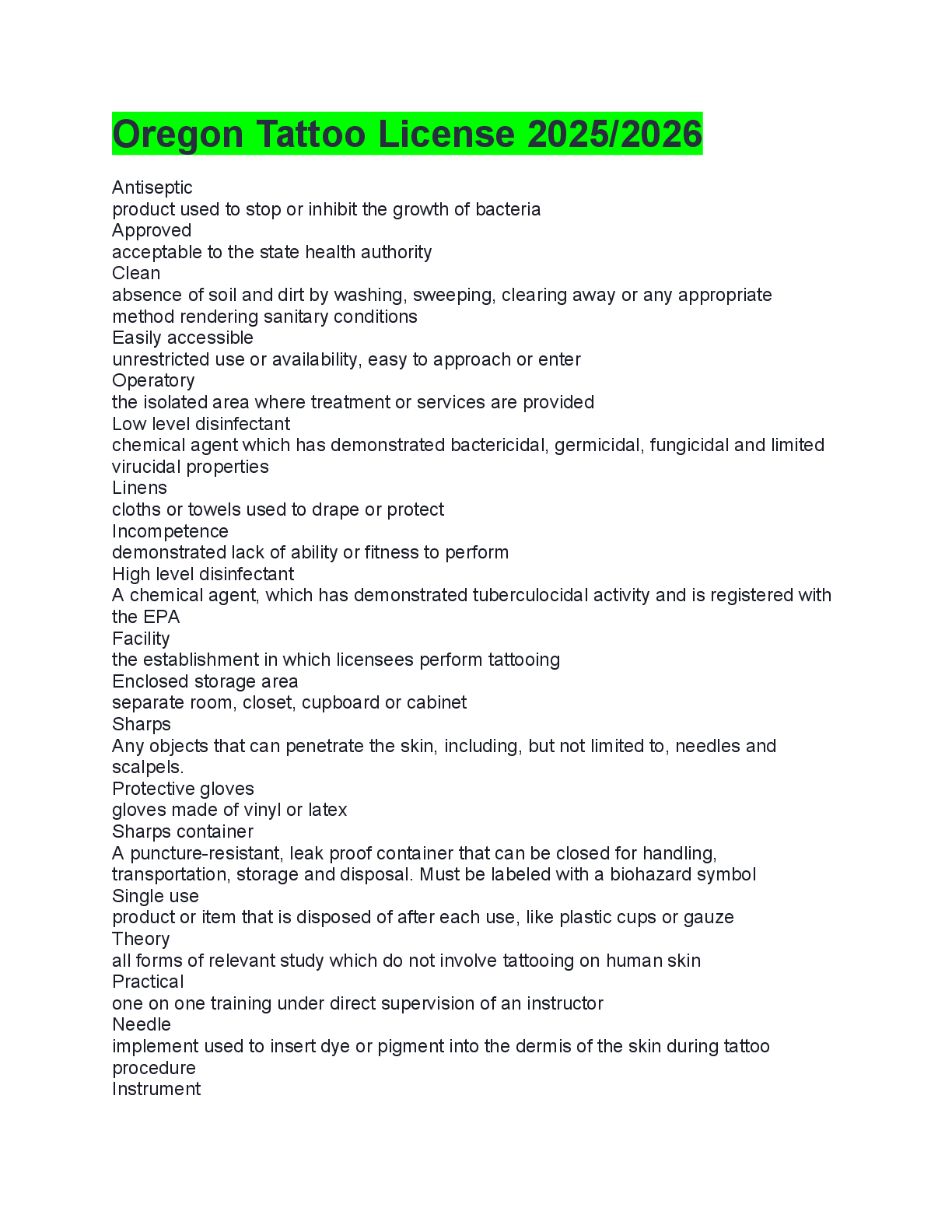
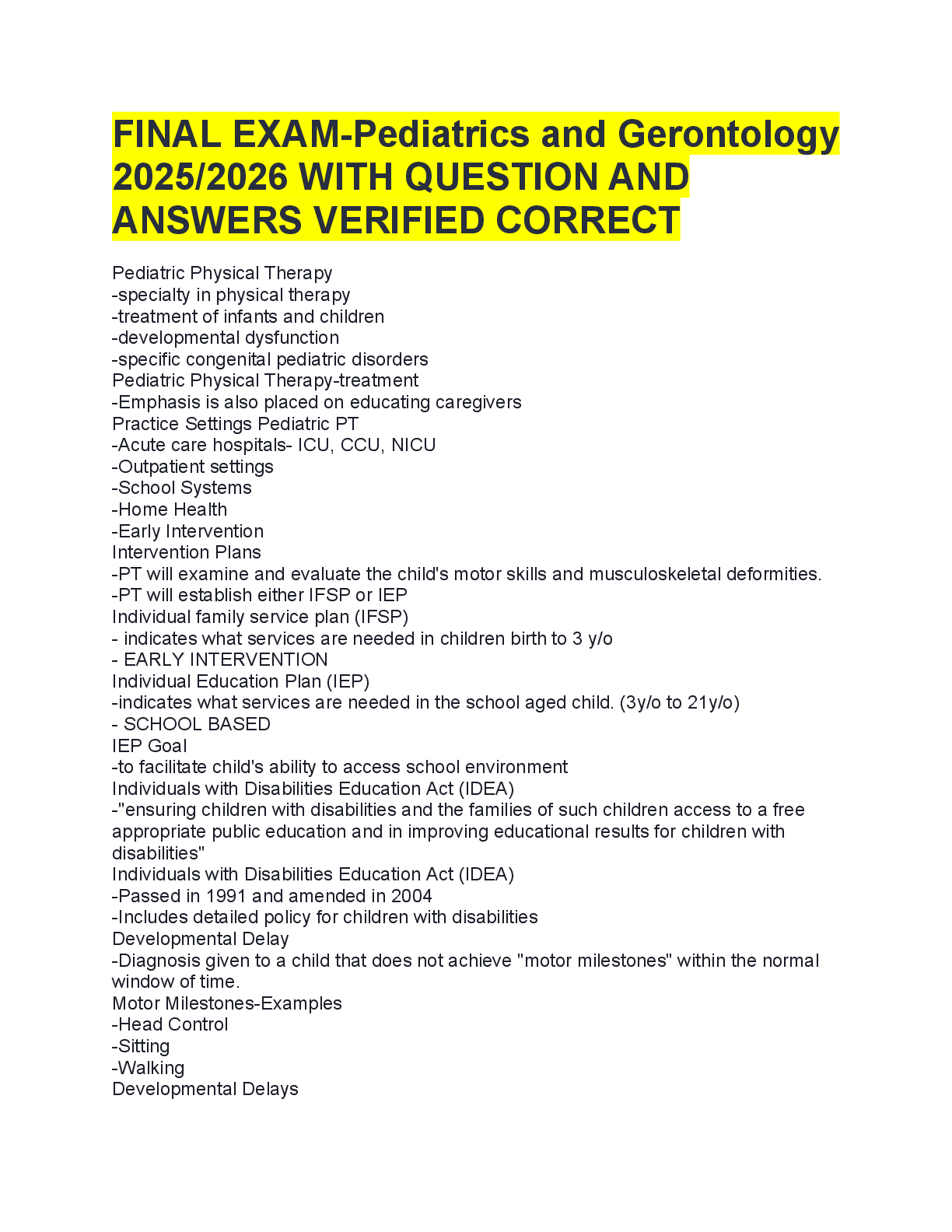
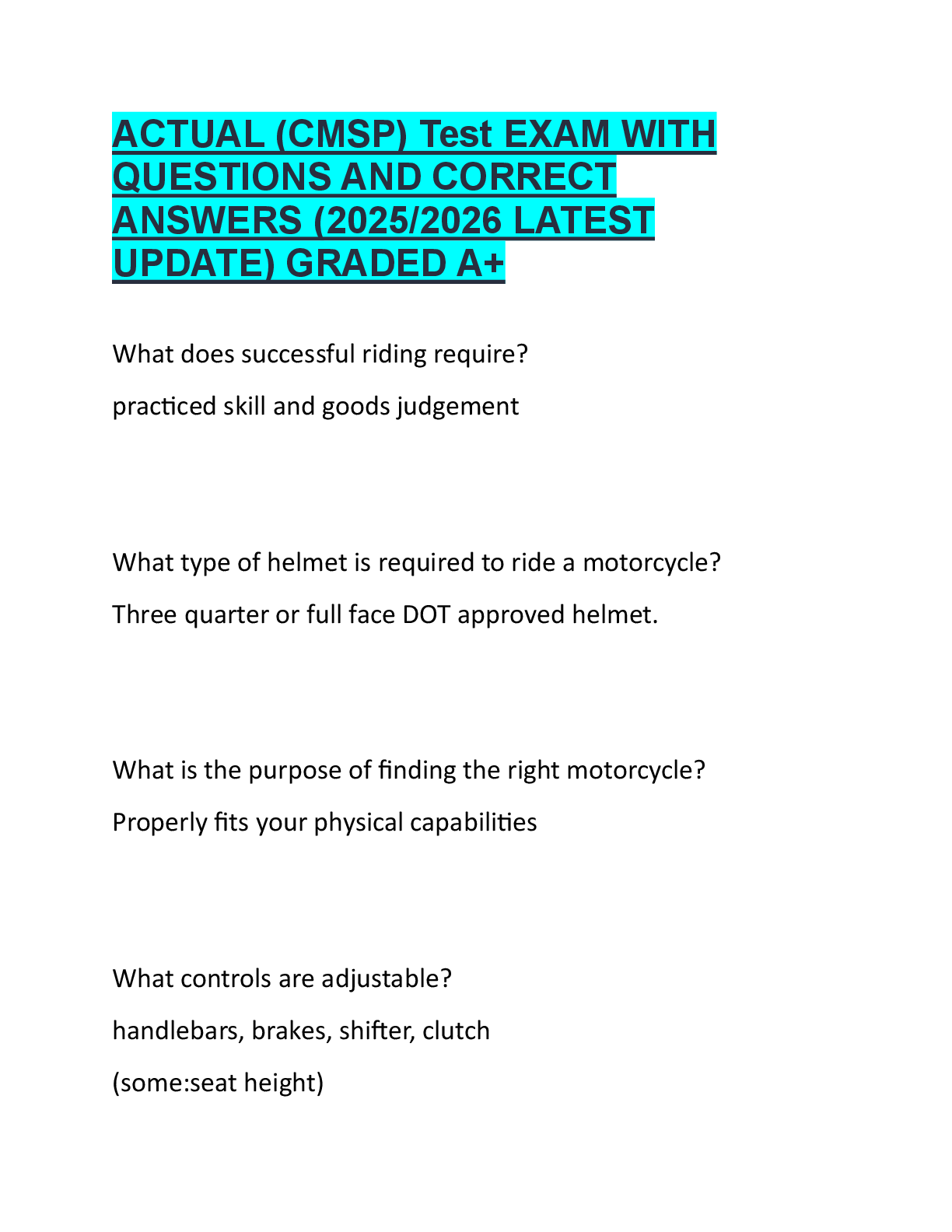
Labour Law > EXAM > Employment Law Exam 2025/2026 QUESTION WITH ANSWERS(GRADE)A+ (All)
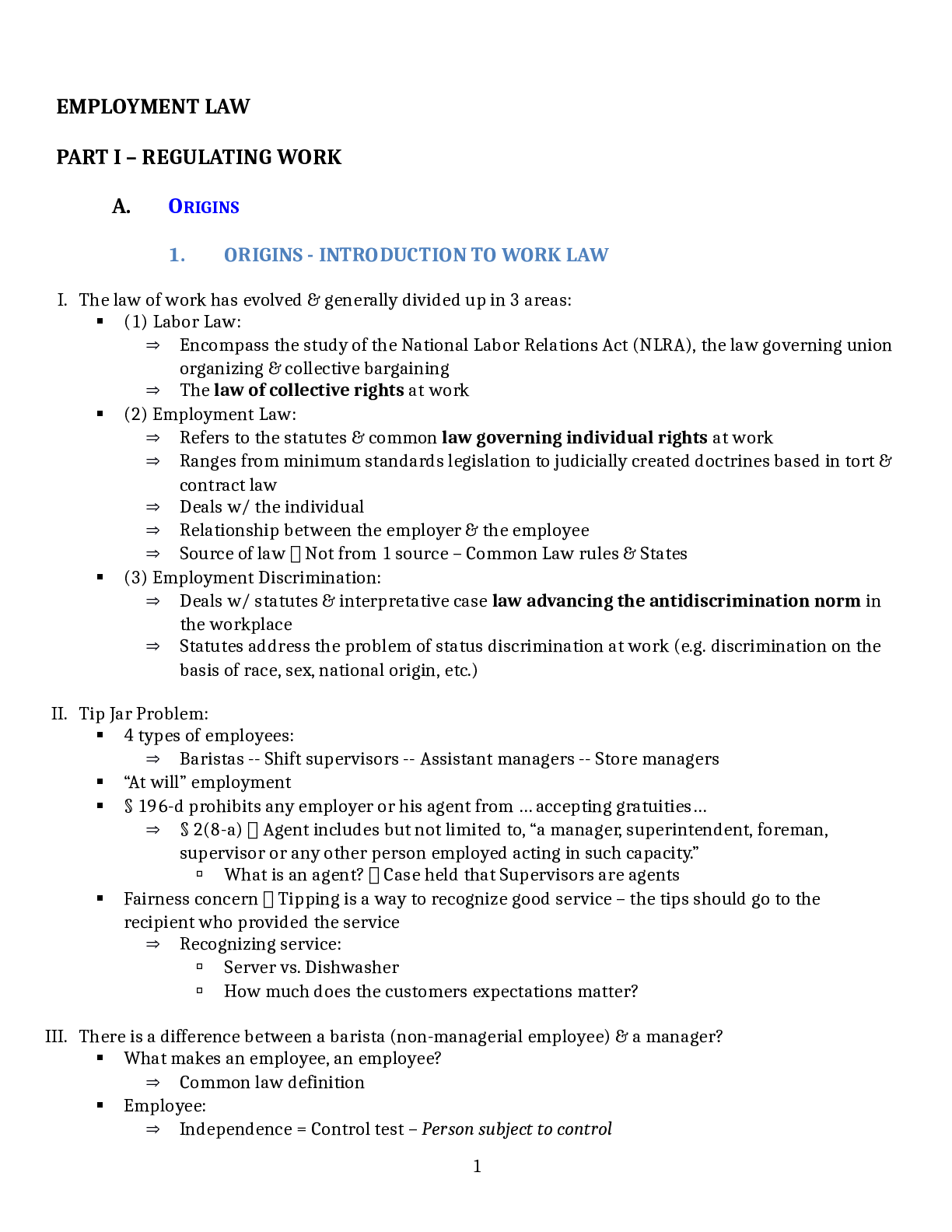
Employment Law Exam 2025/2026 QUESTION WITH ANSWERS(GRADE)A+
Document Content and Description Below
Last updated: 1 year ago
Preview 4 out of 15 pages
Instant download

Loading document previews ...
Buy this Document to get the Full Access Instantly
Provided by Students Who Aced it
We Verify Document Content to Gurantee Accuracy
Reviews( 0 )
Document information
Connected school, study & course
About the document
Uploaded On
Oct 14, 2025
Number of pages
15
Written in
All

Additional information
This document has been written for:
Uploaded
Oct 14, 2025
Downloads
0
Views
95
Topic Tags
Recommended For You
Get more on EXAM »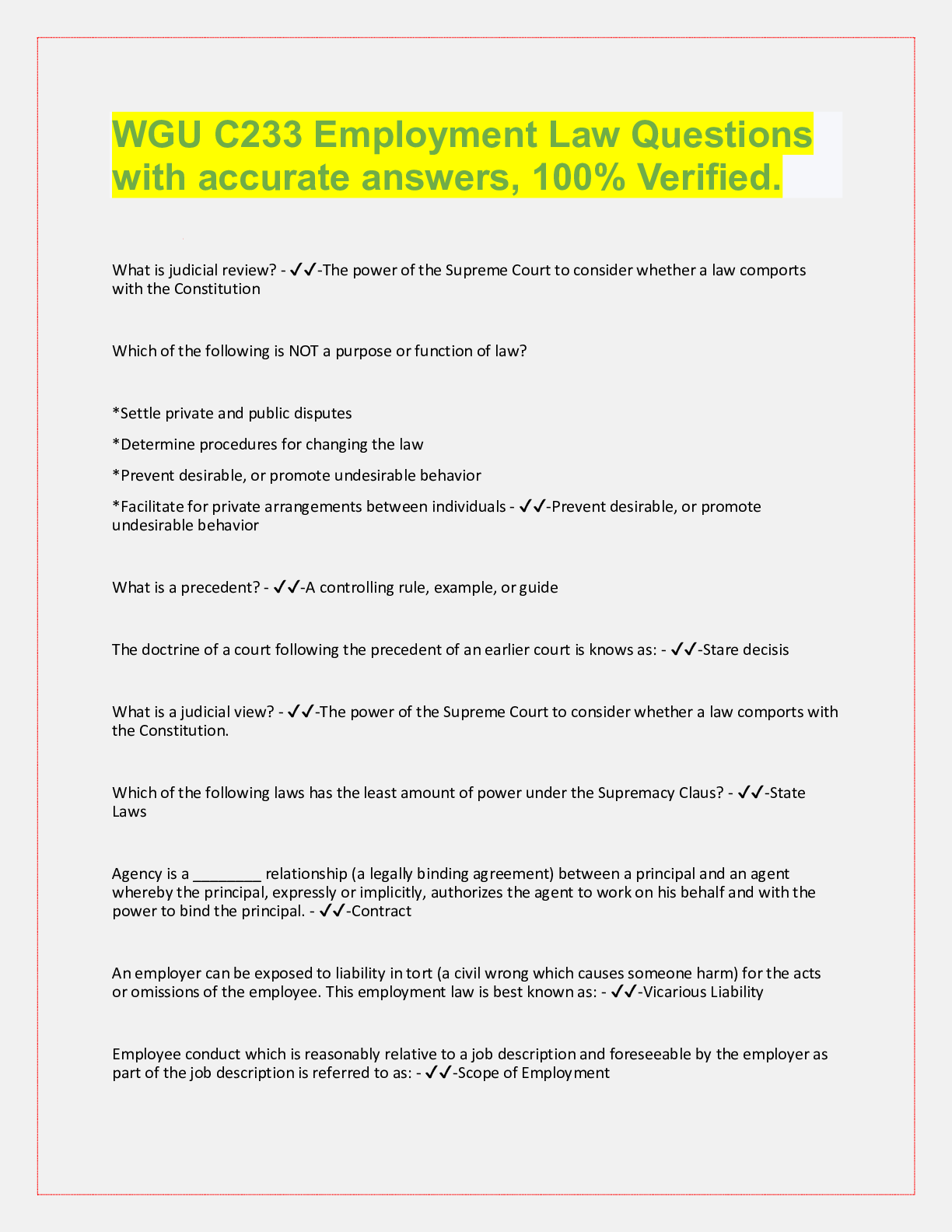
WGU C233 Employment Law Questions with accurate answers, 100%...
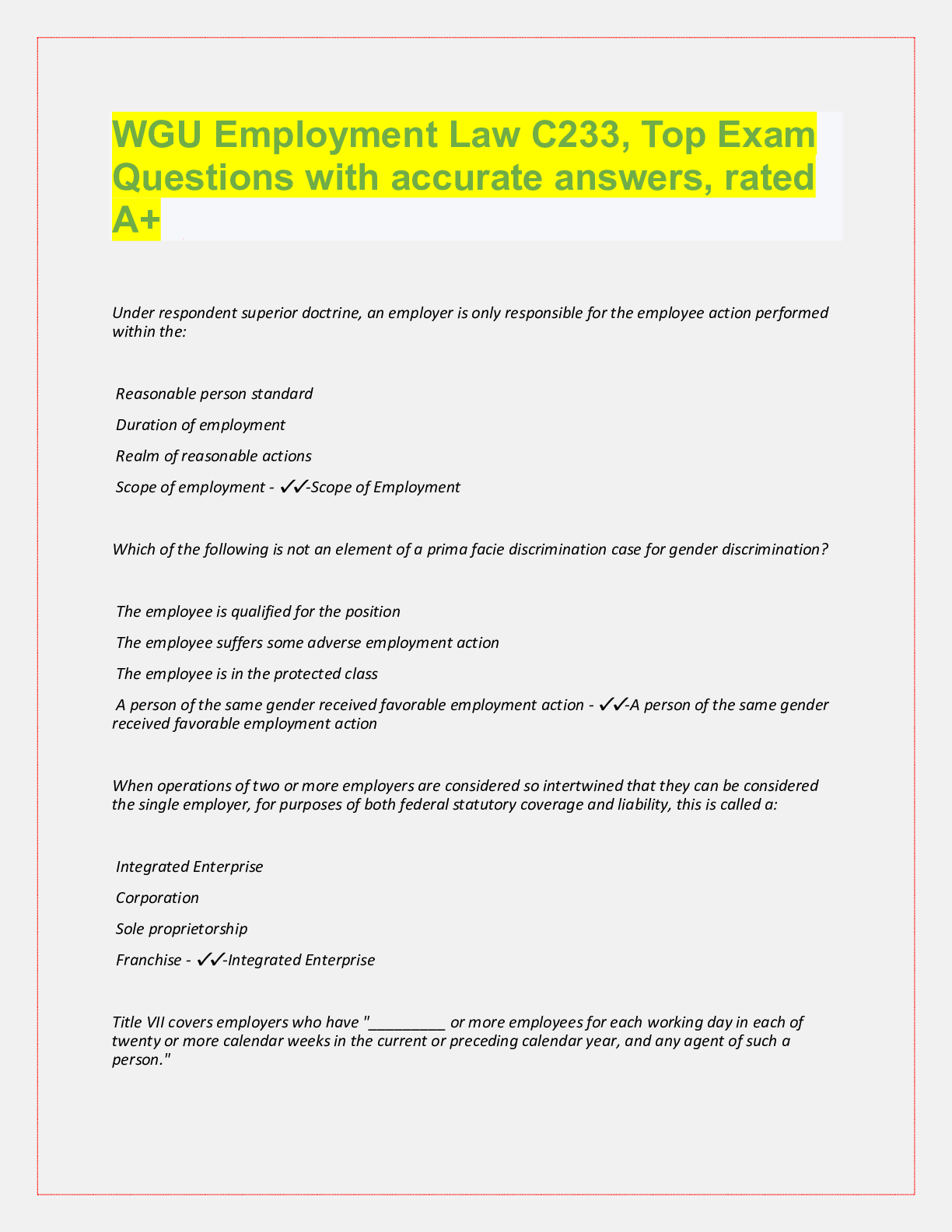
WGU Employment Law C233, Top Exam Questions with accurate ans...

WGU Employment Law C233, Exam Section Coverage. Questions and...
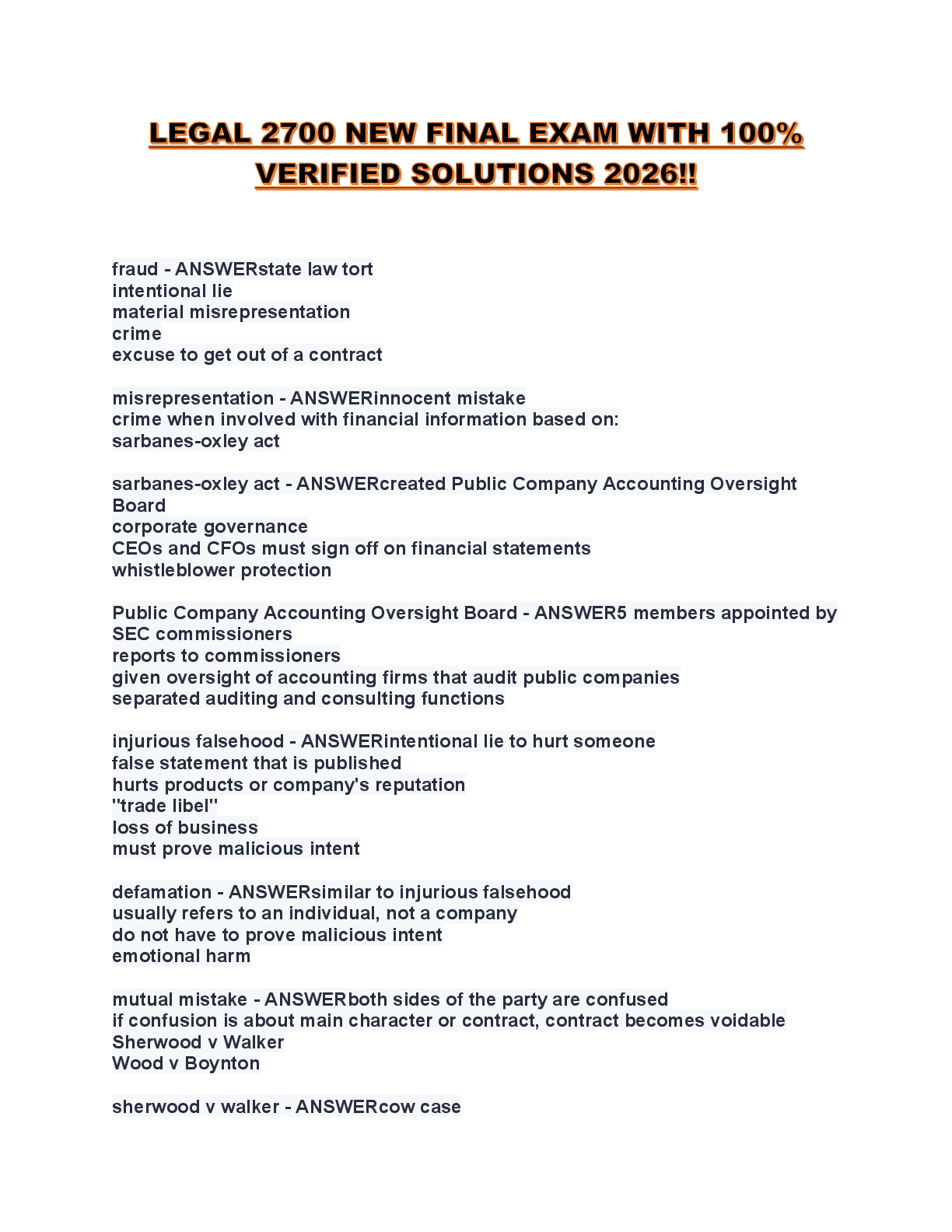


Modern Labor Economics Theory and Public Policy, 14e Ronald Eh...
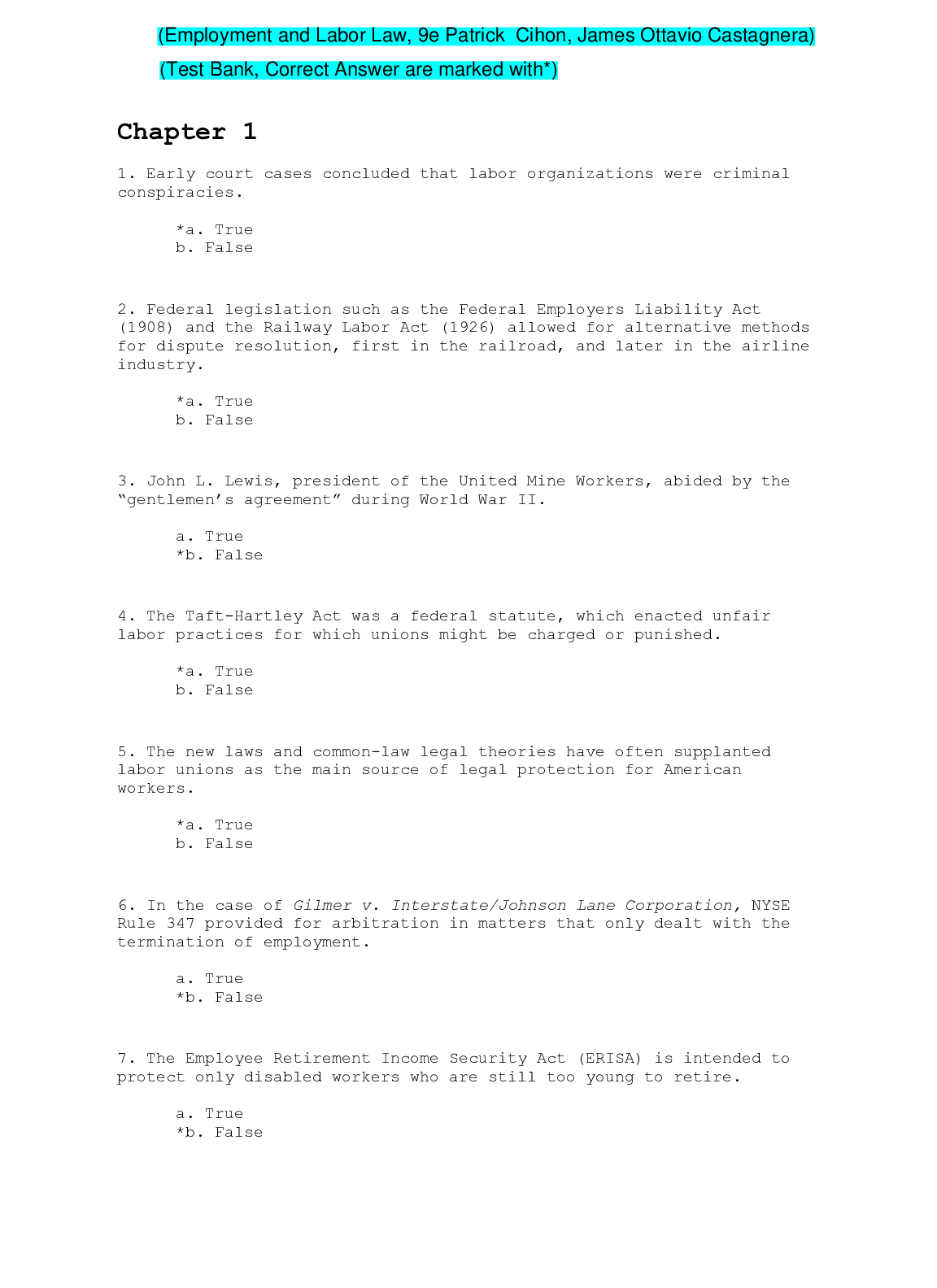
Employment and Labor Law, 9e Patrick Cihon, James Ottavio Cas...

Employment and Labor Law, 9e Patrick Cihon, James Ottavio Cas...
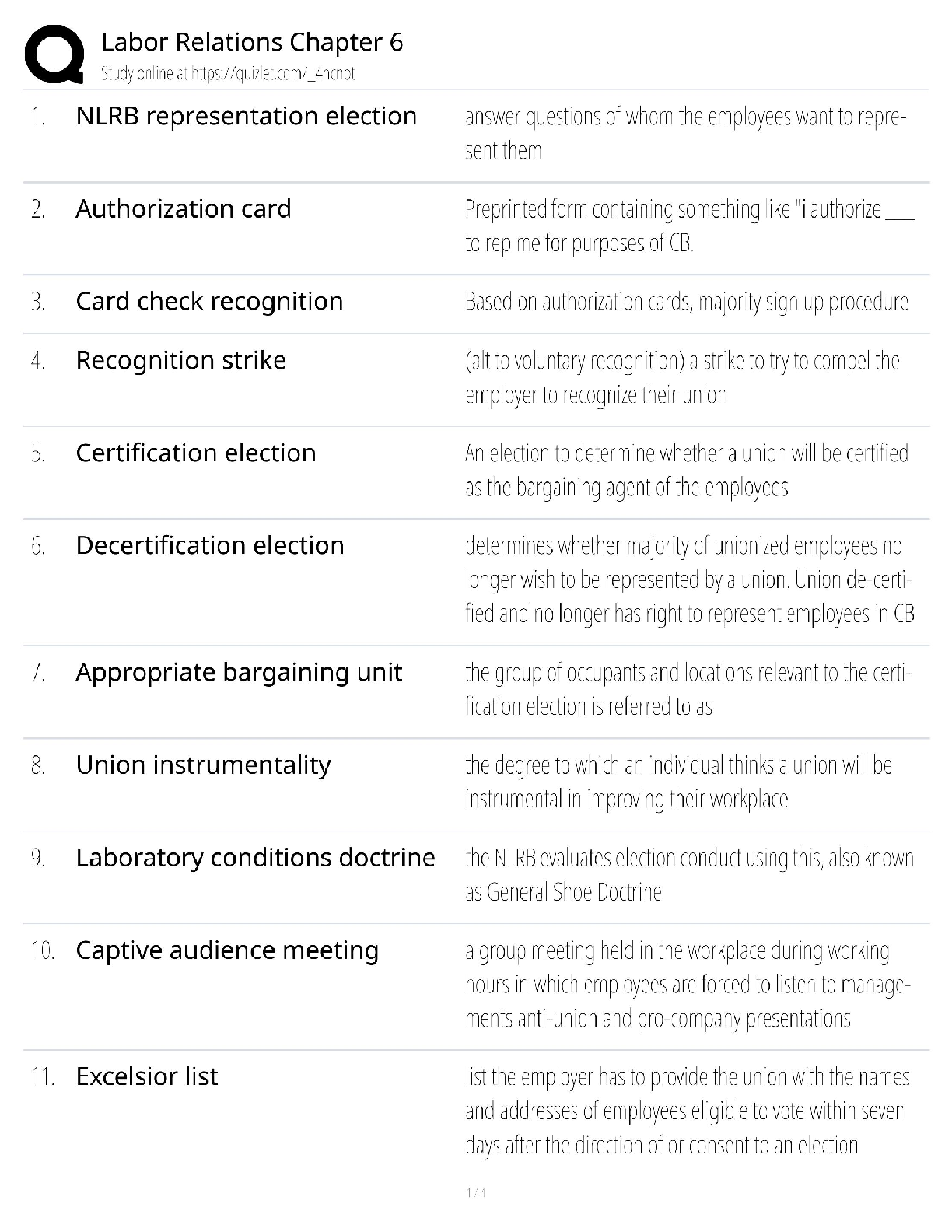
Labor Relations Chapter 6 / Union-Management & Employment Law...
Contemporary Employment Law 3rd Edition by Kerry Fields, Henry...

TEST BANK for Labour Relations 6th Canadian Edition by Larry S...
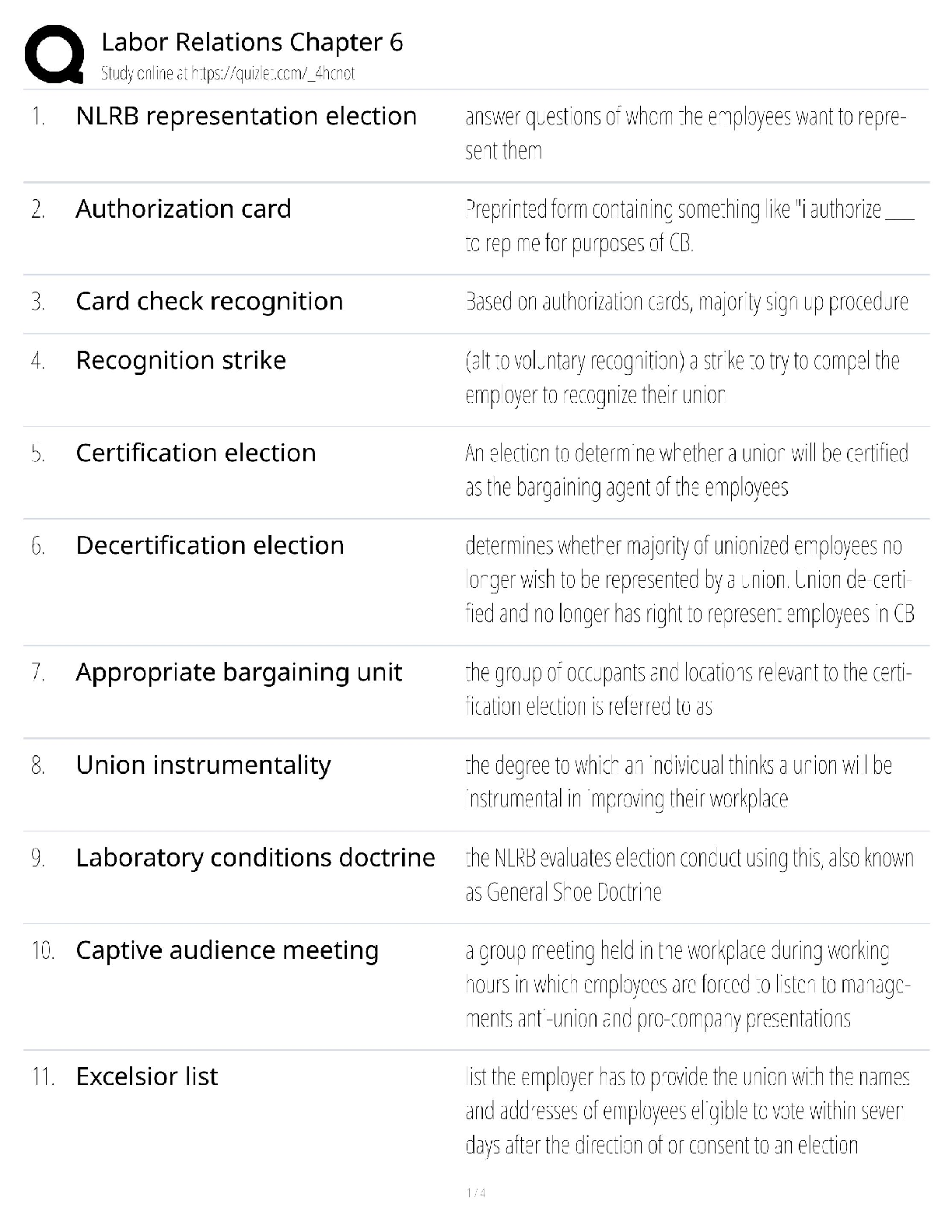
Labor Relations Chapter 6 / Study Guide & Test Bank / Score 10...
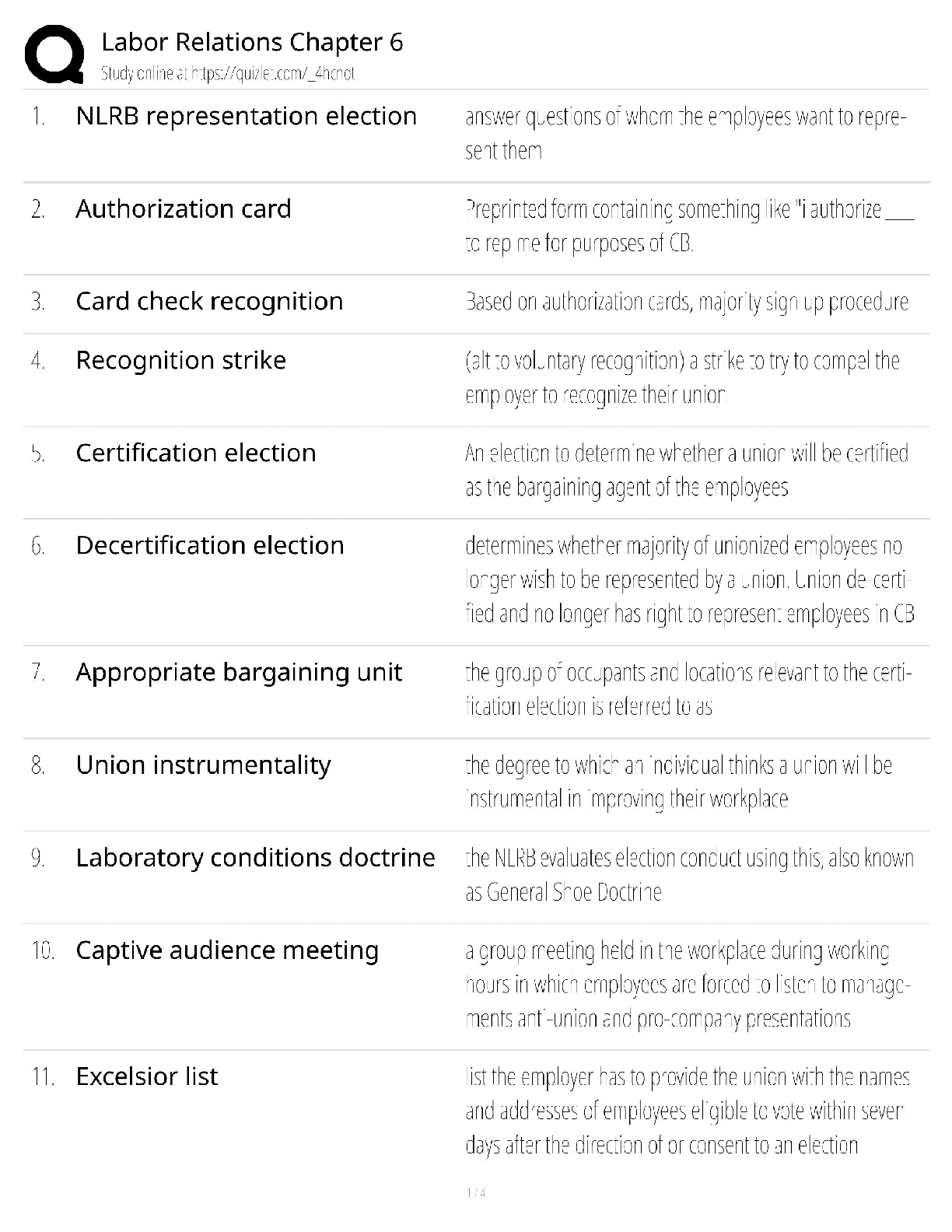
Labor Relations Chapter 6 / Score 100% / New 2025 Update / Com...
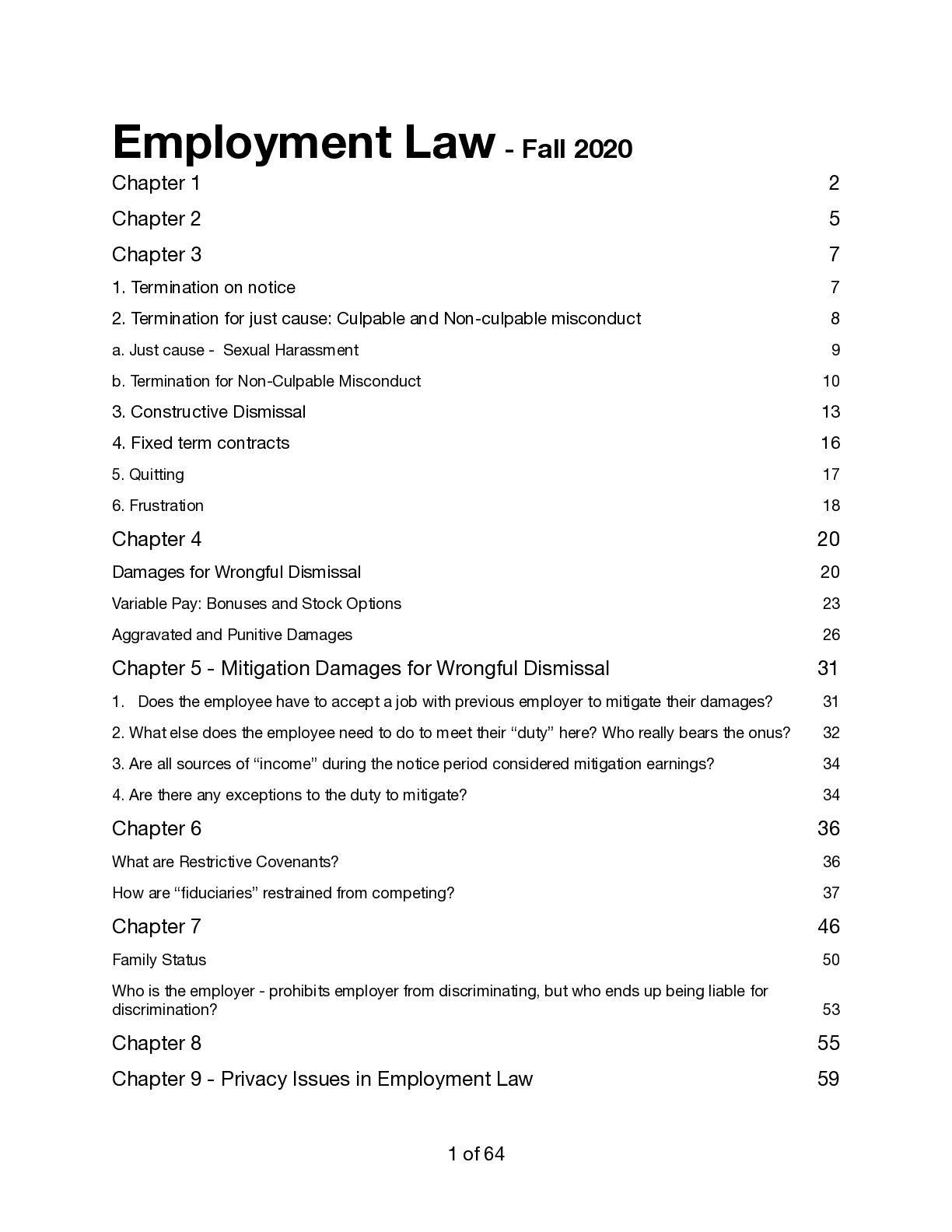
.png)