Pharmacology > EXAM > NR 508 ADVANCED PHARMACOLOGY/NURSING 358 FINAL EXAM 2021.GRADED A+ WITH RATIONALES (All)
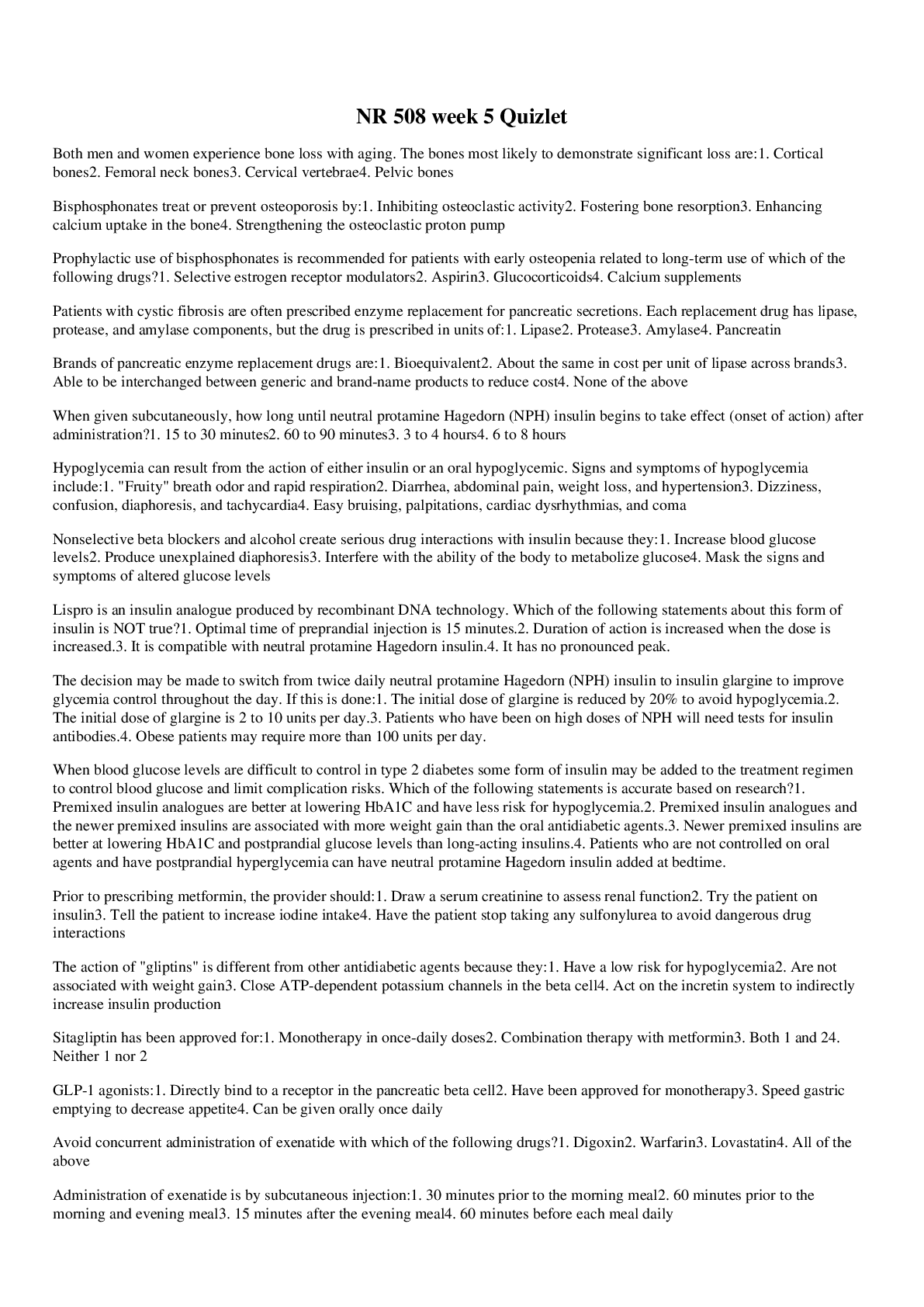
NR 508 ADVANCED PHARMACOLOGY/NURSING 358 FINAL EXAM 2021.GRADED A+ WITH RATIONALES
Document Content and Description Below
Last updated: 4 years ago
Preview 1 out of 29 pages
Instant download
.png)
Buy this Document to get the Full Access Instantly
Provided by Students Who Aced it
We Verify Document Content to Gurantee Accuracy
Reviews( 0 )
Document information
Connected school, study & course
About the document
Uploaded On
Apr 19, 2021
Number of pages
29
Written in
All

Additional information
This document has been written for:
Uploaded
Apr 19, 2021
Downloads
0
Views
94
Topic Tags
Recommended For You
Get more on EXAM ».png)
NR 508 Advanced Pharmacology: Week 2 Quiz (June 2020) GRADED A
.png)
NR 508 Advanced Pharmacology: Week 2 Quiz (Spring 2020) 100% C...
NR 508 Advanced Pharmacology Test bank Chapter 1 to Chapter 73...
NR 508 FINAL EXAM | A patient who has diabetes reports intense...
NR 508 WEEK 3 EXAM 2026/2027 | 150 HIGH-YIELD QUESTIONS & VERI...
NR 508 FINAL EXAM 2026/2027 | 150 HIGH-YIELD QUESTIONS & VERIF...
NR 508 Week 1 Discussion: Legal and Professional Issues in Pre...


NR508 / NR 508 Week 3 Study Guide : Advanced Pharmacology - C...

NR508 / NR 508 Quiz 1 Study Guide : Advanced Pharmacology - C...

NR508 / NR 508 Week 2 Study Guide : Advanced Pharmacology - C...
NR 508 Advanced Pharmacology FINAL Exams PREP Compilation | W...
PHARMACOLOGY HESI EXIT EXAM 2026/2027 | 250 HIGH-YIELD QUESTIO...

NR 508 Week 2 Case Study Discussion: Original Post, Responses...

TEST BANK ADVANCED PHARMACOLOGY FOR PRESCRIBERS 1ST EDITION BY...