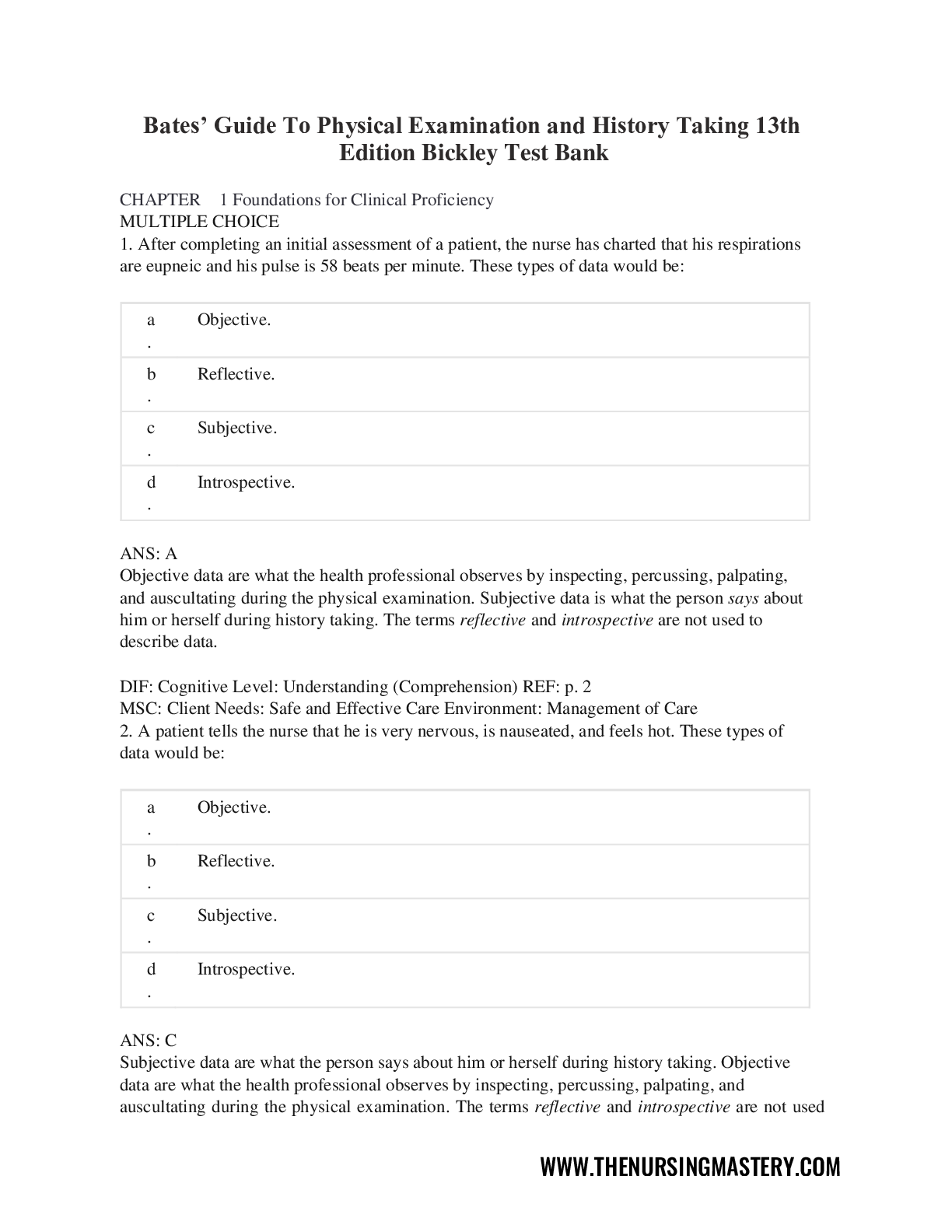
Student Exploration: Dehydration Synthesis
Adapted from ExploreLearning “Dehydration Synthesis” Gizmo
Access Gizmo through Clever! It will NOT work unless you do so!!!!
Answer in a different color and/or font style to
...
Student Exploration: Dehydration Synthesis
Adapted from ExploreLearning “Dehydration Synthesis” Gizmo
Access Gizmo through Clever! It will NOT work unless you do so!!!!
Answer in a different color and/or font style to receive credit.
Answers must be in your own words!
Vocabulary: carbohydrate, chemical formula, dehydration synthesis, disaccharide, glucose, hydrolysis,
monosaccharide, polysaccharide, valence
Prior Knowledge Questions (Do these BEFORE using the Gizmo.)
1. If you exercise on a hot day, you need to worry about dehydration. In this context, what do you
think dehydration means? With a lot of exercising on a hot day we get dehydrated fast and we would need
to drink water. We start to sweat and drink a lot of water to be rehydrated.
2. Astronauts and backpackers often bring dehydrated food. What do you think dehydrated food is? I think
food that wouldn’t have any water molecules in it.
3. Gizmo Warm-up
What do rice, potatoes, and sugar have in common? They are all foods
rich in carbohydrates. Carbohydrates are an important energy source
for your body. The basic building block of most carbohydrate
compounds is the molecule glucose. Using the Dehydration Synthesis
Gizmo™, you will learn about the structure of a glucose molecule and
how glucose molecules can be joined together to make larger
carbohydrate molecules.
To begin, select the CREATE GLUCOSE tab.
1. Look at the chemical formula for glucose. How many carbon (C), hydrogen (H), and oxygen (O) atoms
are found in a molecule of glucose? C:6 H:12 O:6
2. Turn on Show chemical structure. Each black sphere represents a carbon, hydrogen, or oxygen
atom. The lines connecting the spheres represent chemical bonds.
A. How many black spheres are in the diagram? 24
B. How does this relate to the number of carbon, hydrogen, and oxygen atoms in the chemical formula
for glucose? The 24 black spheres show the number of carbons, hydrogen, and oxygens
Introduction: Each element tends to form a certain number of chemical bonds. This value is the valence of
the element. For example, a carbon atom has a valence of four.
Goal: Construct a molecule of glucose.
Activity A:
Build a glucose
molecule
Get the Gizmo ready:
Be sure the CREATE GLUCOSE tab is still
selected.
This study source was downloaded by 100000824015019 from CourseHero.com on 04-19-2021 18:10:10 GMT -05:00
https://www.coursehero.com/file/50205201/DehydrationSynthesis-Gizmo-studentdoc/
This study resource was
shared via CourseHero.com
1. Identify: The structure of a water molecule (H2O) can be written as H-O-H, with each dash
representing a chemical bond. Count the number of bonds the oxygen and hydrogen atoms
form in a water molecule.
A. What is the valence of oxygen? two
B. What is the valence of hydrogen? One
2. Build a model: Use the carbon, oxygen, and hydrogen atoms from the Atoms box to build a
glucose molecule on the empty hexagon in the building region. Use the chemical structure in
the lower right as a guide and pay attention to the valence of each atom as you build.
Once you think you have correctly constructed the glucose molecule, click Check. If
necessary, continue to modify your molecule until it is correct.
3. Make a diagram: Congratulations, you have completed a molecule of glucose! Click the
Tools tab and click Screen shot to take a snapshot of your completed molecule. Right click
the image, click Copy, and then paste the image below. Label the image “Glucose.”
4. Explain: How did the valence of each element help you determine the structure of the
glucose molecule? The number of valence electrons define how the elements combine.
5. Make connections: Carbon forms the backbone of every major type of biological molecule,
including carbohydrates, fats, proteins, and nucleic acids. How does carbon’s high valence
relate to its ability to form these large and complex biomolecules? It can bond to two or even
three other carbon atoms and still form bonds to one or two other elements.
Activity B:
Dehydration
synthesis
Get the Gizmo ready:
Select the DEHYDRATION tab.
Question: What occurs when two glucose molecules bond?
1. Infer: Glucose is an example of a monosaccharide, the simplest type of carbohydrate. A
disaccharide is made from bonding two monosaccharides together.
What do you think the prefixes mono- and di- mean? Mono-: monomers of sugars
Di-: two monomers
[Show More]



![Preview of NURS1150 PHARMACOLOGY EXAM 3[QUESTIONS AND ANSWERS ]LATEST 2020/2021]](https://scholarfriends.com/storage/docx (1) (2).png)
![Preview of FISDAP Medical Questions with Answers[2022 ]graded A+)](https://scholarfriends.com/storage/FISDAP_Medical_Questions_with_Answers.png)
](https://scholarfriends.com/storage/EMT_Final (3).png)
![Preview of NURS 6501N Final Exam 1 (with Complete solution ]](https://scholarfriends.com/storage/NURS_6501N_Final_Exam_1__August_2020___100_out_of_100_.png)