Adult Nursing Exam 6
Dermatologic Problems
1. Acne Vulgaris:
a. What are the topical treatment options for a client with acne
vulgaris?
i. Benzoyl Peroxide- depresses sebum production &
promotes breakdown of comedo
...
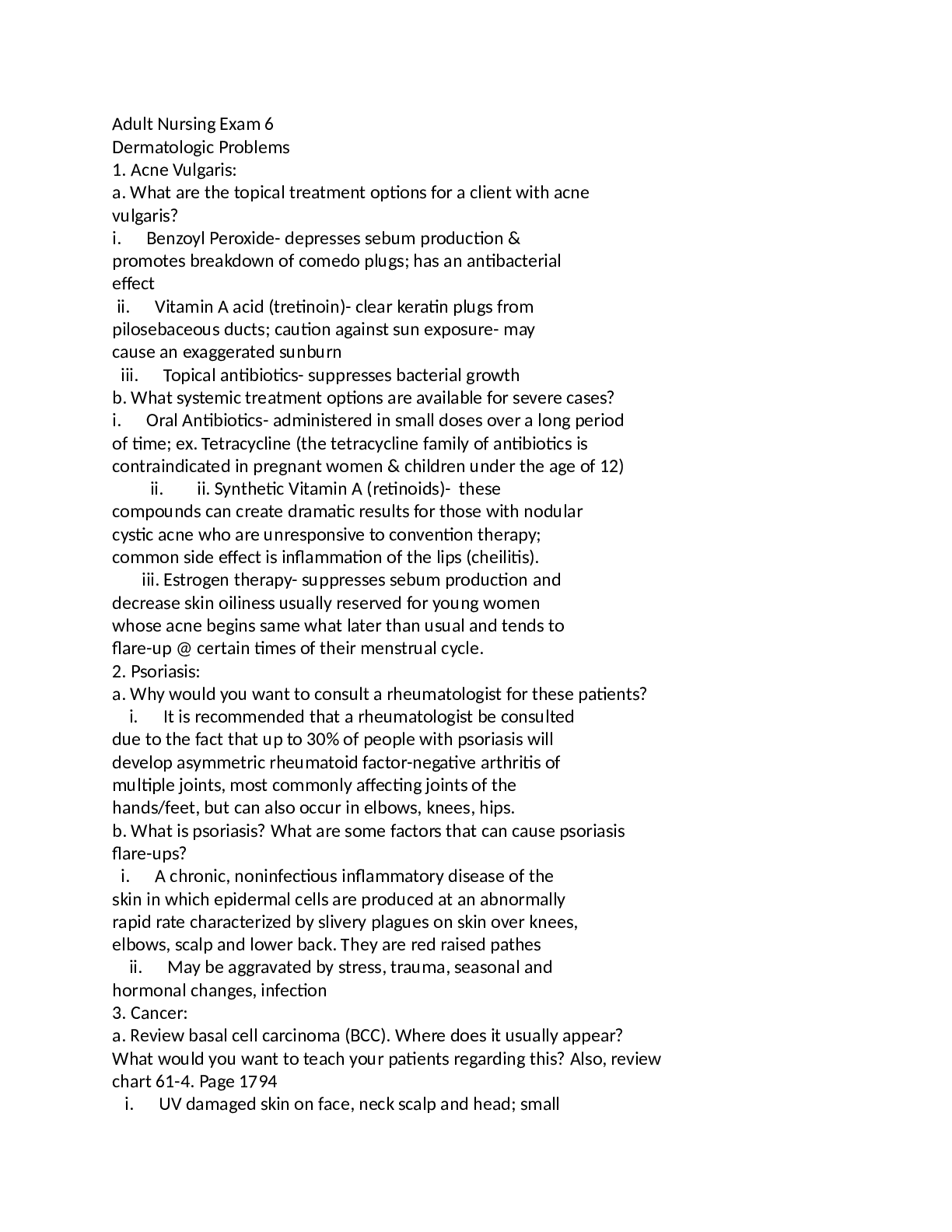
Adult Nursing Exam 6
Dermatologic Problems
1. Acne Vulgaris:
a. What are the topical treatment options for a client with acne
vulgaris?
i. Benzoyl Peroxide- depresses sebum production &
promotes breakdown of comedo plugs; has an antibacterial
effect
ii. Vitamin A acid (tretinoin)- clear keratin plugs from
pilosebaceous ducts; caution against sun exposure- may
cause an exaggerated sunburn
iii. Topical antibiotics- suppresses bacterial growth
b. What systemic treatment options are available for severe cases?
i. Oral Antibiotics- administered in small doses over a long period
of time; ex. Tetracycline (the tetracycline family of antibiotics is
contraindicated in pregnant women & children under the age of 12)
ii. ii. Synthetic Vitamin A (retinoids)- these
compounds can create dramatic results for those with nodular
cystic acne who are unresponsive to convention therapy;
common side effect is inflammation of the lips (cheilitis).
iii. Estrogen therapy- suppresses sebum production and
decrease skin oiliness usually reserved for young women
whose acne begins same what later than usual and tends to
flare-up @ certain times of their menstrual cycle.
2. Psoriasis:
a. Why would you want to consult a rheumatologist for these patients?
i. It is recommended that a rheumatologist be consulted
due to the fact that up to 30% of people with psoriasis will
develop asymmetric rheumatoid factor-negative arthritis of
multiple joints, most commonly affecting joints of the
hands/feet, but can also occur in elbows, knees, hips.
b. What is psoriasis? What are some factors that can cause psoriasis
flare-ups?
i. A chronic, noninfectious inflammatory disease of the
skin in which epidermal cells are produced at an abnormally
rapid rate characterized by slivery plagues on skin over knees,
elbows, scalp and lower back. They are red raised pathes
ii. May be aggravated by stress, trauma, seasonal and
hormonal changes, infection
3. Cancer:
a. Review basal cell carcinoma (BCC). Where does it usually appear?
What would you want to teach your patients regarding this? Also, review
chart 61-4. Page 1794
i. UV damaged skin on face, neck scalp and head; small
[Show More]