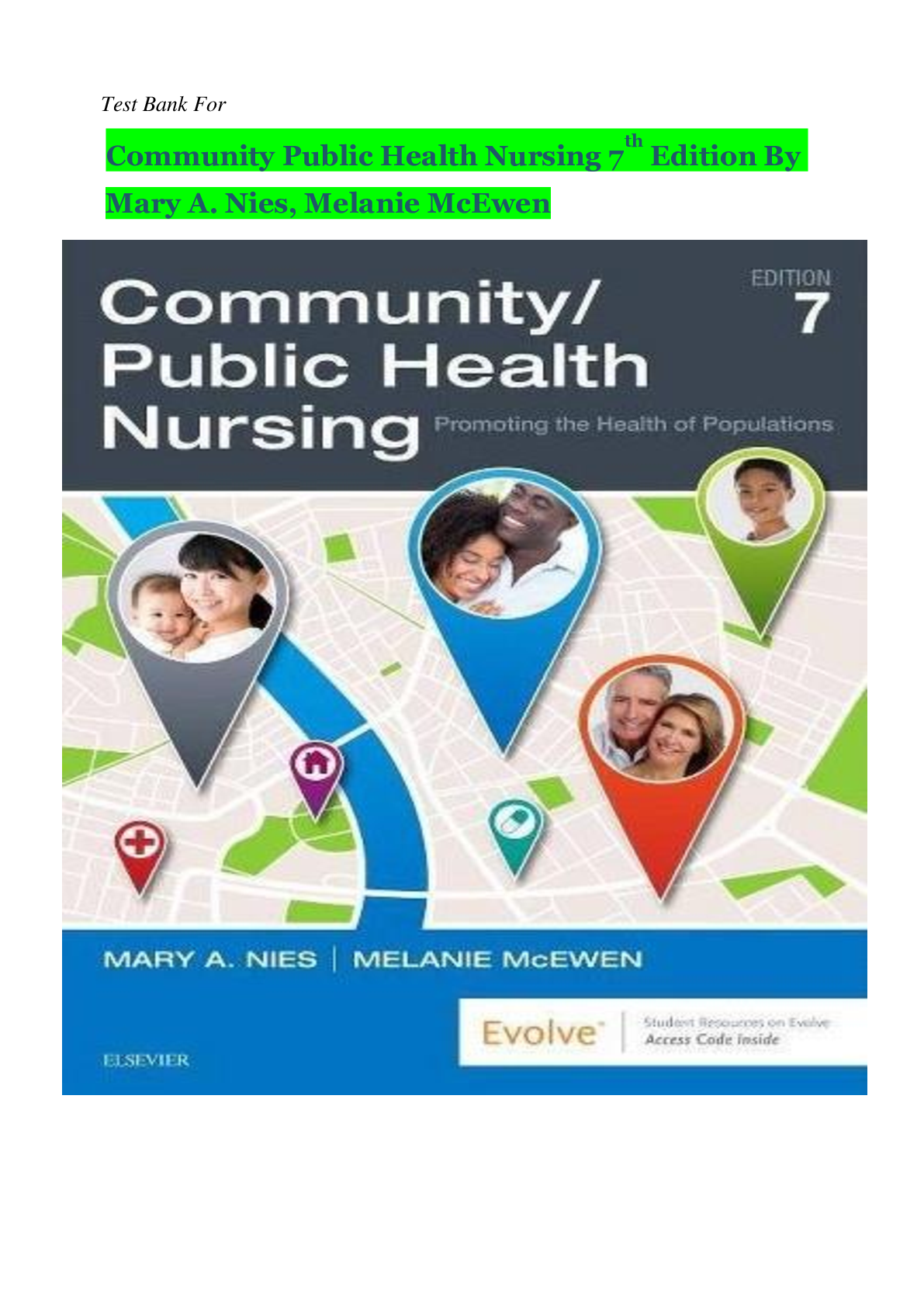
Modern Blood Banking Transfusion Practices 6th Edition
Modern Blood Banking Transfusion Practices*
ANTIGENS
Antigen RBC Antigen Antigen Antigen
Antigen Antigen ISBT Freq. % Expression Distrib. Demonstrates Modificati
...
Modern Blood Banking Transfusion Practices 6th Edition
Modern Blood Banking Transfusion Practices*
ANTIGENS
Antigen RBC Antigen Antigen Antigen
Antigen Antigen ISBT Freq. % Expression Distrib. Demonstrates Modification
System Name Name W B at Birth Plasma/RBC Dosage Enzyme/Other
Rh
Kell
Duffy
*This chart is to be used for general information only. Please refer to the appropriate chapter for more detailed information.
AET = 2-aminoethylisthiouronium bromide; ↑ = enhanced reactivity; → = no effect; ↓ = depressed reactivity; occ = occasionally; CGD = chronic granulomatious disease;
HDN = hemolytic disease of the newborn; HTR = hemolytic transfusion reaction; NRBC = non-red blood cell; RBC = red blood cell; WBC = white blood cell; ZZAP = dithiothreitol
plus papain.
• No human antibody to FY6 has been reported.
† It has been found that Kx is inherited independently of the Kell system; consequently it is no longer referred to as K15.
D CE ce
ce/f
Ce
Cw
GV
VS
K k
Kpa
Kpb
Jsa
Jsb
†Kx
FYa
FYb
RH1
RH2
RH3
RH4
RH5
RH6
RH7
RH8
RH12
RH10
RH20
KEL1
KEL2
KEL3
KEL4
KEL6
KEL7
—
FY1
FY2
FY3
FY5
•FY6
85
70
30
80
98
64
70
1
86
1 1 9
98.8
2
99.9
.01
99.9
99.9
65
80
100
100
100
92
34
21
97
99
rare
30
32
rare
100
rare
100
20
99
99.9
10
23
?
strong
strong
strong
strong
strong
strong
strong
strong
strong
strong
strong
strong
strong
strong
strong
strong
strong
weak
strong
strong
strong
? ?
RBC only
RBC only
RBC only
RBC only
RBC only
RBC only
RBC only
RBC only
RBC only
RBC only
RBC only
RBC only
RBC only
RBC only
RBC only
RBC only
RBC only
RBC low
RBC only
RBC only
RBC only
?
RBC only
no
yes
yes
yes
yes
no
no
yes
no
no
no
occ
occ
occ
occ
occ
occ
occ
yes
yes
no
no
?
Enz. ↑
Enz. ↑
Enz. ↑
Enz. ↑
Enz. ↑
Enz. ↑
Enz. ↑
Enz. ↑
Enz. ↑
Enz. ↑
Enz. → AET+ ↓ ZZAP ↓++
Enz. → AET+ ↓ ZZAP ↓++
Enz. → AET+ ↓ ZZAP ↓++
Enz. → AET+ ↓ ZZAP ↓++
Enz. → AET+↓ ZZAP ↓++
Enz. → AET+ ↓ ZZAP ↓++
Enz. → AET+ ↓ ZZAP ↓++
Enz. ↓ AET ↓ ZZAP ↓
Enz. ↓ AET ↓ ZZAP ↓
Enz. → AET → ZZAP →
Enz. → AET → ZZAP →
Enz. ↓ AET → ZZAP ↓ANTIBODIES
Immunoglobin Clinical
Serology Comp. Class Optimum Significance
Stimulation Saline AHG Binding IgM IgG Temperature HTR HDN Comments
RBC
RBC
RBC/NRBC
RBC
RBC
RBC
RBC
RBC/NRBC
RBC
RBC
RBC
RBC
RBC
RBC
RBC
RBC
RBC
RBC
RBC
RBC
RBC
RBC
occ
occ
occ
occ
occ
occ
occ
occ
occ
occ
occ
occ
no
no
rarely
rarely
no
no
rare
rare
no
no
yes
yes
yes
yes
yes
yes
yes
yes
yes
yes
yes
yes
yes
yes
yes
yes
yes
yes
yes
yes
yes
yes
no
no
no
no
no
no
no
no
no
no
no
some
no
no
no
no
no
no
some
some
rarely
?
occ
occ
occ
occ
occ
occ
occ
occ
occ
occ
occ
occ
rarely
no
rarely
rarely
no
occ
rare
rare
no
no
yes
yes
yes
yes
yes
yes
yes
yes
yes
yes
yes
yes
yes
yes
yes
yes
yes
yes
yes
yes
yes
yes
warm
warm
warm
warm
warm
warm
warm
warm
warm
warm
warm
warm
warm
warm
warm
warm
warm
warm
warm
warm
warm
warm
yes
yes
yes
yes
yes
yes
yes
yes
yes
yes
yes
yes
yes
yes
yes
yes
yes
yes
yes
yes
yes
yes
yes
yes
yes
yes
yes
yes
yes
yes
yes
yes
yes
yes
yes
yes
yes
yes
yes
yes
yes
yes
Very rarely IgA anti-D may be
produced; however, this is
invariably with IgG.
Anti-E may often occur without
obvious immune stimulation.
Warm autoantibodies often appear
to have anti-e-like specificity.
Anti-Cw may often occur without
obvious immune stimulation.
Antibodies to V and VS present
problems only in the black population,
where the antigen frequencies are in
the order of 30 to 32.
Some antibodies to Kell system have
been reported to react poorly in
low ionic media.
Kell system antigens are destroyed
by AET and by ZZAP.
Anti-K1 has been reported to occur
following bacterial infection.
The lack of Kx expression on RBCs
and WBCs has been associated with
the McLeod phenotype and CGD.
Fya and Fyb antigens are destroyed by
enzymes. Fy (a–b–) cells are resistant
to invasion by P. vivax merozoites, a
malaria-causing parasite.
FY3 and 5 are not destroyed by
enzymes.
FY5 may be formed by interaction of
Rh and Duffy gene products.
FY6 is a monoclonal antibody which
reacts with most human red cells
except Fy(a–b–) and is responsible
for susceptibility of cells to penetration
by P. vivax.
(Continued on inside back cover)Modern Blood Banking
& Transfusion Practices
SIXTH EDITIONOnline Resource Center
Visit davisplus.fadavis.com
StudentS
Unlimited free access.
Sign up today to see what’s
available for your title.
InStructorS
Upon Adoption.
Password-protected library of
title-specific, online course content.
DavisPlus is your online source for a wealth of learning resources and
teaching tools, as well as electronic and mobile versions of our products.
www.fadavis.com
Taber’s online resources are now available across many
of the DavisPlus resource pages.
Look for this icon to find Taber’s resources!
www.drugGuide.com
The complete Davis’s Drug Guide
for Nurses® database with over
1,100 monographs on the web.
www.Tabers.com
The power of Taber’s® Cyclopedic
Medical Dictionary on the web.
Find more than 60,000 terms,
1,000 images, and more.
www.LabdxTest.com
The complete database for Davis’s
Comprehensive Handbook of
Laboratory and Diagnostic
Tests with Nursing Implications
online. Access hundreds of
detailed monographs.
explore more online resources from f.a.davisModern Blood
Banking &
Transfusion Practices
SIXTH EDITION
Denise Harmening, PhD, MT(ASCP)
Director of the Online Masters in Clinical Laboratory Management
Adjunct Professor, Department of Medical Laboratory Science
College of Health Sciences
Rush University
Chicago, Illinois, USAF. A. Davis Company
1915 Arch Street
Philadelphia, PA 19103
www.fadavis.com
Copyright © 2012 by F. A. Davis Company
Copyright © 2012 by F. A. Davis Company. All rights reserved. This product is protected by copyright. No part of it may be reproduced, stored in a retrieval
system, or transmitted in any form or by any means, electronic, mechanical, photocopying, recording, or otherwise, without written permission from the
publisher.
Printed in the United States of America
Last digit indicates print number: 10 9 8 7 6 5 4 3 2 1
Senior Acquisitions Editor: Christa Fratantoro
Manager of Content Development: George W. Lang
Developmental Editor: Nancy J. Peterson
Art and Design Manager: Carolyn O’Brien
As new scientific information becomes available through basic and clinical research, recommended treatments and drug therapies undergo changes. The
author(s) and publisher have done everything possible to make this book accurate, up to date, and in accord with accepted standards at the time of publication. The author(s), editors, and publisher are not responsible for errors or omissions or for consequences from application of the book, and make no
warranty, expressed or implied, in regard to the contents of the book. Any practice described in this book should be applied by the reader in accordance
with professional standards of care used in regard to the unique circumstances that may apply in each situation. The reader is advised always to check
product information (package inserts) for changes and new information regarding dose and contraindications before administering any drug. Caution is
especially urged when using new or infrequently ordered drugs.
Library of Congress Cataloging-in-Publication Data
Modern blood banking & transfusion practices / [edited by] Denise Harmening.—6th ed.
p. ; cm.
Modern blood banking and transfusion practices
Rev. ed. of: Modern blood banking and transfusion practices / [edited by] Denise M. Harmening. c2005.
Includes bibliographical references and index.
ISBN 978-0-8036-2682-9–ISBN 0-8036-2682-7
I. Harmening, Denise. II. Modern blood banking and transfusion practices. III. Title: Modern blood banking and transfusion practices.
[DNLM: 1. Blood Banks—methods. 2. Blood Grouping and Crossmatching. 3. Blood Transfusion—methods. WH 460]
615'.39—dc23
2011047863
Authorization to photocopy items for internal or personal use, or the internal or personal use of specific clients, is granted by F. A. Davis Company for users
registered with the Copyright Clearance Center (CCC) Transactional Reporting Service, provided that the fee of $.25 per copy is paid directly to CCC, 222
Rosewood Drive, Danvers, MA 01923. For those organizations that have been granted a photocopy license by CCC, a separate system of payment has been
arranged. The fee code for users of the Transactional Reporting Service is: / + $.25.To all students—full-time, part-time, past, present,
and future—who have touched and will continue to
touch the lives of so many educators. . . .
It is to you this book is dedicated in the hope of
inspiring an unquenchable thirst for knowledge and
love of mankind.vii
Foreword
Blood groups were discovered more than 100 years ago, but
most of them have been recognized only in the past 50 years.
Although transfusion therapy was used soon after the ABO
blood groups were discovered, it was not until after World
War II that blood transfusion science really started to become
an important branch of medical science in its own right. In
order to advance, transfusion science needs to be nurtured
with a steady flow of new knowledge generated from research. This knowledge then must be applied at the bench.
To understand and best take advantage of the continual
flow of new information generated by blood transfusion scientists and to apply it to everyday work in the blood bank,
technologists and pathologists must have a solid understanding of basic immunology, genetics, biochemistry (particularly
membrane chemistry), and the physiology and function of
blood cells. High standards are always expected and strived
for by technologists who work in blood banks and transfusion services. I strongly believe that technologists should understand the principles behind the tests they are performing,
rather than performing tasks as a machine does.
Because of this, I do not think that “cookbook” technical
manuals have much value in teaching technologists; they do
have a place as reference books in the laboratory. During the
years (too many to put in print) that I have been involved in
teaching medical technologists, it has been very difficult to
select one book that covers all of the information that technologists in training need to know about blood transfusion
science without confusing them.
Dr. Denise Harmening has produced that single volume.
She has been involved in teaching medical technologists for
most of her career. After seeing how she has arranged this
book, I would guess that her teaching philosophies are close
to my own. She has gathered a group of experienced scientists and teachers who, along with herself, cover all of the
important areas of blood transfusion science.
The chapters included in Part I, “Fundamental Concepts”
(including a section on molecular phenotyping), provide a
firm base on which the student can learn the practical and
technical importance of the other chapters. The chapters in
Part II, “Blood Groups and Serologic Testing,” and Part III,
“Transfusion Practice” (including a new chapter on cellular
therapy), provide enough information for medical technologists without overwhelming them with esoteric and clinical
details. Part IV covers leukocyte antigens and relationship
(parentage) testing. The chapters in Part V, “Quality and
Compliance Issues” (including new chapters on utilization
management and tissue banking), complete the scope of
transfusion science. Part VI: Future Trends describes tissue
banking as a new role for the transfusion service.
Although this book is designed primarily for medical
technologists, I believe it is admirably suited to pathology
residents, hematology fellows, and others who want to
review any aspect of modern blood banking and transfusion
practices.
GEORGE GARRATTY, PhD, FIBMS, FRCPath
Scientific Director
American Red Cross Blood Services
Southern California Region
and
Clinical Professor of Pathology and Laboratory Medicine
University of California, Los Angelesix
Preface
This book is designed to provide the medical technologist,
blood bank specialist, and resident with a concise and thorough guide to transfusion practices and immunohematology.
This text, a perfect “crossmatch” of theory and practice, provides the reader with a working knowledge of routine blood
banking. Forty-four contributors from across the country
have shared their knowledge and expertise in 28 comprehensive chapters. More than 500 illustrations and tables
facilitate the comprehension of difficult concepts not routinely illustrated in other texts. In addition, color plates provide a means for standardizing the reading of agglutination
reactions.
Several features of this textbook offer great appeal to students and educators, including chapter outlines and educational objectives at the beginning of each chapter; case
studies, review questions, and summary charts at the end of
each chapter; and an extensive and convenient glossary for
easy access to definitions of blood bank terms.
A blood group Antigen-Antibody Characteristic Chart is
provided on the inside cover of the book to aid in retention
of the vast amount of information and serve as a review of
the characteristics of the blood group systems. Original,
comprehensive step-by-step illustrations of ABO forward and
reverse grouping, not found in any other book, help the student to master this important testing, which represents the
foundation of blood banking.
The sixth edition has been reorganized and divided into
the following sections:
• Part I: Fundamental Concepts
• Part II: Blood Groups and Serologic Testing
• Part III: Transfusion Practice
• Part IV: Leukocyte Antigens and Relationship Testing
• Part V: Quality and Compliance Issues
• Part VI: Future Trends
In Part I, the introduction to the historical aspects of red
blood cell and platelet preservation serves as a prelude to the
basic concepts of genetics, blood group immunology, and
molecular biology (including molecular phenotyping). Part II
focuses on blood groups and routine blood bank practices
and includes the chapters “Detection and Identification of
Antibodies” and “Pretransfusion Testing.” It also covers current technologies and automation.
Part III, “Transfusion Practice,” includes a new chapter
called “Cellular Therapy” and covers the more traditional
topics of donor screening, component preparation, transfusion therapy, transfusion reactions, and apheresis. Certain
clinical situations that are particularly relevant to blood
banking are also discussed in detail in this section, including
hemolytic disease of the fetus and newborn, autoimmune
hemolytic anemias, and transfusion-transmitted diseases.
The human leukocyte antigens system and relationship
testing are discussed in Part IV of the book. In Part V, quality
and compliance issues are discussed, including a new chapter
on utilization management. The chapters on quality management, transfusion safety and federal regulatory requirements, laboratory information systems, and legal and ethical
considerations complete the scope of practice for transfusion
services. Also included is the chapter “Tissue Banking: A
New Role for the Transfusion Service,” which introduces another responsibility already in place in several institutions.
This book is a culmination of the tremendous efforts of
many dedicated professionals who participated in this project
by donating their time and expertise because they care about
the blood bank profession. The book’s intention is to foster
improved patient care by providing the reader with a basic
understanding of modern blood banking and transfusion
practices. The sixth edition is designed to generate an
unquenchable thirst for knowledge in all medical technologists, blood bankers, and practitioners, whose education,
knowledge, and skills provide the public with excellent
health care.
DENISE M. HARMENING, PhD, MT(ASCP)x
Contributors
Robert W. Allen, PhD
Director of Forensic Sciences
Center for Health Sciences
Oklahoma State University
Tulsa, Oklahoma, USA
Lucia M. Berte, MA, MT(ASCP)SBB, DLM;
CQA(ASQ)CMQ/OE
President
Laboratories Made Better! P.C.
Broomfield, Colorado, USA
Maria P. Bettinotti, PhD
Director, HLA & Immunogenetics Department
Quest Diagnostics Nichols Institute
Chantilly, Virginia, USA
Cara Calvo, MS, MT(ASCP)SH
Medical Technology Program Director and Lecturer
Department of Laboratory Medicine
University of Washington
Seattle, Washington, USA
Lorraine Caruccio, PhD, MT(ASCP)SBB
National Institutes of Health
Rockville, Maryland, USA
Judy Ellen Ciaraldi, BS, MT(ASCP)SBB, CQA(ASQ)
Consumer Safety Officer
Division of Blood Applications
Office of Blood Research and Review
Center for Biologics Evaluation and Research
U.S. Food and Drug Administration
Rockville, Maryland, USA
Julie L. Cruz, MD
Associate Medical Director
Indiana Blood Center
Indianapolis, Indiana, USA
Paul James Eastvold, MD, MT(ASCP)
Chief Medical Officer
American Red Cross
Lewis and Clark Region
Salt Lake City, Utah, USA
Glenda A. Forneris, MHS, MT(ASCP)SBB
Program Director/Professor
Medical Laboratory Technology Program
Kankakee Community College
Kankakee, Illinois, USA
Ralph E. B. Green
Associate Professor
Discipline and Program Leader
Discipline of Laboratory Medicine
School of Medical Sciences
RMIT University
Melbourne, Australia
Steven F. Gregurek, MD
Assistant Professor
Clarian Health
Indianapolis, Indiana, USA
Denise Harmening, PhD, MT(ASCP)
Director of the Online Masters in Clinical Laboratory Management
Adjunct Professor, Department of Medical Laboratory Science
College of Health Sciences
Rush University
Chicago, Illinois, USA
Chantal Ricaud Harrison, MD
Professor of Pathology
University of Texas Health Sciences Center at San Antonio
San Antonio, Texas, USA
Elizabeth A. Hartwell, MD, MT(ASCP)SBB
Medical Director
Gulf Coast Regional Blood Center
Houston, Texas, USA
Darlene M. Homkes, MT(ASCP)
Senior Technologist for Transfusion Services
St. Joseph Hospital
Kokomo, Indiana, USA
Virginia C. Hughes, MS, MLS(ASCP)SBB
Director/Assistant Professor
Medical Laboratory Sciences
Dixie State College of Utah
St. George, Utah
Patsy C. Jarreau, MLS(ASCP)
Program Director and Associate Professor
Department of Clinical Laboratory Sciences
School of Allied Health Professions
Louisiana State University Health Sciences Center
New Orleans, Louisiana, USASusan T. Johnson, MSTM, MT(ASCP)SBB
Director: Department of Clinical Education and Specialist in Blood
Banking (SBB) Program, Blood Center of Wisconsin
Director and Adjunct Associate Professor:
Marquette University Graduate School, Transfusion Medicine Program
Clinical Associate Professor: University of Wisconsin-Milwaukee, College of
Health Sciences
Associate Director: Indian Immunohematology Initiative
Milwaukee, Wisconsin, USA
Melanie S. Kennedy, MD
Clinical Associate Professor Emeritus
Department of Pathology
College of Medicine
The Ohio State University
Columbus, Ohio, USA
Dwane A. Klostermann, MSTM, MT(ASCP)SBB
Clinical Laboratory Technician Instructor
Moraine Park Technical College
Fond du Lac, Wisconsin, USA
Barbara Kraj, MS, MLS(ASCP)CM
Assistant Professor
Georgia Health Sciences University
College of Allied Health Sciences
Department of Medical Laboratory, Imaging, and Radiologic Sciences
Augusta, Georgia, USA
Regina M. Leger, MSQA, MT(ASCP)SBB, CMQ/OE(ASQ)
Research Associate II
American Red Cross Blood Services
Southern California Region
Pomona, California, USA
Ileana Lopez-Plaza, MD
Division Head, Transfusion Medicine
Department of Pathology and Laboratory Medicine
Henry Ford Health System
Detroit, Michigan, USA
Holli Mason, MD
Director, Transfusion Medicine and Serology
Director, Pathology Residency Training Program
Harbor UCLA Medical Center
Associate Clinical Professor
David Geffen School of Medicine at UCLA
Torrance, California, USA
Gerald P. Morris, MD, PhD
Research Instructor
Department of Pathology and Immunology
Washington University School of Medicine
Saint Louis, Missouri, USA
Donna L. Phelan, BA, CHS(ASHI), MT(HEW)
Technical Supervisor
HLA Laboratory
Barnes-Jewish Hospital
St. Louis, Missouri, USA
Christine Pitocco, MS, MT(ASCP)BB
Clinical Assistant Professor
Clinical Laboratory Science Program
School of Health Technology and Management
Stony Brook University
Stony Brook, New York, USA
Valerie Polansky, MEd, MLS(ASCP)CM
Retired Program Director
Medical Laboratory Technology Program
St. Petersburg College
St. Petersburg, Florida, USA
Karen Rodberg, MBA, MT(ASCP)SBB
Director, Reference Services
American Red Cross Blood Services
Southern California Region
Pomona, California, USA
Susan Ruediger, MLT, CSMLS
Senior Medical Technologist
Henry Ford Cottage Hospital
Henry Ford Health System
Grosse Pointe Farms, Michigan, USA
Kathleen Sazama, MD, JD, MS, MT(ASCP)
Chief Medical Officer
LifeSouth Community Blood Centers, Inc.
Gainesville, Florida, USA
Scott Scrape, MD
Assistant Professor of Pathology
Director, Transfusion Medicine Service
The Ohio State University Medical Center
Columbus, Ohio, USA
Burlin Sherrick, MT(ASCP)SBB
Blood Bank Supervisor and Adjunct Clinical Instructor
Lima Memorial Hospital
Lima, Ohio
Ann Tiehen, MT(ASCP) SBB
Education Coordinator (f), Retired
North Shore University Health System
Evanston Hospital
Department of Pathology and Laboratory Medicine
Evanston, Illinois, USA
Kathleen S. Trudell, MLS(ASCP)CM SBBCM
Clinical Coordinator—Immunohematology
Clinical Laboratory Science Program
University of Nebraska Medical Center
Omaha, Nebraska, USA
Phyllis S. Walker, MS, MT(ASCP)SBB
Manager, Immunohematology Reference Laboratory, Retired
Blood Centers of the Pacific
San Francisco, California, USA
Contributors xiMerilyn Wiler, MA, MT(ASCP)SBB
Customer Regulatory Support Specialist
Terumo BCT
Lakewood, Colorado
Alan E. Williams, PhD
Associate Director for Regulatory Affairs
Office of Blood Research and Review
Center for Biologics Evaluation and Research
U.S. Food and Drug Administration
Silver Spring, Maryland, USA
Elizabeth F. Williams, MHS, MLS(ASCP)CM, SBB
Associate Professor
Department of Clinical Laboratory Sciences
School of Allied Health Professions
LSU Health Sciences Center
New Orleans, Louisiana, USA
Scott Wise, MHA, MLS(ASCP), SBB
Assistant Professor and Translational Research Laboratory Manager
Medical College of Georgia
Department of Biomedical and Radiological Technologies
Augusta, Georgia, USA
[Show More]