NURSING > HESI > PSYCHIATRIC NURSING HESI FINAL EXAM 2021 THERAPEUTIC COMMUNICATION TREATMENT MODALITIES (All)
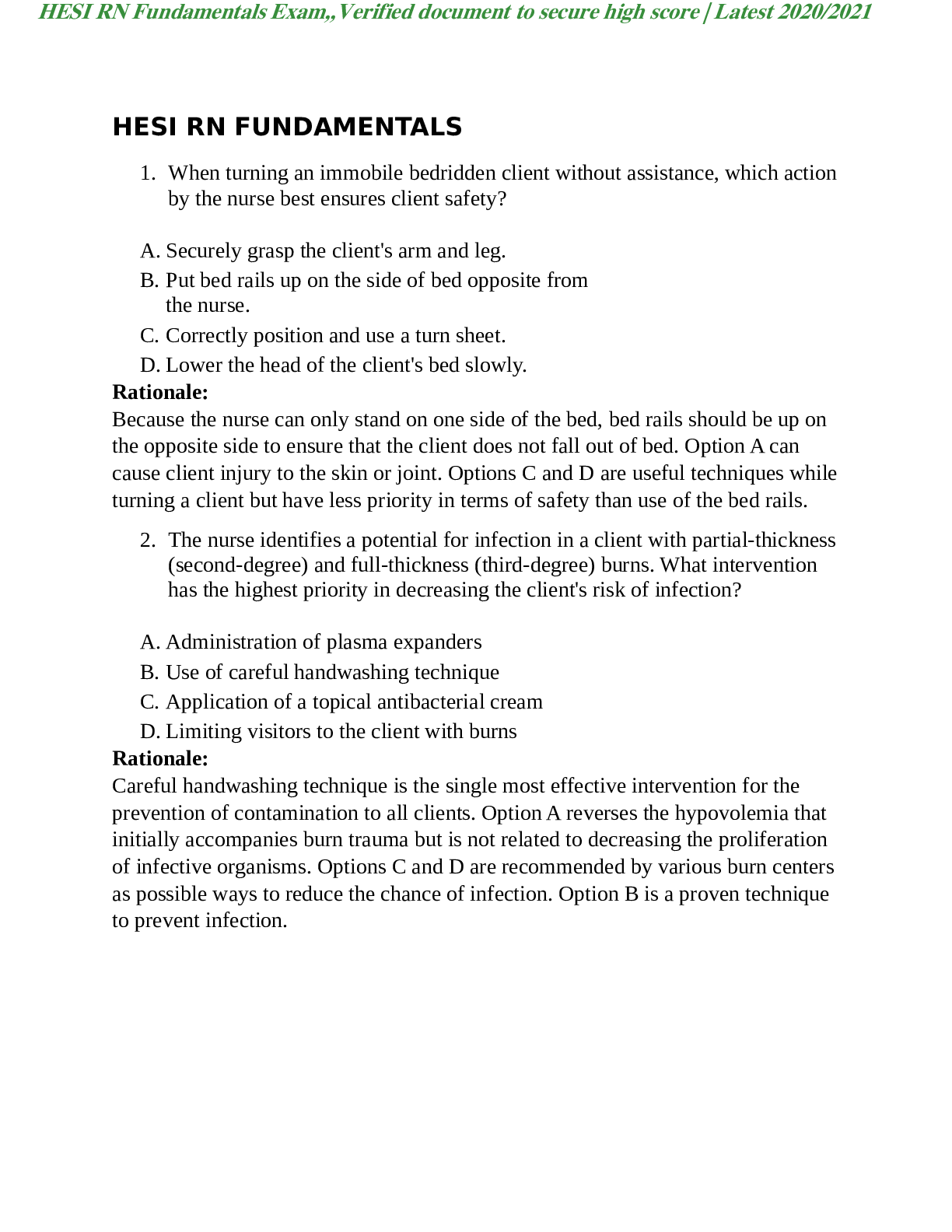
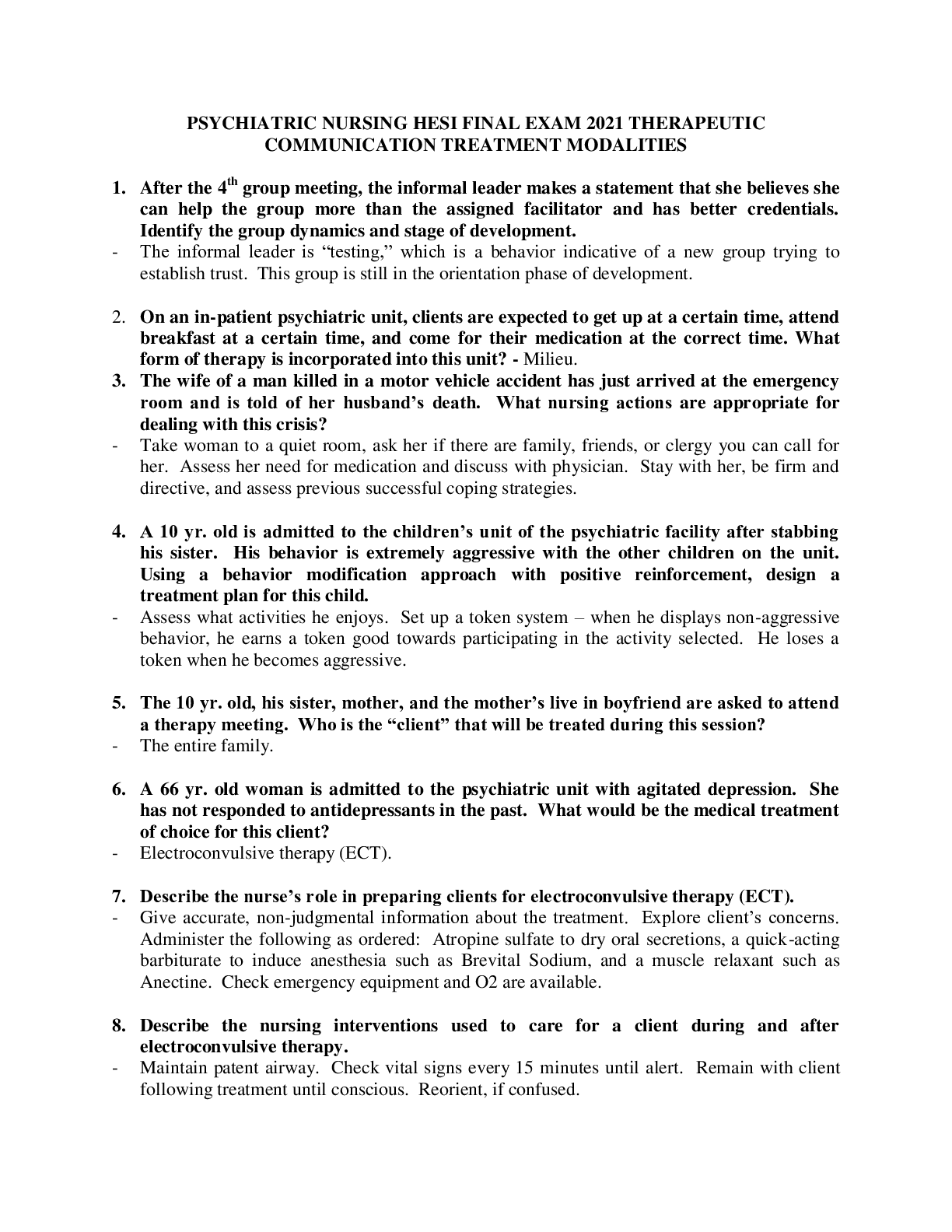
PSYCHIATRIC NURSING HESI FINAL EXAM 2021 THERAPEUTIC COMMUNICATION TREATMENT MODALITIES
Document Content and Description Below
Last updated: 4 years ago
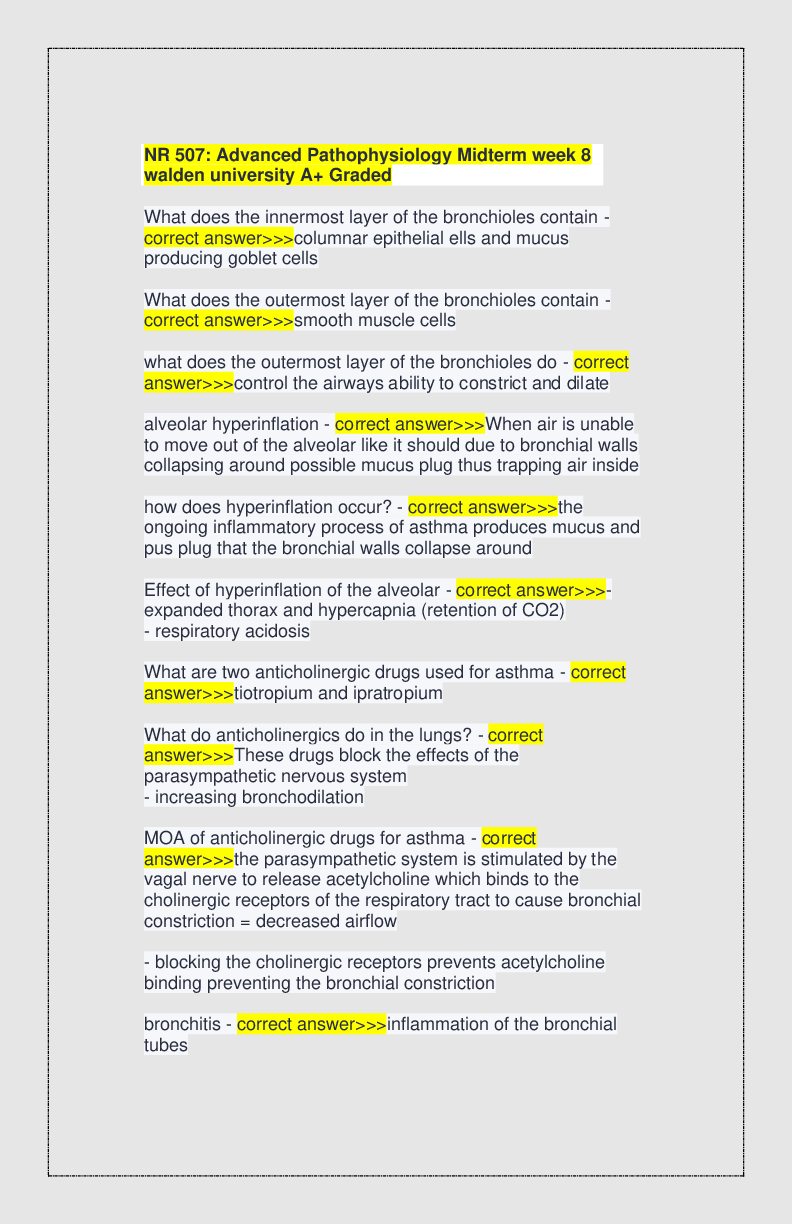
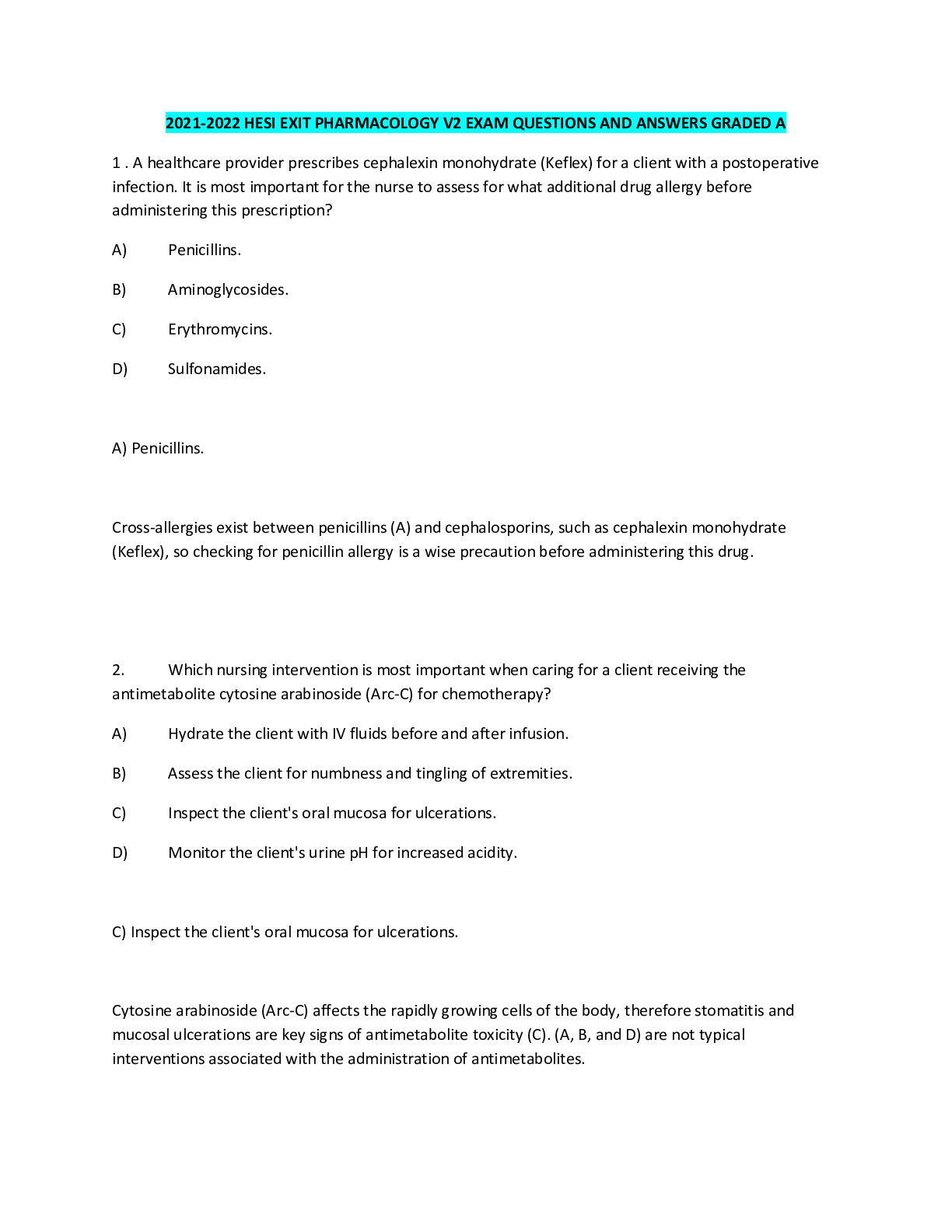
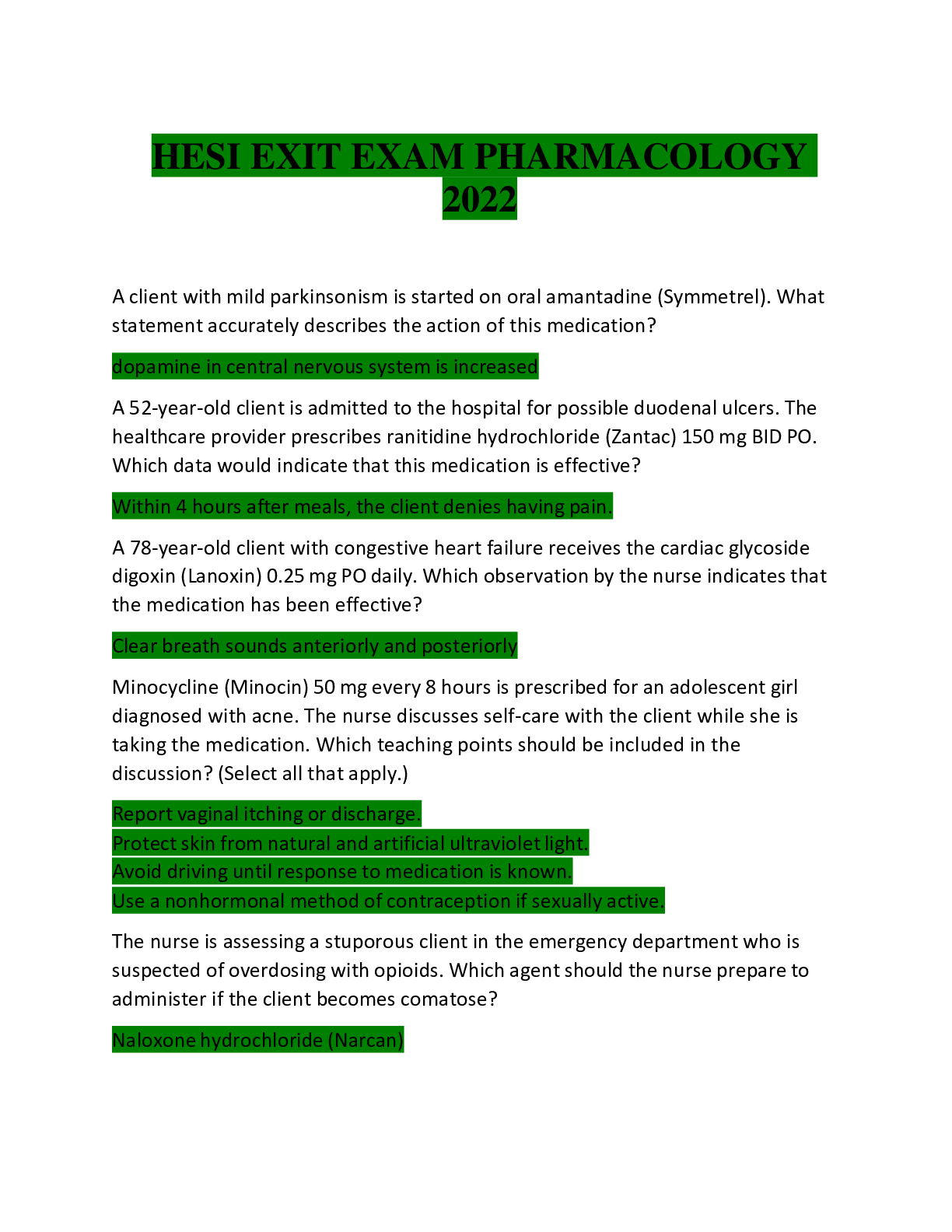
Preview 1 out of 8 pages
Instant download
Buy this Document to get the Full Access Instantly
Provided by Students Who Aced it
We Verify Document Content to Gurantee Accuracy
Reviews( 0 )
Document information
Connected school, study & course
About the document
Uploaded On
Apr 21, 2021
Number of pages
8
Written in
All

Additional information
This document has been written for:
Uploaded
Apr 21, 2021
Downloads
0
Views
161
Topic Tags
Recommended For You
Get more on HESI »
HESI DOSAGE CALCULATIONS QUIZ 150 QUESTIONS AND CORRECT SOVLED...
HESI LPN Medical-Surgical Nursing I & II Exam LPN/LVN Comprehe...
2026 HESI RN Exit Exam | NGN Nursing Questions | 2026 HESI Nur...
MED SURG HESI EXIT EXAM Compilation Test Bank - QUESTIONS AND...
MED SURG HESI EXIT EXAM Compilation of highly tested Questions...
MED SURG HESI EXIT EXAM QUESTIONS AND ANSWERS CORRECT/VERIFIED...
 Questions, Answers & Rationale, A+ Guide.png)
Mental Health PSYCH HESI Practice 2021 Study Guide - Verified...
Solutions Manual for Organic Chemistry 9th Edition by John McM...

Instructor Manual(Lecture Notes Only) for Principles of Pediat...
Instructor's Manual (Lecture Notes) For Health & Physical Asse...

Instructor's Manual for Child Health Nursing, Updated Edition...