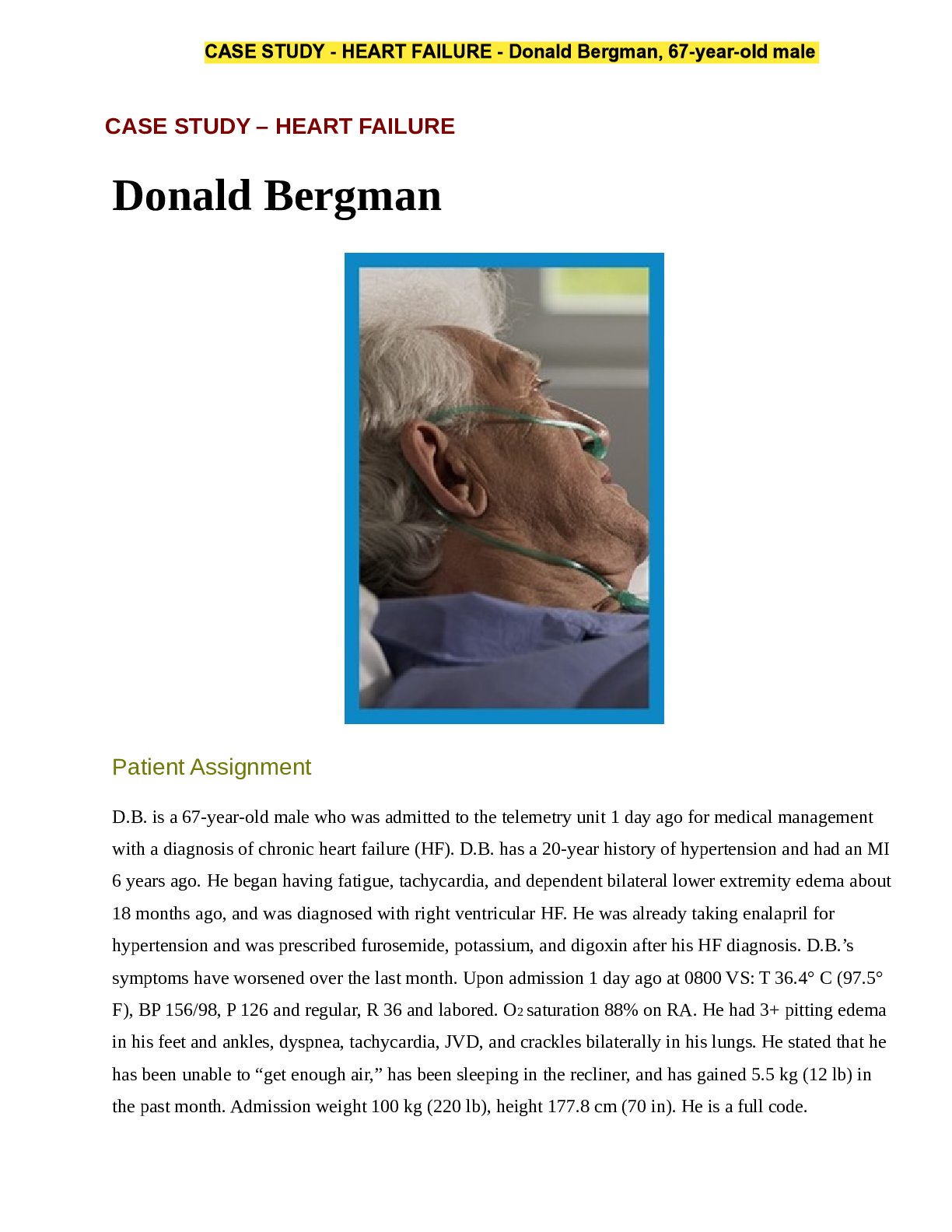
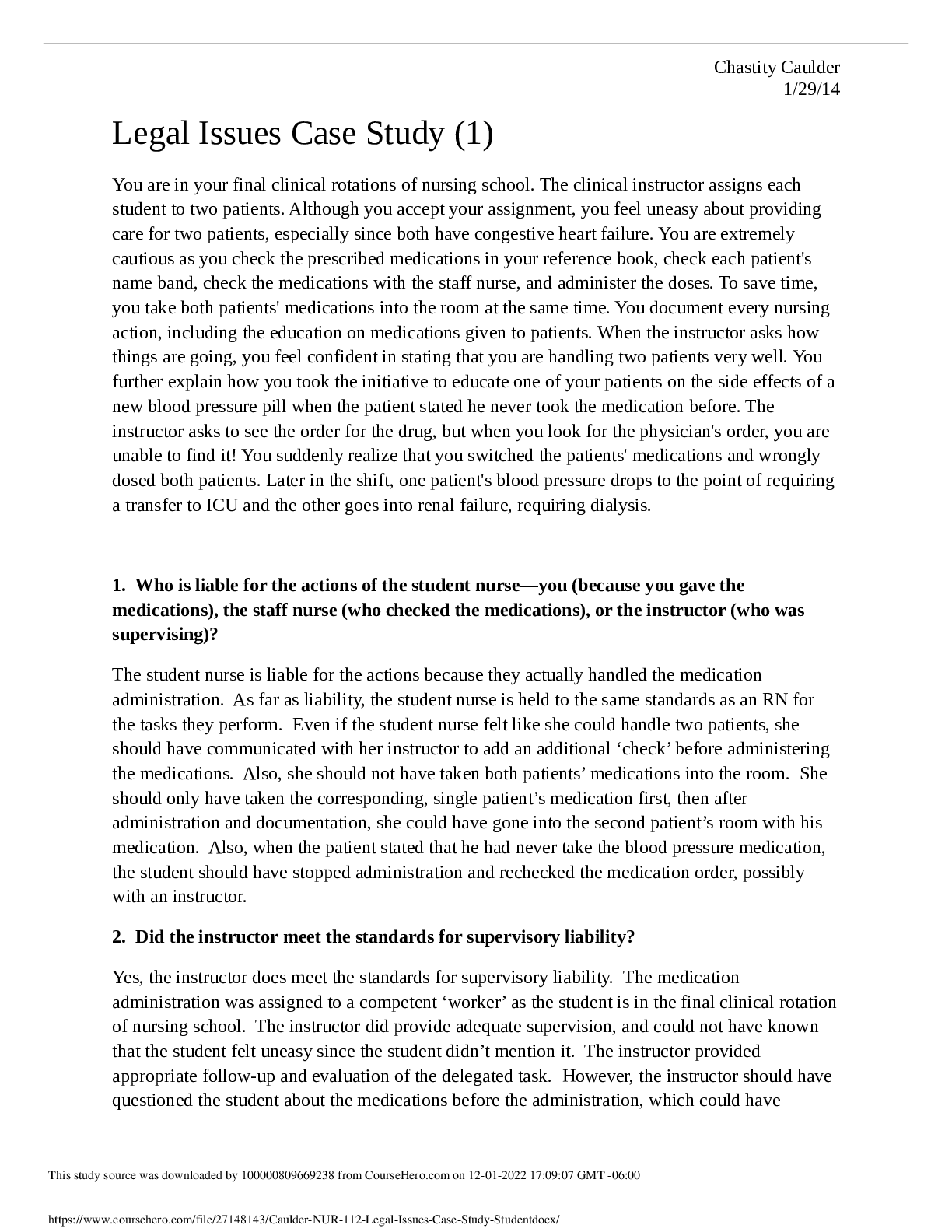
NURSING > CASE STUDY > Acute Coronary Syndrome (ACS) Myocardial Infarction (MI) (All)
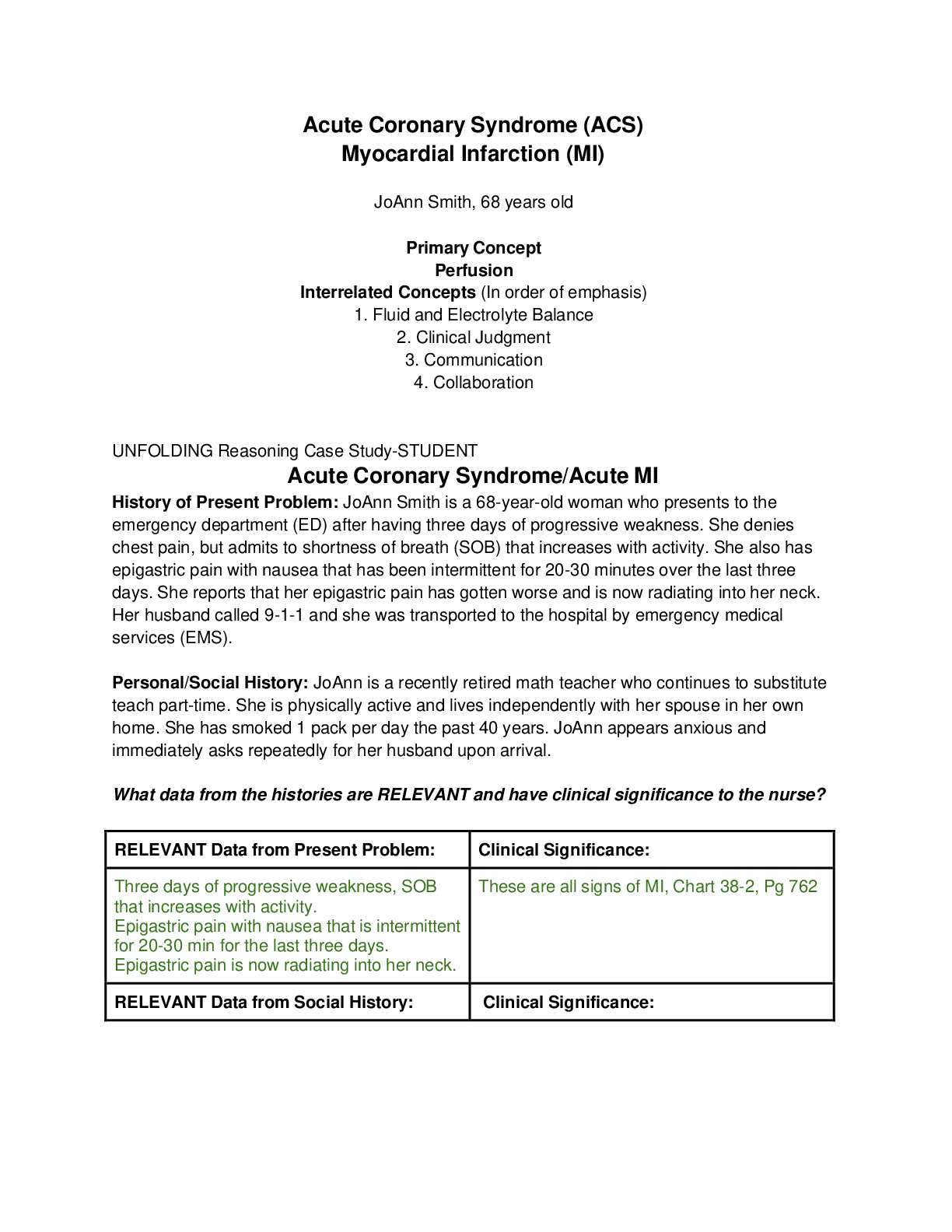
Acute Coronary Syndrome (ACS) Myocardial Infarction (MI)
Document Content and Description Below
Last updated: 3 years ago
Preview 1 out of 11 pages
Instant download

Buy this Document to get the Full Access Instantly
Provided by Students Who Aced it
We Verify Document Content to Gurantee Accuracy
Reviews( 0 )
Document information
Connected school, study & course
About the document
Uploaded On
Apr 21, 2021
Number of pages
11
Written in
All

Additional information
This document has been written for:
Uploaded
Apr 21, 2021
Downloads
0
Views
183
Topic Tags
Recommended For You
Get more on CASE STUDY »
JoAnn Smith _ Acute Coronary Syndrome_ Myocardial Infarction (...

Joann Smith - Acute Coronary Syndrome - Myocardial Infarction...
Case Study for Clinical Makeup Acute Coronary Syndrome (ACS) M...
 Myocardial Infarction (MI), (Latest 2021) Correct Study Guide, Download to Score A.png)
Case Study JoAnn Smith, 68 years old, Acute Coronary Syndrome...
 Myocardial Infarction (MI), JoAnn Smith, 68 years old, (Latest 2021) Correct Study Guide, Download to Score A.png)
Case Study Acute Coronary Syndrome (ACS) Myocardial Infarction...

Test Bank for 12 Lead ECG in Acute Coronary Syndromes 3rd Edit...
CASE STUDY Acute Coronary Syndrome (ACS) Myocardial Infarction...
Christina Hammack and Cash Thomas Acute Coronary Syndrome (ACS...

The 12-Lead ECG in Acute Coronary Syndromes 3rd Edition by Pha...

12 Lead ECG in Acute Coronary Syndromes 3rd Edition Phalen Tes...
.png)
Nursing Management: Coronary Artery Disease and Acute Coronary...
.png)
Milestone Chapter 38 Care of Patients with Acute Coronary Synd...
ATI Care of Patients with Acute Coronary Syndromes, Questions...

[ALS - Red Cross] Acute Coronary Syndromes [Pre-Assessment - 2...
Solutions Manual for Organic Chemistry 9th Edition by John McM...
Test Bank for Byrd & Chen's Canadian Tax Principles 1st edit...



 (1).png)