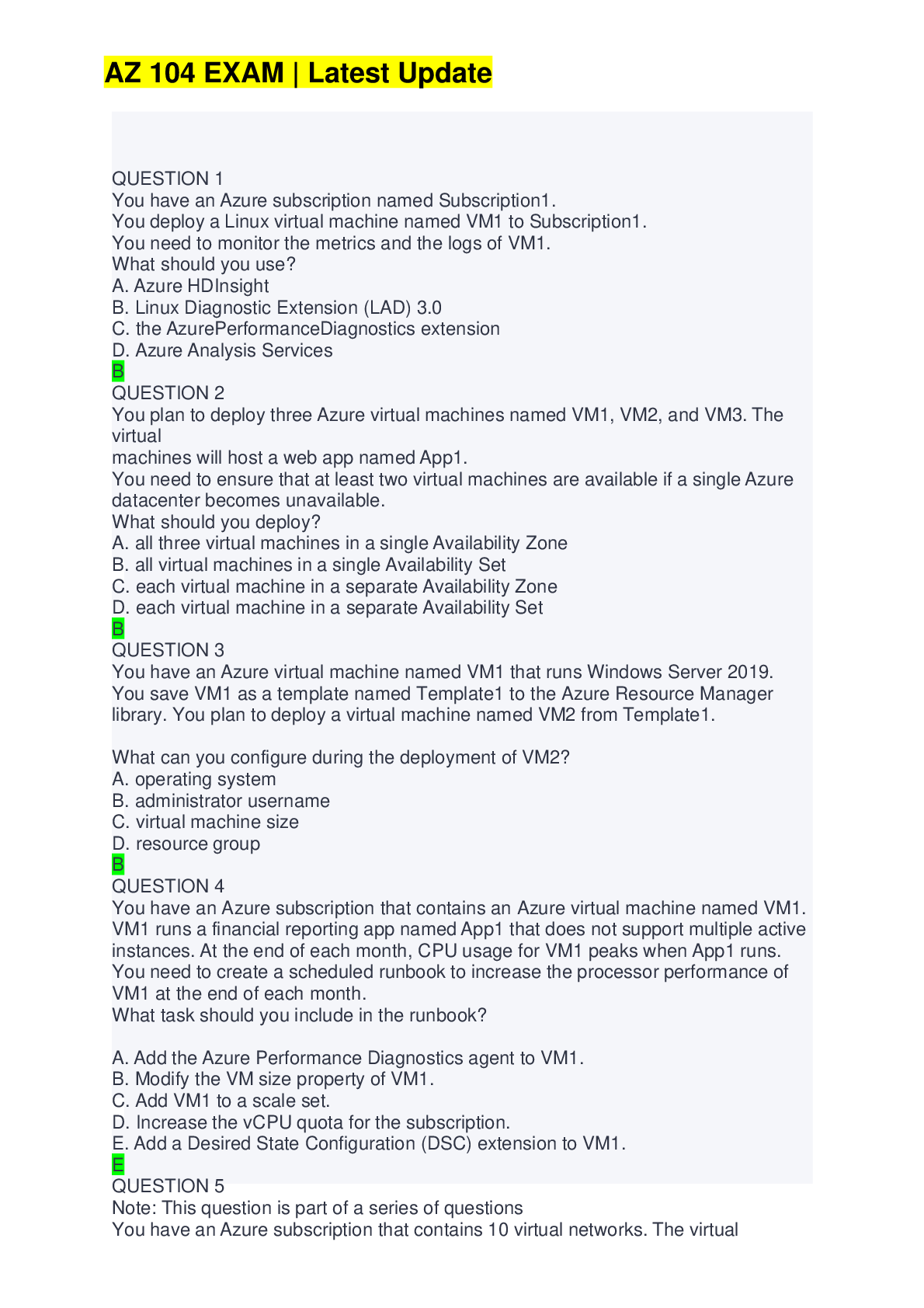
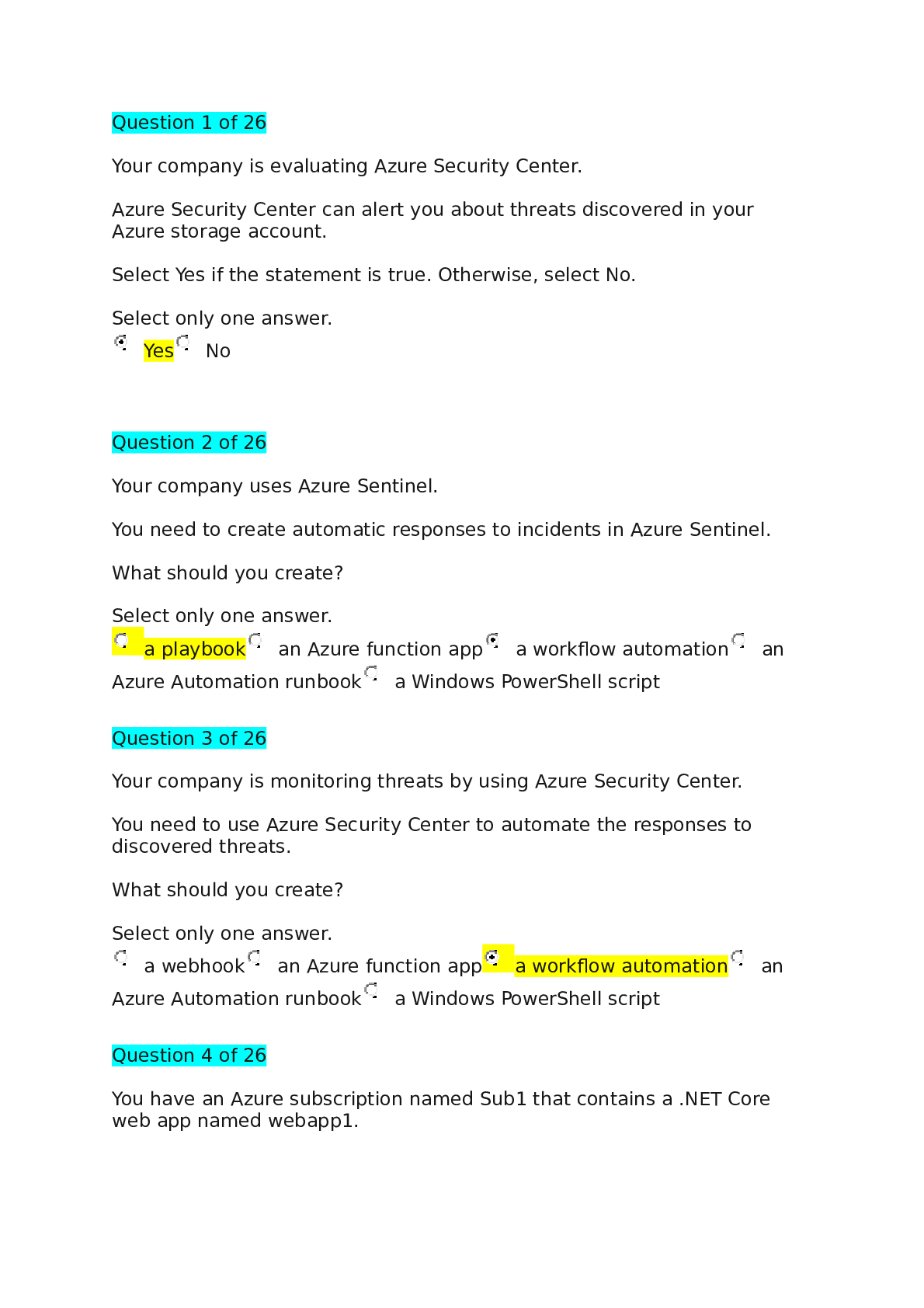
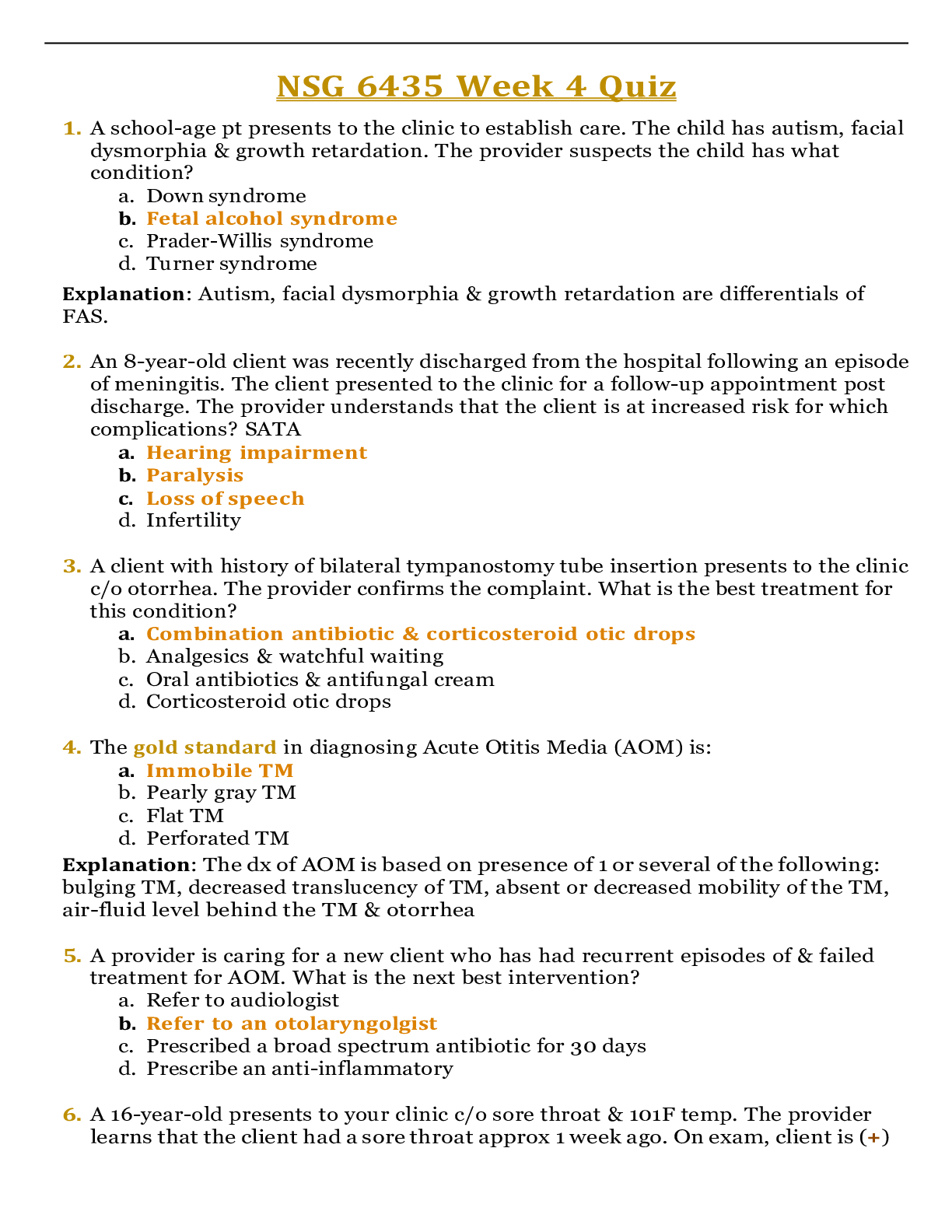
NURSING > EXAM > NURSING FUNDAMENTALS/RT FINAL EGANS STUDY GUIDE LATEST 2021. 100% USEFUL BEFORE SITTING FINALS (All)
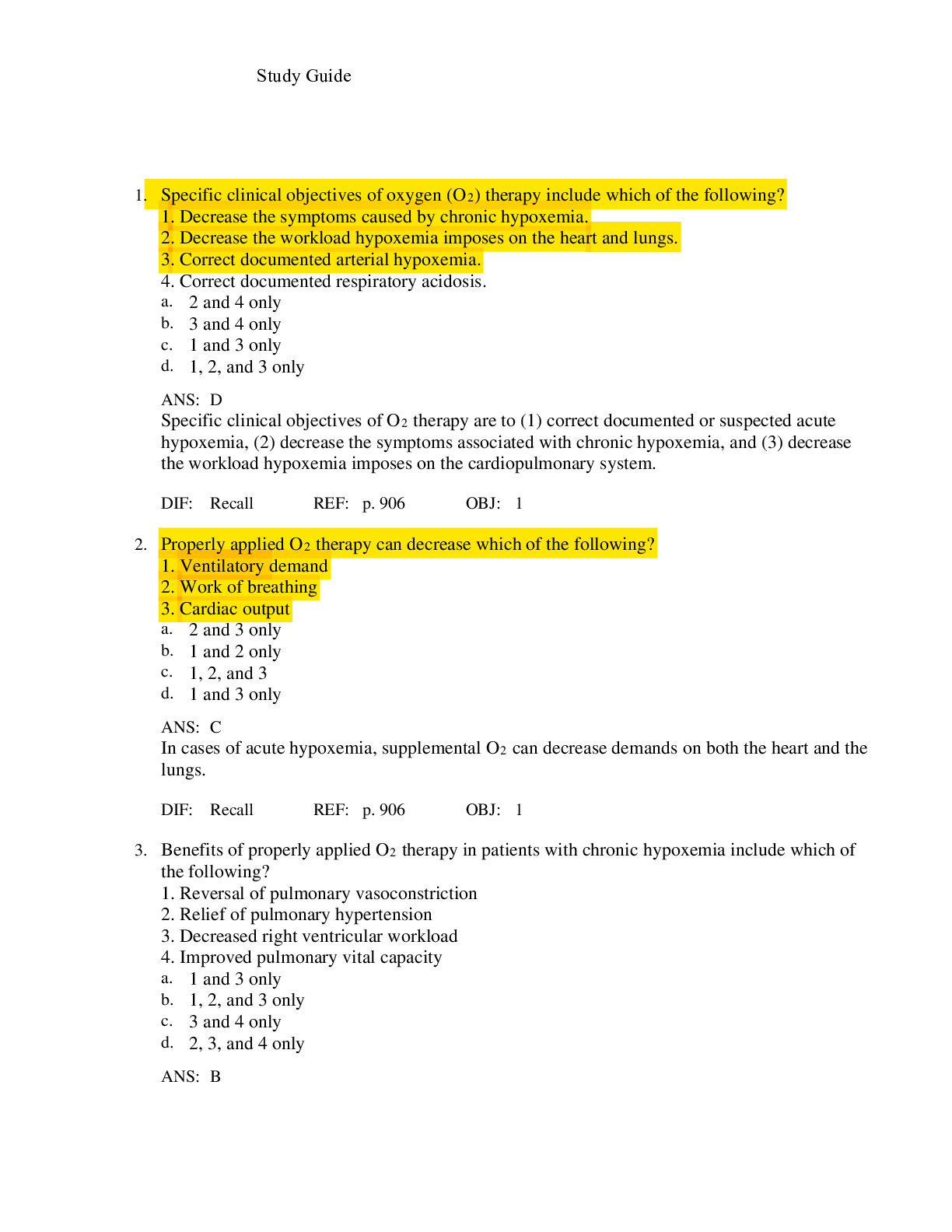
NURSING FUNDAMENTALS/RT FINAL EGANS STUDY GUIDE LATEST 2021. 100% USEFUL BEFORE SITTING FINALS
Document Content and Description Below
Last updated: 3 years ago
Preview 1 out of 4 pages
Instant download
Buy this Document to get the Full Access Instantly
Provided by Students Who Aced it
We Verify Document Content to Gurantee Accuracy
Reviews( 0 )
Document information
Connected school, study & course
About the document
Uploaded On
Apr 22, 2021
Number of pages
4
Written in
All

Additional information
This document has been written for:
Uploaded
Apr 22, 2021
Downloads
0
Views
126
Topic Tags
Related Subjects & Courses
Explore similar study resources and related concepts.
Recommended For You
Get more on EXAM »
ATI Fundamentals Proctored Exam |Questions and Answers with Ra...
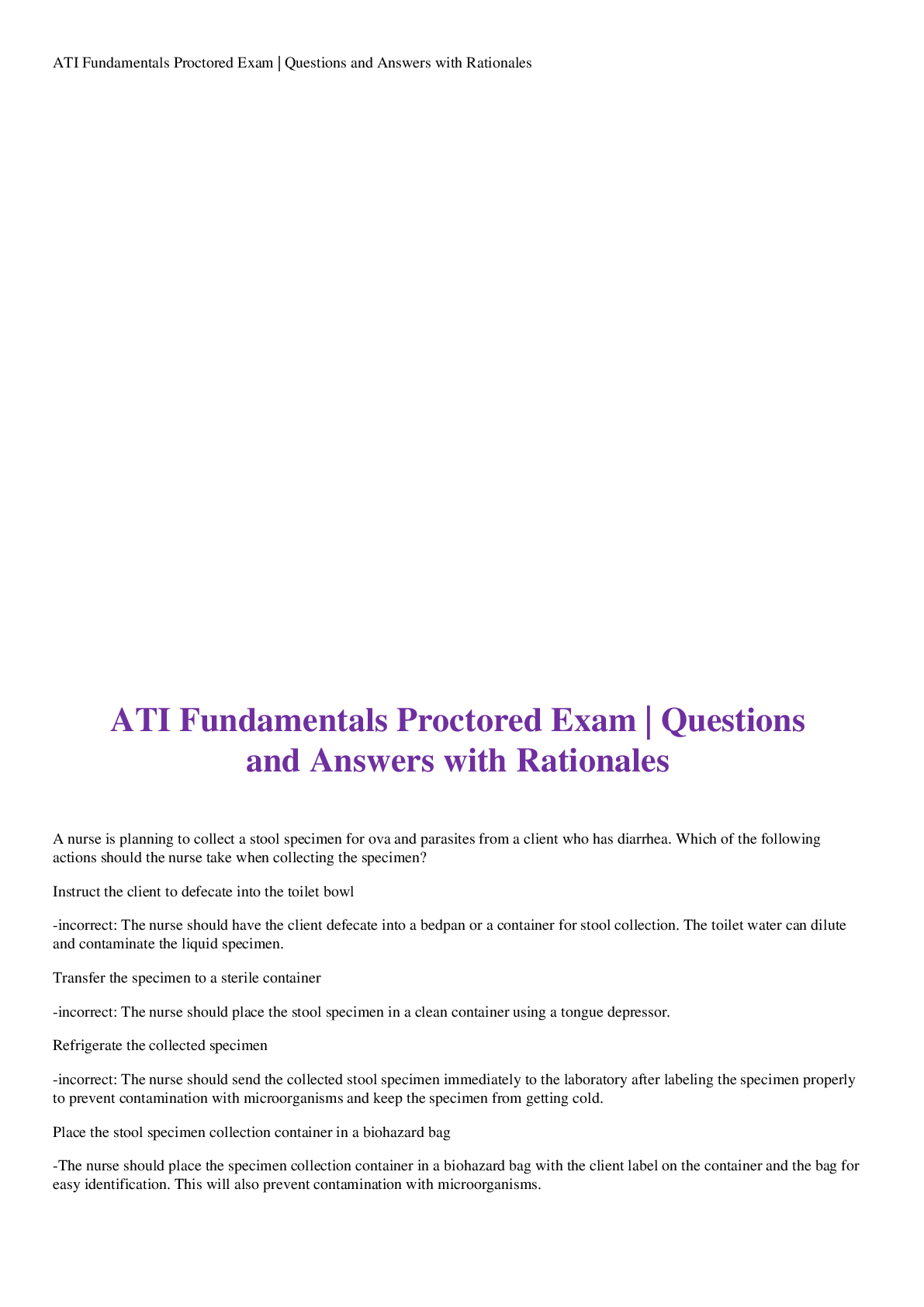
ATI Fundamentals Proctored Exam | Questions and Answers with R...

NUR2474 / NUR 2474 Exam 1 {Modules 1-3} | Latest 2021 / 2022 |...
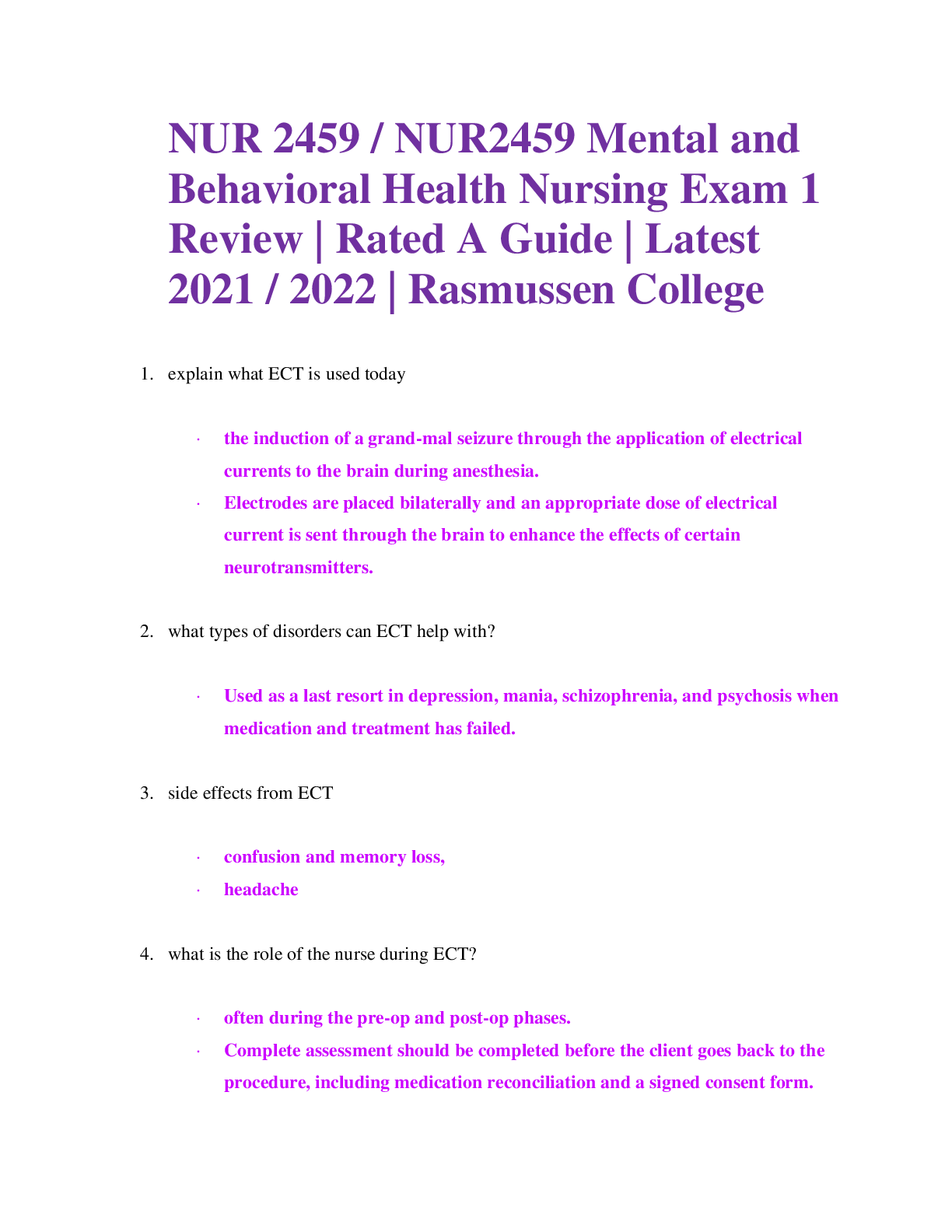
NUR 2459 / NUR2459 Mental and Behavioral Health Nursing Exam 1...

NUR2474 / NUR 2474 Pharmacology for Professional Nursing Final...
 F21.png)
NR599 / NR-599 Midterm Exam (Latest 2021 /2022): Nursing Infor...

NR599 / NR-599 Final Exam (Latest 2021 /2022): Nursing Informa...
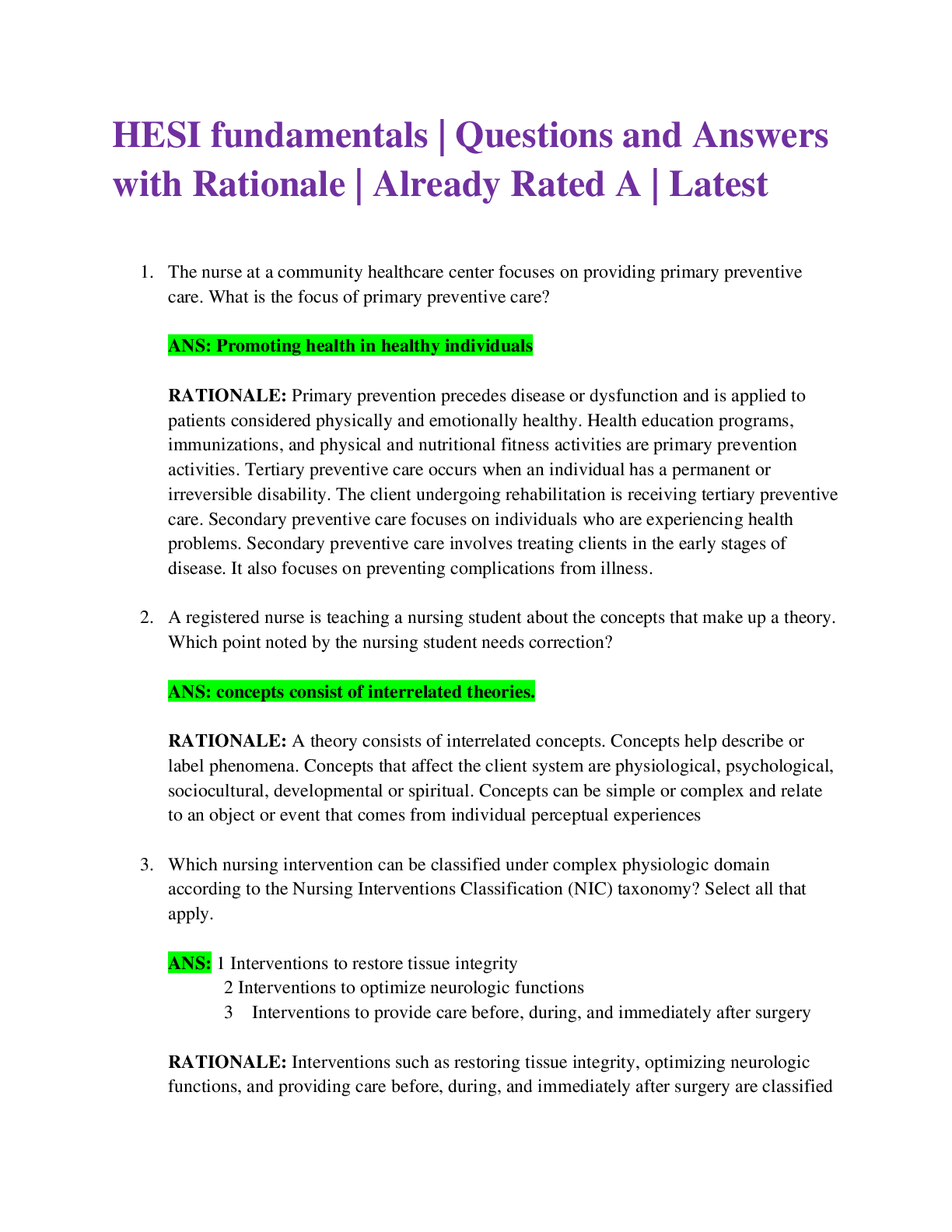
HESI fundamentals | Questions and Answers with Rationale | Alr...
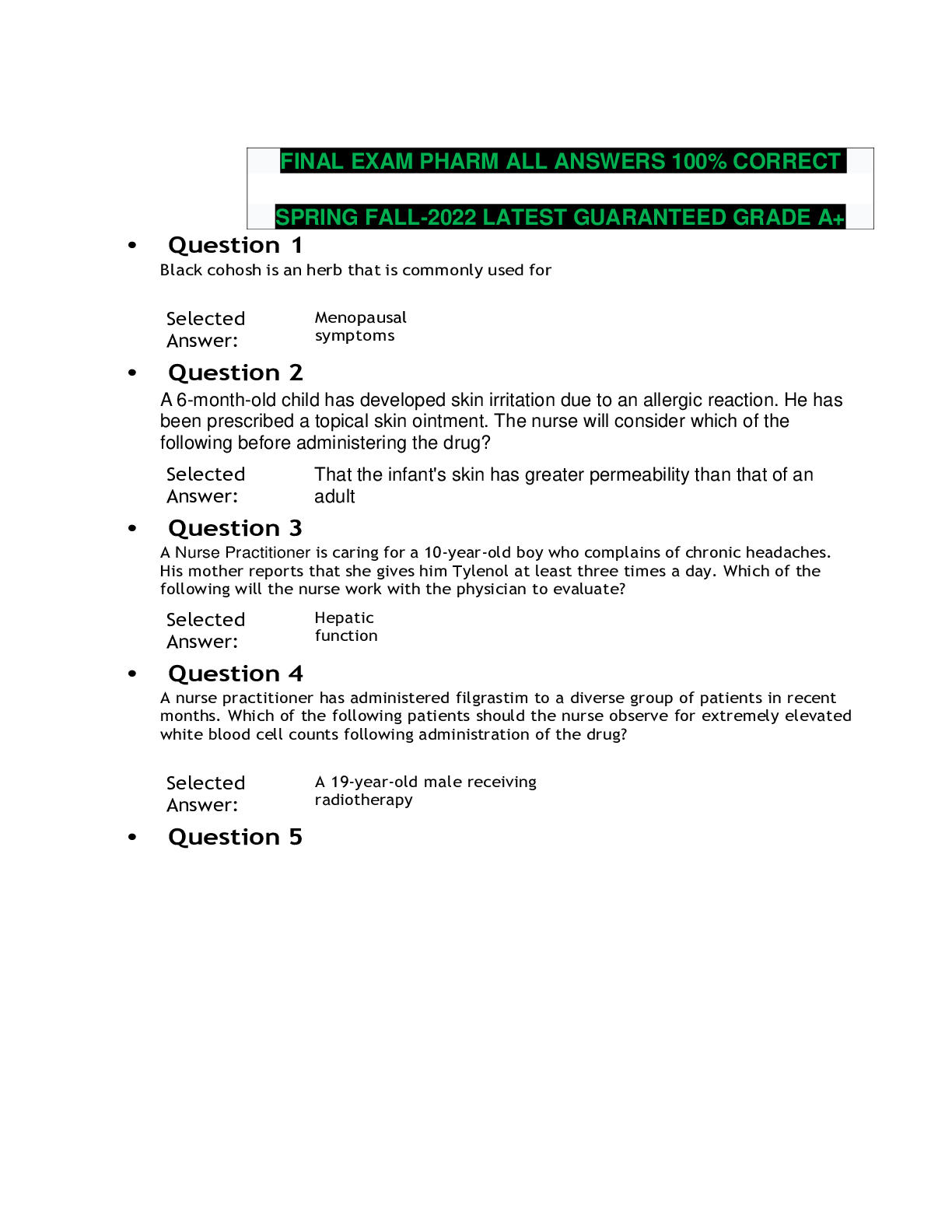
Walden University - NURS -6521N FINAL EXAM PHARM (Latest 2021)...
.png)
ATI MATERNAL NEWBORN Proctored Exam Latest 2021/2022. VERIFIED...
NR 509 / NR509 Advanced Physical Assessment Final Exam Quiz Ba...

Ati rn pediatric proctored exam 7 versions latest 2021/2022 a...
ATI Leadership Proctored Exam questions and answers latest 202...

NUR2755 / NUR 2755 Final Exam (Latest2021 / 2022): Multidimens...
NR222 / NR 222 Exam 2 (Latest 2021/ 2022): Health & Wellness -...
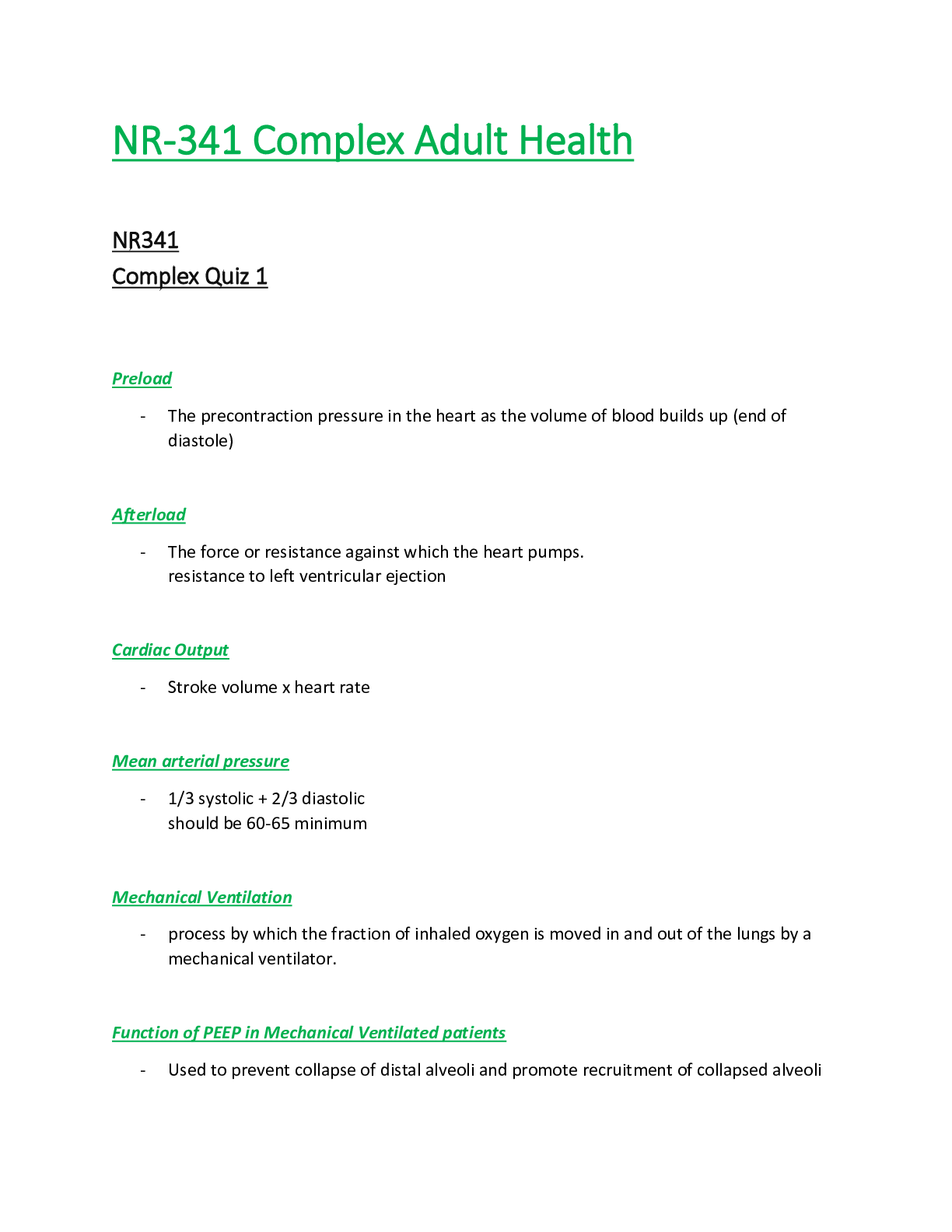
NR341 / NR 341 Quiz 1 (Latest 2021 /2022): Complex Adult Healt...
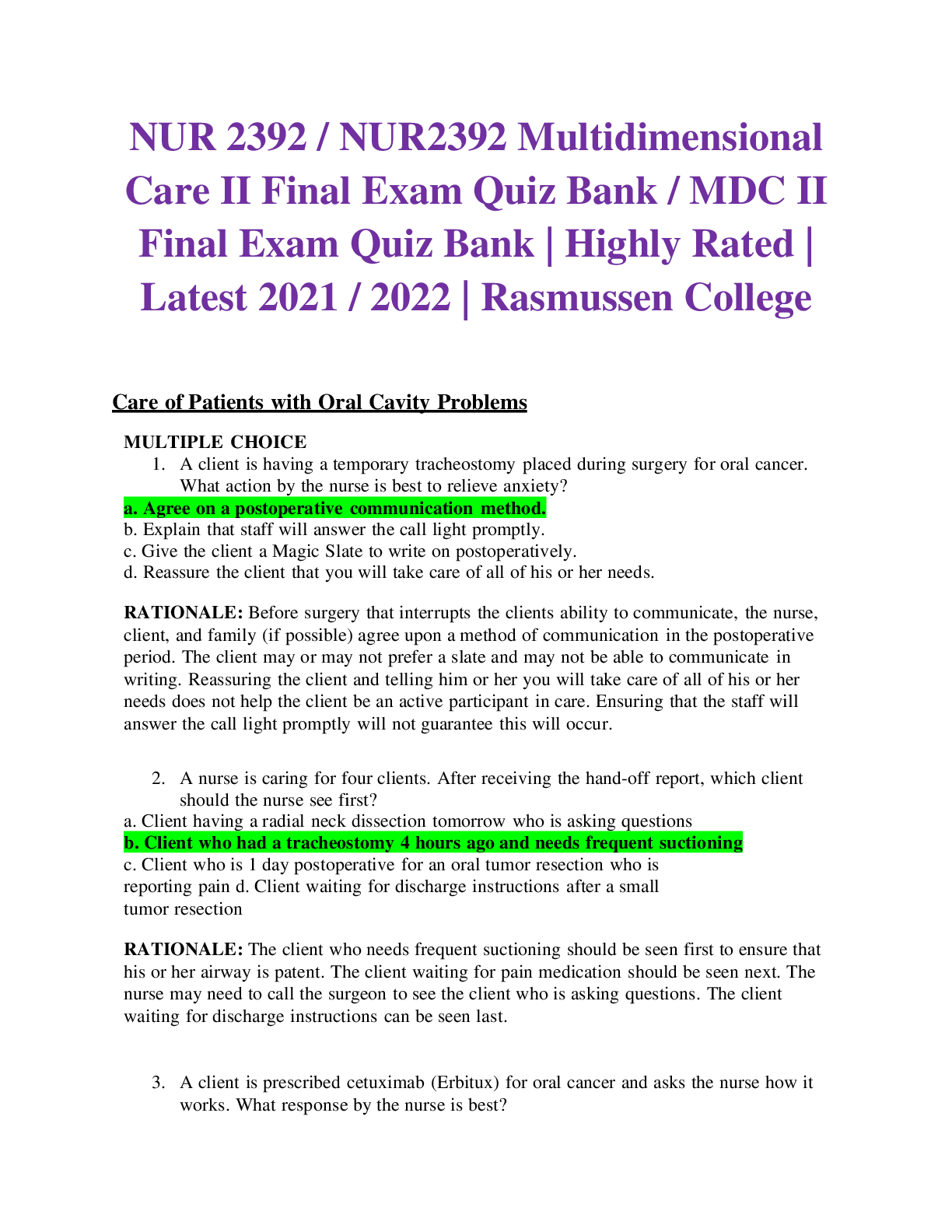
NUR 2392 / NUR2392 Multidimensional Care II Final Exam Quiz Ba...

NUR 2407 / NUR2407 Pharmacology Exam 2 Review | Latest 2021 /...