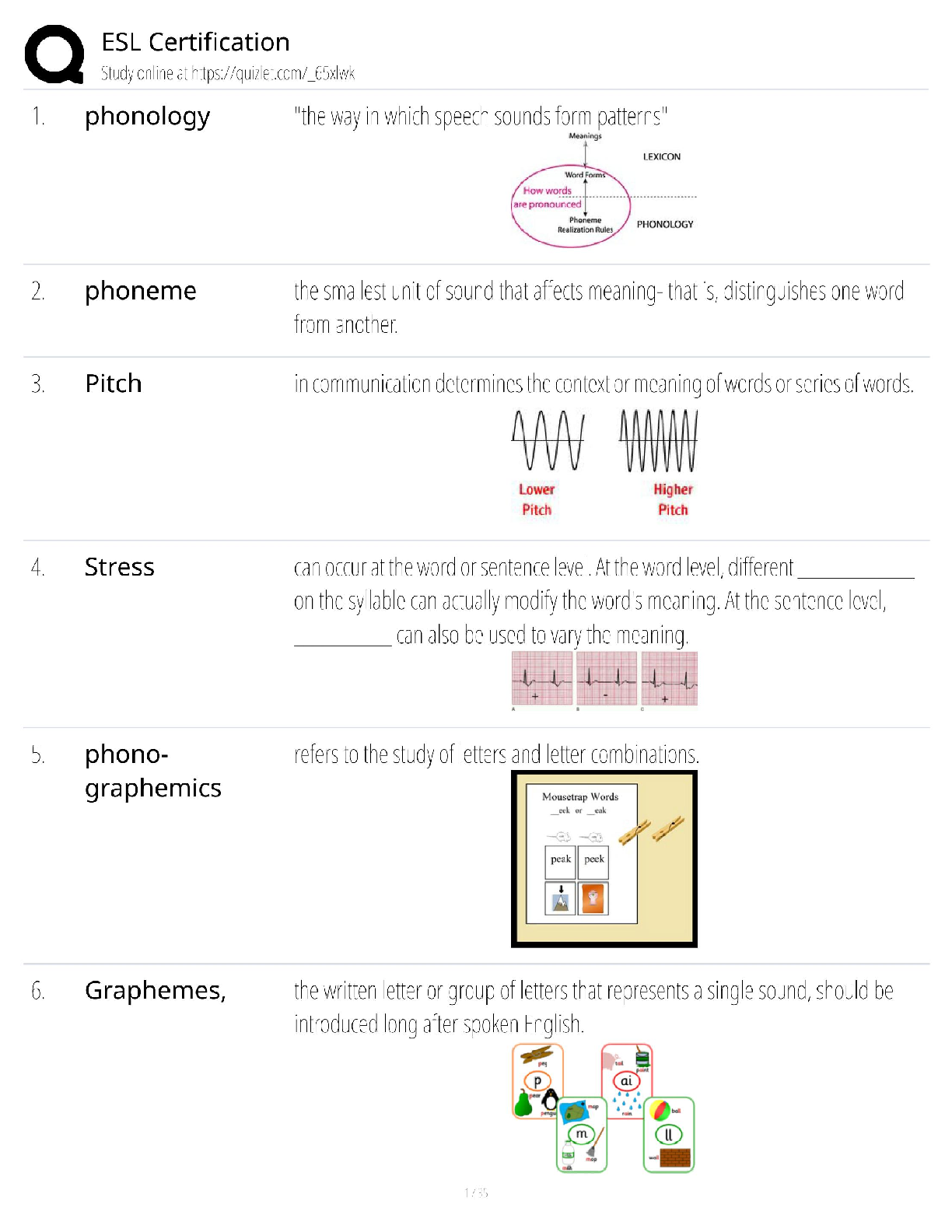
*NURSING > QUESTIONS & ANSWERS > NURS 6670 / NURS6670 FINAL EXAM. QUESTIONS AND ANSWERS WITH EXPLANATIONS. (All)
NURS 6670 / NURS6670 FINAL EXAM. QUESTIONS AND ANSWERS WITH EXPLANATIONS.
Document Content and Description Below
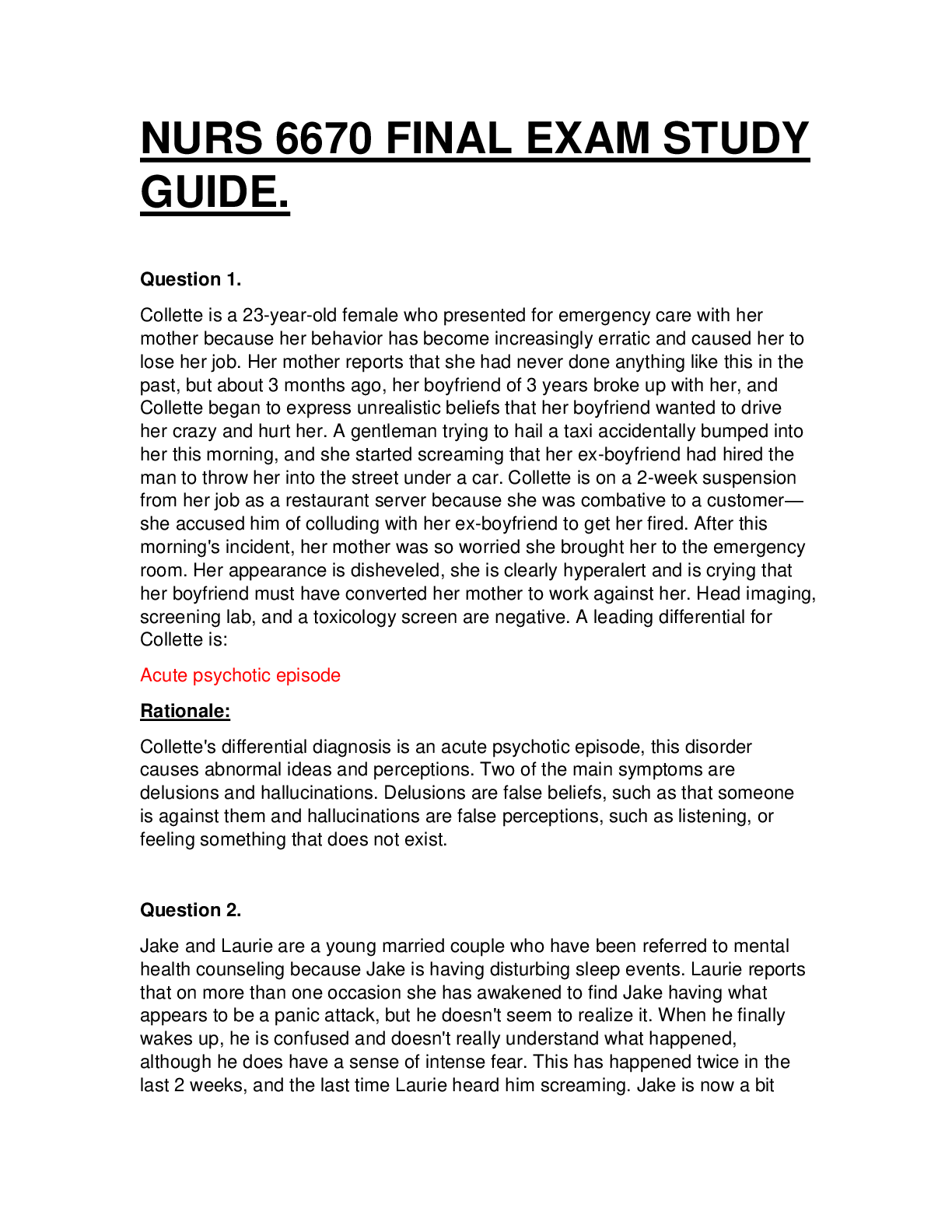
Question 85. When considering biological issues in gender dysphoria, the PMHNP recognizes that: Question 86. Steve is a 31-year-old male who presents for care on his own initiative. He has a n ... ew girlfriend for whom he really cares, but he is concerned that his lack of sex drive may be a problem as the relationship progresses. He says he just is not interested in sex. He doesn't think about it, and while he really enjoys the company of this lady and doing things with her, he is not interested in sexual relations. When considering a diagnosis of male hypoactive sexual desire disorder, the PMHNP must consider all of the following except: Question 87. A couple in their late thirties presents for care. They have been married for eight years, and the wife is becoming increasingly frustrated by their sex life. As their marriage has progressed she has become increasingly disturbed by the fact that her husband cannot ejaculate during intercourse. It is more of an issue lately because she really wants to have a baby. She admits that their sex life has never been "ideal," but that she has been able to reach orgasm, often using a sex toy during sex with her husband. Her husband has ejaculated with manual stimulation, but never during intercourse. The husband is rather quiet during the whole evaluation, but he says he does not ejaculate during intercourse and he is "OK with that." The PMHNP considers that: Question 88. Mr. Vasquez is a 76-year-old man who is presented to care by his daughter for management of his Parkinson's dementia. He was initially diagnosed with Parkinson's disease 5 years ago and has been managed with good results on carbidopa-levodopa (Sinemet). Approximately 18 months ago he began to develop symptoms of dementia that led to a diagnosis Parkinson's dementia. Today the daughter reports that he has been acting "different" for over a week. He suddenly seems to be hallucinating and trouble sleeping, and has overall been acting acutely confused. There have been a few spells where he was hard to rouse. She took him to the primary care provider, but they could not identify any acute cause of his symptoms; they even lowered his Parkinson's medication, but it didn't help. After ensuring that the appropriate metabolic causes of delirium have been rule out, the PMHNP considers: Question 89. Hypersomnia has a variety of etiologies, and treatments are varied based upon underlying cause. Which of the following types of hypersomnolence disorder is best managed with wake-promoting substances or psychostimulants? [Show More]
Last updated: 3 years ago
Preview 1 out of 25 pages
Buy this document to get the full access instantly
Instant Download Access after purchase
Buy NowInstant download
We Accept:

Reviews( 0 )
$11.00
Can't find what you want? Try our AI powered Search
Document information
Connected school, study & course
About the document
Uploaded On
Apr 22, 2021
Number of pages
25
Written in
All

Additional information
This document has been written for:
Uploaded
Apr 22, 2021
Downloads
0
Views
110




.png)