6420 Study Guide
Return to deck
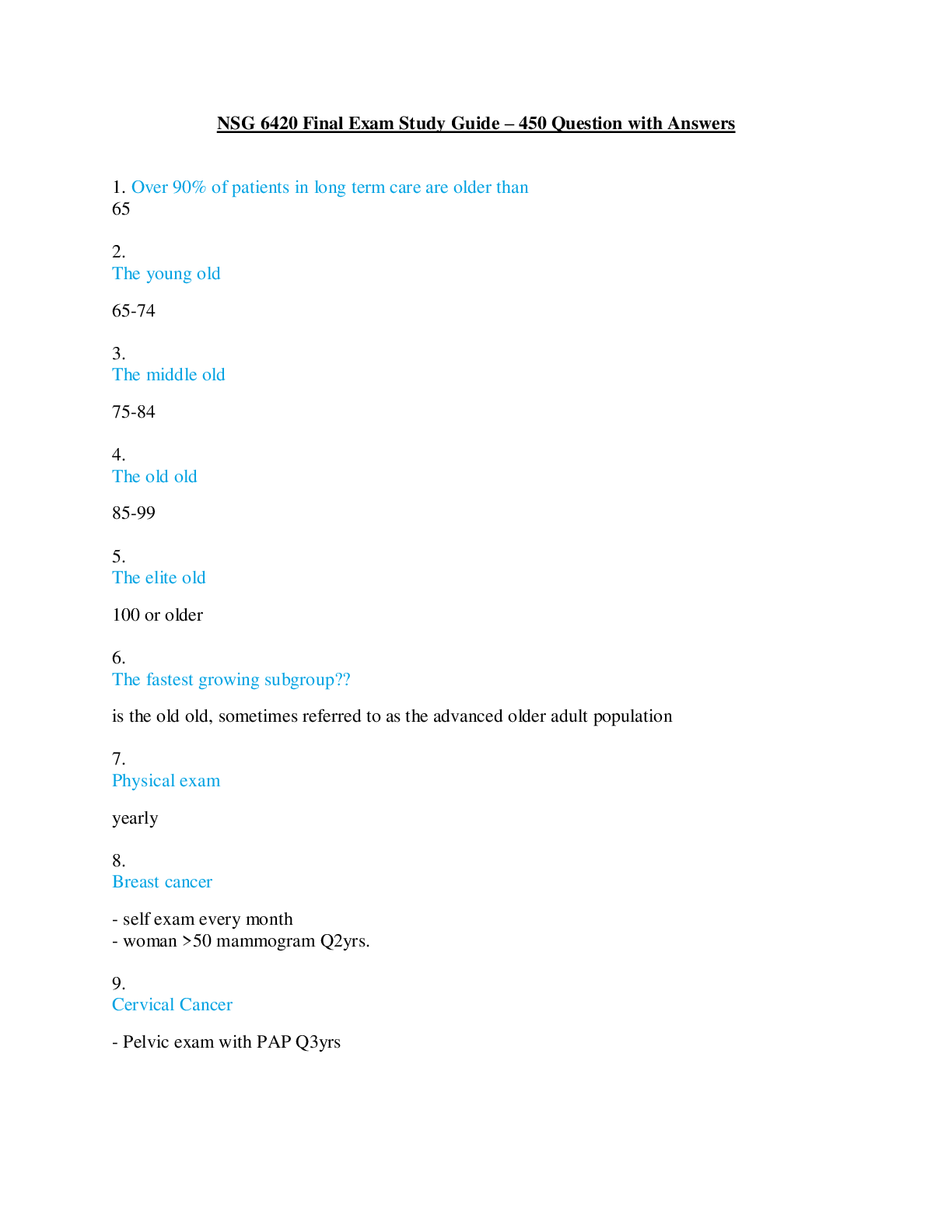
1.
Over 90% of patients in long term care are older than
65
2.
The young old
65-74
3.
the middle old
75-84
4.
The old old
85-99
5.
the elite old
100 or older
6.
...
6420 Study Guide
Return to deck
1.
Over 90% of patients in long term care are older than
65
2.
The young old
65-74
3.
the middle old
75-84
4.
The old old
85-99
5.
the elite old
100 or older
6.
the fastest growing subgroup??
is the old old, sometimes referred to as the advanced older adult population
7.
physical exam
yearly
8.
Breast cancer
- self exam every month
- woman >50 mammogram Q2yrs.
9.
Cervical Cancer
- Pelvic exam with PAP Q3yrs
10.
Prostate (50 and older)
- PSA test Q year, digital exam Q year
11.
testicular cancer
Self exam every month
12.
Colorectal cancer (men and women)
- fecal occult blood test Q year
- sigmoidoscopy Q3-5 years
- colonoscopy Q 3-5 years
13.
Skin Cancer
- clinical exam yearly
14.
oral cancer
- yearly with dental checkup
15.
Oral cancer
Cancerous growths on the lips, tongue or elsewhere in the mouth. Sores do not heal and will metastasize if not removed
16.
Bone density
- every 2 years
17.
Vision
- every year
18.
Immunnizations
- tetanus diptheria (every 10 years)
- FLU (every year)
- Pneumococcal PPV those who receive 1 dose before age 65 should receive another dose at age 65 or later if at least 5 years have elapsed
- zoster vaccine
19.
Genetic Theory
- holds that life span depends to a great extent on genetic factors
- genes within the organism control "genetic clock"
- genes determine metabolic rate and cell division
- wear and tear theory
20.
Immunity Theory
- focuses on the function of the immune system (composed of the bone marrow, thymus, spleen, and lymph nodes
- decrease in thymus gland
- decrease in T cells
- nutrition plays an important role so there is a focus in vitamin supplements
- increase in autoimmunity, infection, cancer
21.
Cross linkage theory
- is a chemical reaction that produces damage to DNA and cell death
- as one ages cross links accumulates, leading to essential molecules in the cell binding together and interfering with normal cell function
..........................................................CONTINUED,......................................................................
[Show More]