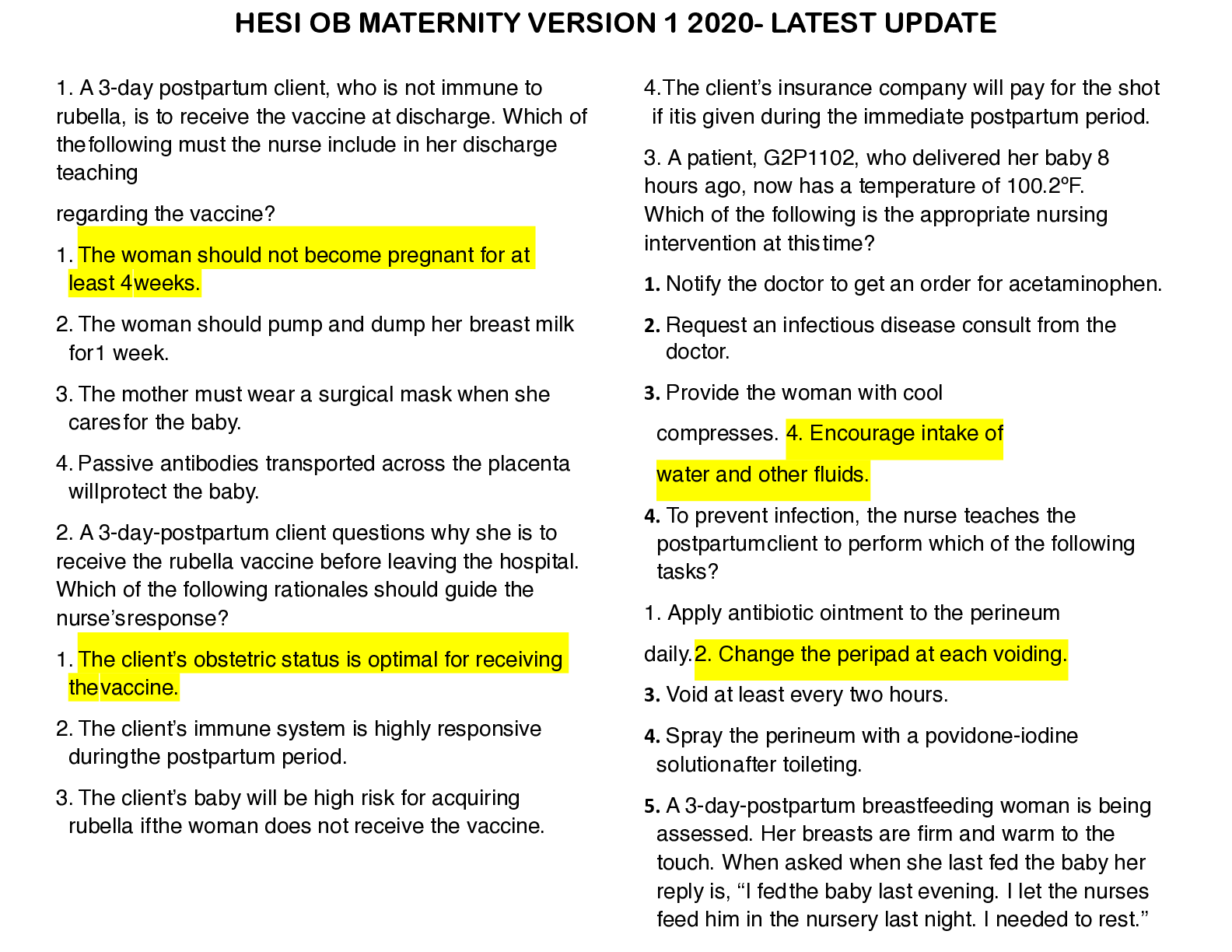
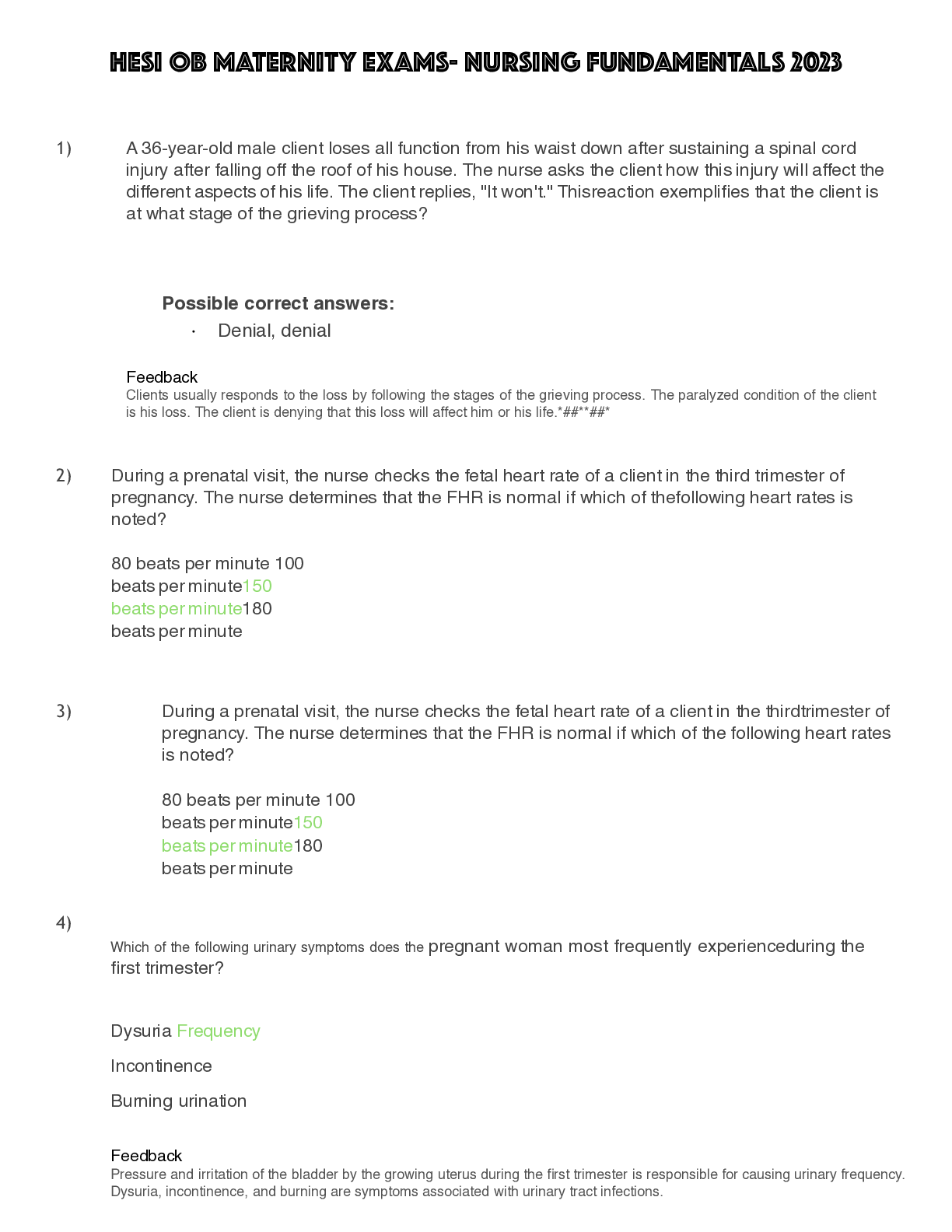
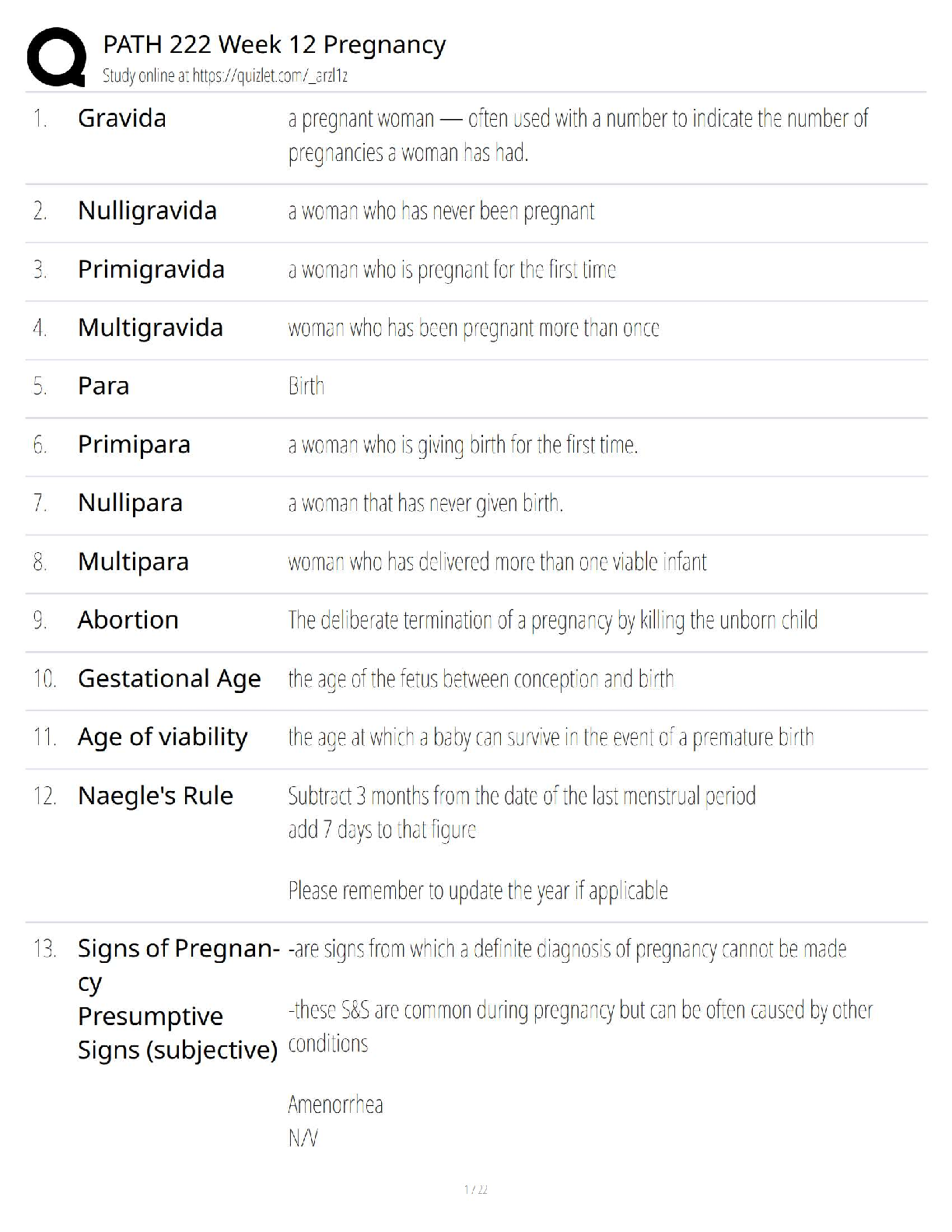
HESI OB Maternity > EXAM > HESI OB NEWEST PRACTICE TEST EXAM 2026 STUDY QUESTIONS WITH VERIFIED CORRECT ANSWERS GUARANTEED PASS (All)
HESI OB NEWEST PRACTICE TEST EXAM 2026 STUDY QUESTIONS WITH VERIFIED CORRECT ANSWERS GUARANTEED PASS | ASSURED A+
Document Content and Description Below
Last updated: 10 months ago
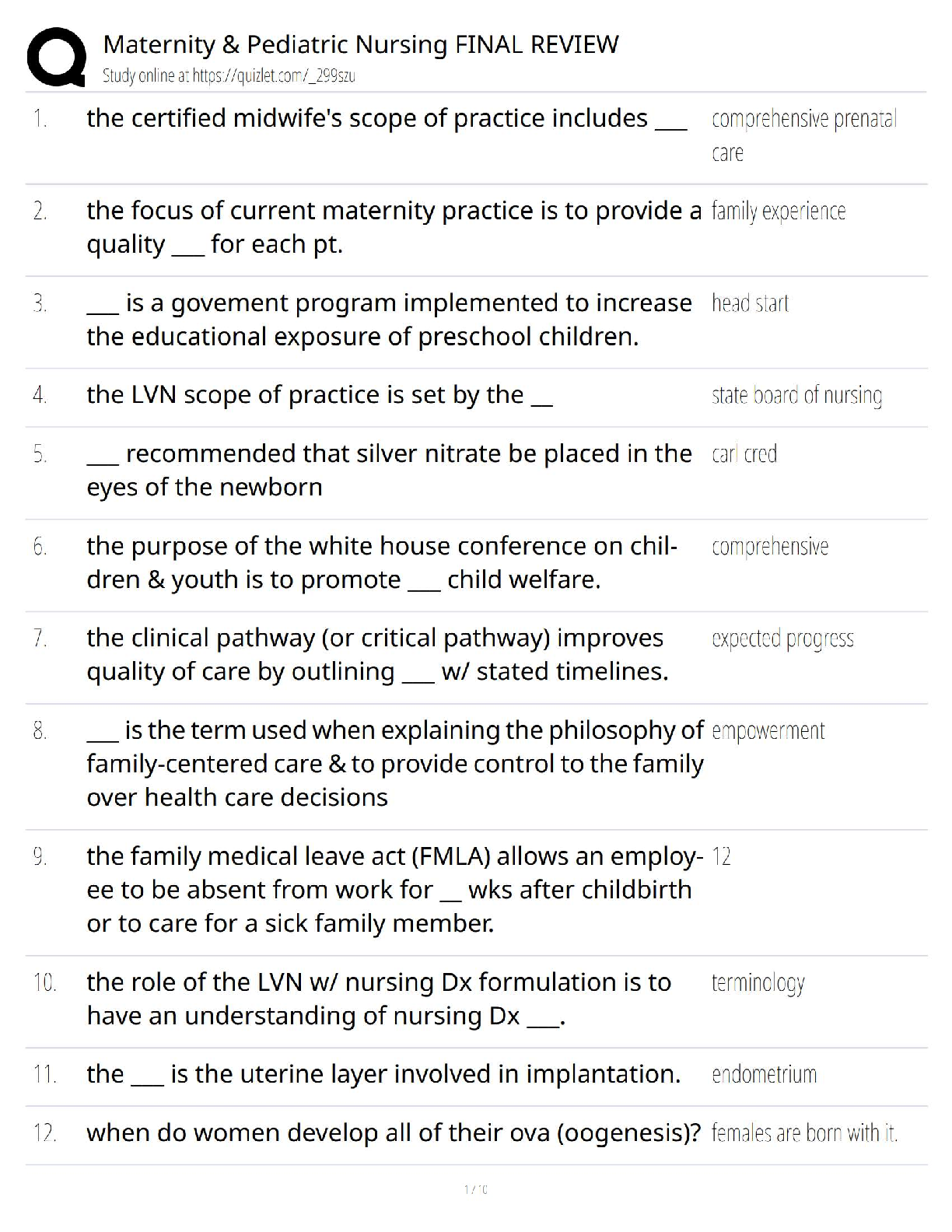
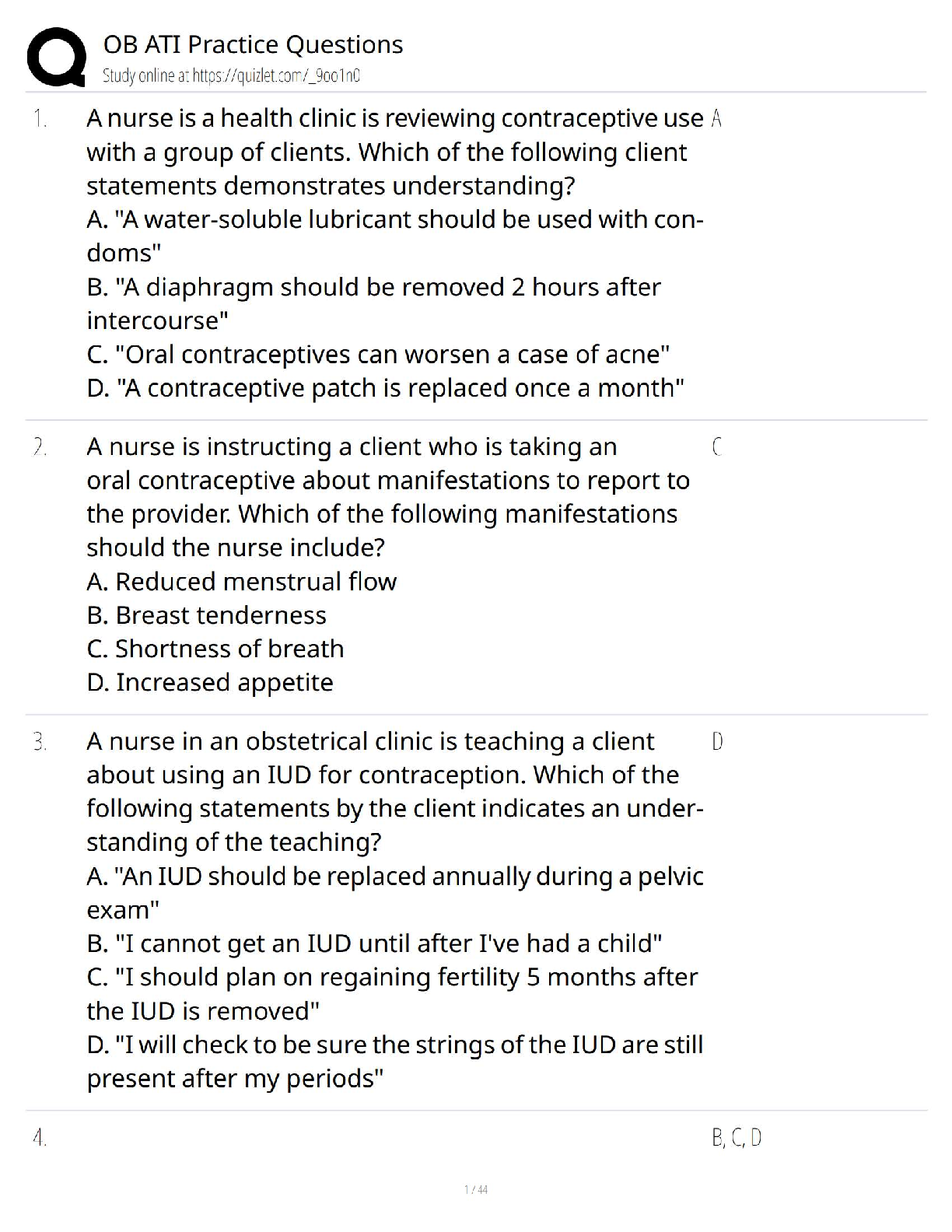
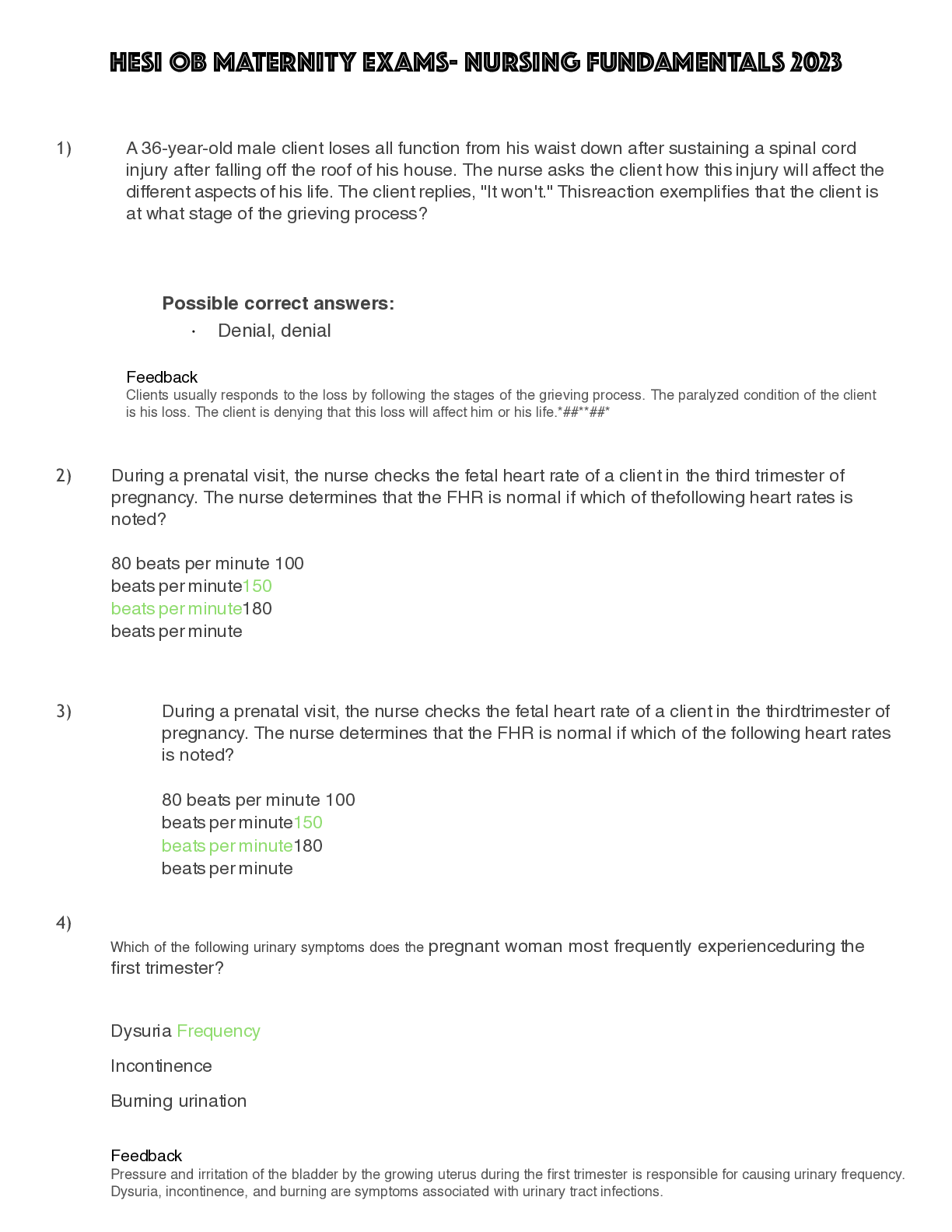
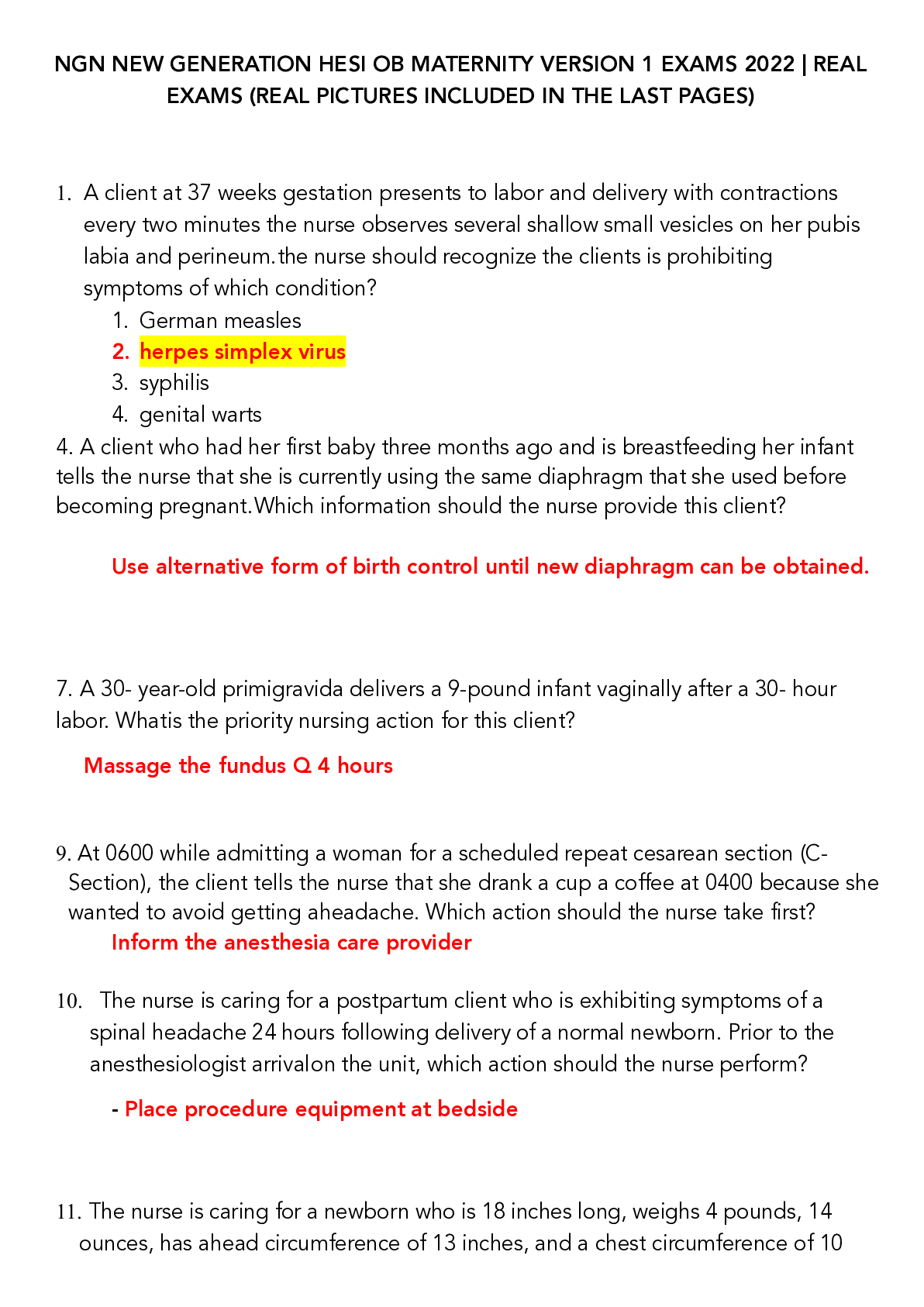
Preview 5 out of 38 pages
Instant download

Loading document previews ...
Buy this Document to get the Full Access Instantly
Provided by Students Who Aced it
We Verify Document Content to Gurantee Accuracy
Reviews( 0 )
Document information
Connected school, study & course
About the document
Uploaded On
Jan 20, 2026
Number of pages
38
Written in
All

Additional information
This document has been written for:
Uploaded
Jan 20, 2026
Downloads
0
Views
84
Topic Tags
Recommended For You
Get more on EXAM »
HESI MATERNITY OB ASSIGNMENT NEWEST TEST EXAM 2026 ALL STUDY Q...
MEDICAL HESI MATERNITY OB NEWEST PRACTICE 2026 TEST EXAM COMPL...
ATI MATERNITY HESI OB PRACTICE TEST EXAM NEWEST STUDY QUESTION...

{NGN}HESI OB Maternity 2023 Version 1 (V1) Exit Exam (All 55 Q...

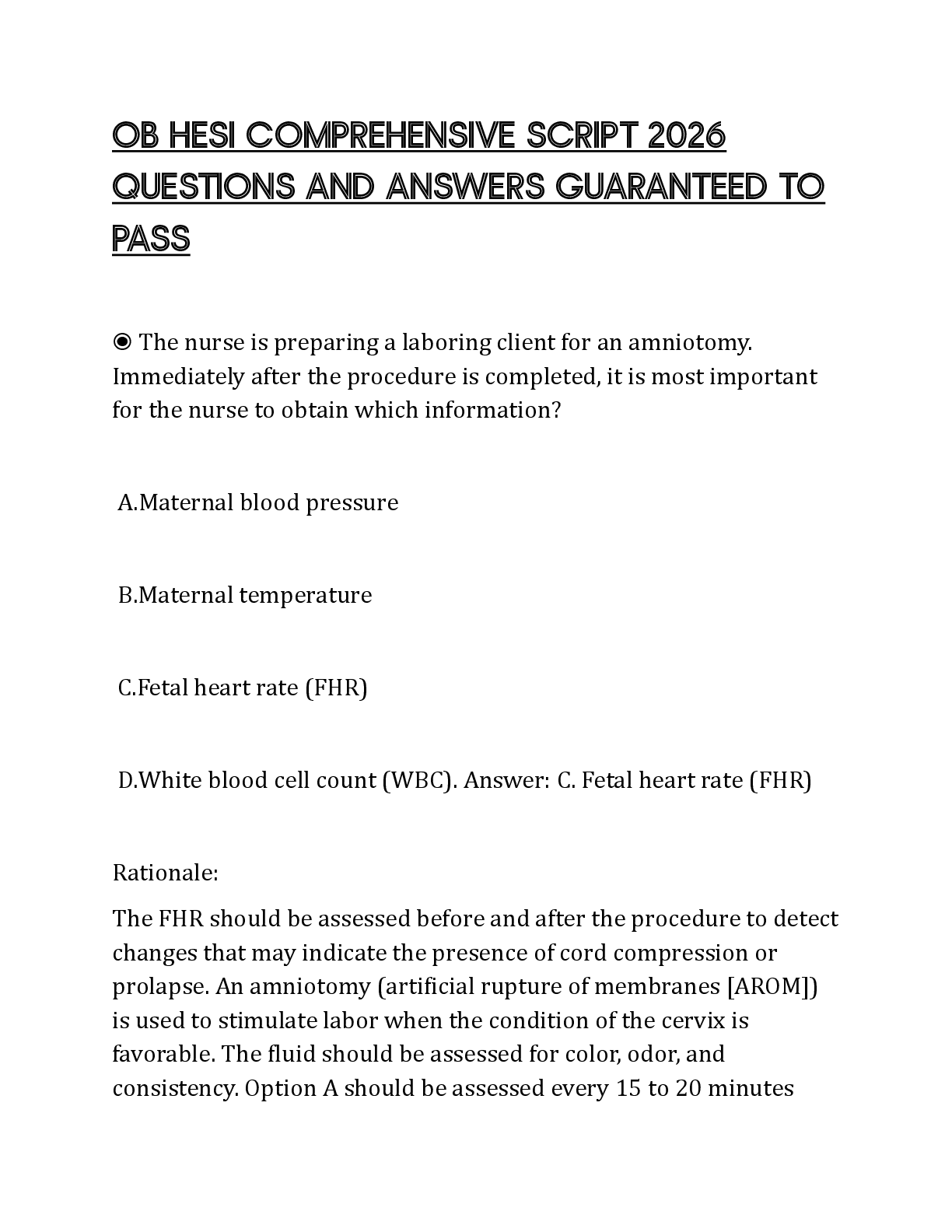

HESI RN OB 2 PRACTICE QUESTIONS AND ANSWERS TEST BANK FOR HESI...

HESI OB PEDS EXAM TEST BANK 1, QUESTIONS AND ANSWERS FULL PACK...
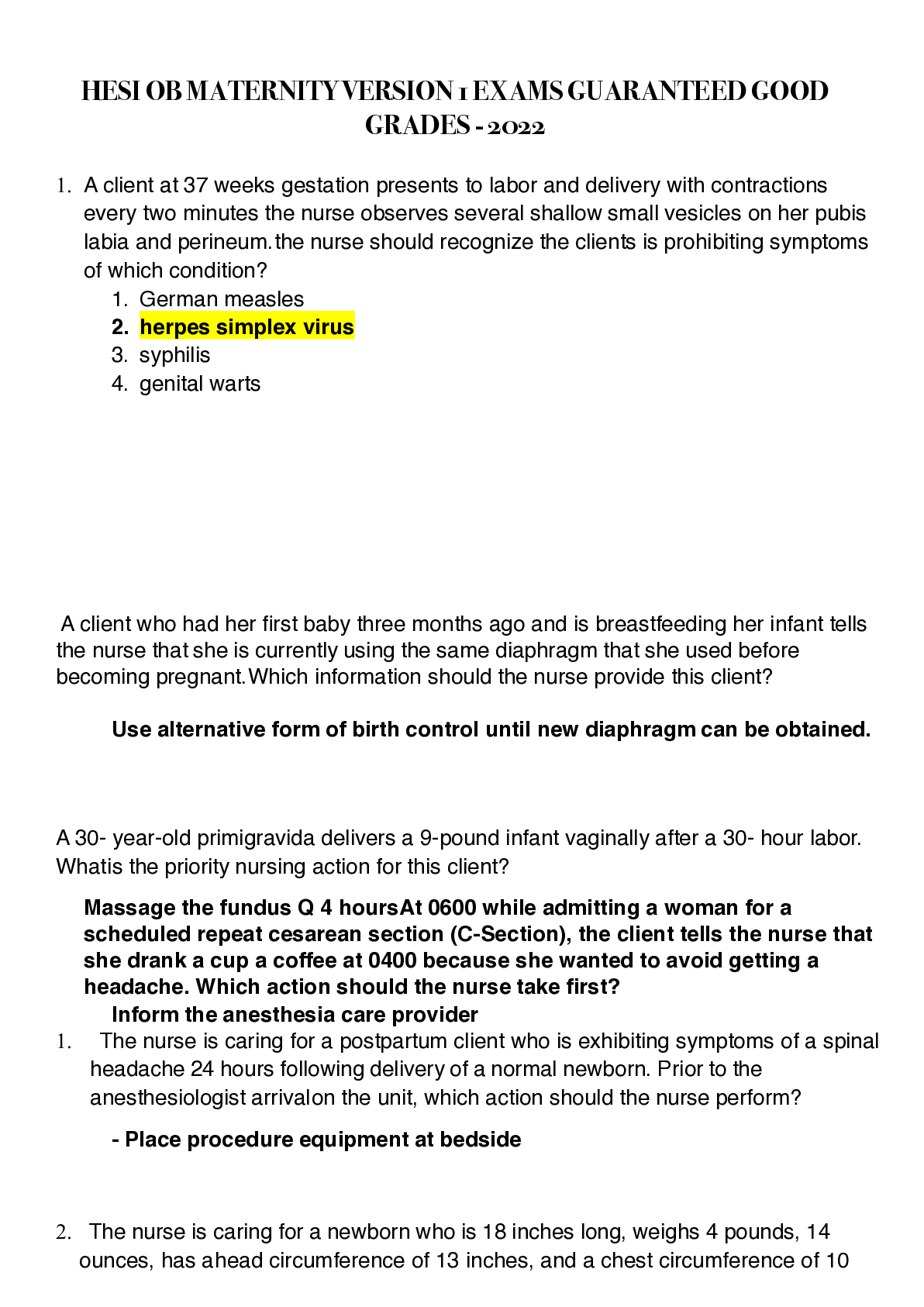
HESI OB MATERNITY VERSION 1 EXAMS GUARANTEED GOOD GRADES - 202...
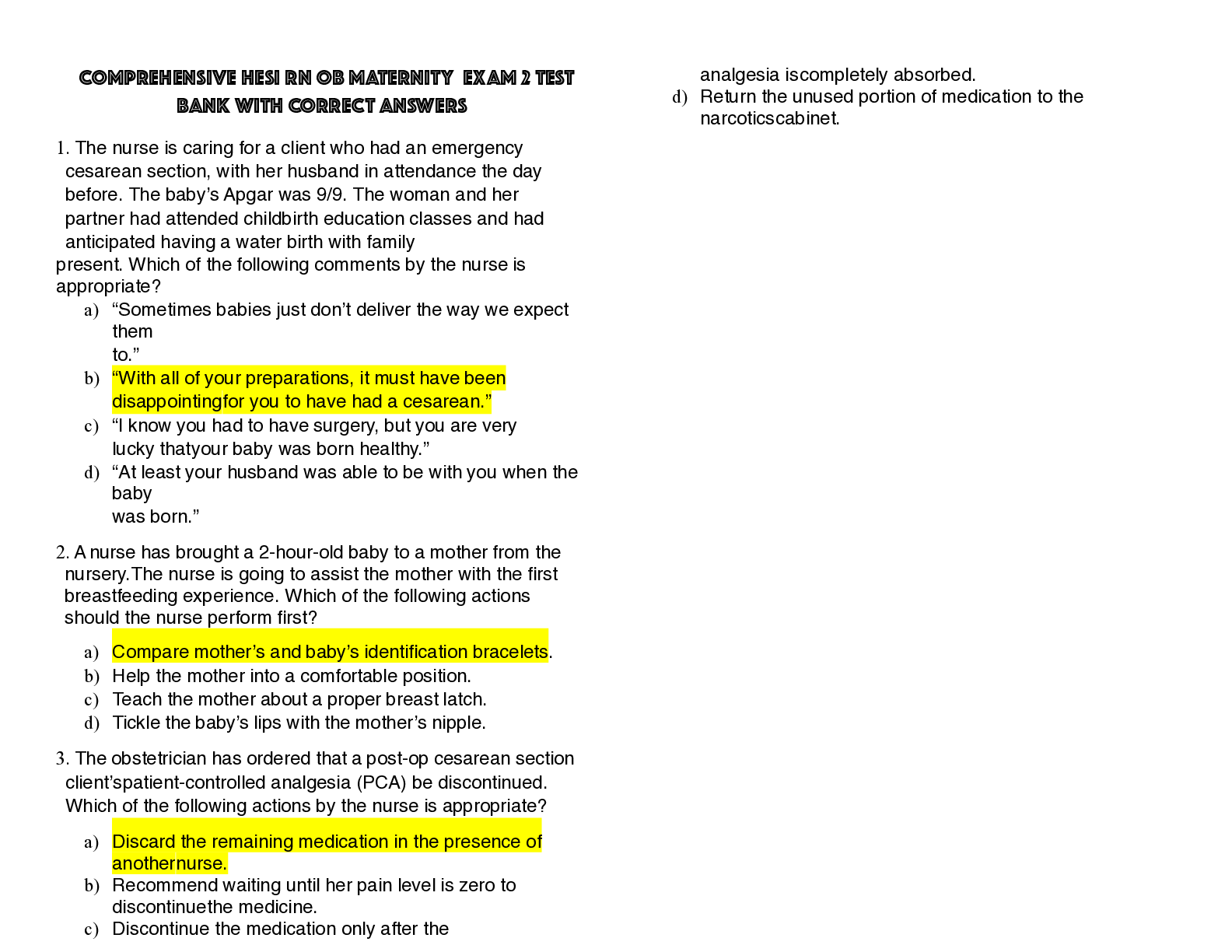
COMPREHENSIVE HESI RN OB MATERNITY EXAM 2 TEST BANK WITH CORR...