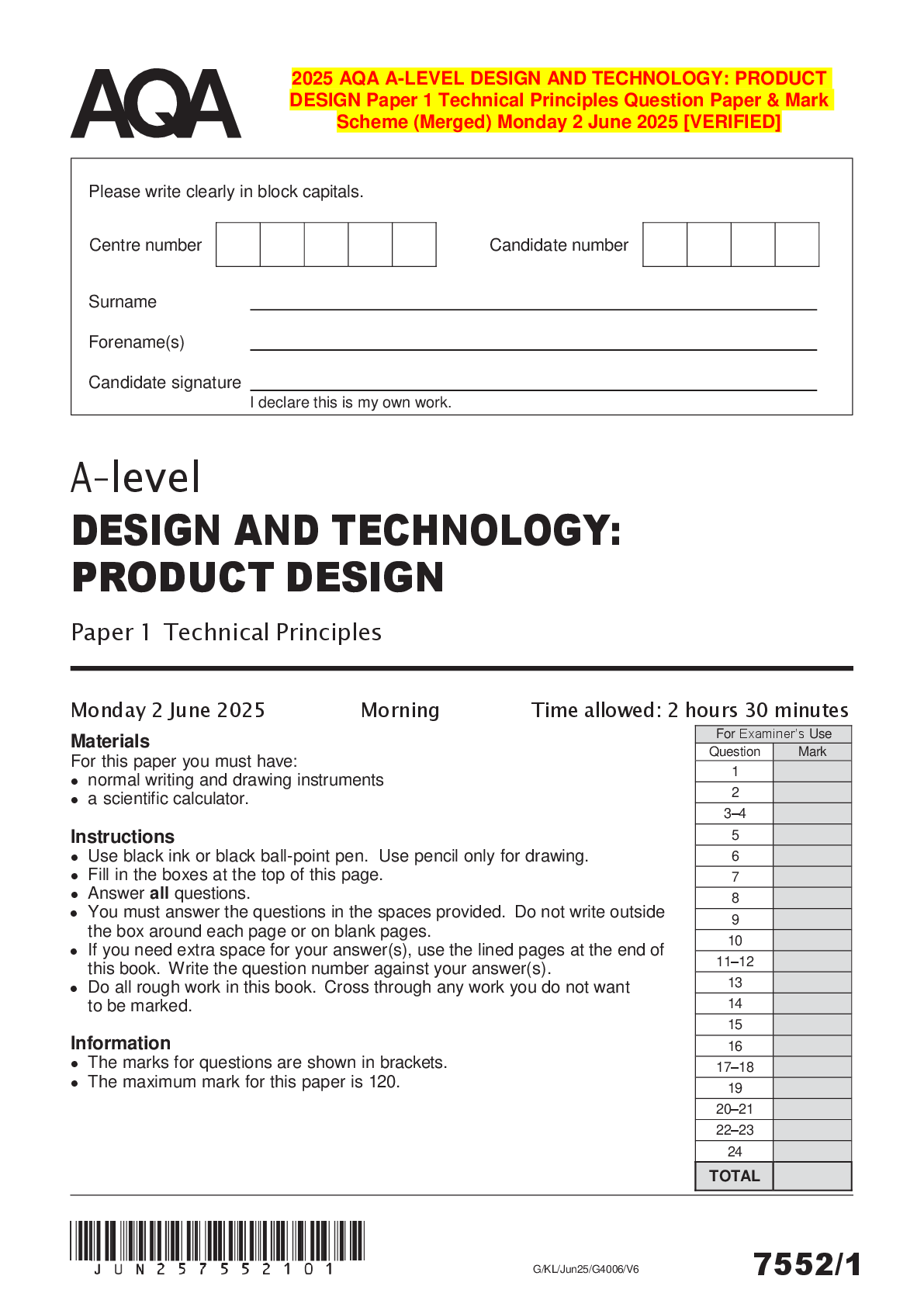
Physics > EXAM > 2025 AQA A-LEVEL PHYSICS Paper 3 Section B Engineering Physics Question Paper & Mark Scheme (Merge (All)
2025 AQA A-LEVEL PHYSICS Paper 3 Section B Engineering Physics Question Paper & Mark Scheme (Merged) Tuesday 17 June 2025 [VERIFIED]
Document Content and Description Below
Last updated: 8 months ago
Preview 5 out of 33 pages
Instant download

Loading document previews ...
Buy this Document to get the Full Access Instantly
Provided by Students Who Aced it
We Verify Document Content to Gurantee Accuracy
Reviews( 0 )
Document information
Connected school, study & course
About the document
Uploaded On
Jan 22, 2026
Number of pages
33
Written in
All
Seller

Reviews Received
Additional information
This document has been written for:
Uploaded
Jan 22, 2026
Downloads
0
Views
190
Topic Tags
Recommended For You
Get more on EXAM »

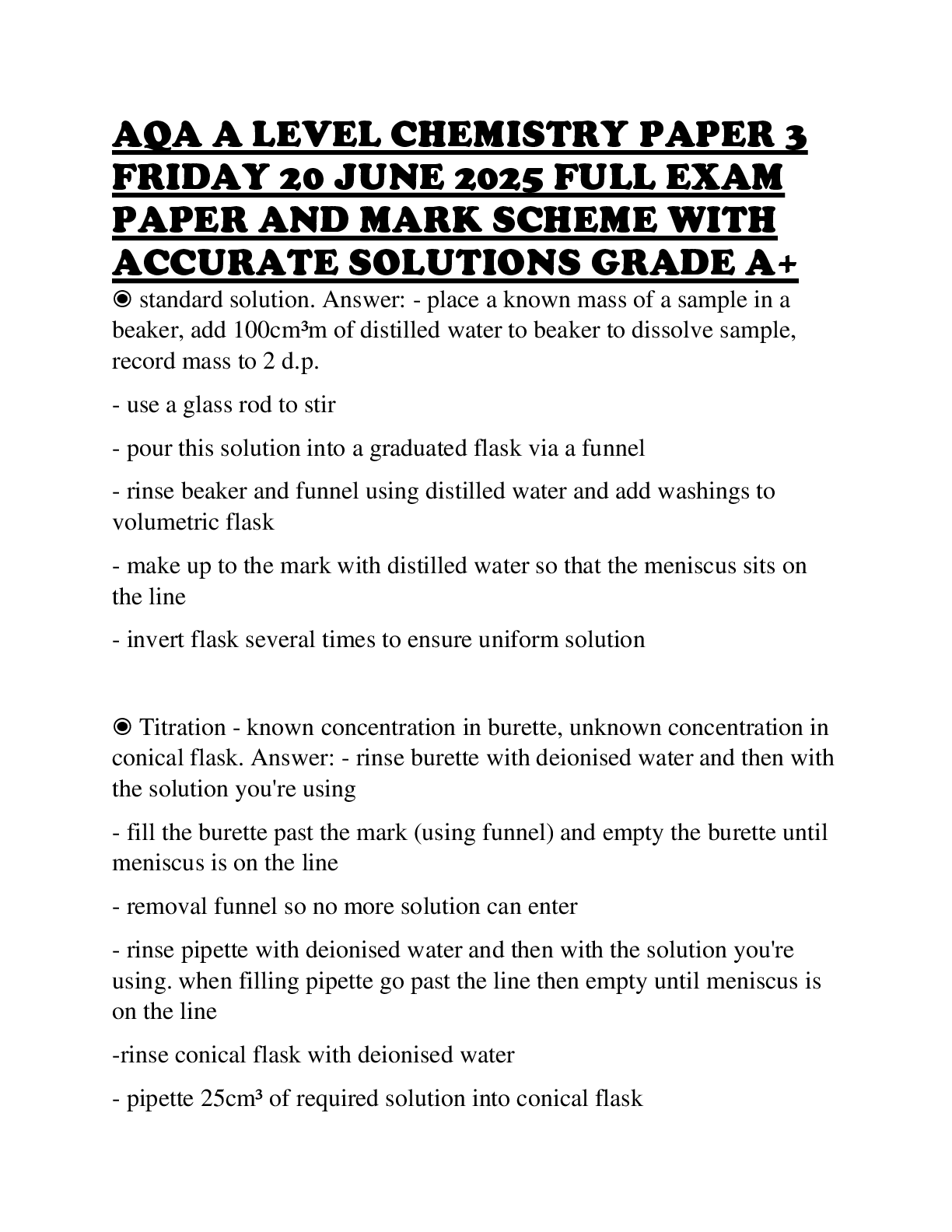
OCR GCE Computer Science H446/02: Algorithms and programming A...
OCR GCE Computer Science H446/01: Computer systems A Level Mar...
Pearson Edexcel GCE Advanced Subsidiary Level Further Mathemat...
ocr as level june 2025 marksheme chemistry b paper 2 chemistry...
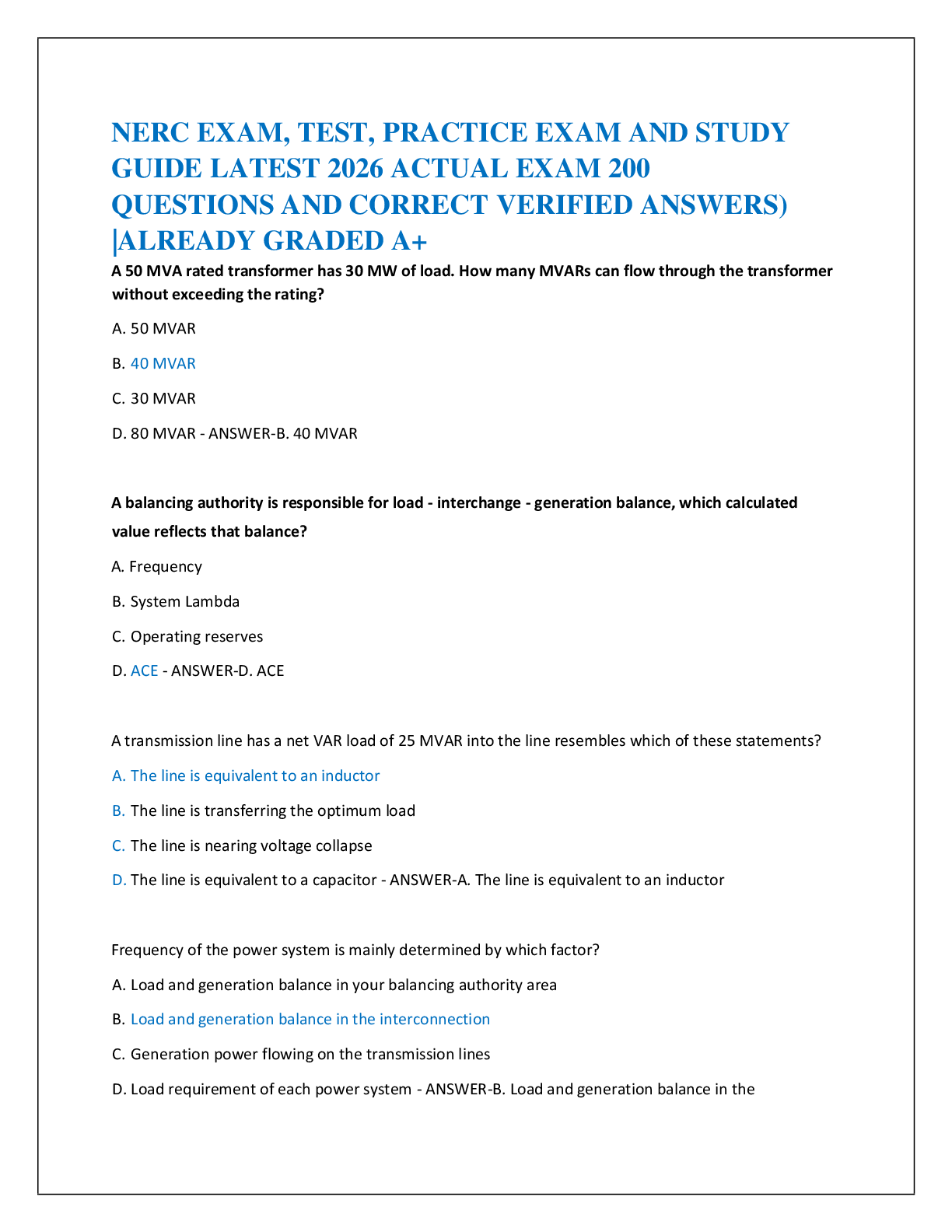
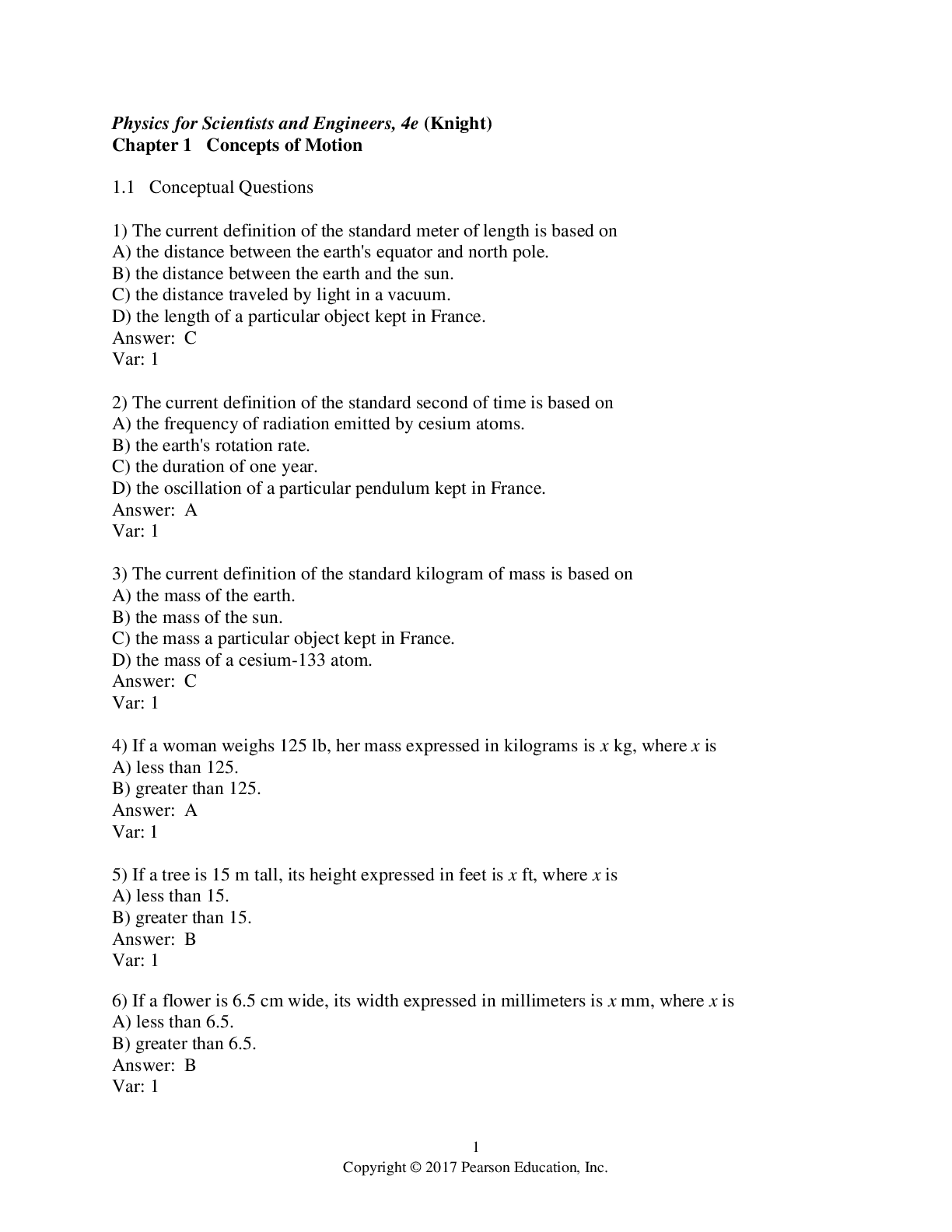
Test Bank for Physics for Scientists and Engineers A Strategic...

Plasma Physics, 2e by Richard Fitzpatrick (Solutions Manual)

College Physics, 3e Roger Freedman, Todd Ruskell, Philip Keste...

A Concise Introduction to Thermodynamics for Physicists, 1e by...
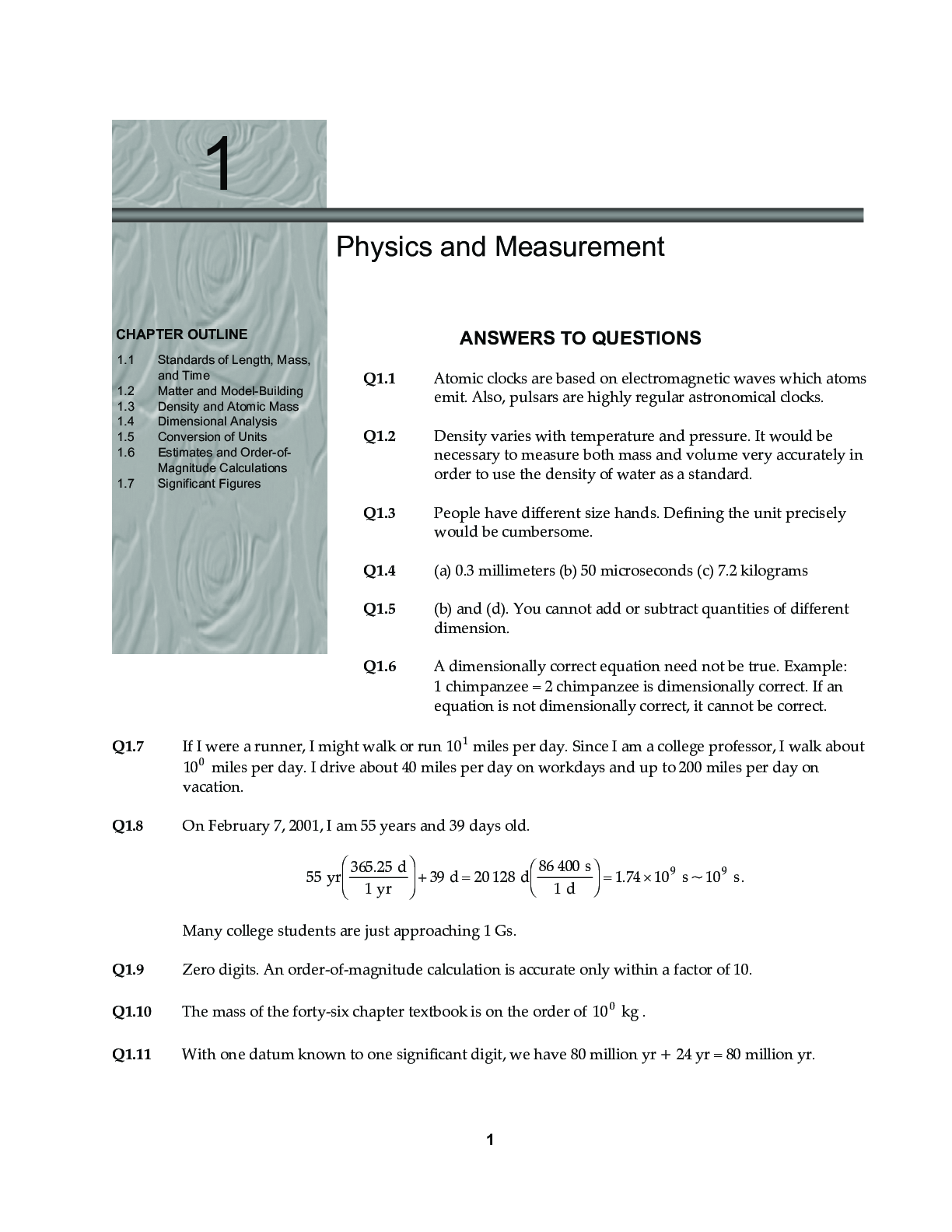
Physics for Scientists and Engineers by Raymond Serway | SOLUT...
SOLUTIONS MANUAL for Physics for Scientists and Engineers by R...