1. A patient with multiple comorbidities is under the care of nurses, physicians,
pharmacists, and dietitians. Conflicts arise regarding care priorities. Which
leadership action MOST reflects Distinguished-level prac
...
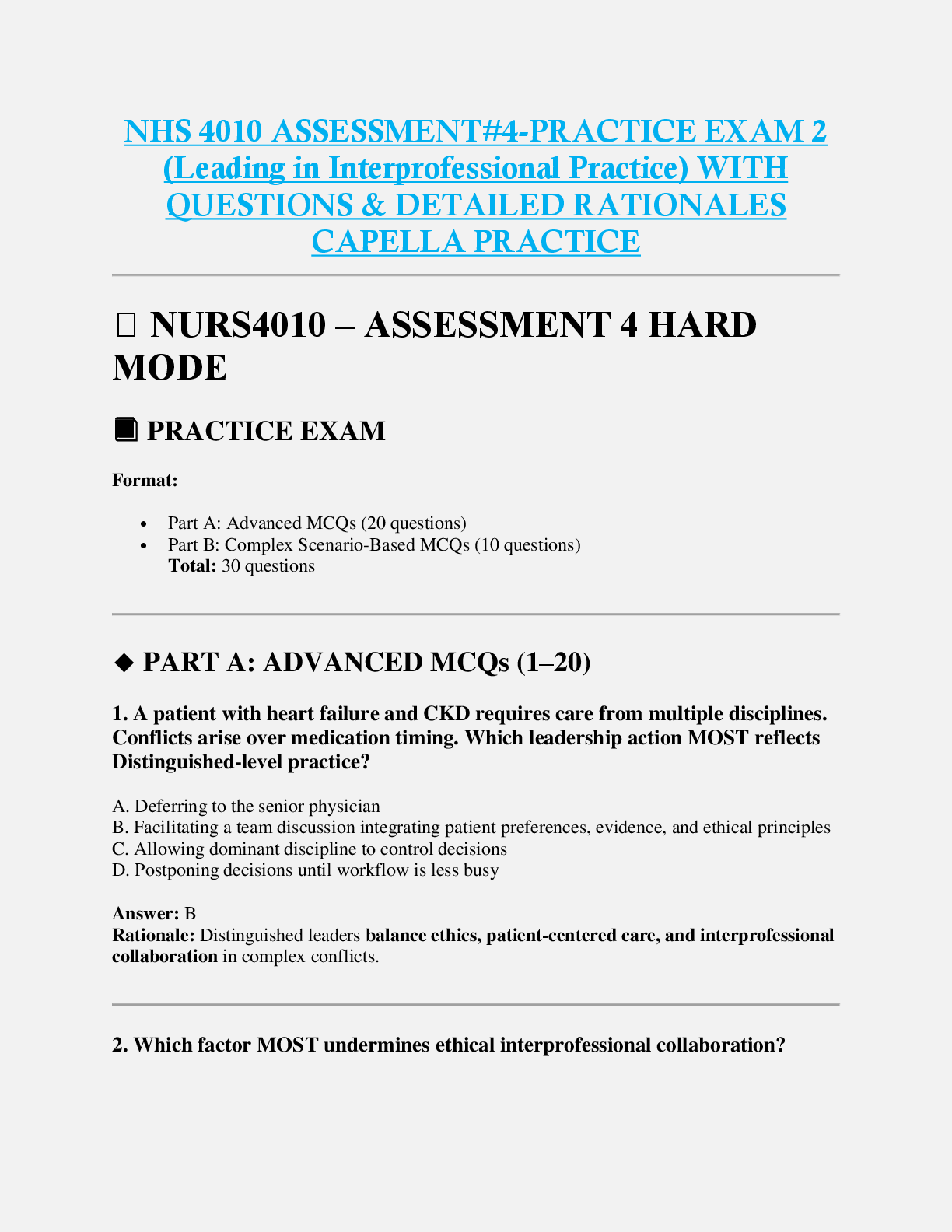
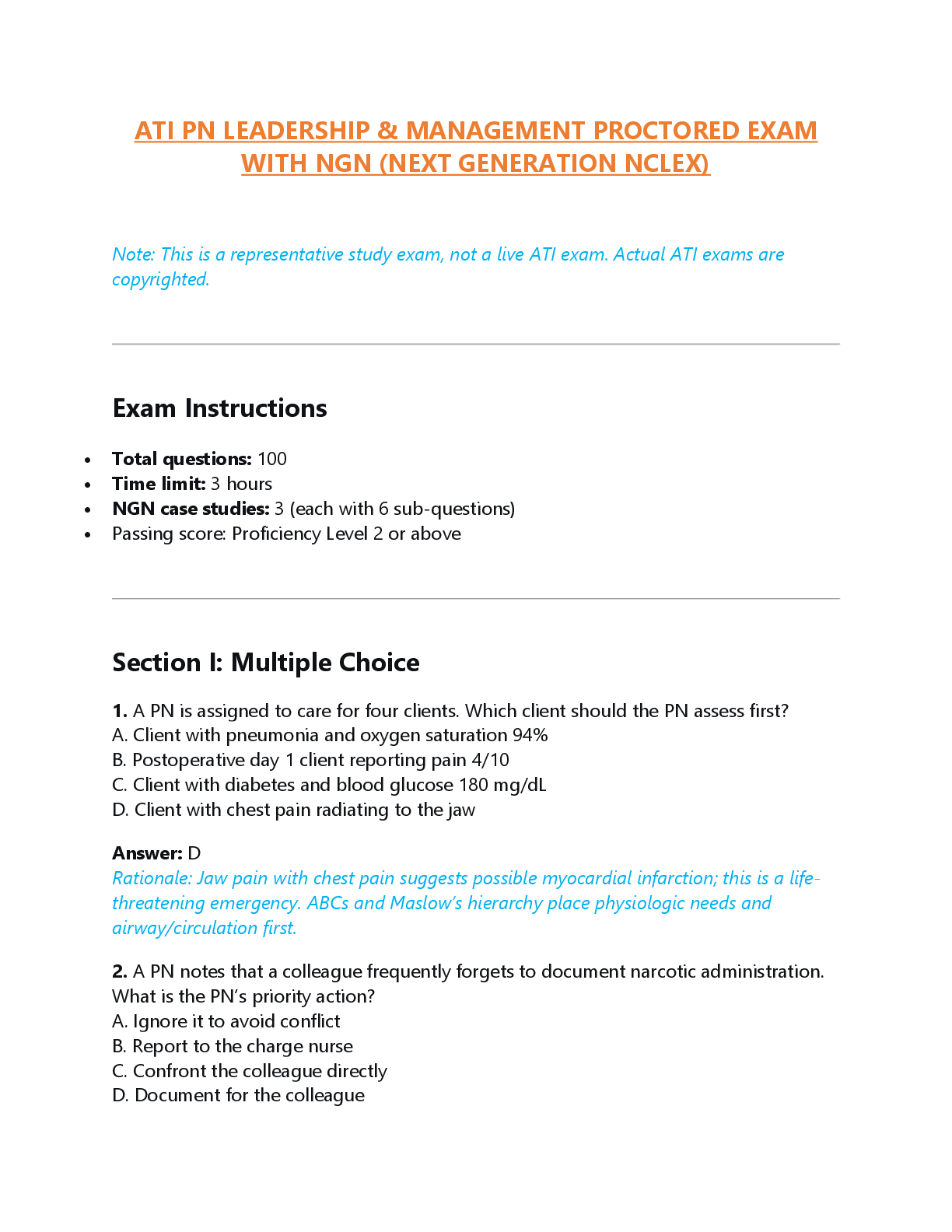
1. A patient with multiple comorbidities is under the care of nurses, physicians,
pharmacists, and dietitians. Conflicts arise regarding care priorities. Which
leadership action MOST reflects Distinguished-level practice?
A. Deferring decisions to the most senior physician
B. Facilitating a team discussion integrating patient preferences, evidence, and ethical principles
C. Allowing the dominant discipline to control decisions
D. Postponing decisions until workflow is less busy
Answer: B
Rationale: Distinguished leaders balance ethics, patient-centered care, and interprofessional
collaboration to resolve complex conflicts.
2. Which factor MOST undermines ethical collaboration in interprofessional
teams?
A. Role ambiguity, hierarchical dominance, and poor communication
B. Shared goals and mutual respect
C. Clear delegation and defined responsibilities
D. Regular interdisciplinary rounds
Answer: A
Rationale: These barriers increase conflict, reduce collaboration, and compromise patient
safety.
3. Which strategy MOST supports sustained innovation in complex
interprofessional teams?
A. Encouraging diverse perspectives, safe experimentation, and continuous feedback
B. Enforcing rigid hierarchy
C. Limiting decision-making to senior staff
D. Avoiding team discussions
Answer: A
Rationale: Transformational leadership fosters creativity, engagement, and problem-solving
across disciplines.
4. Which scenario demonstrates ethical delegation in interprofessional practice?
A. Assigning high-risk tasks based on team member competency and scope of practice
B. Delegating tasks randomly
C. Assigning critical tasks to the least experienced staff
D. Completing all tasks personally
Answer: A
Rationale: Ethical delegation ensures patient safety while empowering competent staff.
5. Which approach MOST effectively resolves conflict arising from power
imbalances?
A. Facilitated negotiation emphasizing shared goals, mutual respect, and patient-centered
priorities
B. Allowing dominant professions to dictate care
C. Ignoring conflict
D. Postponing discussion until later
Answer: A
Rationale: Distinguished leadership balances authority, ethics, and patient outcomes.
6. Which factor MOST supports patient-centered interprofessional care?
A. Actively integrating patient preferences, goals, and feedback into care planning
B. Prioritizing workflow efficiency over patient input
C. Allowing senior staff to override patient preferences
D. Limiting patient involvement to consent forms
Answer: A
Rationale: Patient-centered care requires patient values to guide interprofessional
collaboration.
7. Which factor MOST predicts successful interprofessional collaboration?
A. Mutual accountability, shared goals, and ongoing evaluation
B. Strict hierarchy enforcement
C. Individual performance metrics only
D. Minimal communication
Answer: A
Rationale: Collaboration relies on engagement, clarity, and continuous monitoring.
8. Which leadership competency MOST enhances ethical decision-making in
high-stakes scenarios?
A. Emotional intelligence, systems thinking, and ethical reasoning
B. Technical skill only
C. Budget knowledge only
D. Authority assertion only
Answer: A
Rationale: Distinguished leaders navigate complex team dynamics while prioritizing ethics
and patient safety.
9. Which strategy MOST reduces errors from miscommunication?
[Show More]