Fluid Dynamics > QUESTIONS & ANSWERS > AAE 333 -Fluid Mechanics Fall 2020 Homework #11ALL ANSWERS CORRECT,100% SCORE (All)
AAE 333 -Fluid Mechanics Fall 2020 Homework #11ALL ANSWERS CORRECT,100% SCORE
Document Content and Description Below
Last updated: 3 years ago
Preview 1 out of 18 pages
Instant download

Buy this Document to get the Full Access Instantly
Provided by Students Who Aced it
We Verify Document Content to Gurantee Accuracy
Reviews( 0 )
Document information
Connected school, study & course
About the document
Uploaded On
Apr 24, 2021
Number of pages
18
Written in
All

Additional information
This document has been written for:
Uploaded
Apr 24, 2021
Downloads
0
Views
168
Topic Tags
Recommended For You
Get more on QUESTIONS & ANSWERS »

Munson, Young and Okiishi’s Fundamentals of Fluid Mechanics,...

Fox and McDonald's Introduction to Fluid Mechanics 9e Philip P...

Biofluid Mechanics An Introduction to Fluid Mechanics, Macroc...

eBook Fluid Mechanics in 2nd EDition SI Units By Russell Hibbe...

Solutions Manual for Engineering Fluid Mechanics, 7th Edition...

Solutions Manual for Fluid Mechanics: Fundamentals and Applic...


eBook Fundamentals of Fluid Mechanics 3rd Revised edition by G...


Gaza’s Cycle of Destruction and Rebuilding_ Understanding t...


Solutions Manual for Computational Fluid Dynamics for Mechanic...

📄 Instructor’s Solutions Manual – Design of Fluid Thermal Sys...
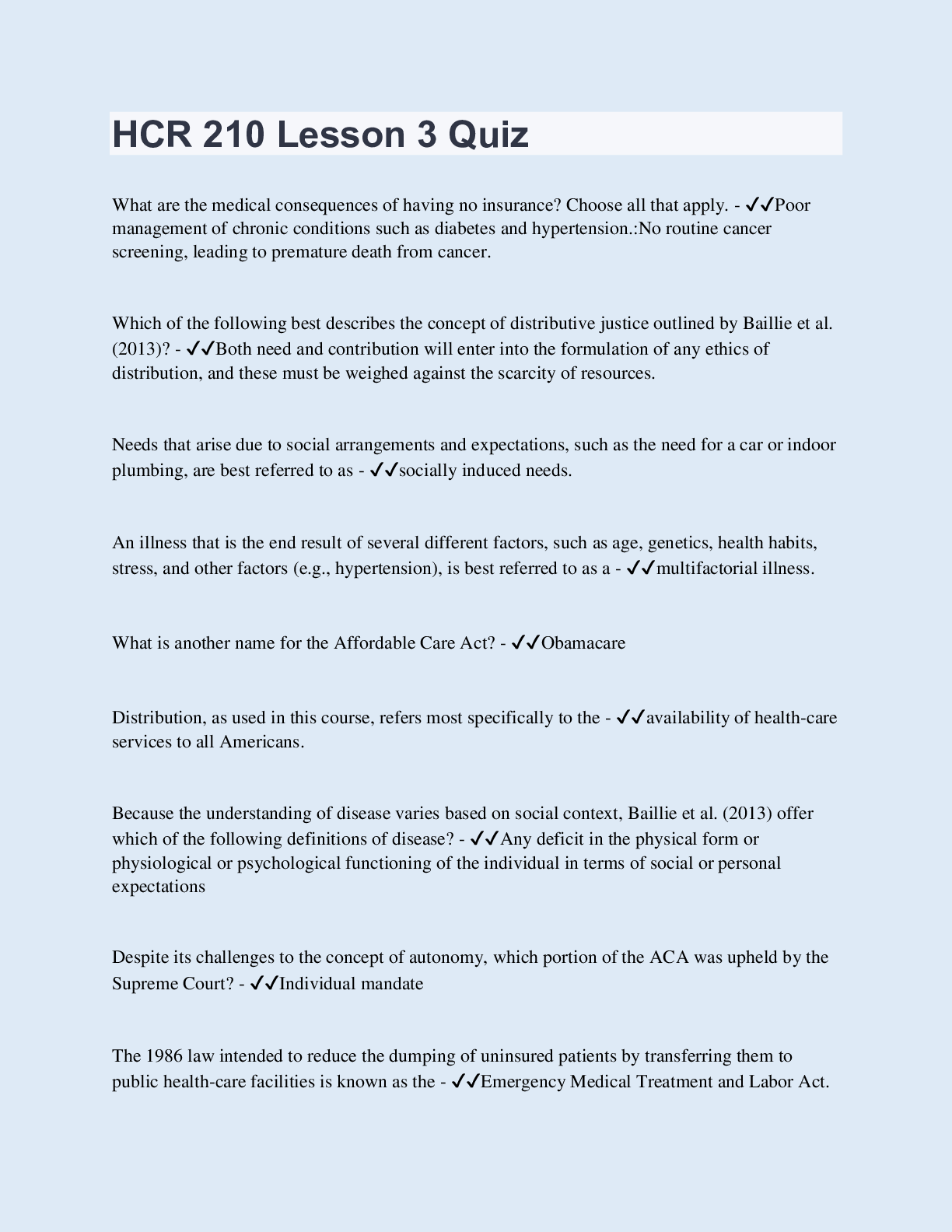
HCR 210 Lesson 3 Quiz | Questions with 100% Correct Answers |...