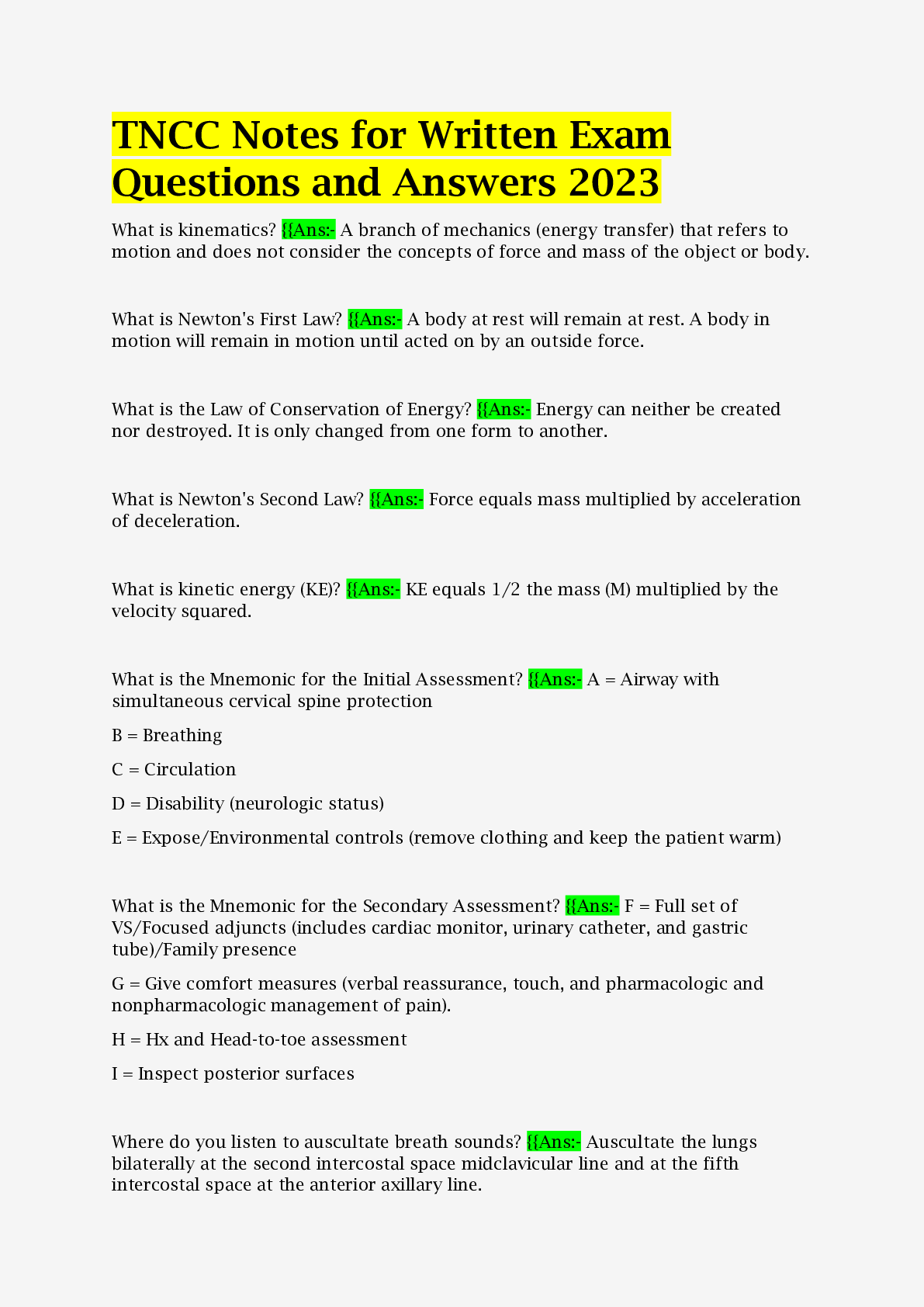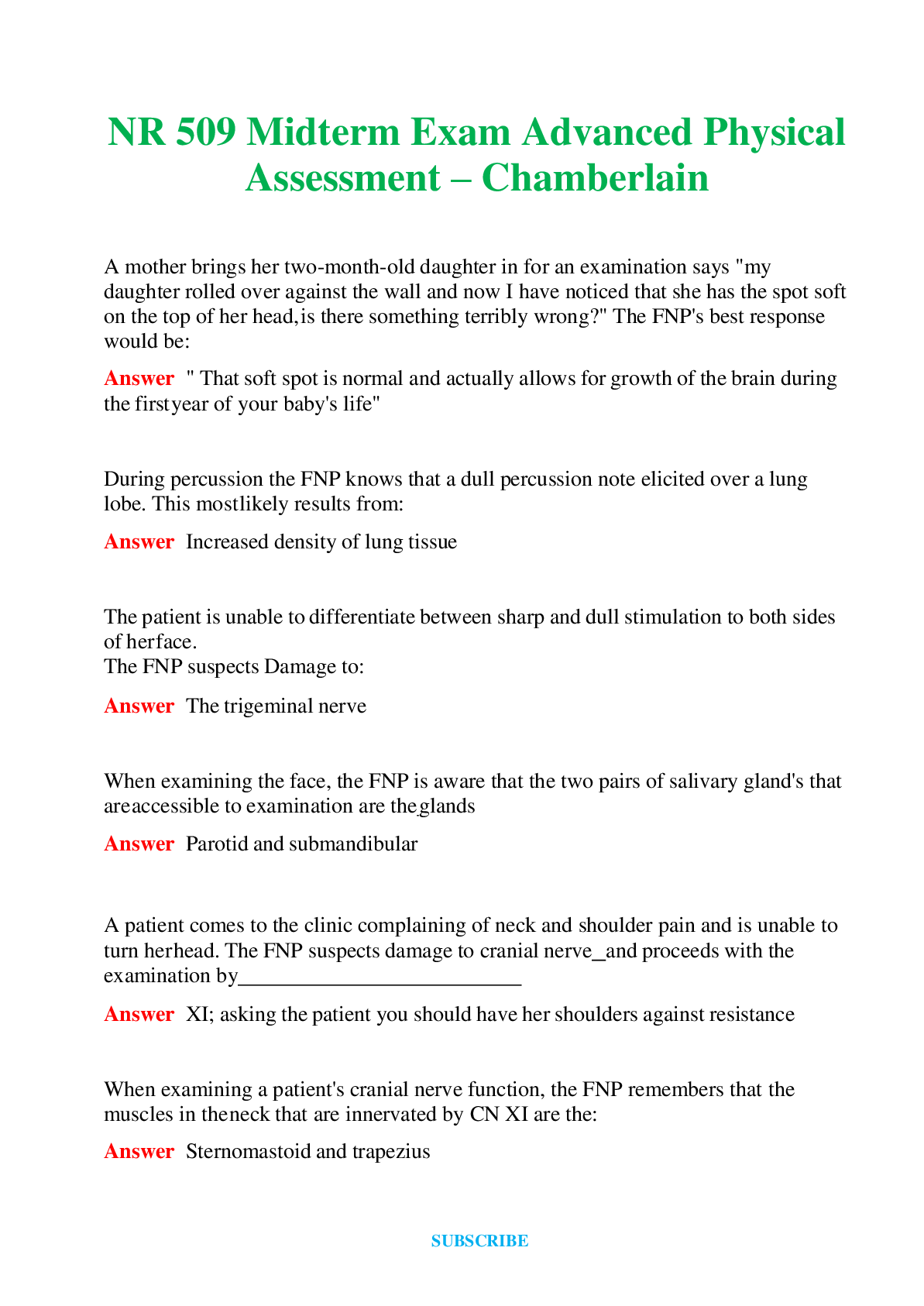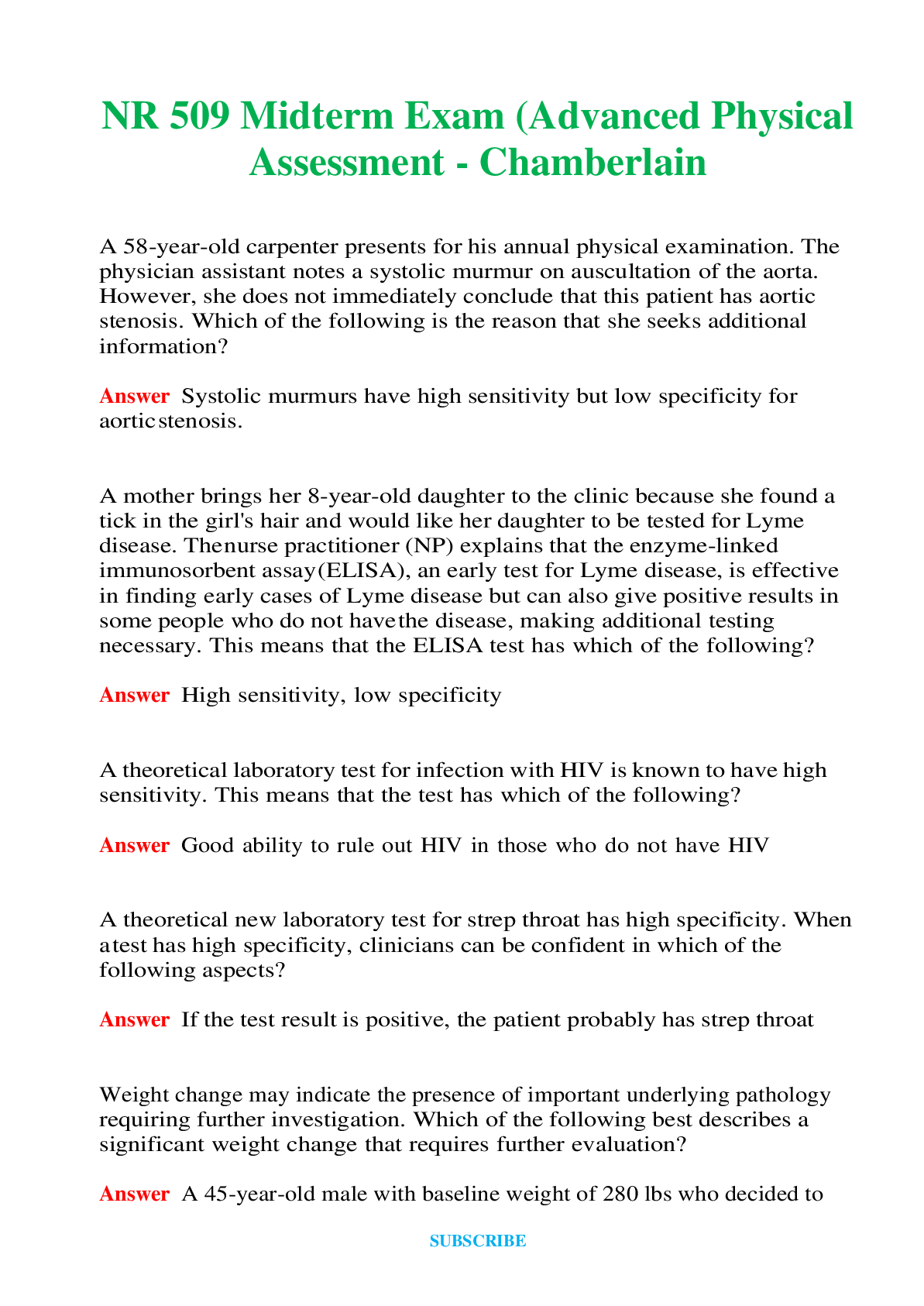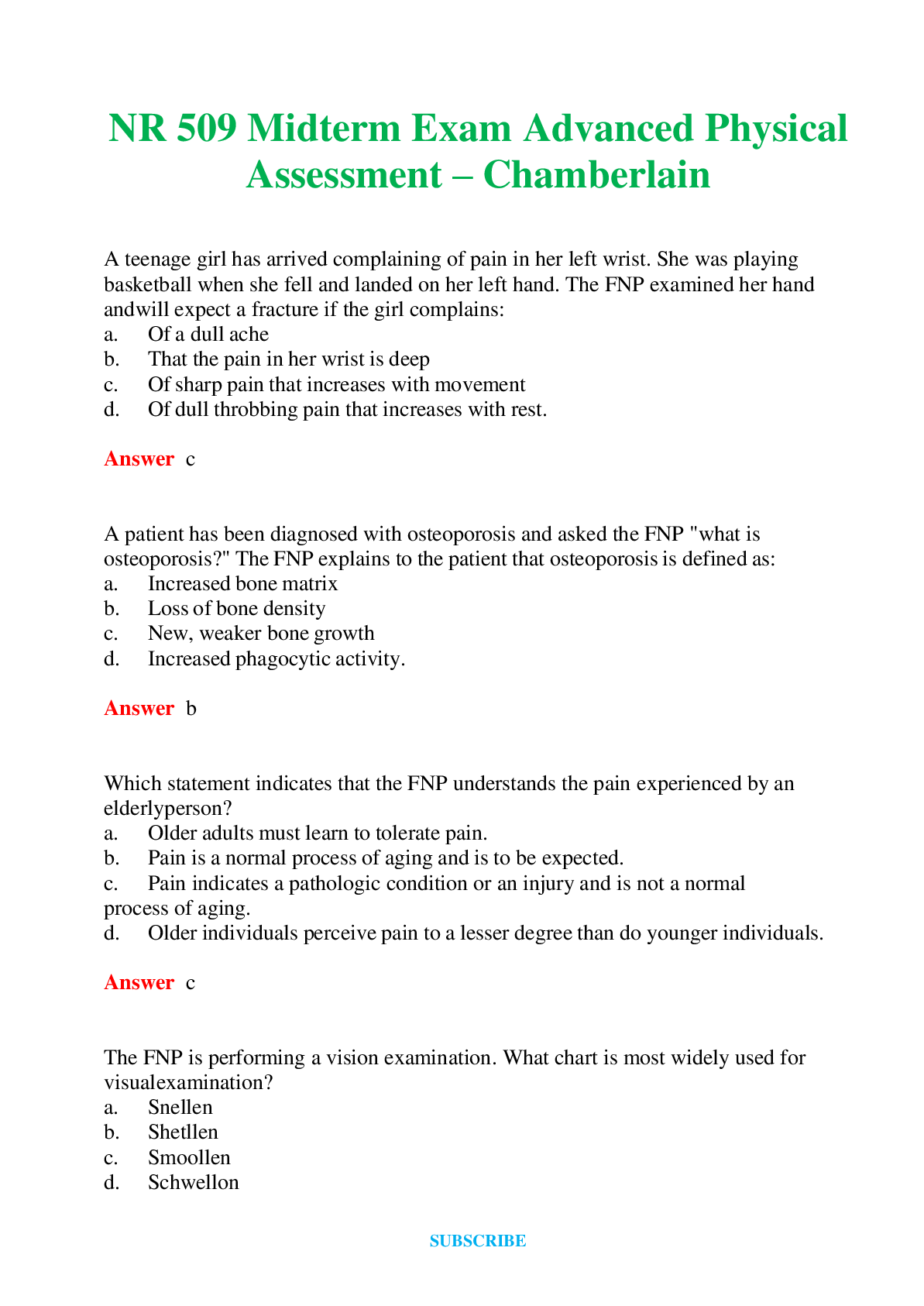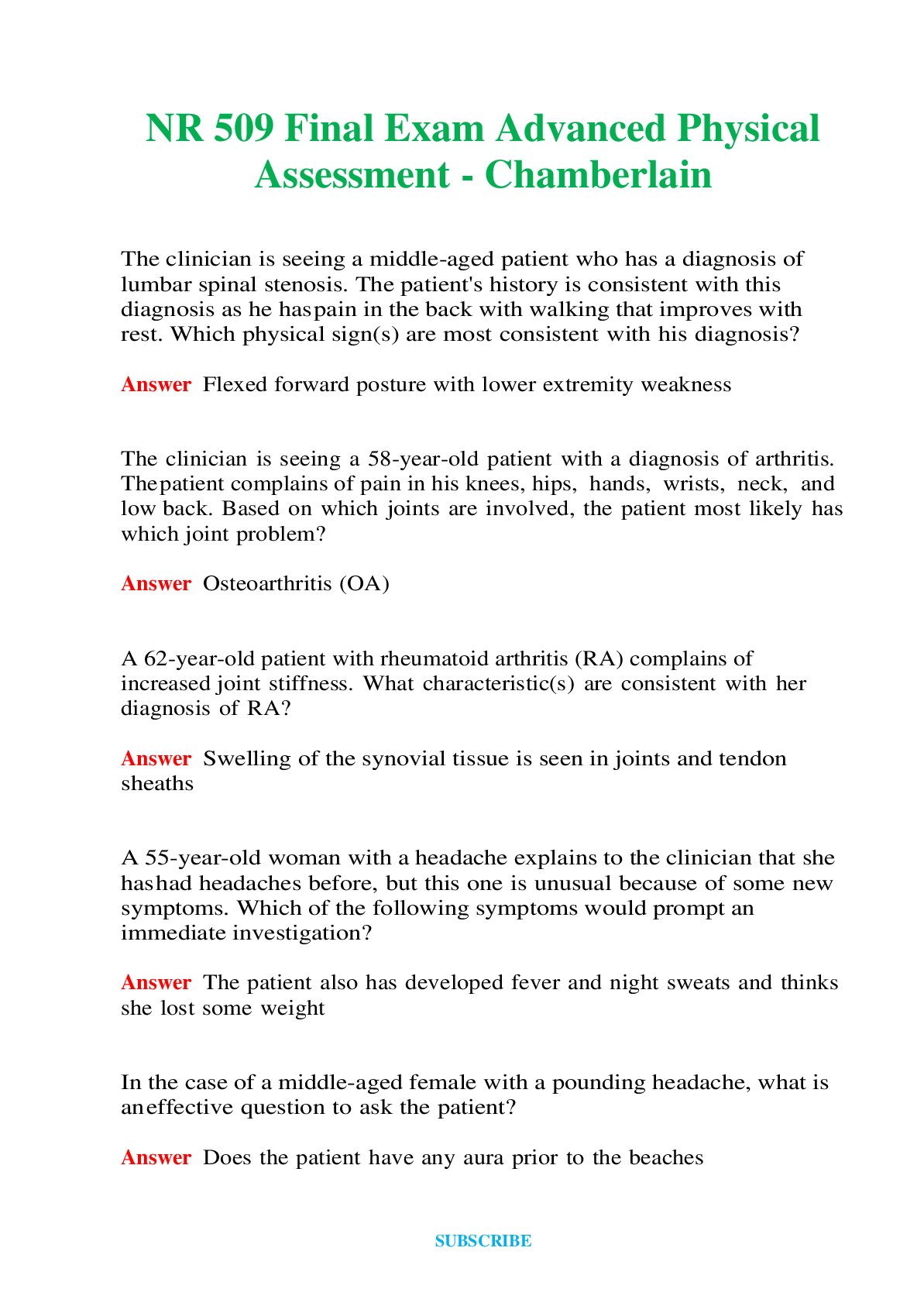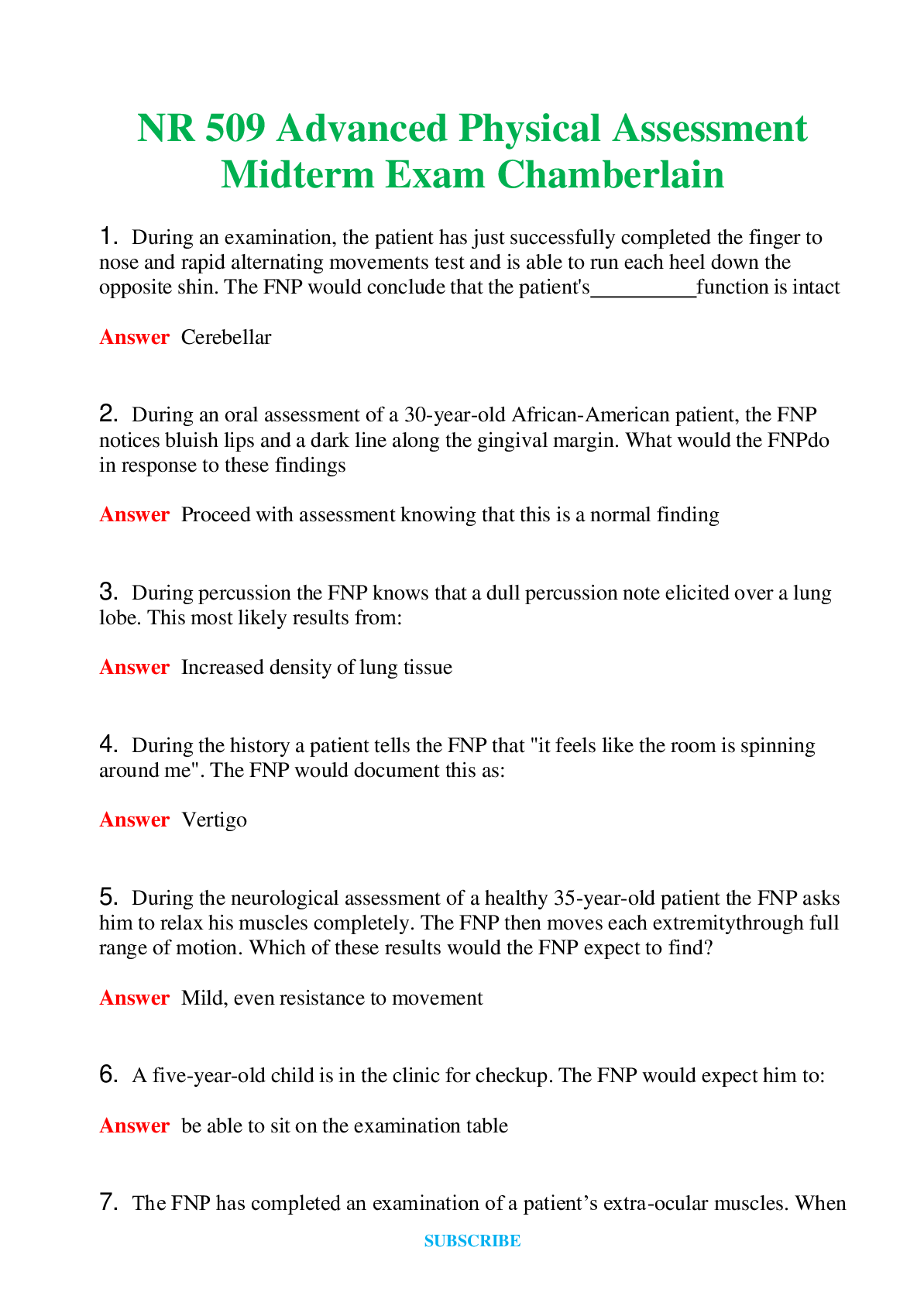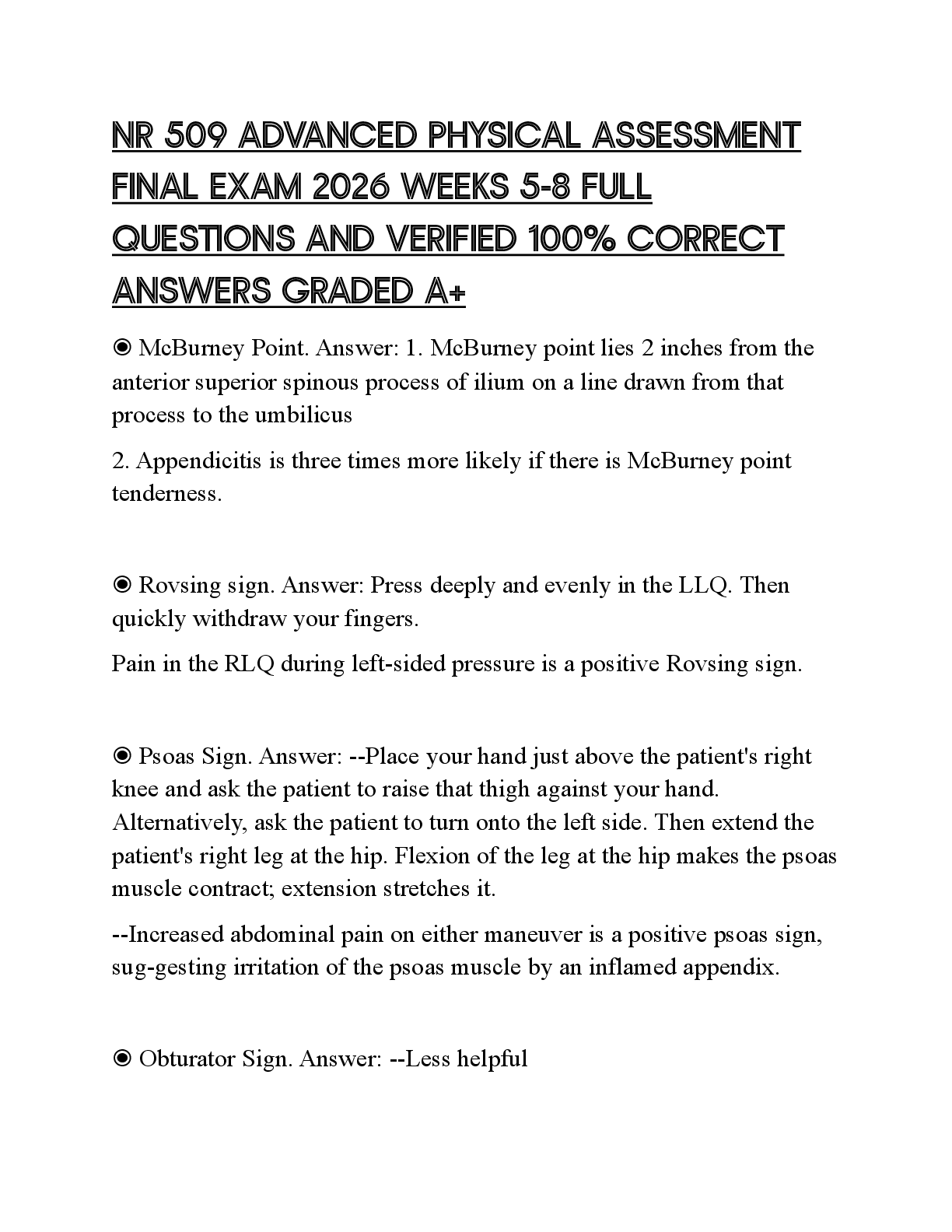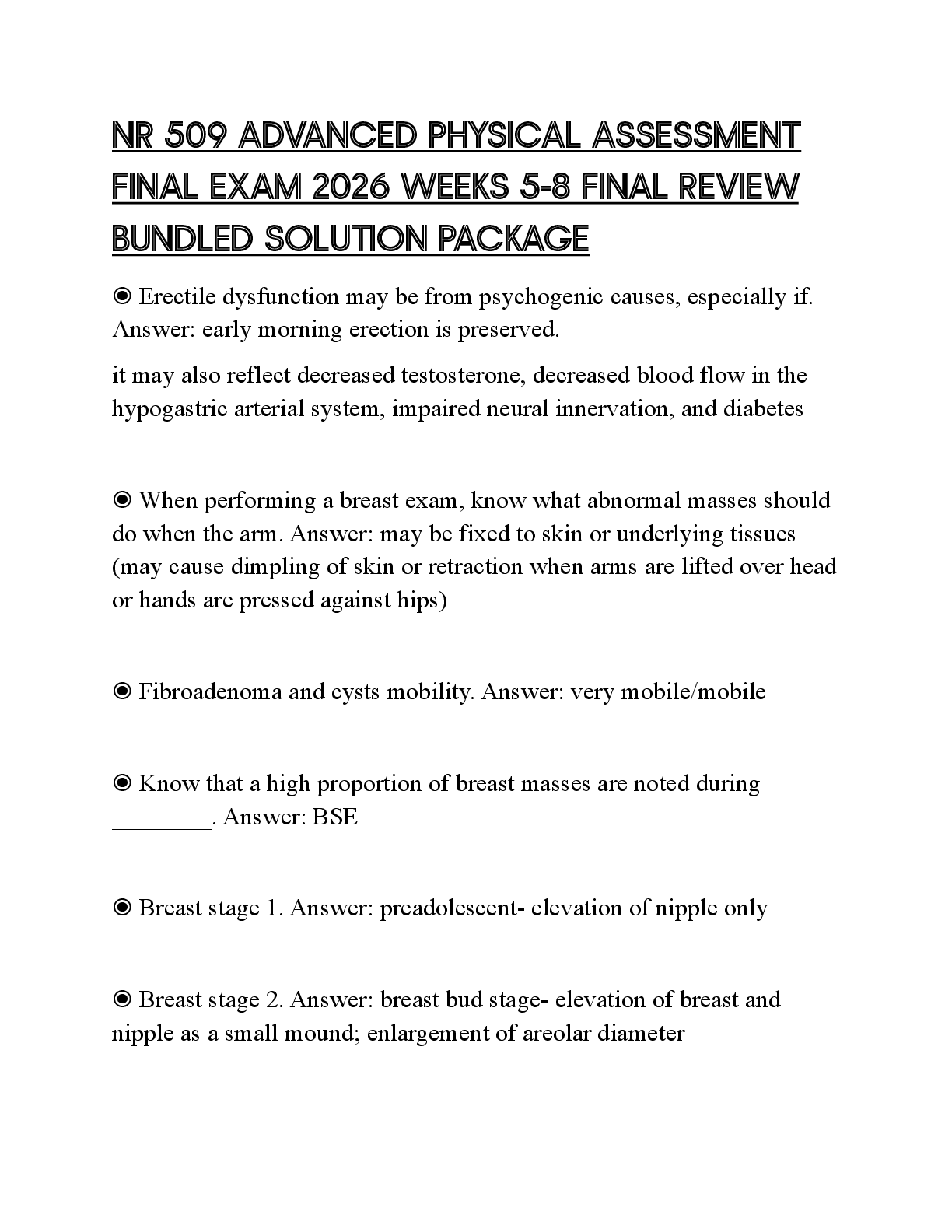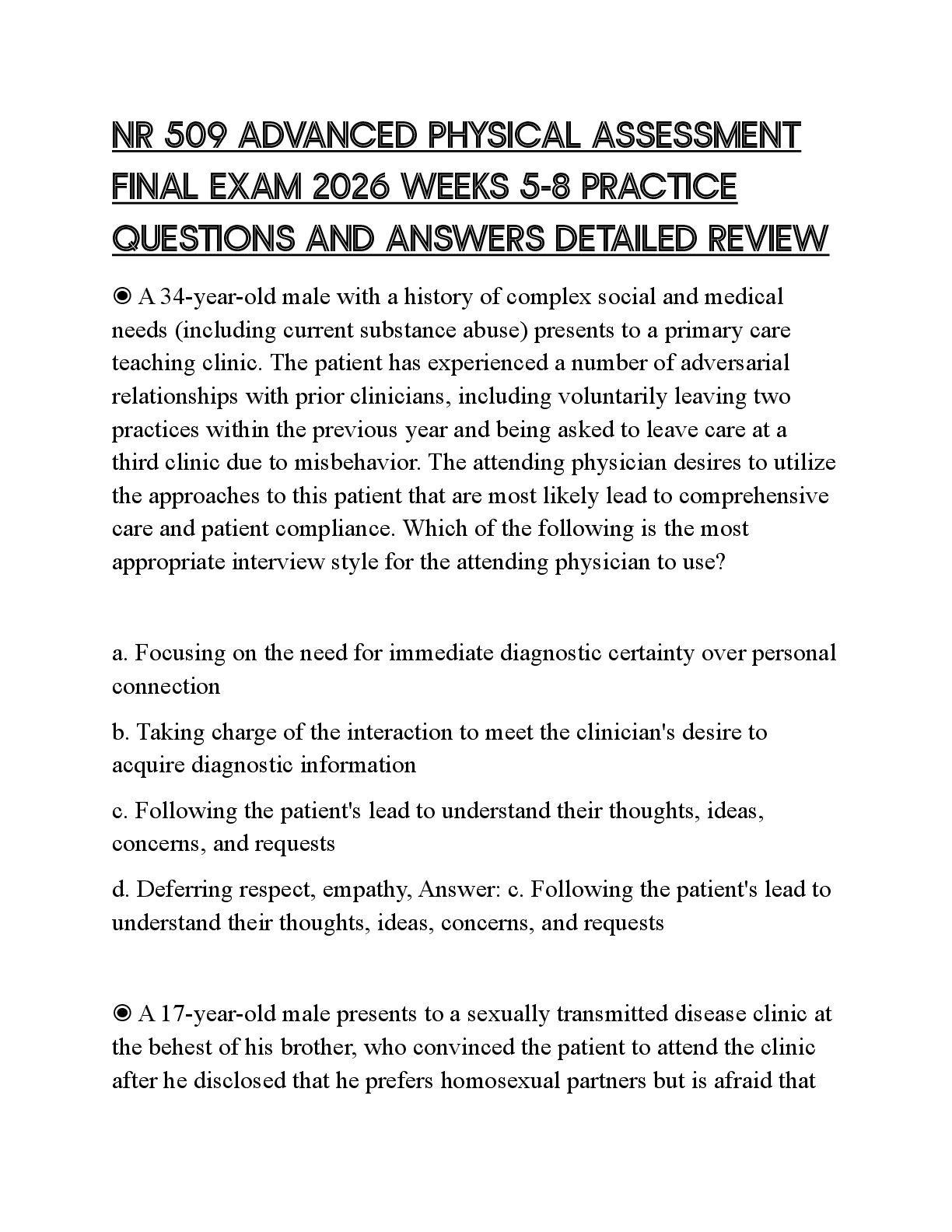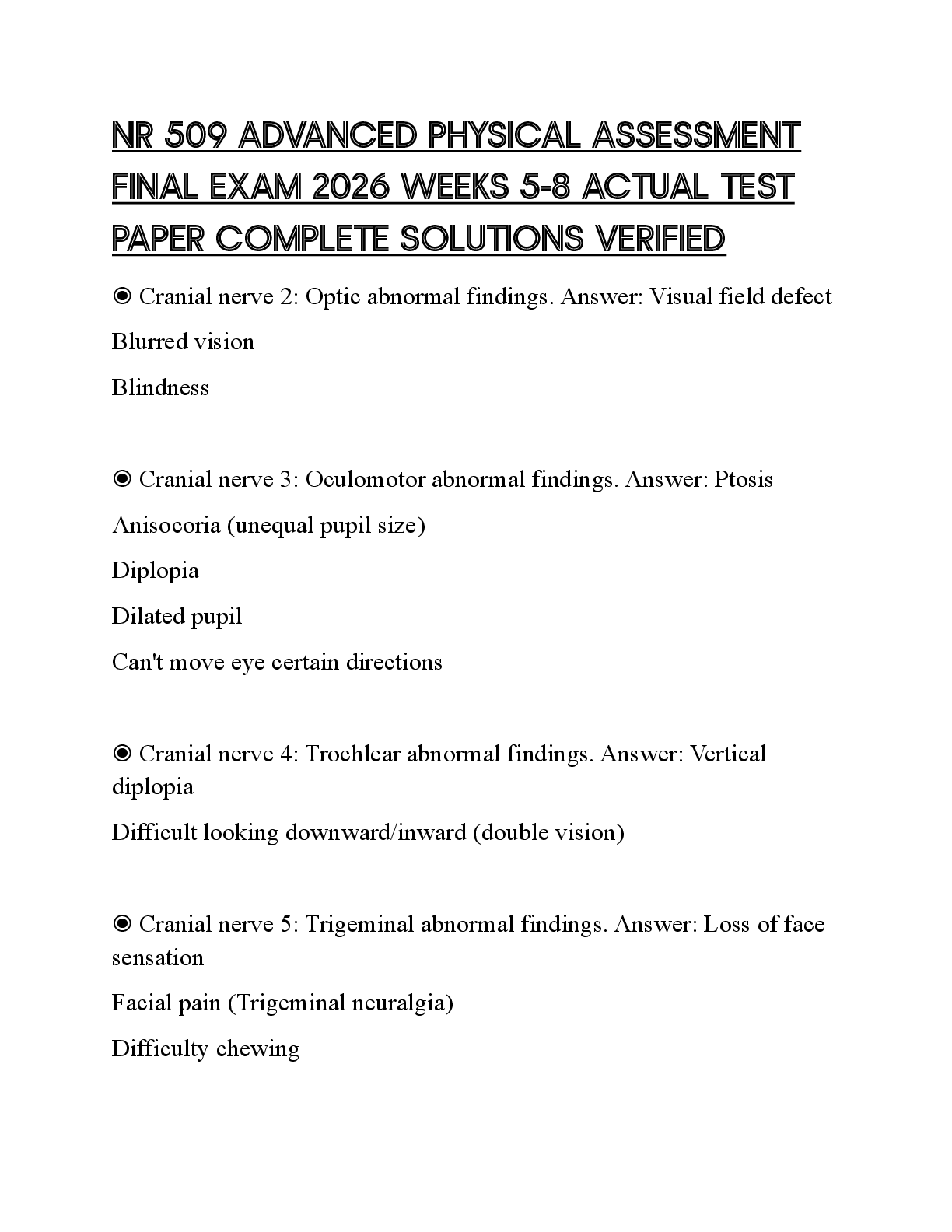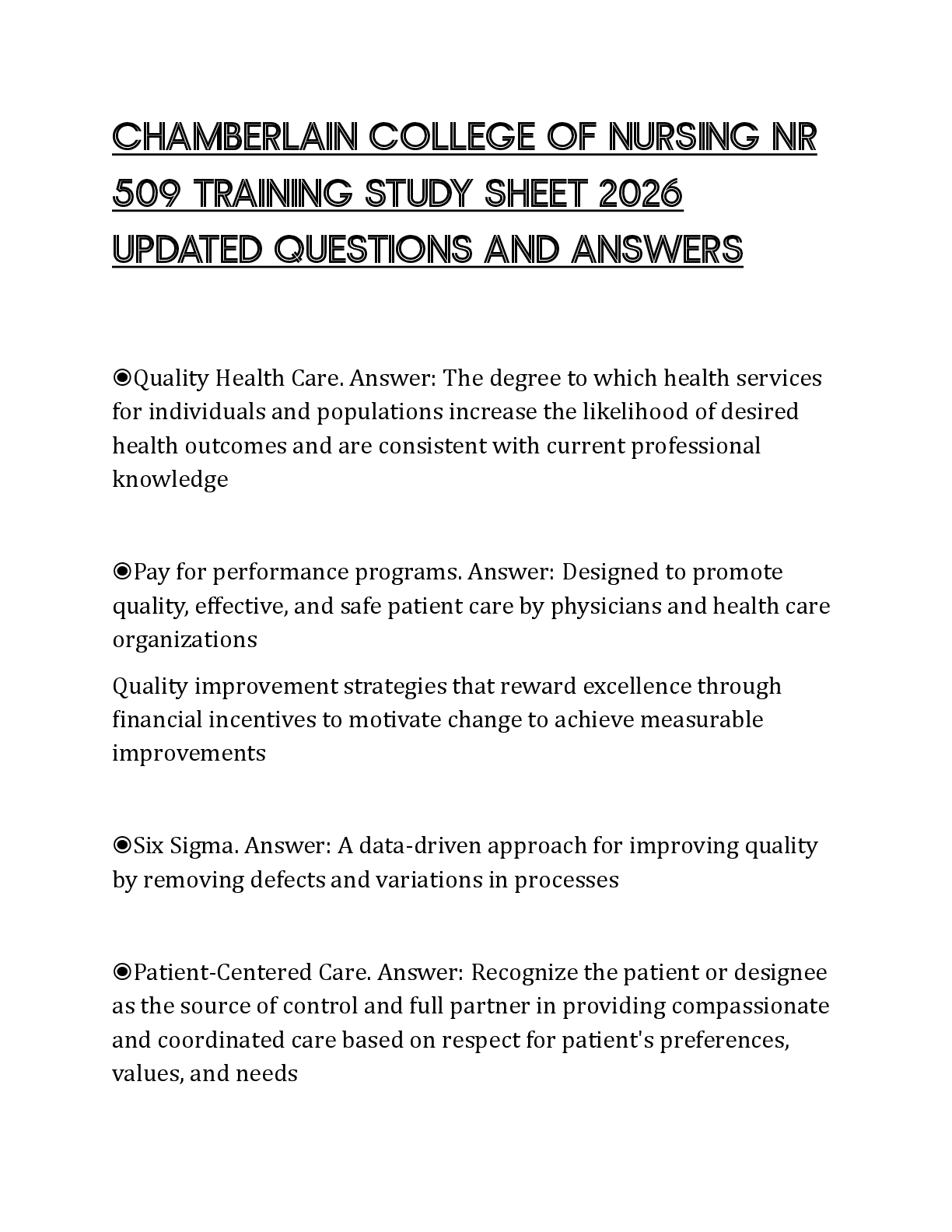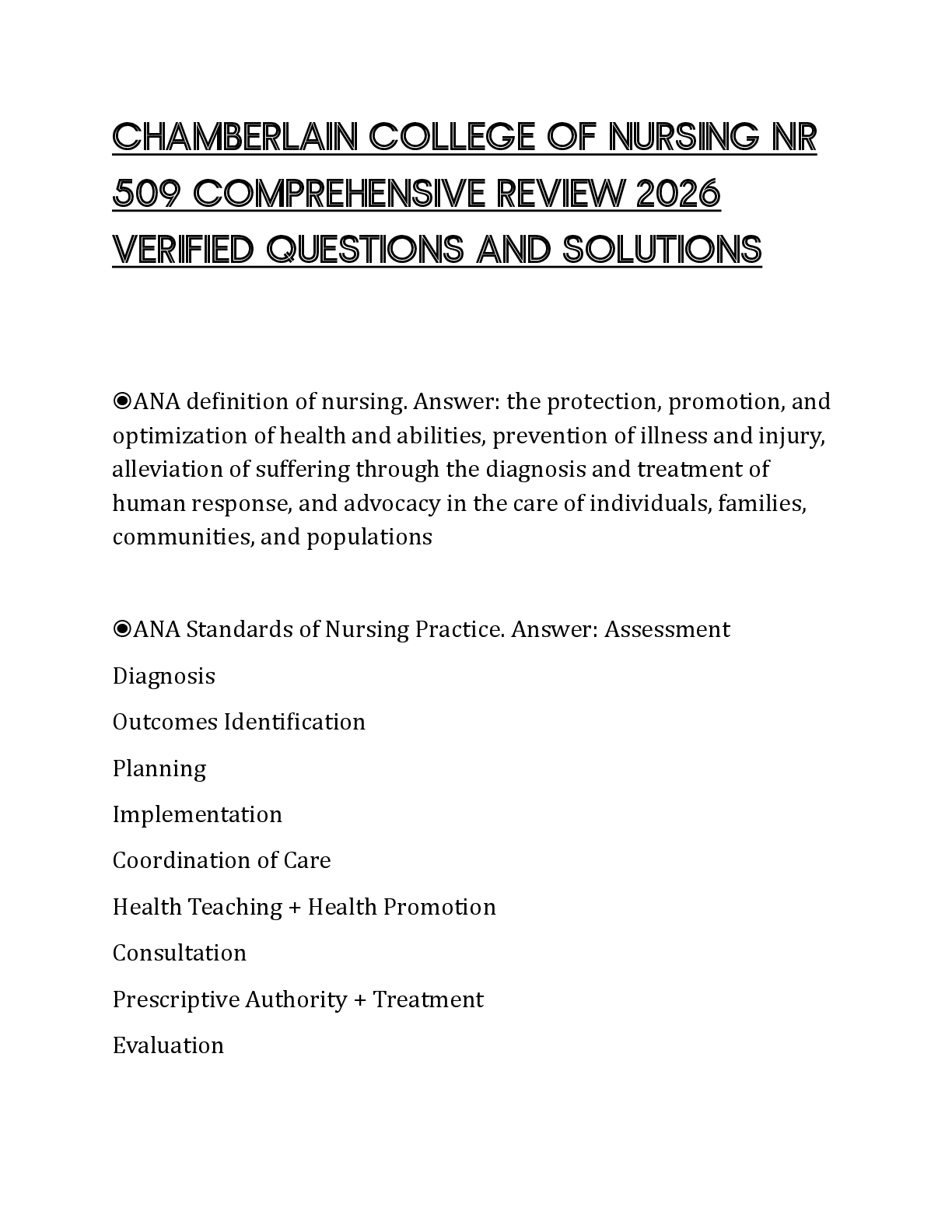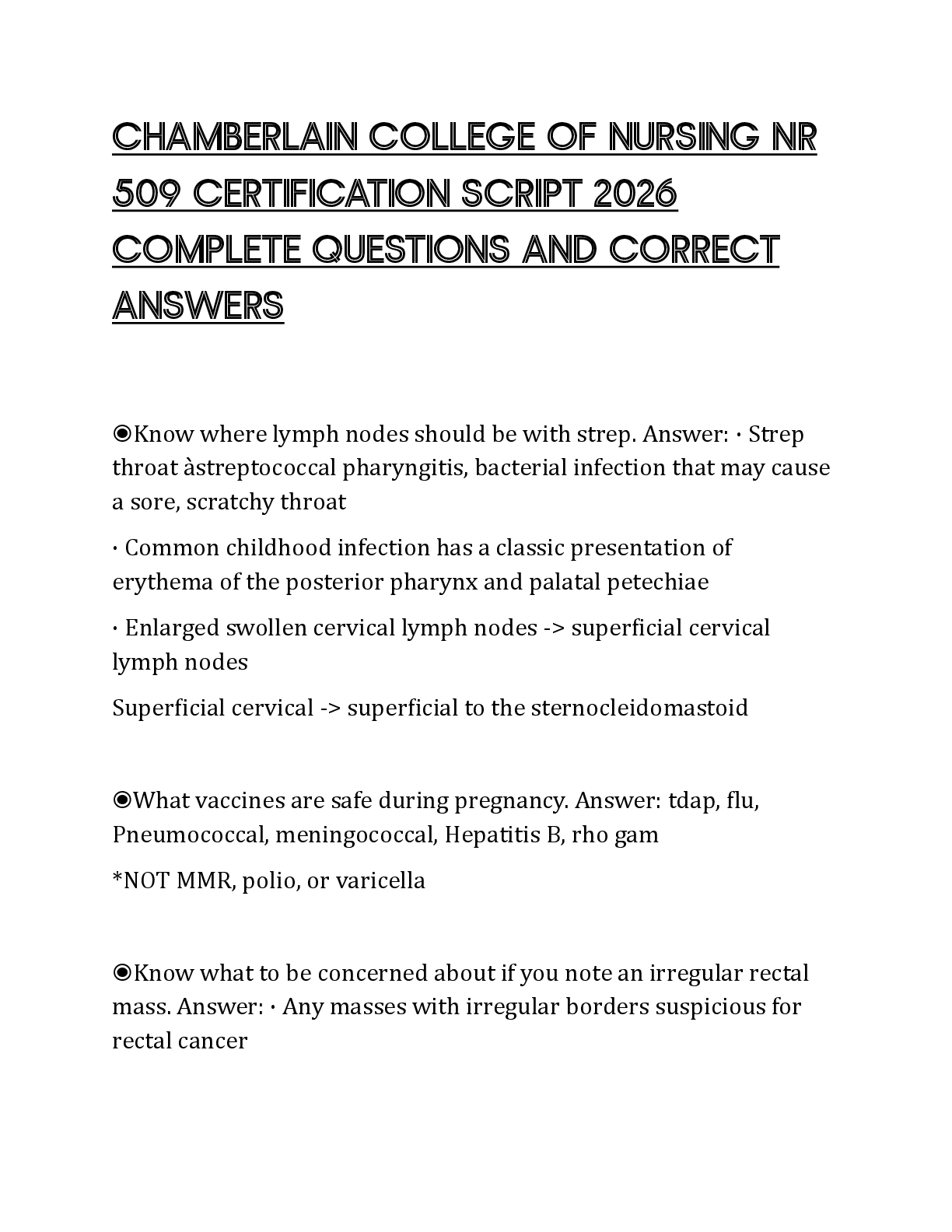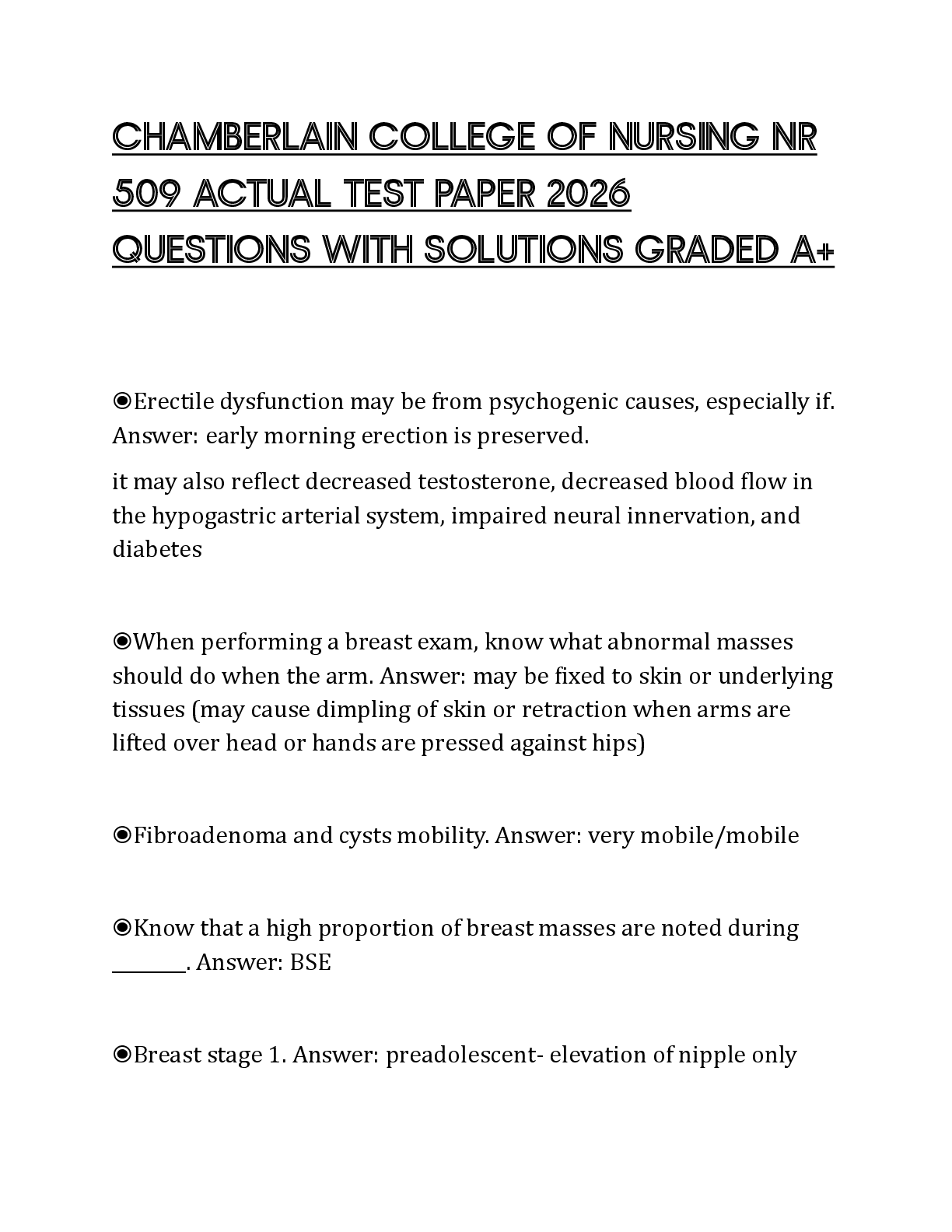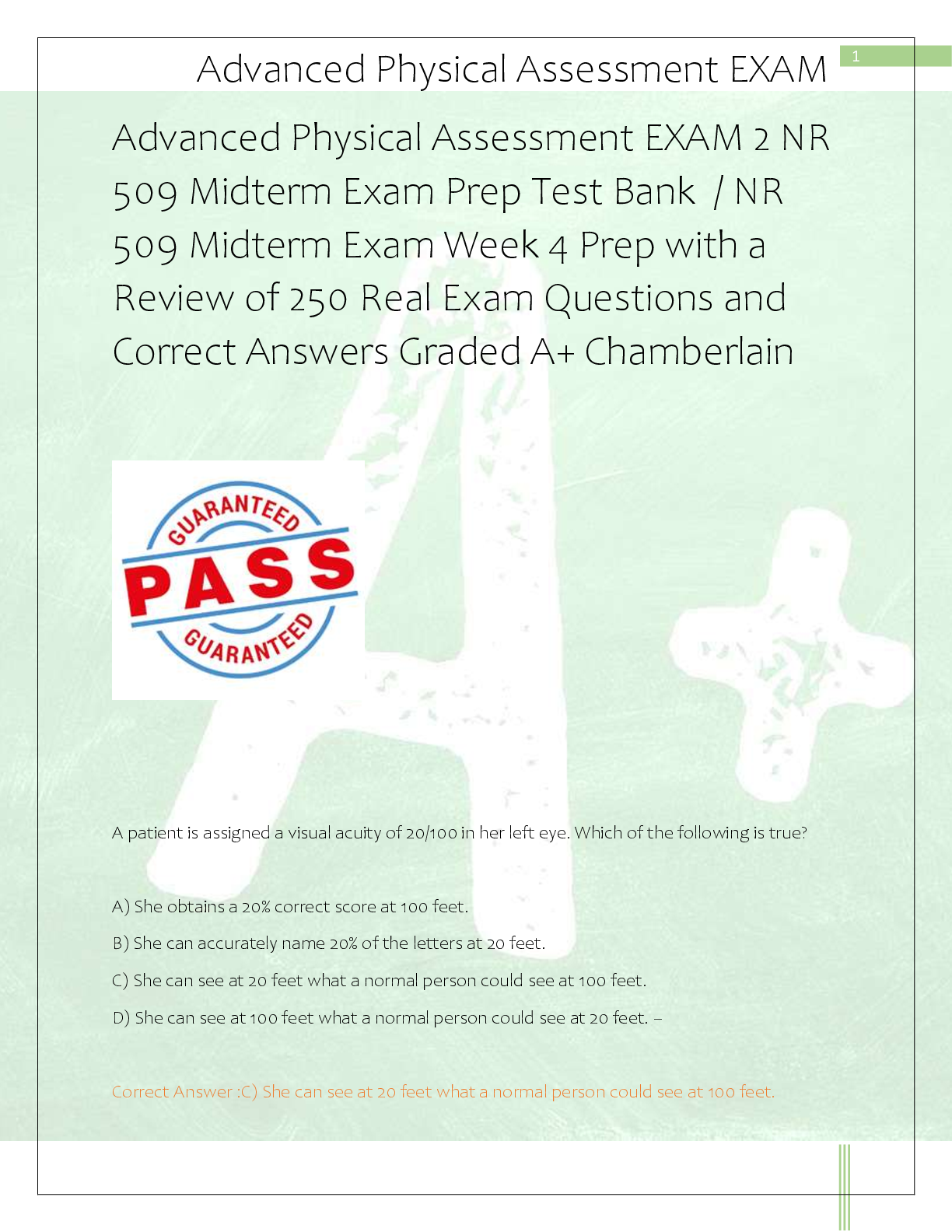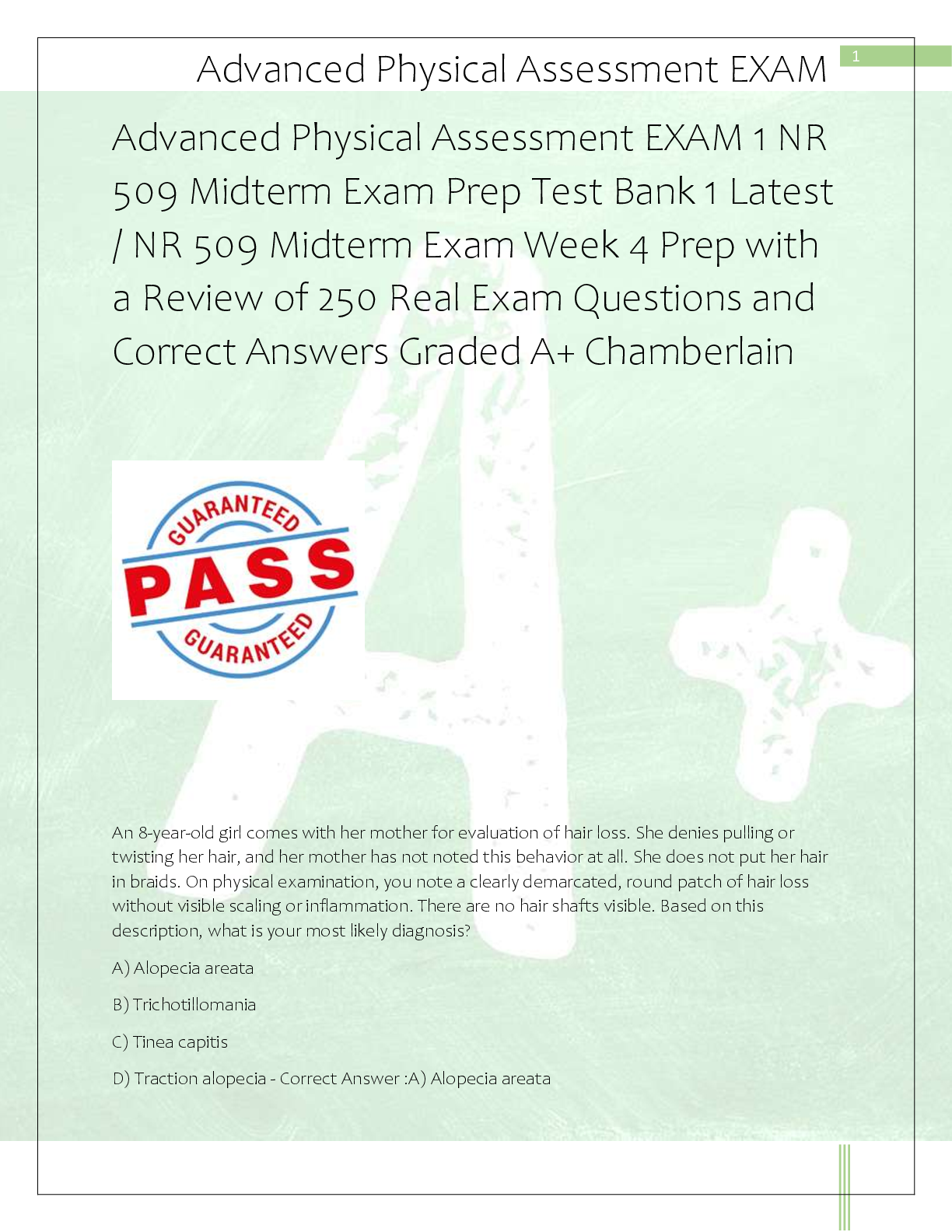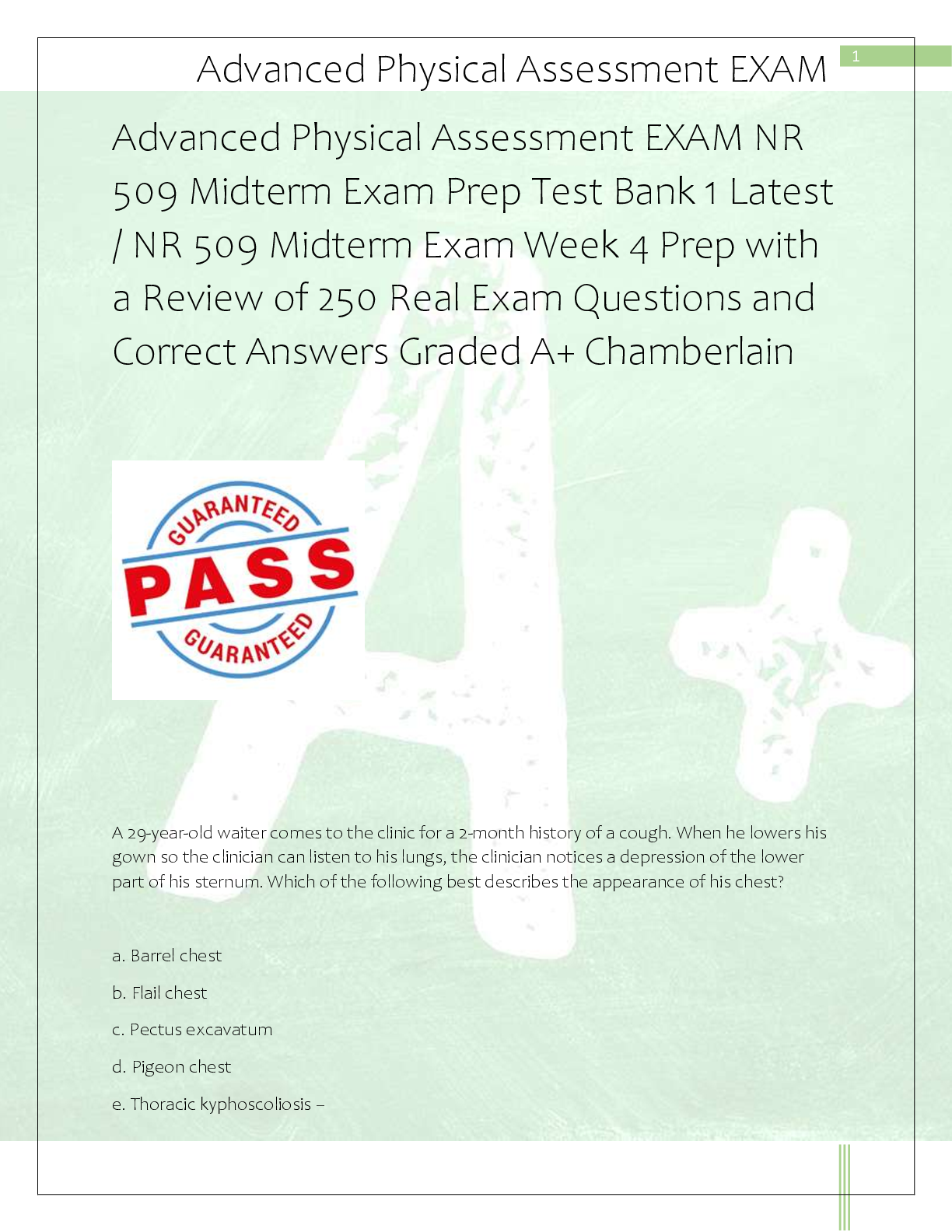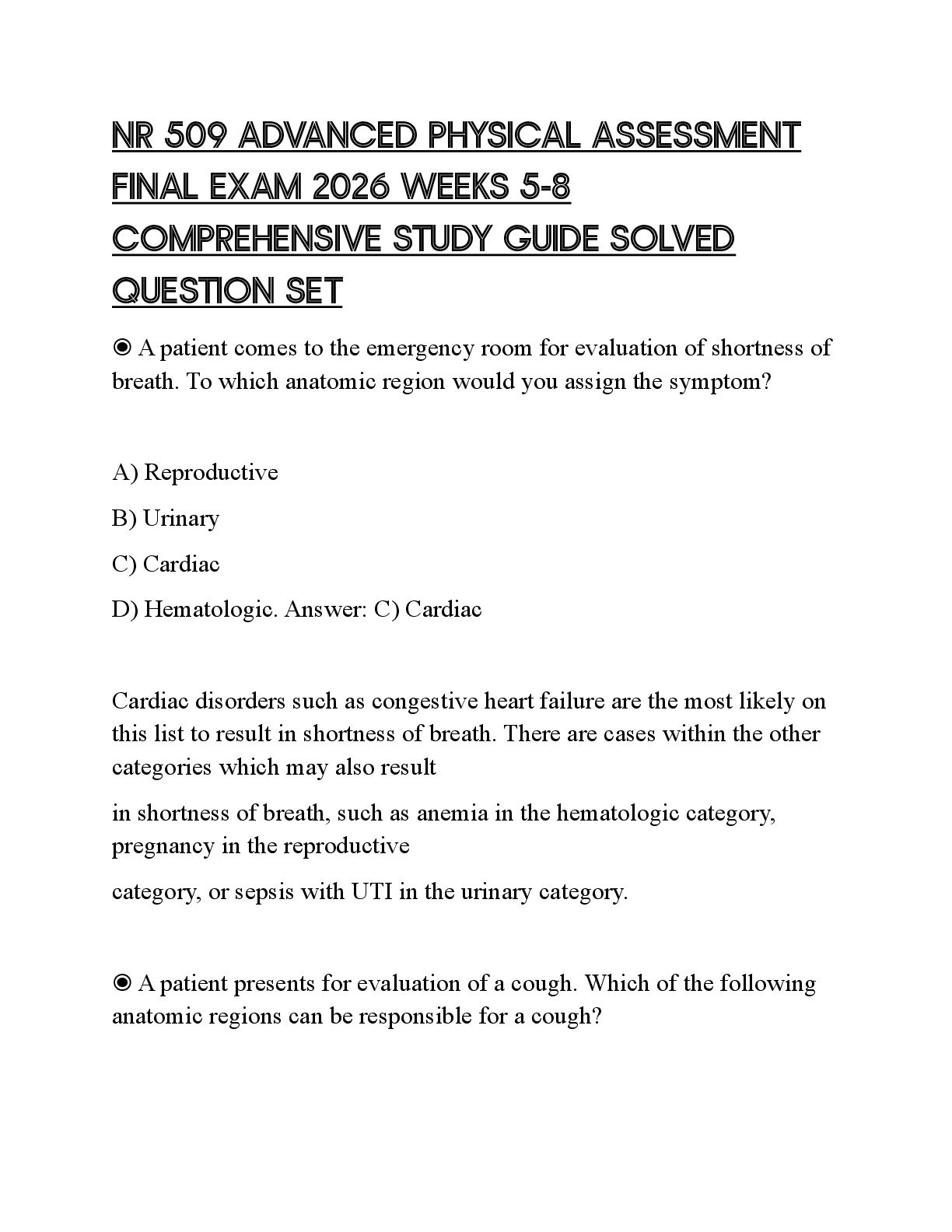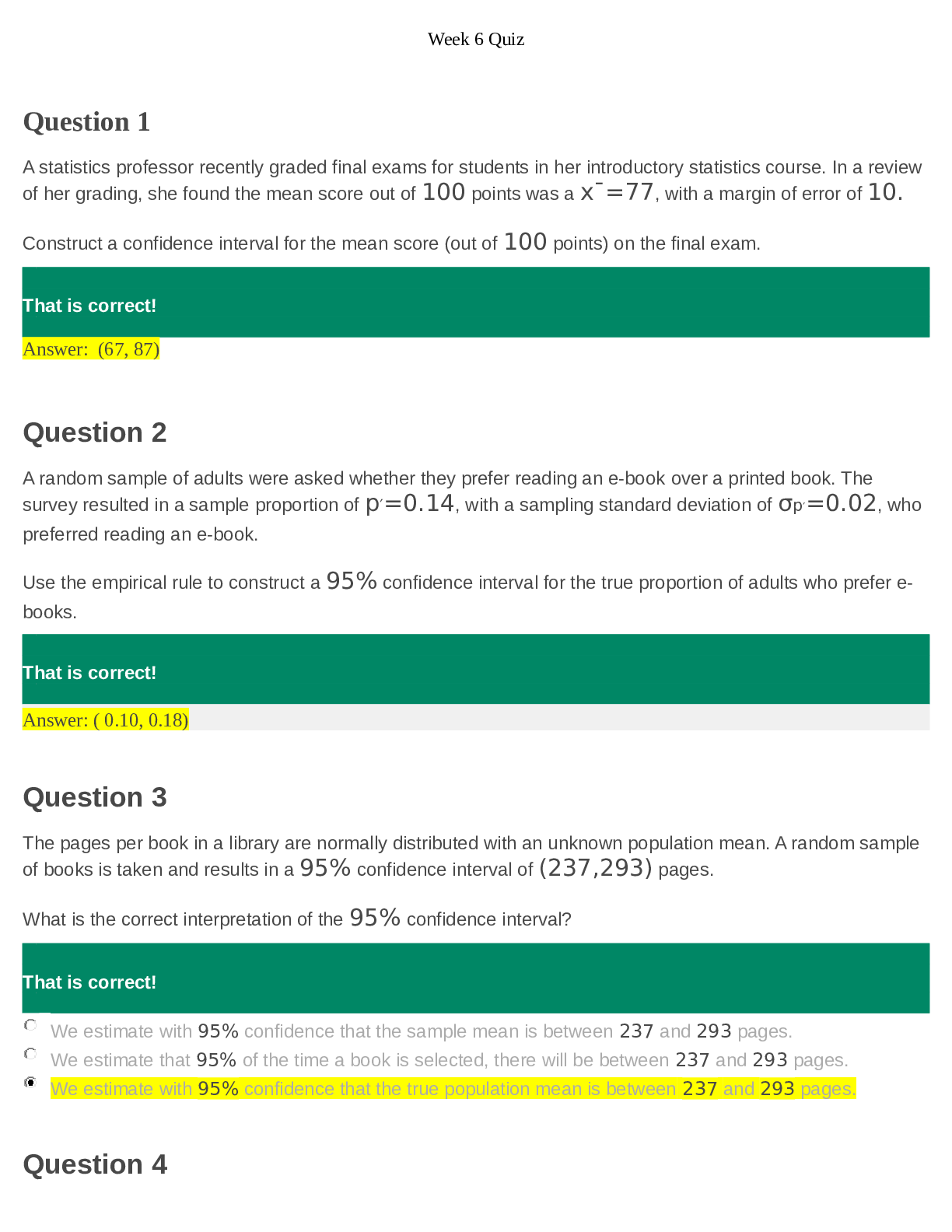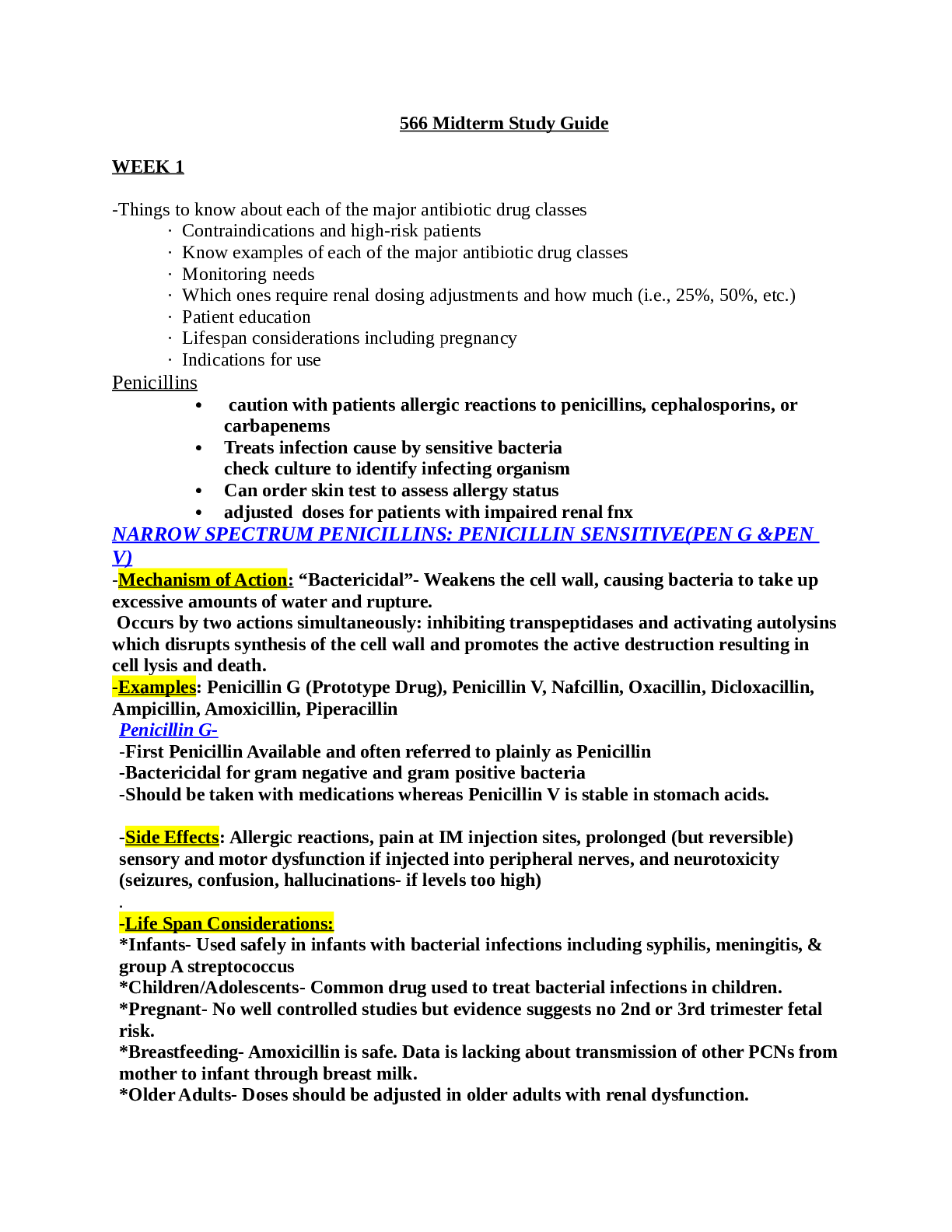
Question: NR 509 Final Exam (Latest): Chamberlain College of Nursing (100% CORRECT ANSWERS ON LAST PAGE) The function of the auditory ossicles is to: transmit the light reflex to the ... light cone. transform sound vibrations into mechanical waves for the inner ear. to capture sound waves from the external ear for transmission into the middle ear. to separate the inner ear from the middle ear. Question: A 35-year-old patient complains of vertigo accompanied by nausea and vomiting. Examination reveals bilateral diplopia and an unsteady gait. These symptoms could be suggestive of: Anarrhythmia .a neurological condition .an inner ear infection. orthostatic hypotension. Question: A 60-year-old was concerned about a yellowish colored lesion above her right eyelid. Findings revealed a slightly raised yellowish, well circumscribed plaque along the nasal area of her right eyelid. This finding is most consistent with: apinguecula. achalazion. episcleritis. xanthelasma. Question: Question 1: A primary care NP is developing a clinical practice guideline for management of a patient population in a midsized suburban hospital. The NP should: a. use an existing guideline from a leading research hospital. b. follow the guideline provided by a third-party payer to help ensure reimbursement. c. review expert opinion and experimental, anecdotal, correlational study data. d. write the guideline to adhere to long-standing practice protocols already in use Question 2: A primary care NP prescribes a nitroglycerin transdermal patch, 0.4 mg/hour release, for a patient with chronic stable angina. The NP should teach the patient to: a. change the patch four times daily. b. use the patch as needed for angina pain. c. use two patches daily and change them every 12 hours. d. apply one patch daily in the morning and remove in 12 hours. Question 3: A patient is diagnosed with asthma. The primary care nurse practitioner (NP) prescribes an inhaled corticosteroid and an inhaled bronchodilator medication and provides education about how to use inhalers. At a follow-up visit 2 weeks later, the patient’s pulmonary function tests are worse. The NP should: a. provide a detailed written asthma action plan for the patient. b. ask the patient to describe how the medications have been used. c. review the symptoms of an acute asthma exacerbation with the patient. d. teach the patient to use the albuterol more often and order an oral steroid. Question 4: A patient who will undergo surgery in implant a biosynthetic heart valve asks the primary care NP whether any medications will be necessary postoperatively. The NP should tell the patient that it will be necessary to take: a. daily low-dose aspirin for 1 year. b. heparin injections as needed based on activated partial thromboplastin time levels. c. lifelong warfarin combined with enoxaparin as needed. d. warfarin for 3 months postoperatively plus long-term asp .........................................................Continued.................................................. [Show More]
Last updated: 3 years ago
Preview 1 out of 5 pages
Buy this document to get the full access instantly
Instant Download Access after purchase
Buy NowInstant download
We Accept:
Can't find what you want? Try our AI powered Search
Connected school, study & course
About the document
Uploaded On
Apr 25, 2021
Number of pages
5
Written in
All
This document has been written for:
Uploaded
Apr 25, 2021
Downloads
0
Views
56
Scholarfriends.com Online Platform by Browsegrades Inc. 651N South Broad St, Middletown DE. United States.
We're available through e-mail, Twitter, and live chat.
FAQ
Questions? Leave a message!
Copyright © Scholarfriends · High quality services·