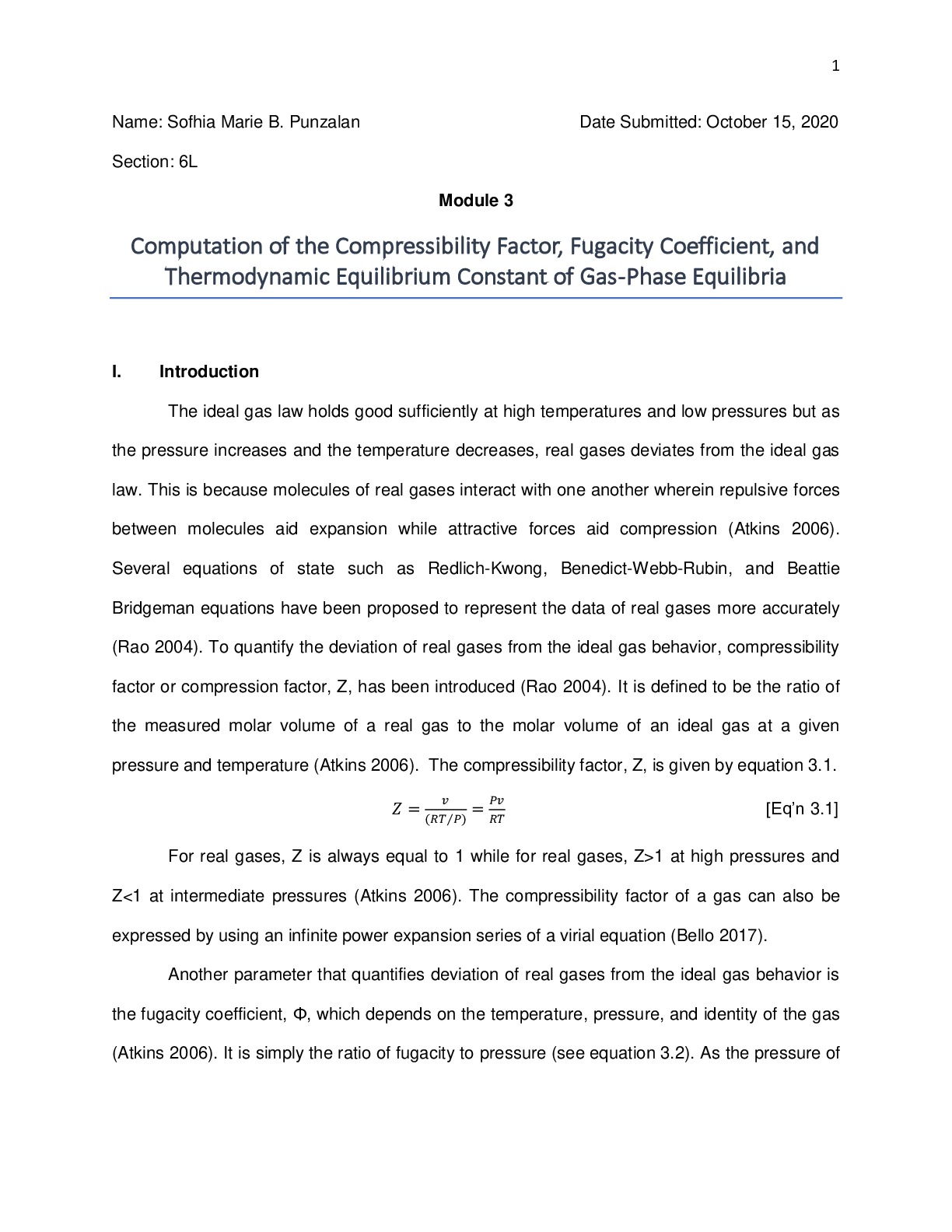
CHEMISTRY 17 Mock Formal Report - Chemical Kinetics
Document Content and Description Below
Chemical Kinetics
K.D. Zerna
Department of Chemical Engineering, College of Engineering, University of the Philippines, Diliman, Quezon City 1101
Performed 29 January 2019; Submitted 7 February 2019
ABSTRACT
The obj
...
[Show More]
Last updated: 7 months ago
Preview 2 out of 4 pages
Instant download

Loading document previews ...
Buy this Document to get the Full Access Instantly
Provided by Students Who Aced it
We Verify Document Content to Gurantee Accuracy
Reviews( 0 )
Document information
Connected school, study & course
About the document
Uploaded On
Feb 25, 2026
Number of pages
4
Written in
All

Additional information
This document has been written for:
Uploaded
Feb 25, 2026
Downloads
0
Views
121
Topic Tags
Recommended For You
Get more on Report »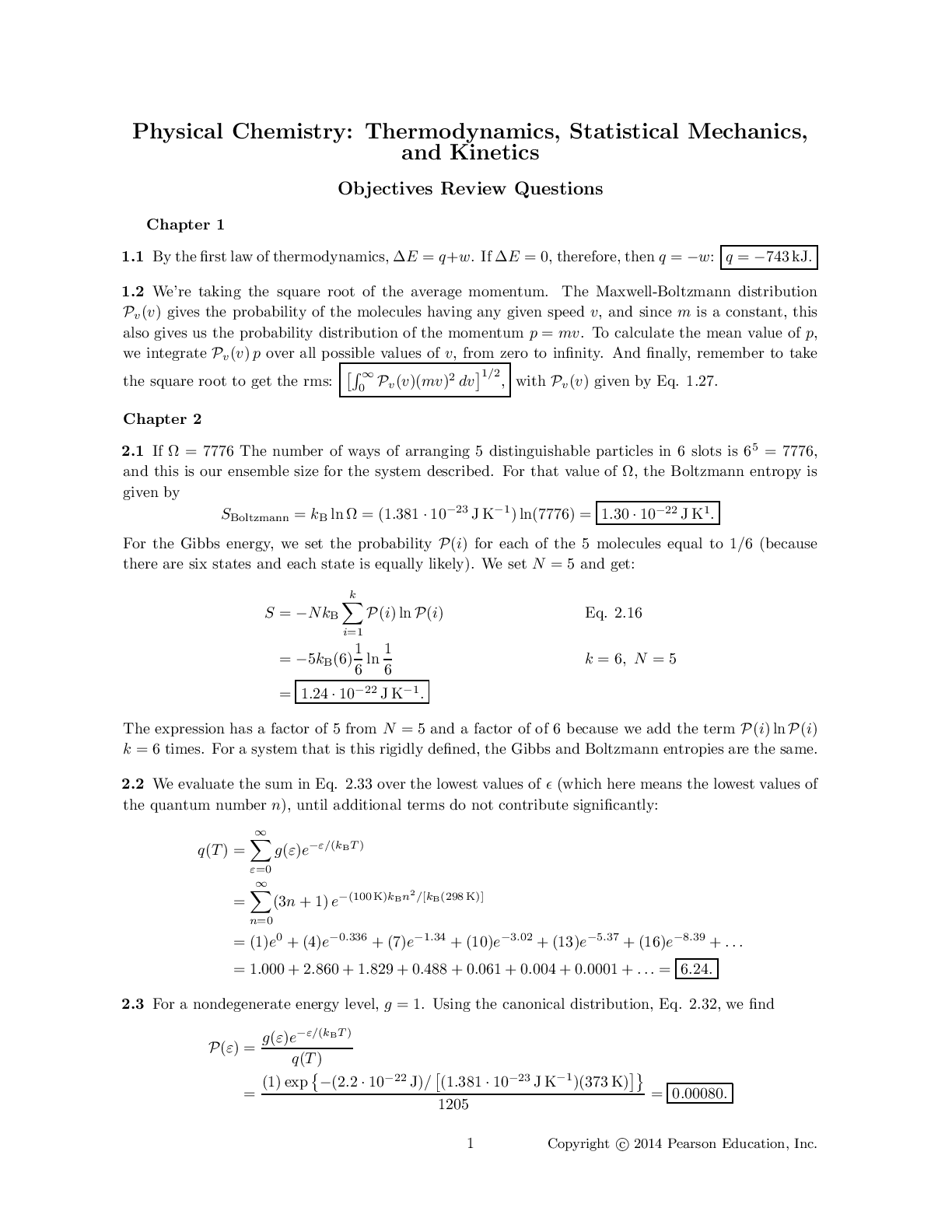
$20
237 Pages
Physical Chemistry Thermodynamics Statistical Mechanics and Ki...
$19
389 Pages
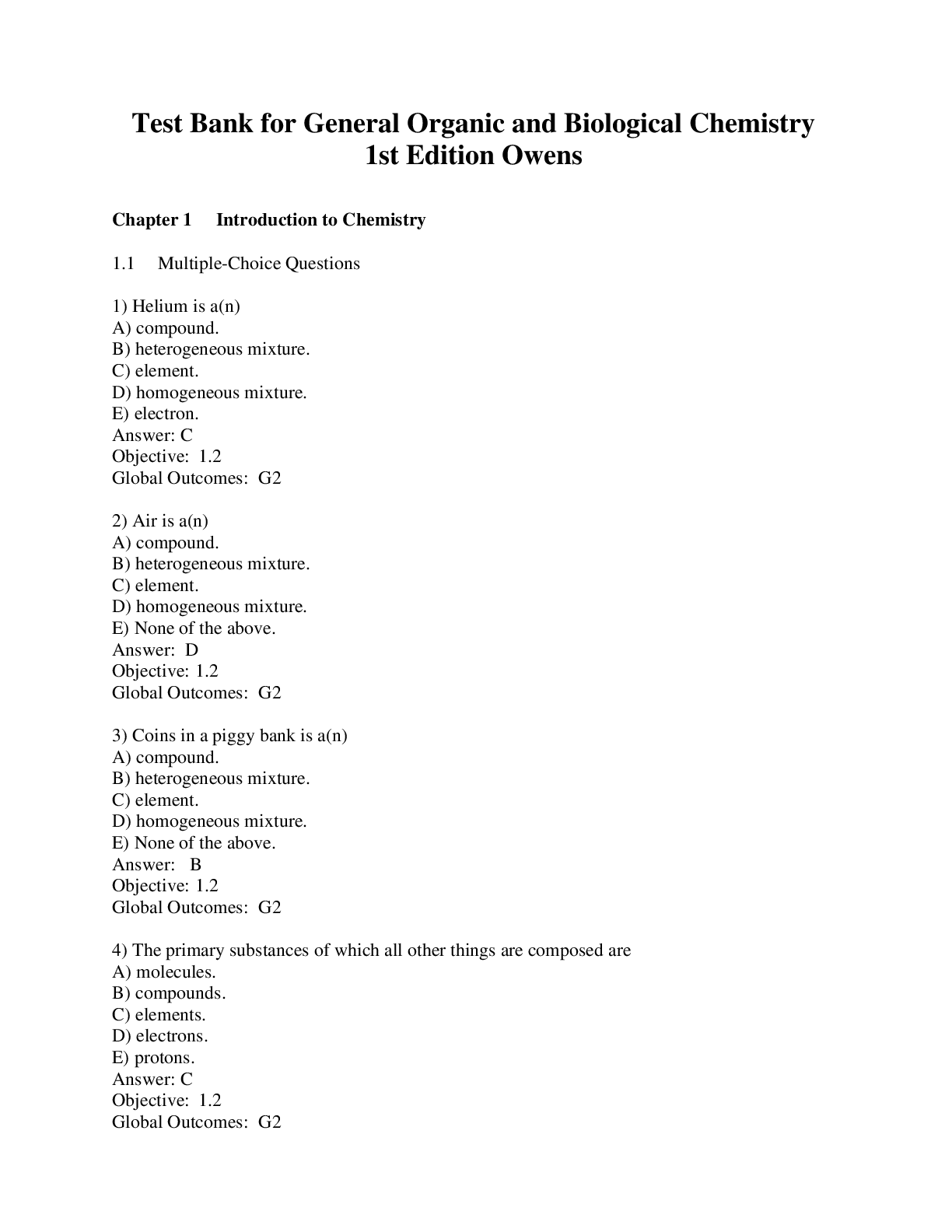
General Organic and Biological Chemistry 1st Edition by Kalyn...
$11
20 Pages
Bomb Calorimetry: Determination of the Resonance Energy of Ben...
$7
10 Pages
Ethane to Ethylene Northwestern New York University - CHEMIST...
More related documents below