NURSING > EXAM > HESI A2 Comprehensive Practice Exam From Mcgraw-Hill And Elsevier Each Question Includes The Corre (All)
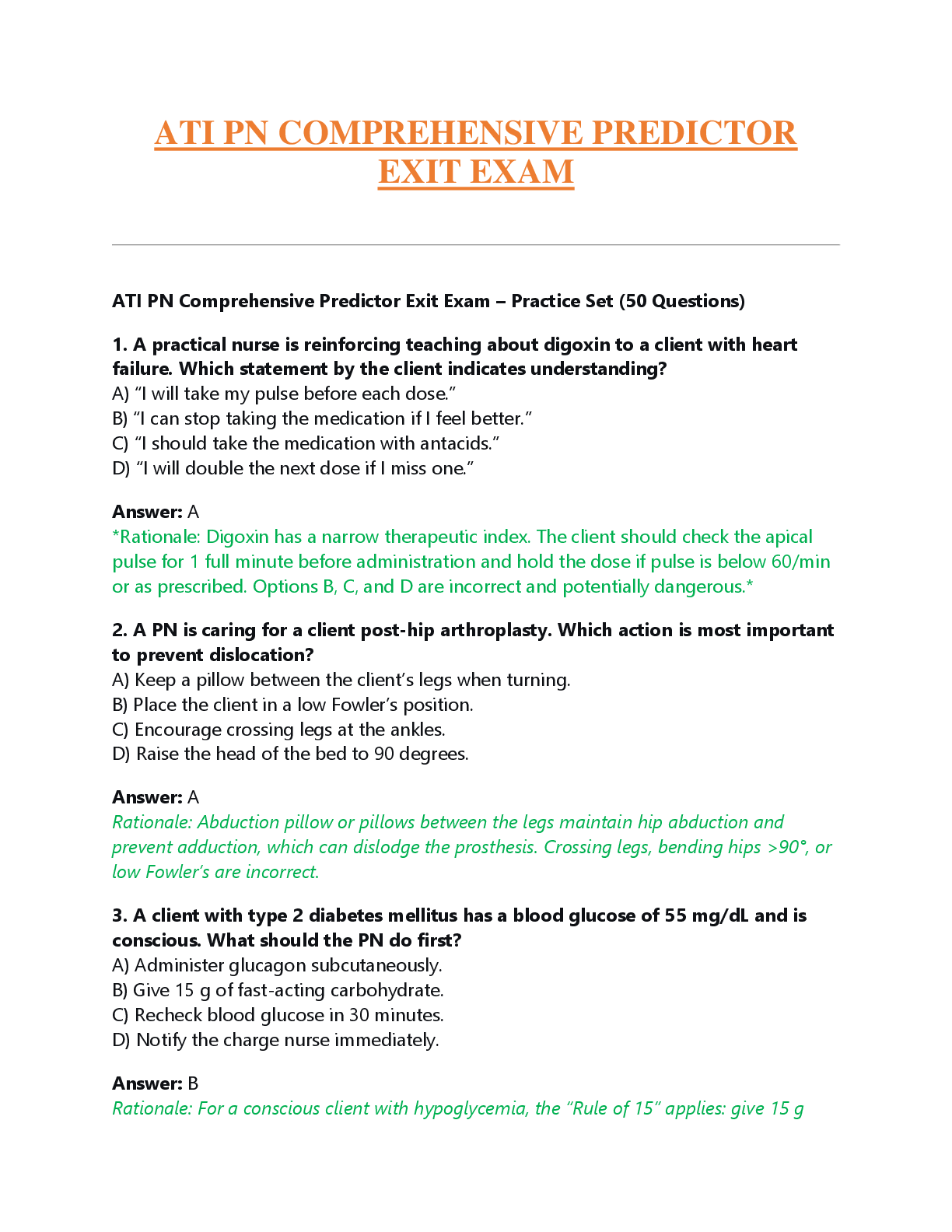
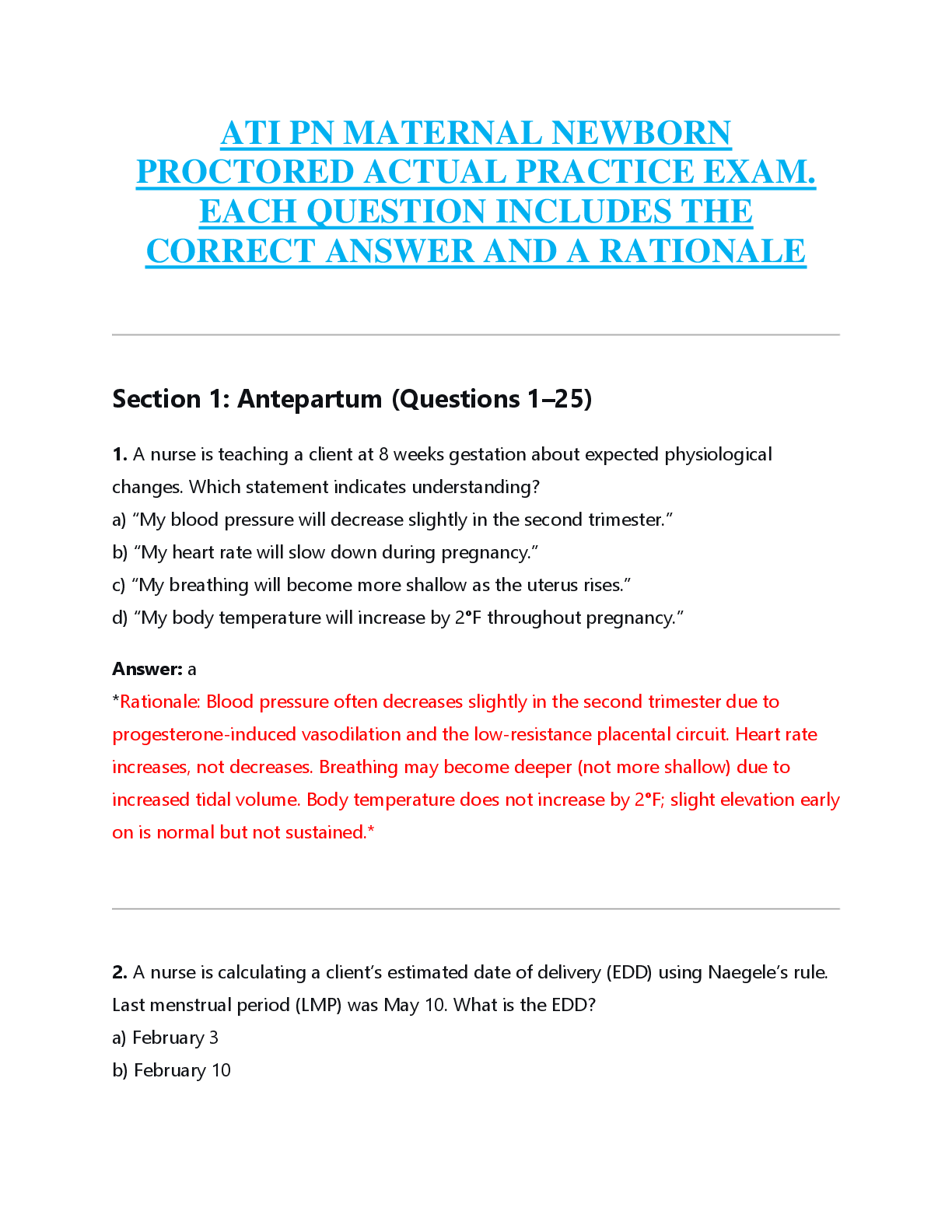
HESI A2 Comprehensive Practice Exam From Mcgraw-Hill And Elsevier Each Question Includes The Correct Answer And A Detailed Rationale
Document Content and Description Below
Last updated: 8 months ago
Preview 5 out of 37 pages
Instant download

Loading document previews ...
Buy this Document to get the Full Access Instantly
Provided by Students Who Aced it
We Verify Document Content to Gurantee Accuracy
Also available in bundle (1)
Click Below to Access Bundle(s)

Nursing Entrance & Related Allied Health Program Admissions New Exams Update
Section 3: Mathematics (Questions 31-55) 18. Convert 3/5 to a decimal. A) 0.35 B) 0.6 C) 0.8 D) 0.5 Correct Answer: B *Rationale: * *To convert a fraction to a decimal, divide the numera...
By muriithi282 8 months ago
$75
9
Reviews( 0 )
Document information
Connected school, study & course
About the document
Uploaded On
Mar 04, 2026
Number of pages
37
Written in
All

Additional information
This document has been written for:
Uploaded
Mar 04, 2026
Downloads
0
Views
68
Topic Tags
Recommended For You
Get more on EXAM »
Evolve Reach Hesi A2 Practice Test 50 Questions with Verified...

HESI A2 Practice test 58 Questions with Verified Answers,100%...


HESI A2 Practice Test new update questions and answers 100% s...

4 HESI A2 Practice Tests, Third Edition (McGraw-Hill Education...



Eat Right Prep Exam 2026/2027 Latest Update | Complete Study...

TEST BANK for Davis Advantage for Psychiatric Mental Health Nu...
Test Bank For Fundamentals of Nursing 11th Edition Potter Perr...
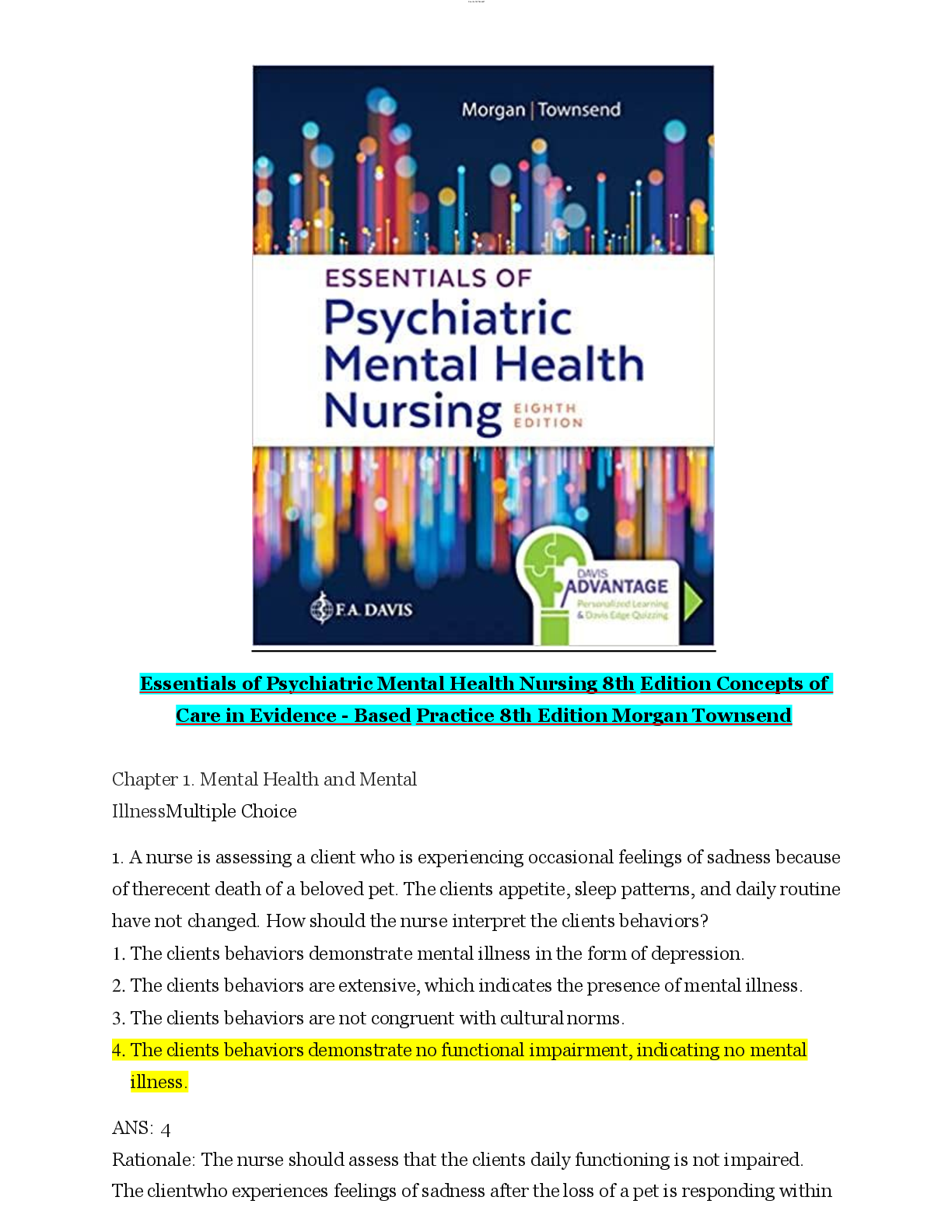
TEST BANK for Essentials of Psychiatric Mental Health Nursing:...
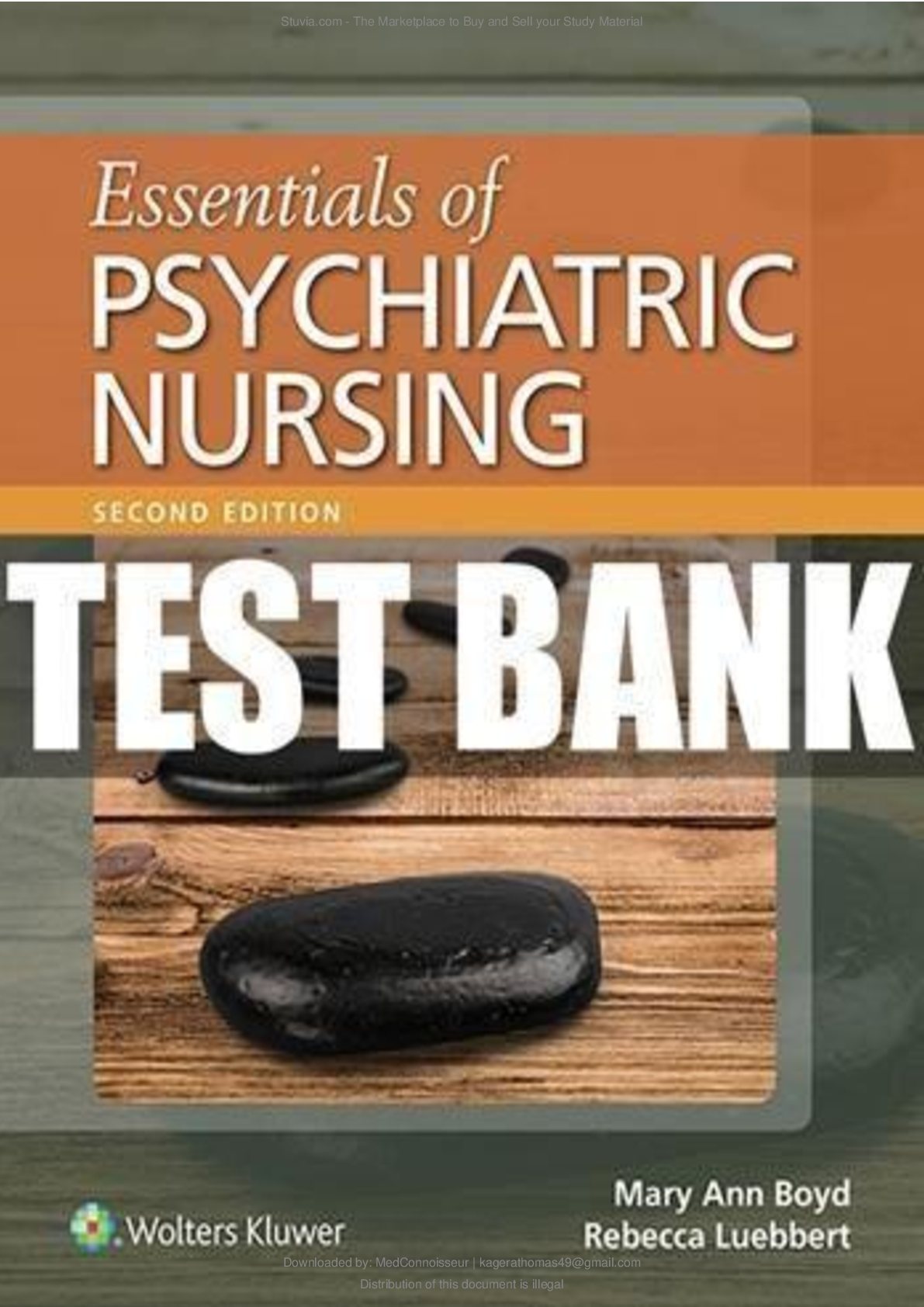
Essentials of Psychiatric Nursing 2nd Edition Boyd TEST BANK