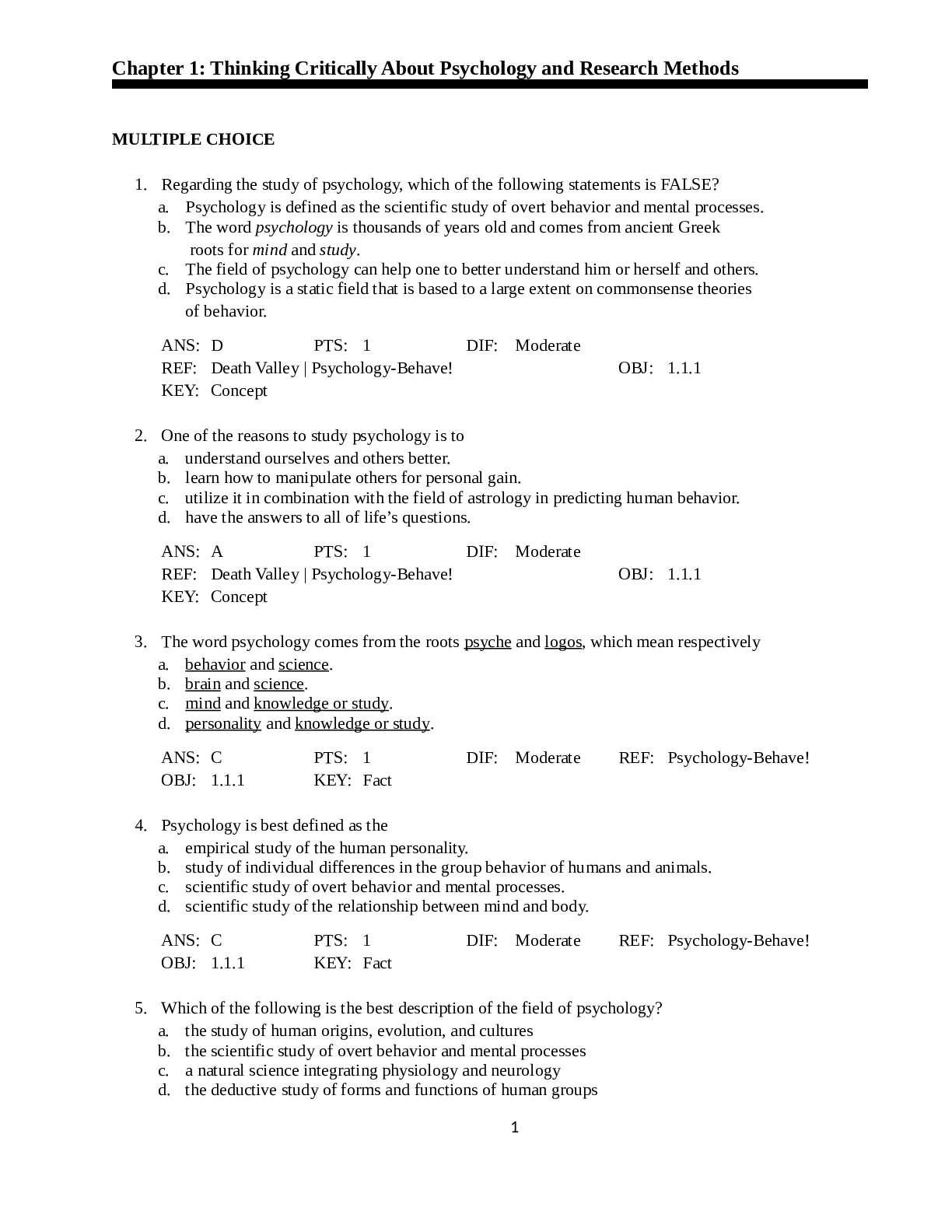
NURSING > TEST BANKS > Test Bank Ricci Essentials of Maternity Chapter 22 With Rationales. (All)
Test Bank Ricci Essentials of Maternity Chapter 22 With Rationales.
Document Content and Description Below
Last updated: 3 years ago
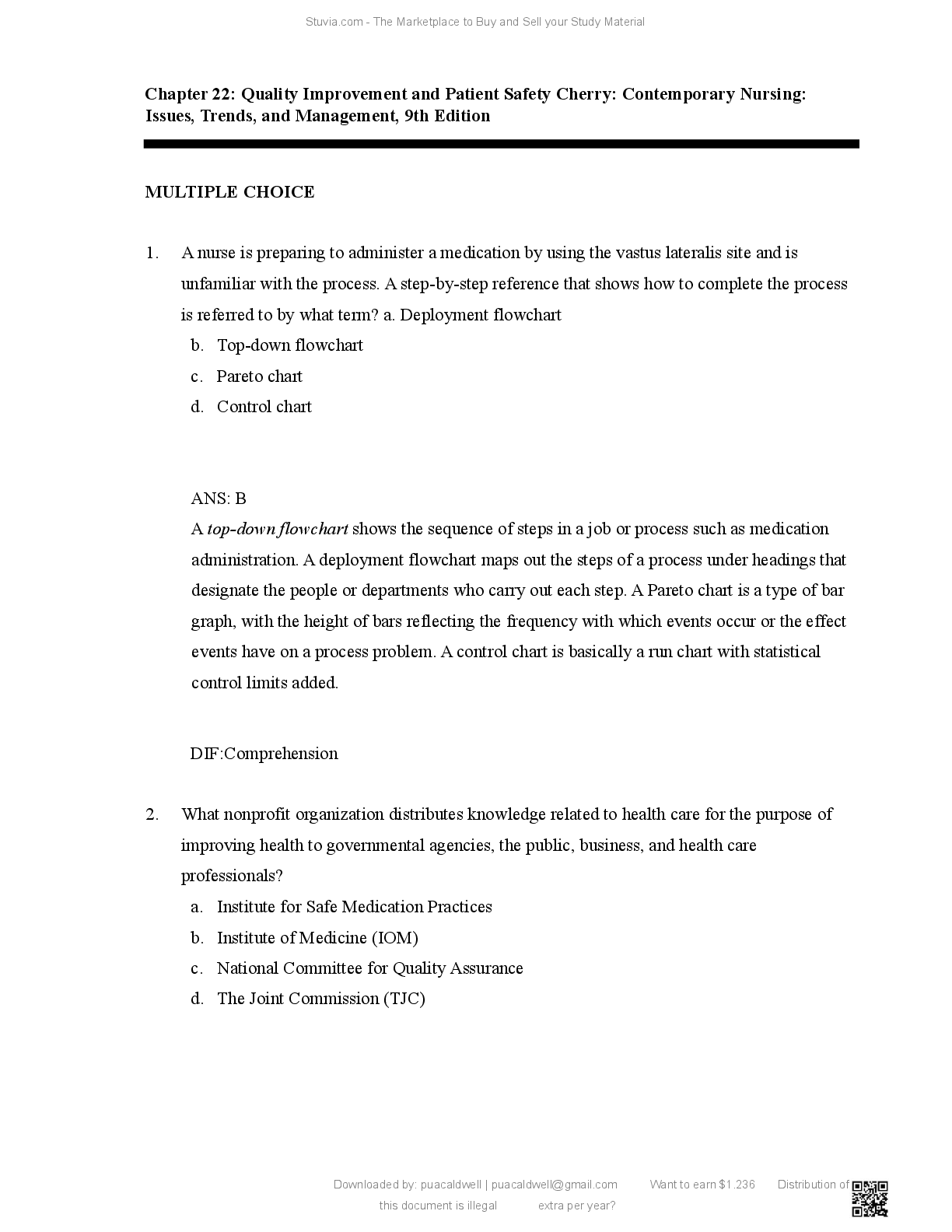
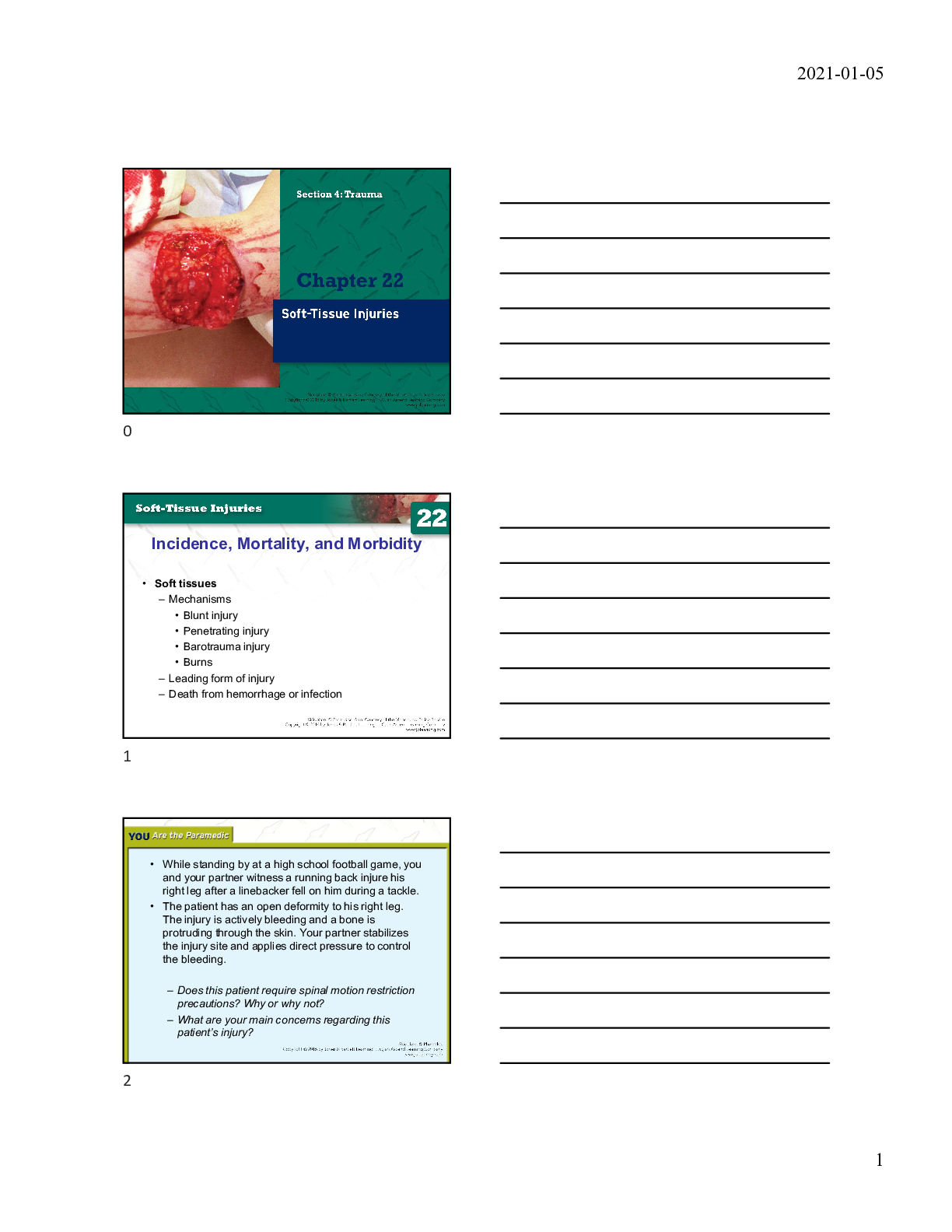
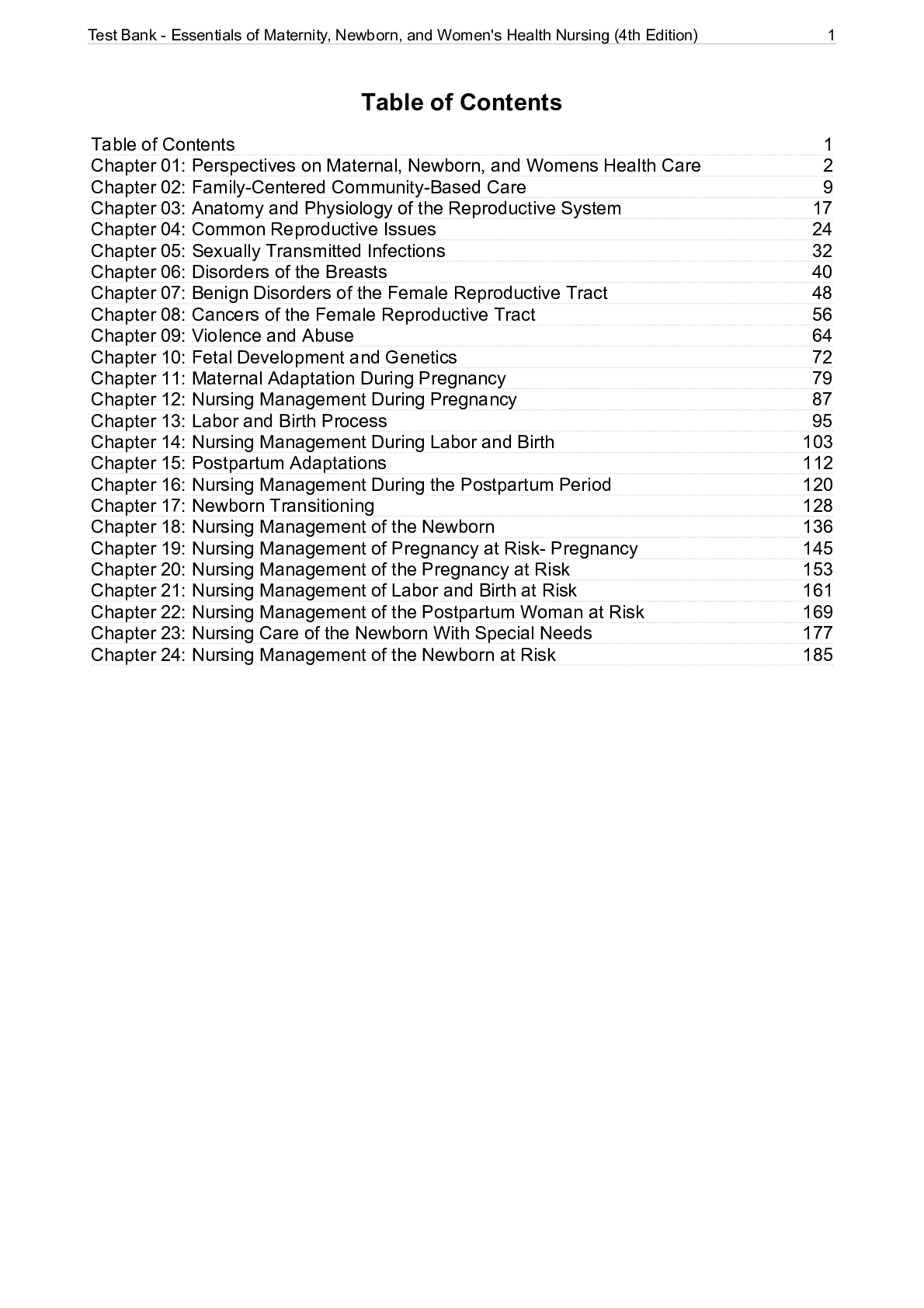
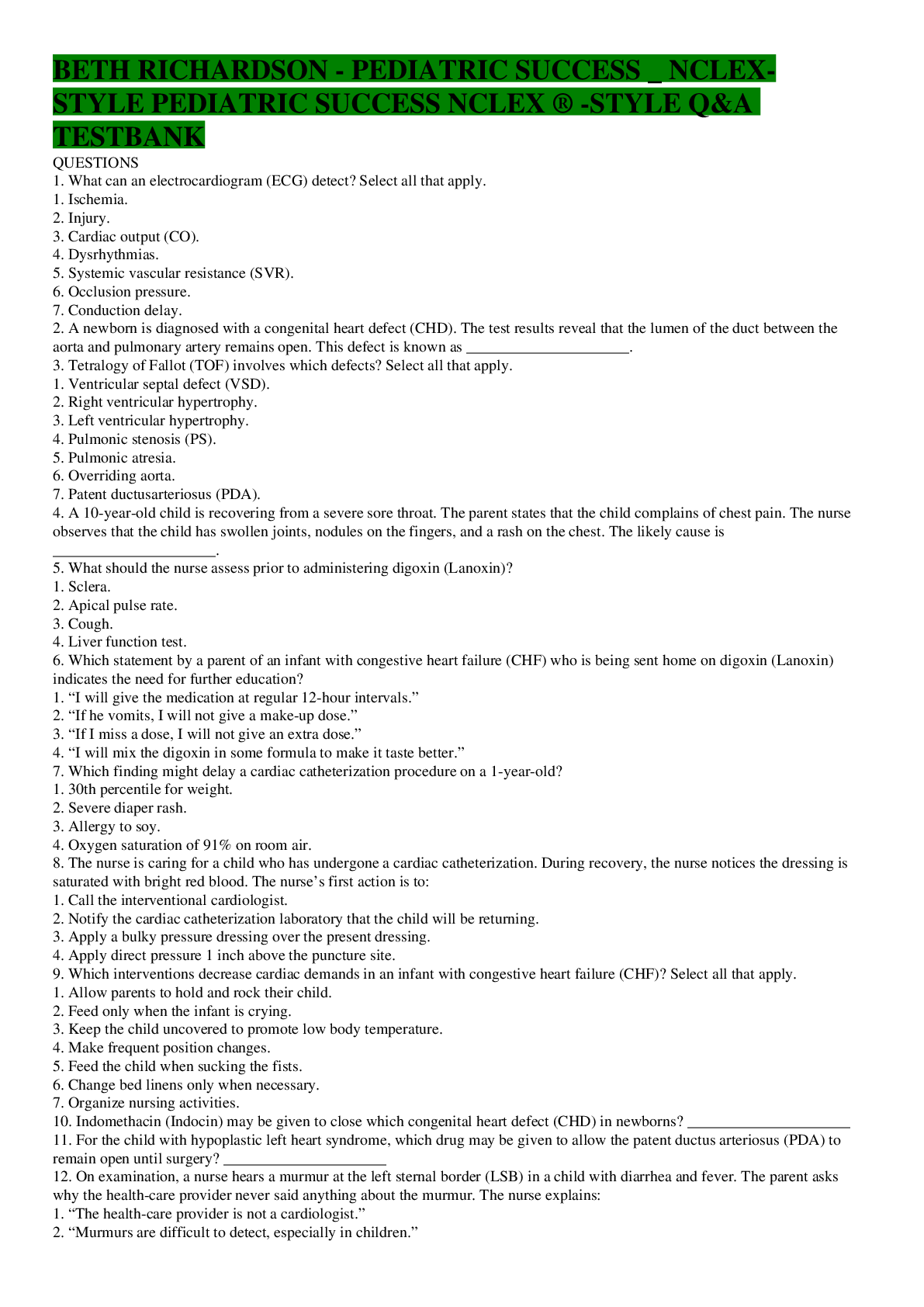
Preview 1 out of 5 pages
Instant download

Buy this Document to get the Full Access Instantly
Provided by Students Who Aced it
We Verify Document Content to Gurantee Accuracy
Reviews( 0 )
Document information
Connected school, study & course
About the document
Uploaded On
Apr 26, 2021
Number of pages
5
Written in
All

Additional information
This document has been written for:
Uploaded
Apr 26, 2021
Downloads
0
Views
168
Topic Tags
Related Subjects & Courses
Explore similar study resources and related concepts.
Recommended For You
Get more on TEST BANKS ».png)
Burns and Grove's The Practice of Nursing Research: Appraisal,...

Chapter 21- Nursing Management of Labor and Birth at Risk & Ch...
Chapter 21- Nursing Management of Labor and Birth at Risk & Ch...

Test Bank Advanced Practice Nursing in the Care of Older Adult...
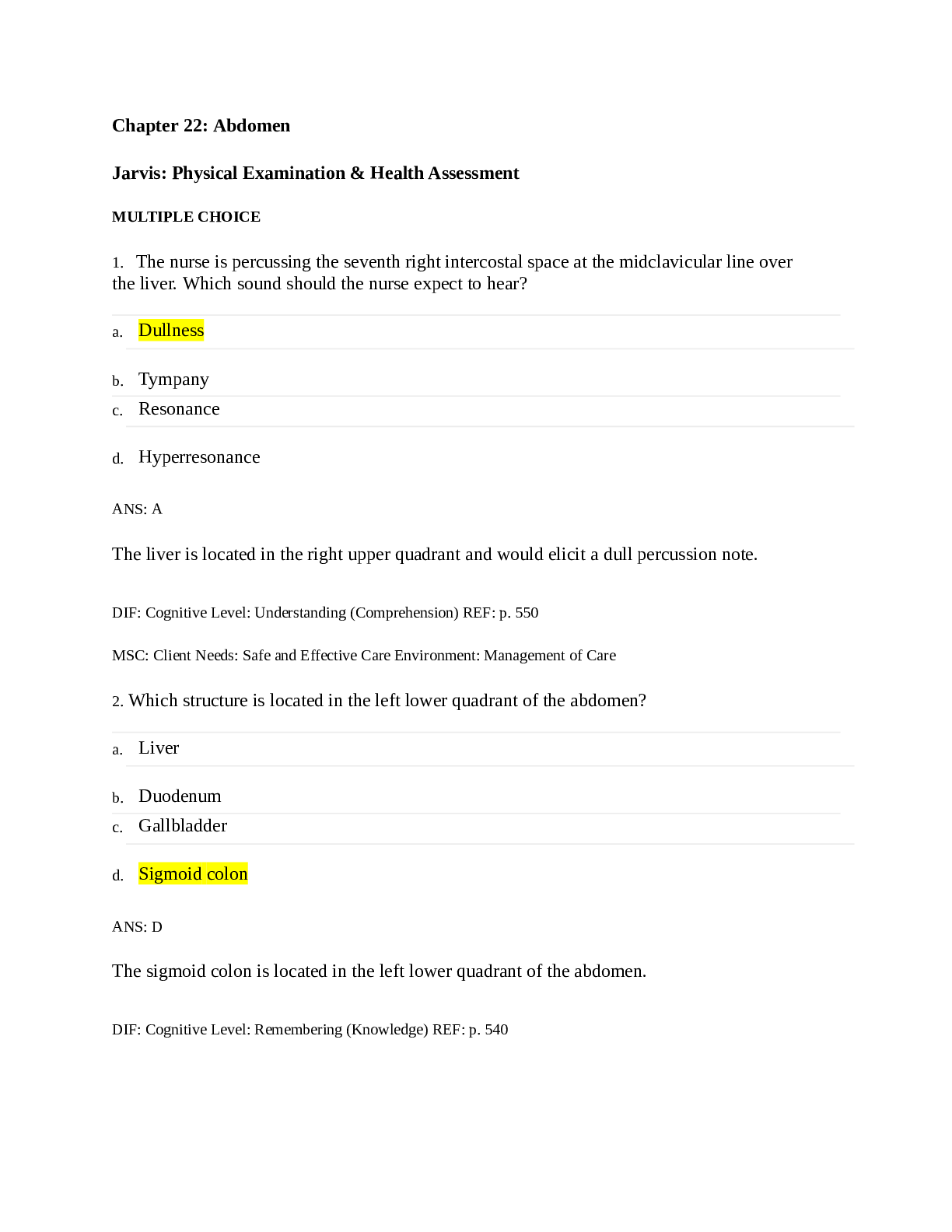
PHYSICAL EXAMINATION AND HEALTH ASSESSMENT TESTBANK BY JARVI...

INTRODUCTION TO MATERNITY AND PEDIATRIC NURSING 8TH EDITION LE...
.png)
Chapter 22_ Parenteral Medications _ Nursing School Test Banks...

Chapter 22: Antihypertensive Drugs Lilley: Pharmacology and th...

Obstetrician Chapter 22: Nursing Management of the Postpartum...

NURS 6501 / NURS6501: Advanced Pathophysiology - Chapter 22 St...
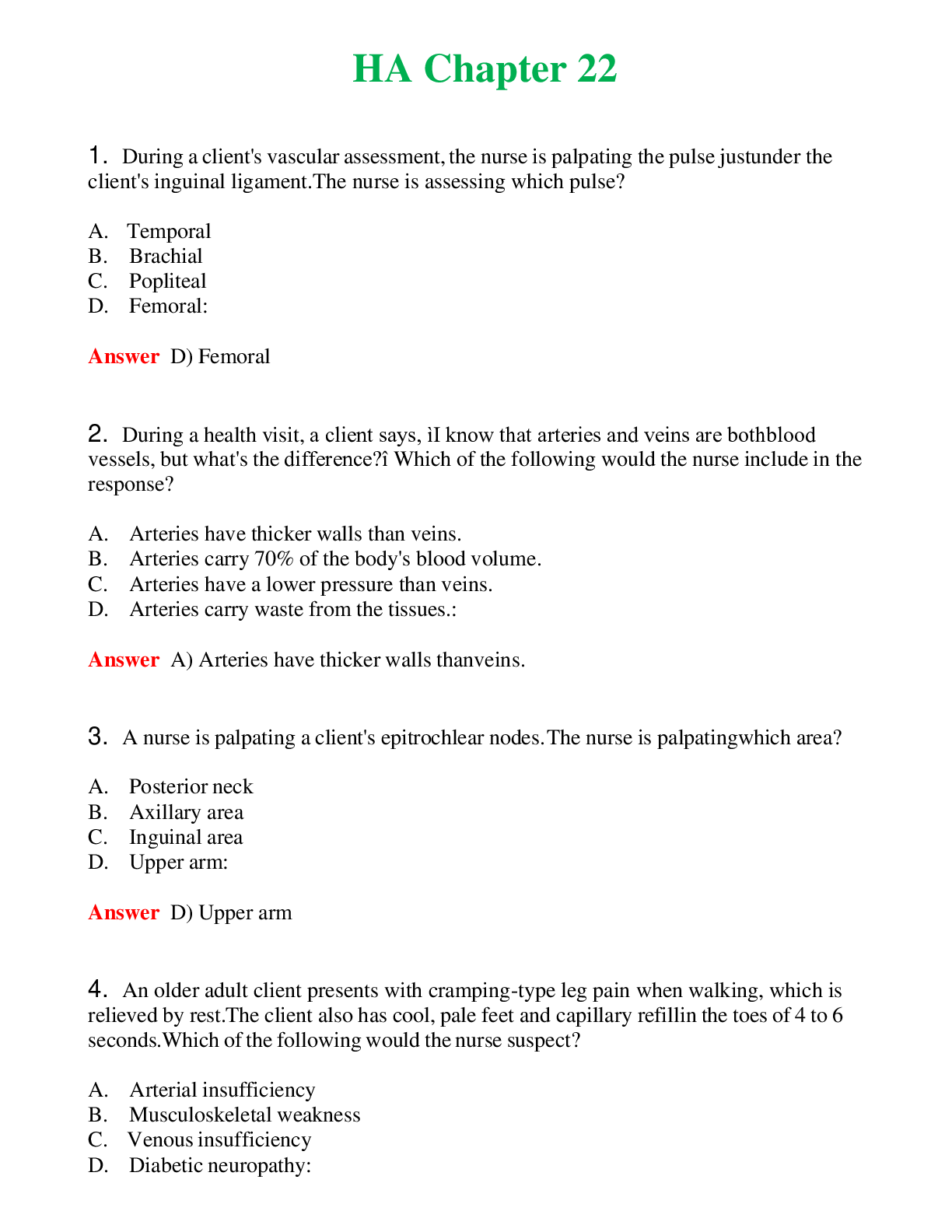
HA Chapter 22 Actual Questions and Verified Answers ( Included...
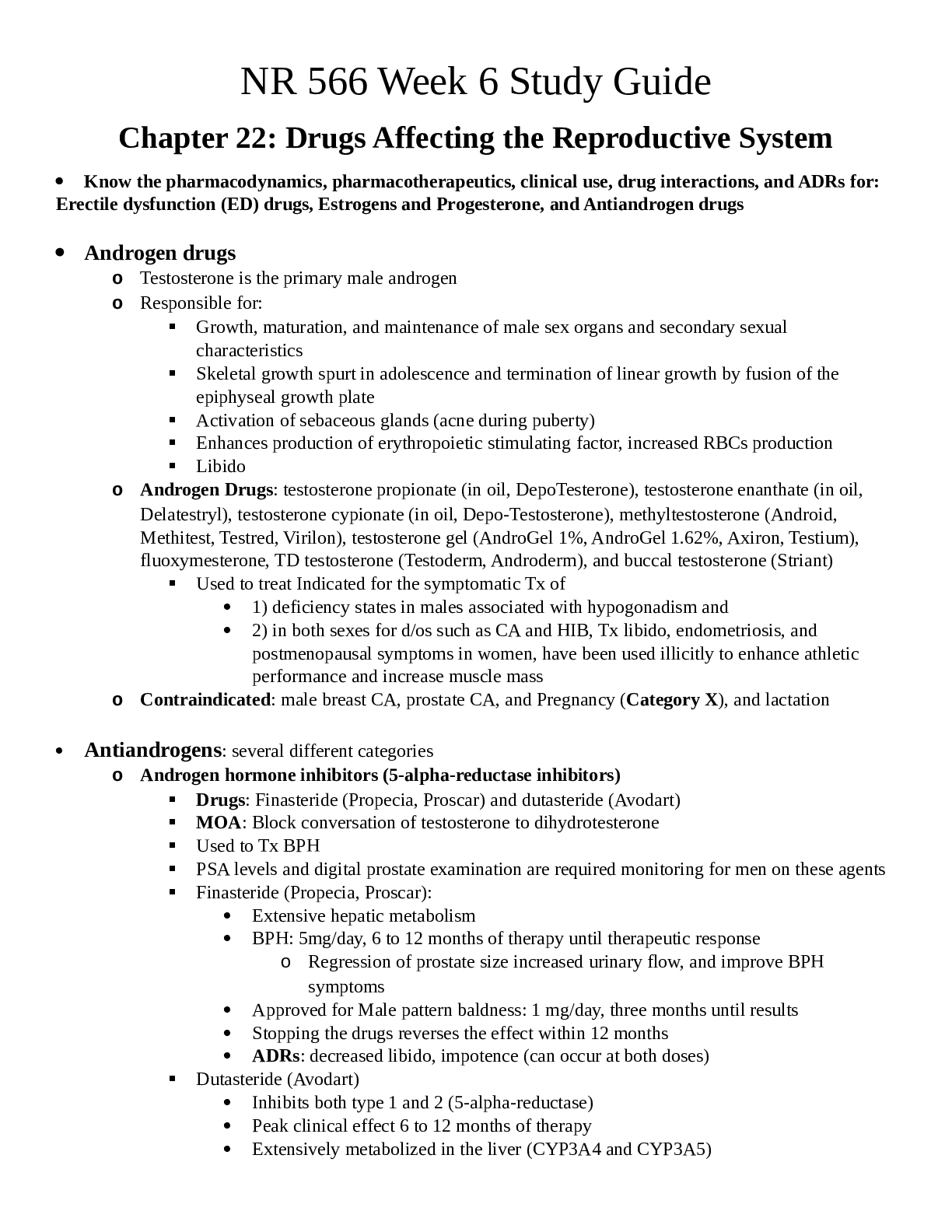
NR 566 Week 6 Study Guide {2022} | Chapter 22: Drugs Affecting...

NR566 / NR 566: Advanced Pharmacology for Care of the Family W...
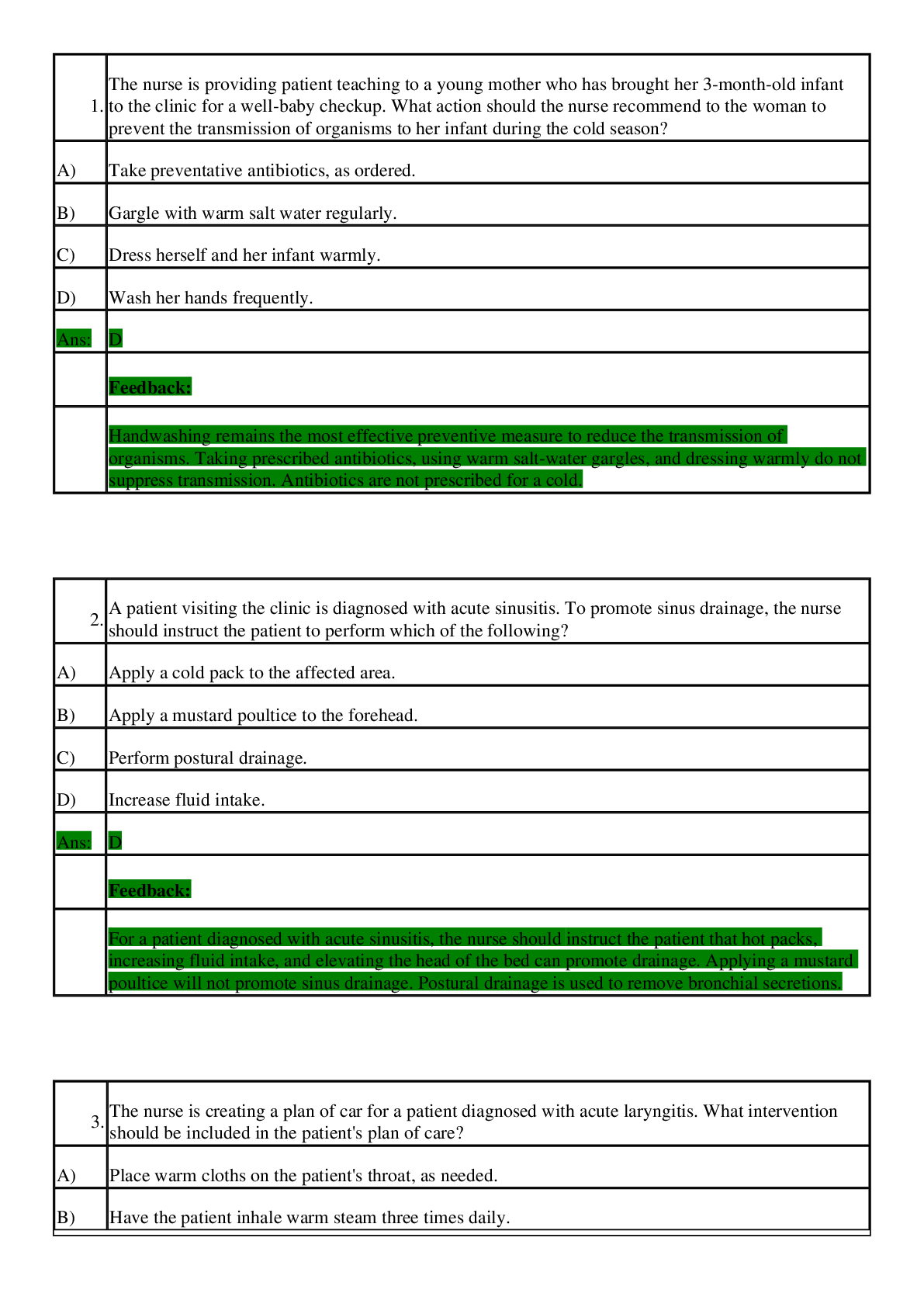
NUR1021 1211c Chapter 22 real exam questions and answers solut...
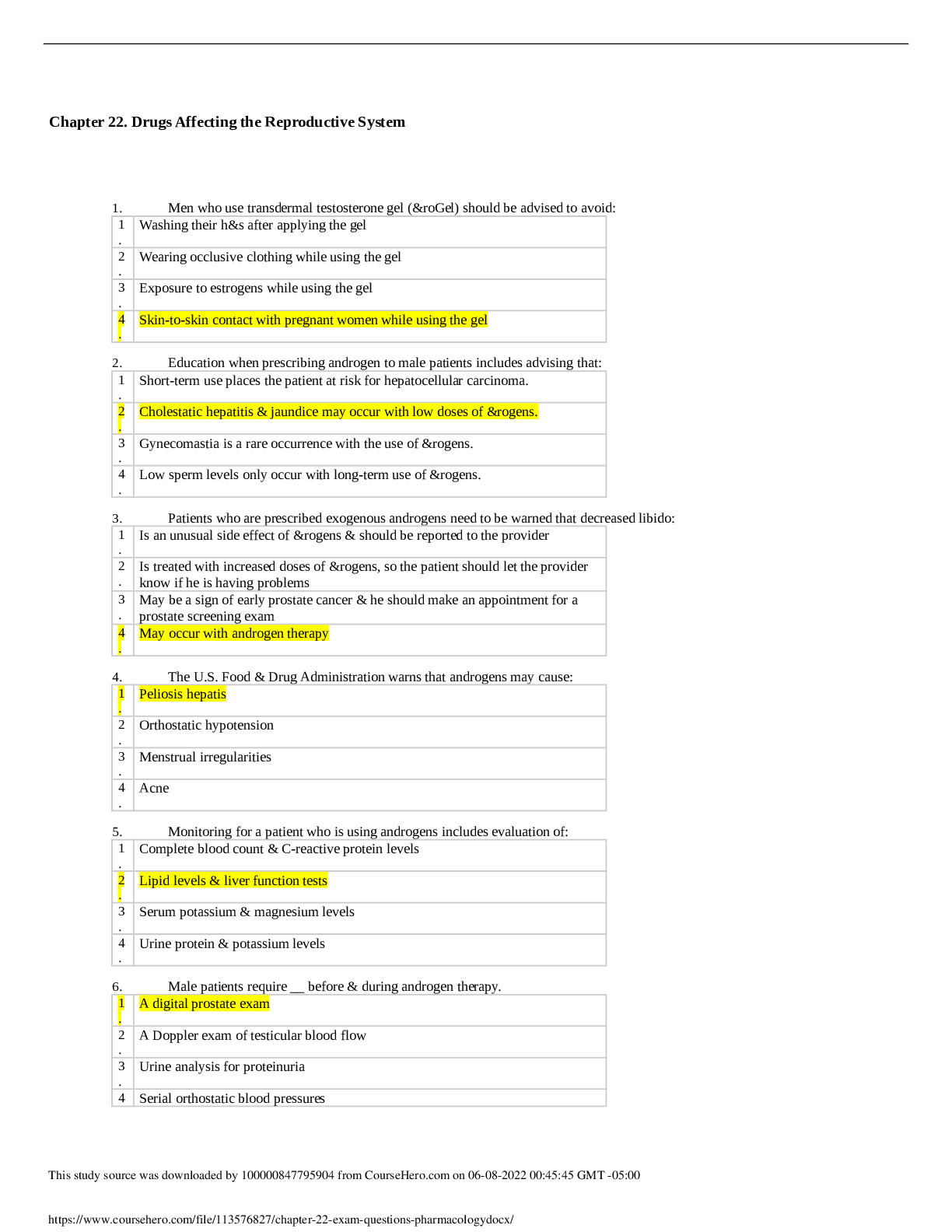
NR 566 Exam Preparation: Week 6 Chapter 22 Drugs affecting the...

NR 222 Health And Wellness - NR 222 Unit 3 Exam 1 Practice - C...

ASSESSING PERIPHERAL VASCULAR SYSTEMS CHAPTER 22 6TH EDITION G...