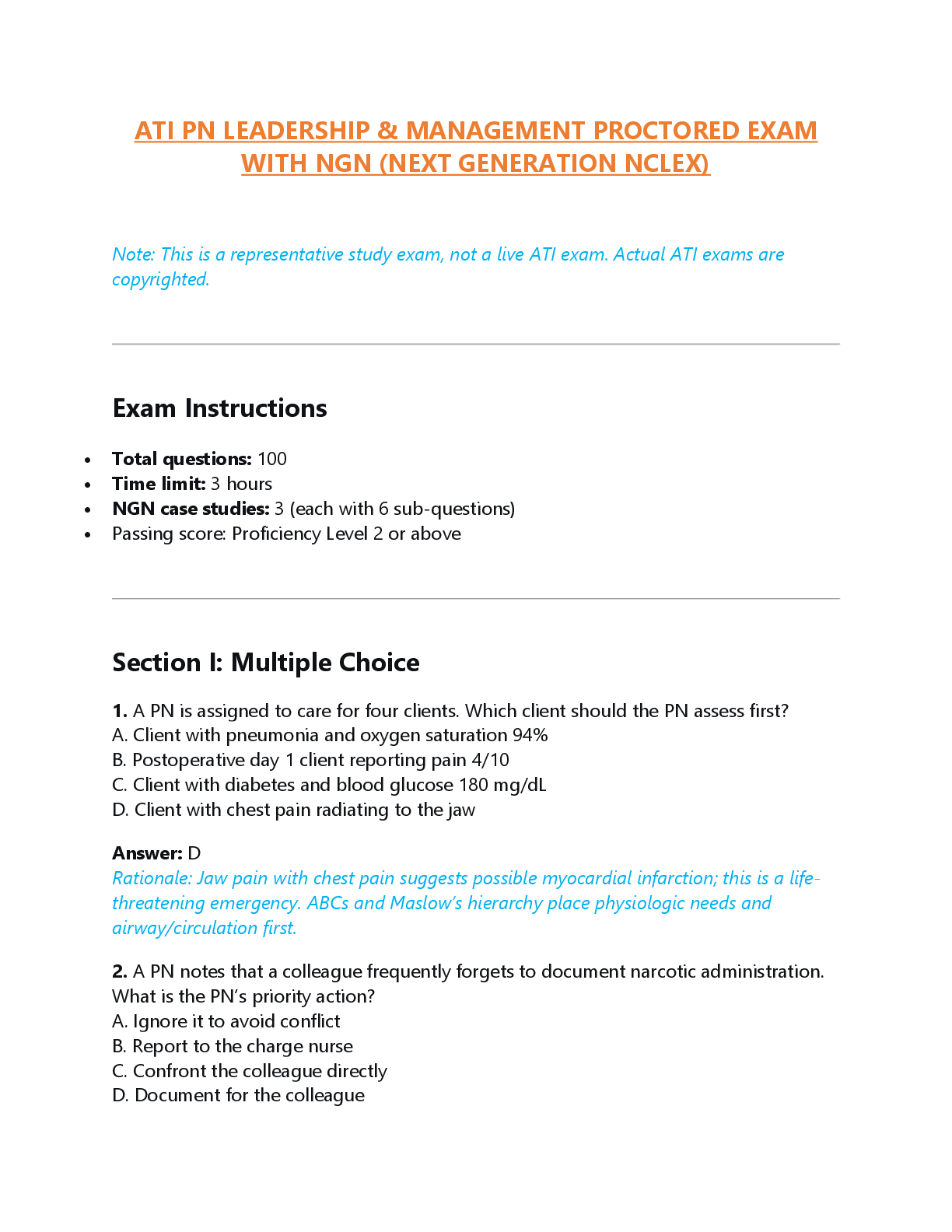
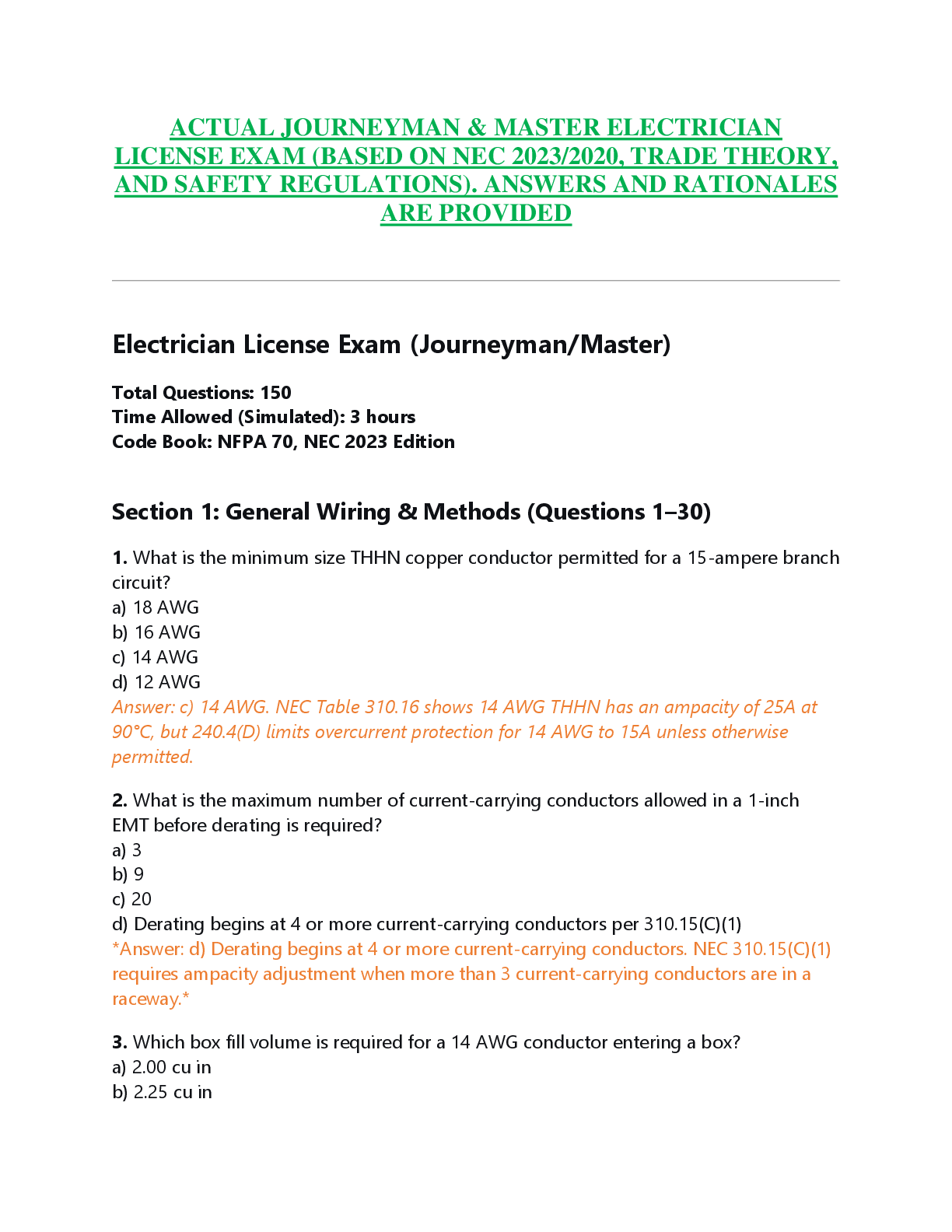
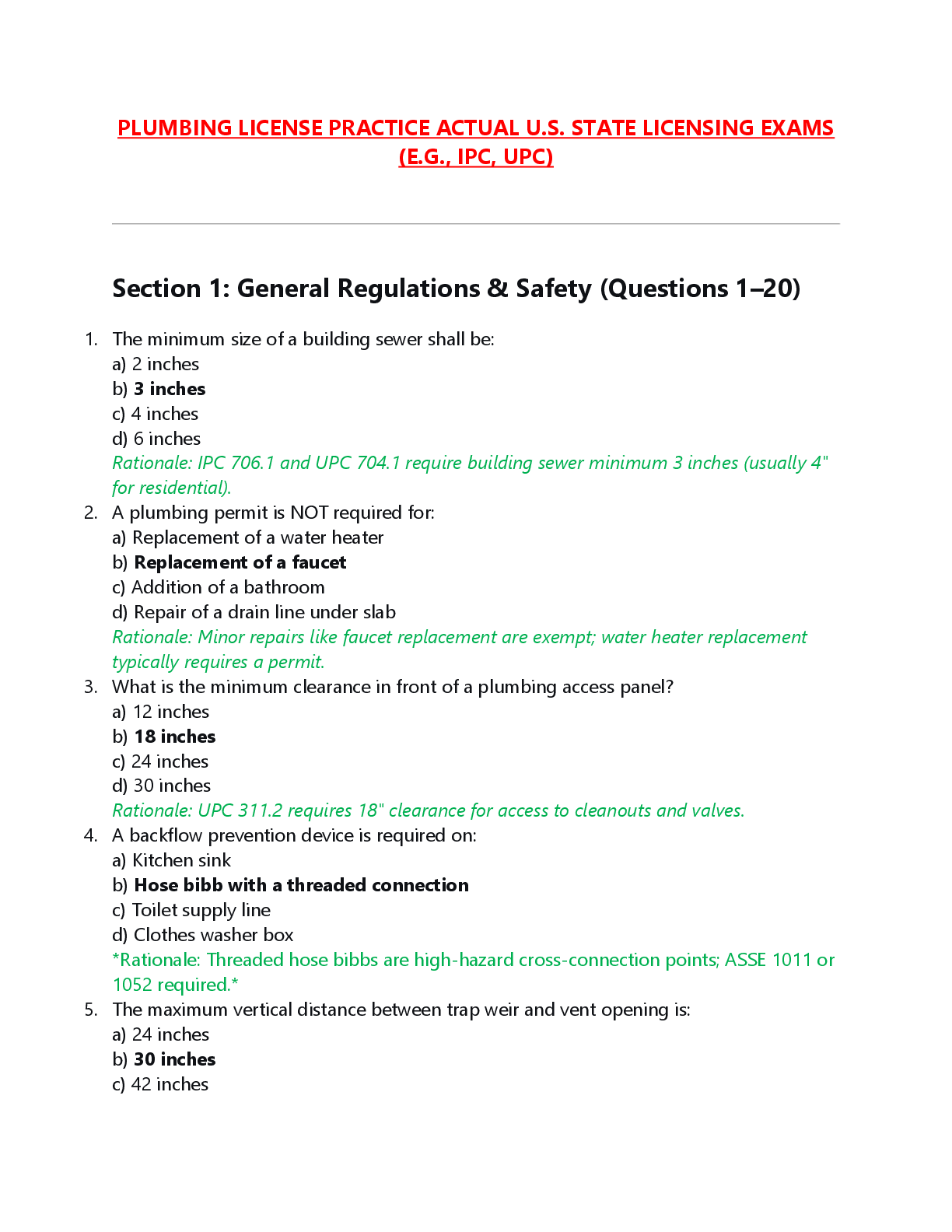
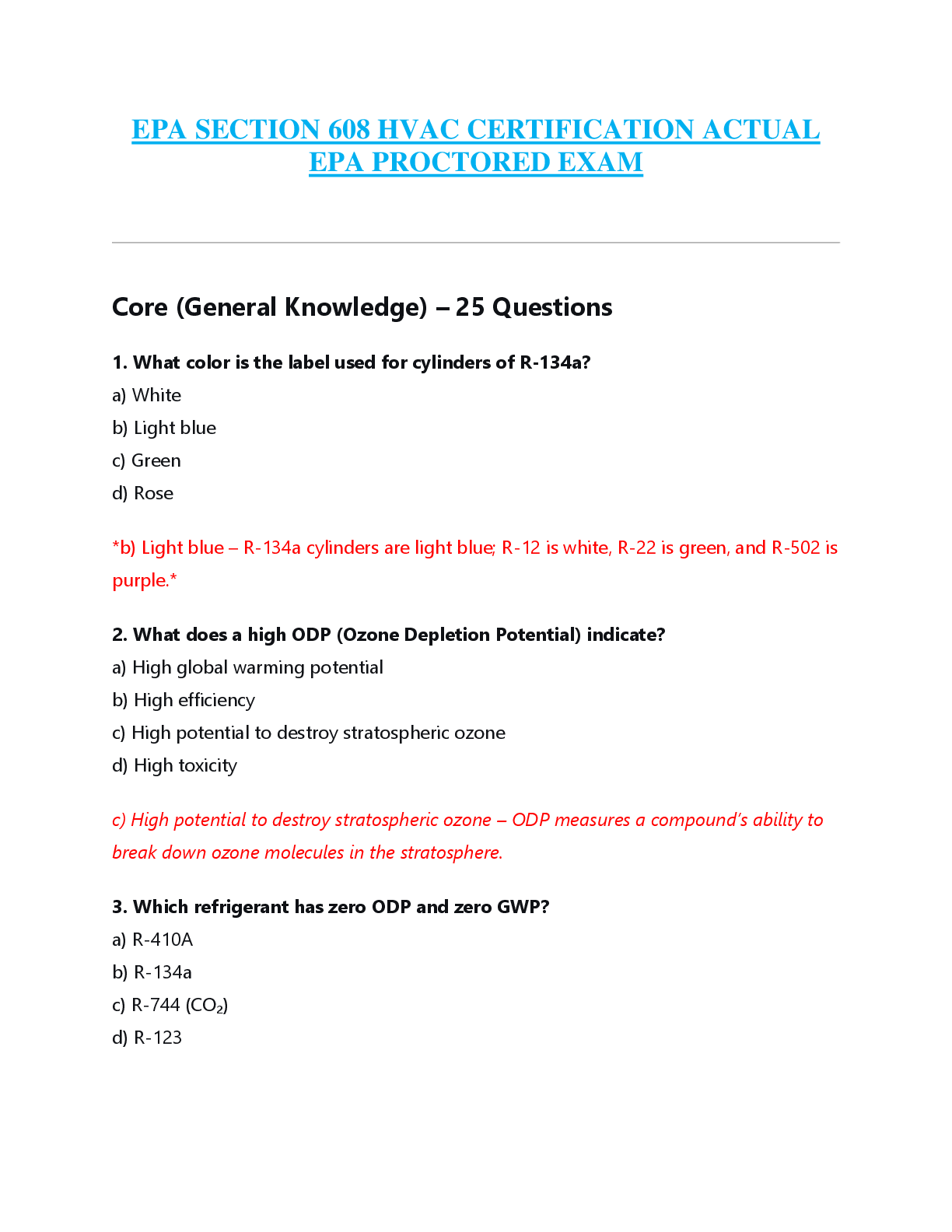
AANP Family Nurse Practitioner (FNP) Certification Actual Exam Practice Test
Document Content and Description Below
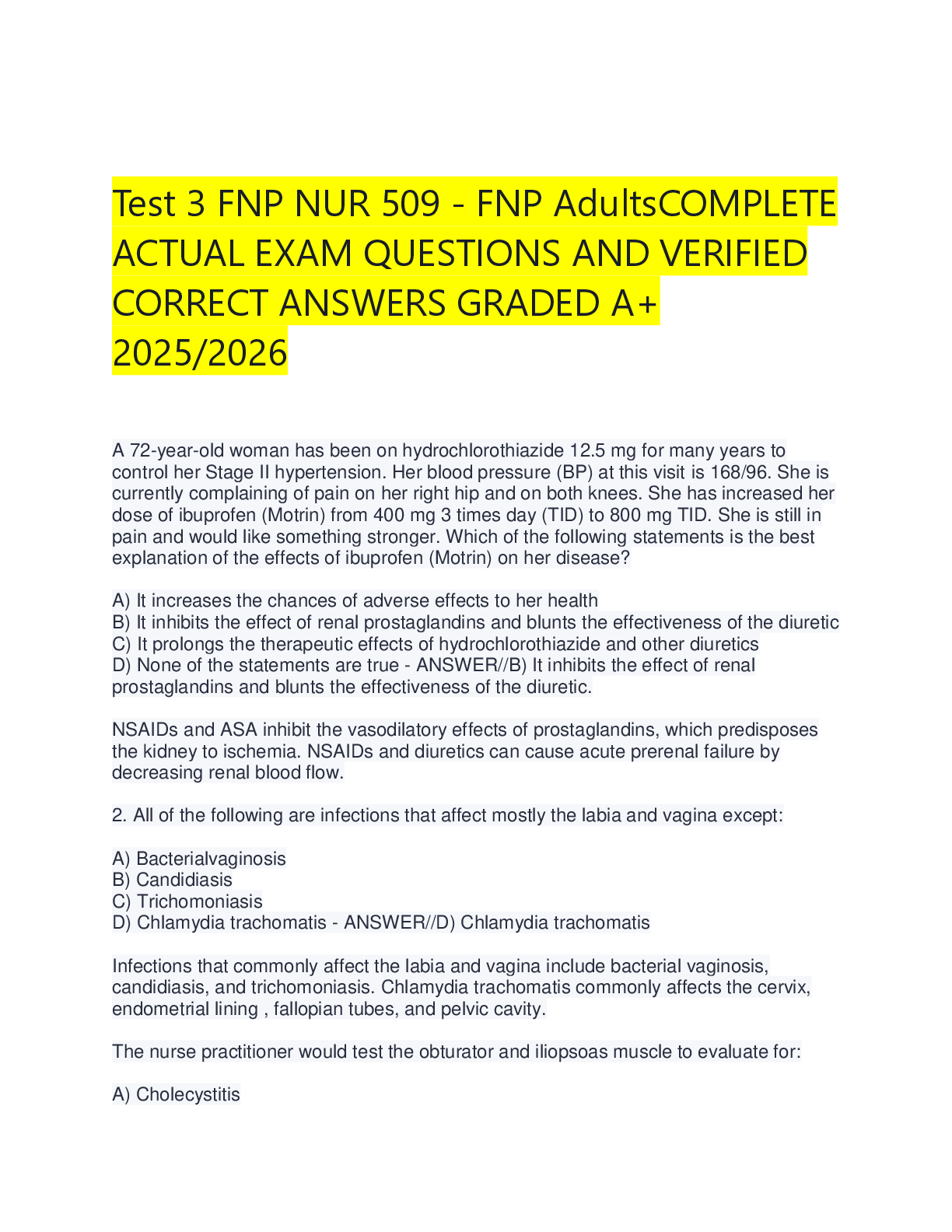
AANP FNP Certification Full-Length Practice Exam (150
Questions)
Domain 1: Assessment (43 Questions)
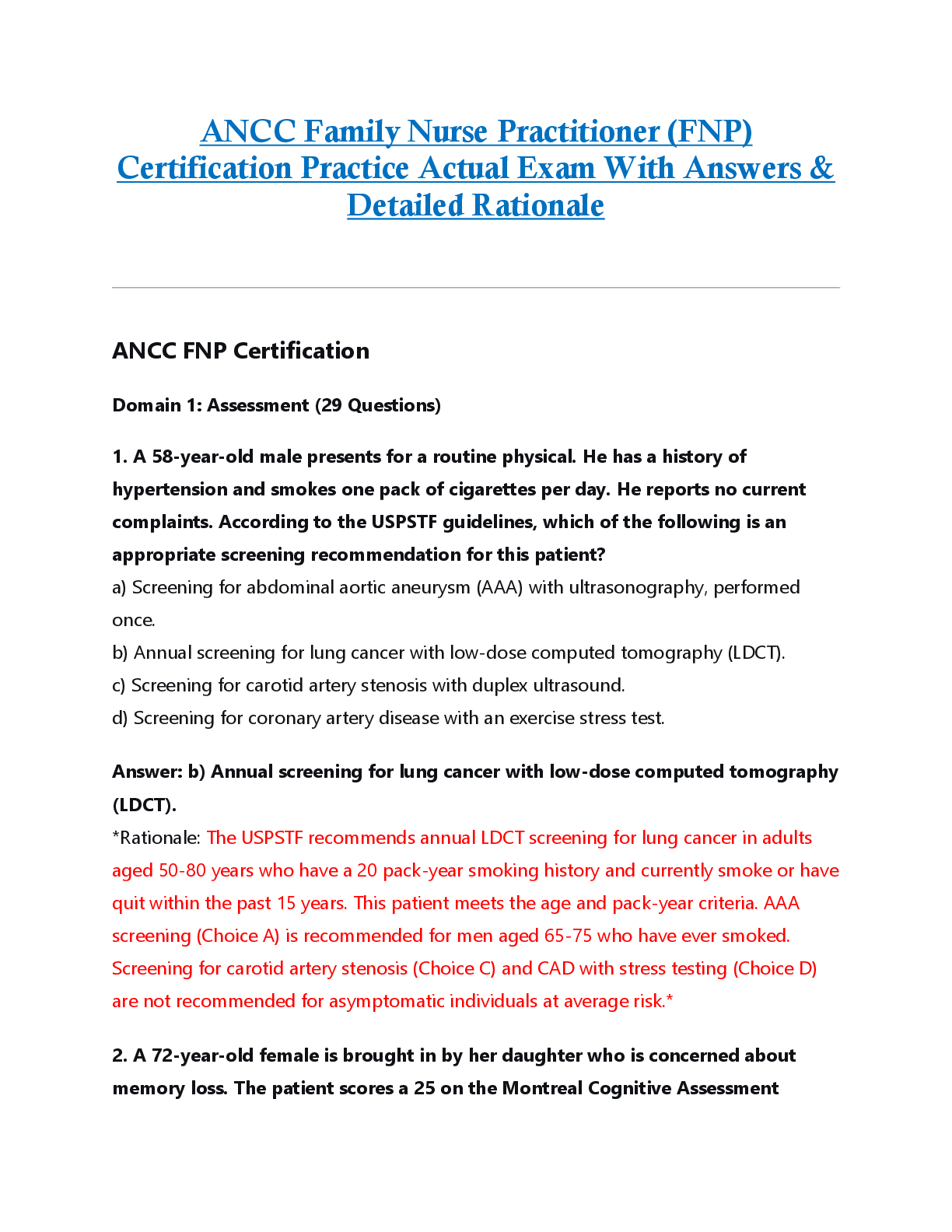
1. A 58-year-old male presents for a routine physical. He has a history of
hypertension and smokes one pack of
...
[Show More]
Last updated: 8 months ago
Preview 7 out of 83 pages
Instant download

Loading document previews ...
Buy this Document to get the Full Access Instantly
Provided by Students Who Aced it
We Verify Document Content to Gurantee Accuracy
Reviews( 0 )
Document information
Connected school, study & course
About the document
Uploaded On
Mar 11, 2026
Number of pages
83
Written in
All

Additional information
This document has been written for:
Uploaded
Mar 11, 2026
Downloads
0
Views
149
Topic Tags
Recommended For You
Get more on EXAM »


$25.5
36 Pages
Adult-Gerontology Acute Care Nurse Practitioner Certification...

$14
12 Pages
APEA FNP Predictor Exam Practice Questions: Updated 2025–2026...


$9.5
8 Pages
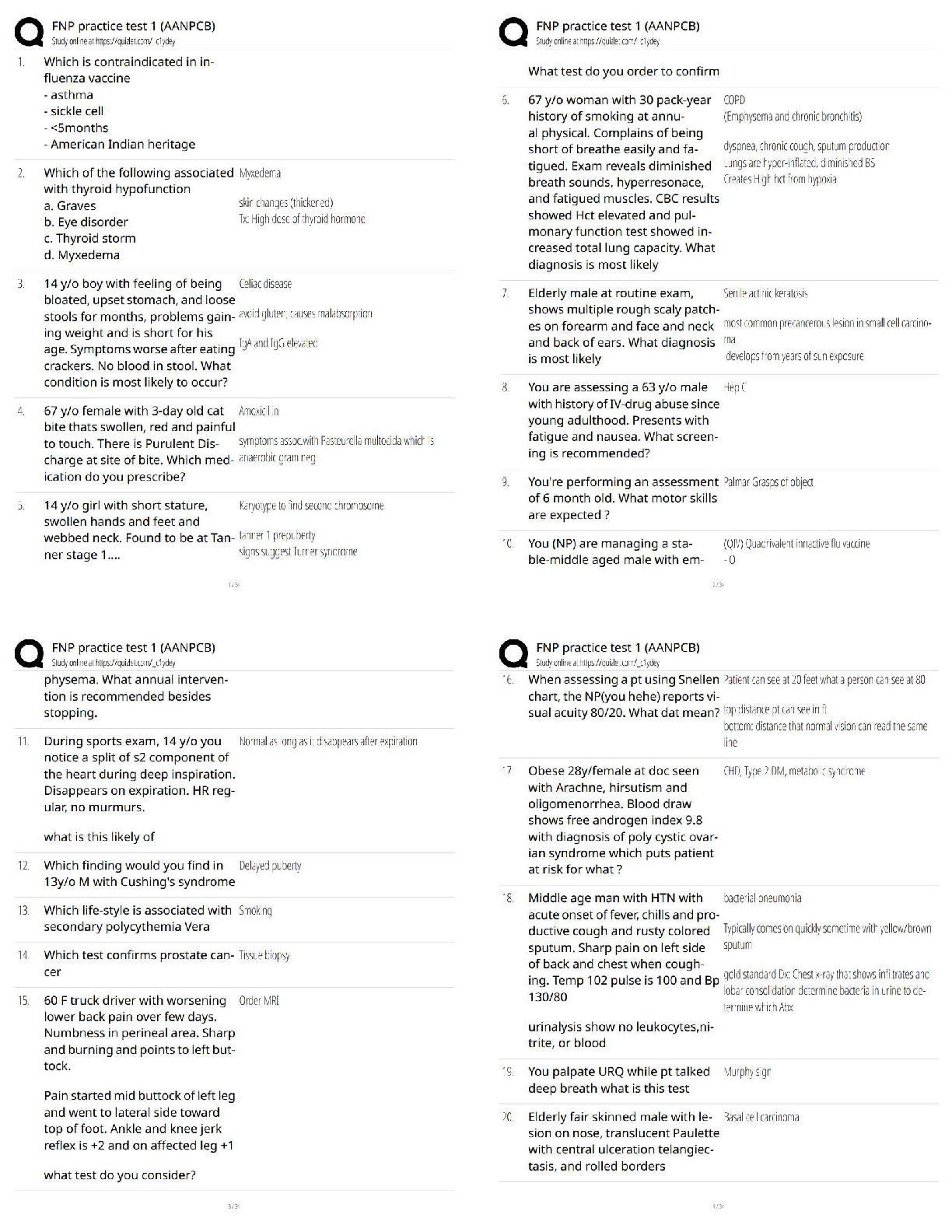
FNP 1 - HEENT Board Review Family Nurse Practitioner Certific...
$12
3 Pages
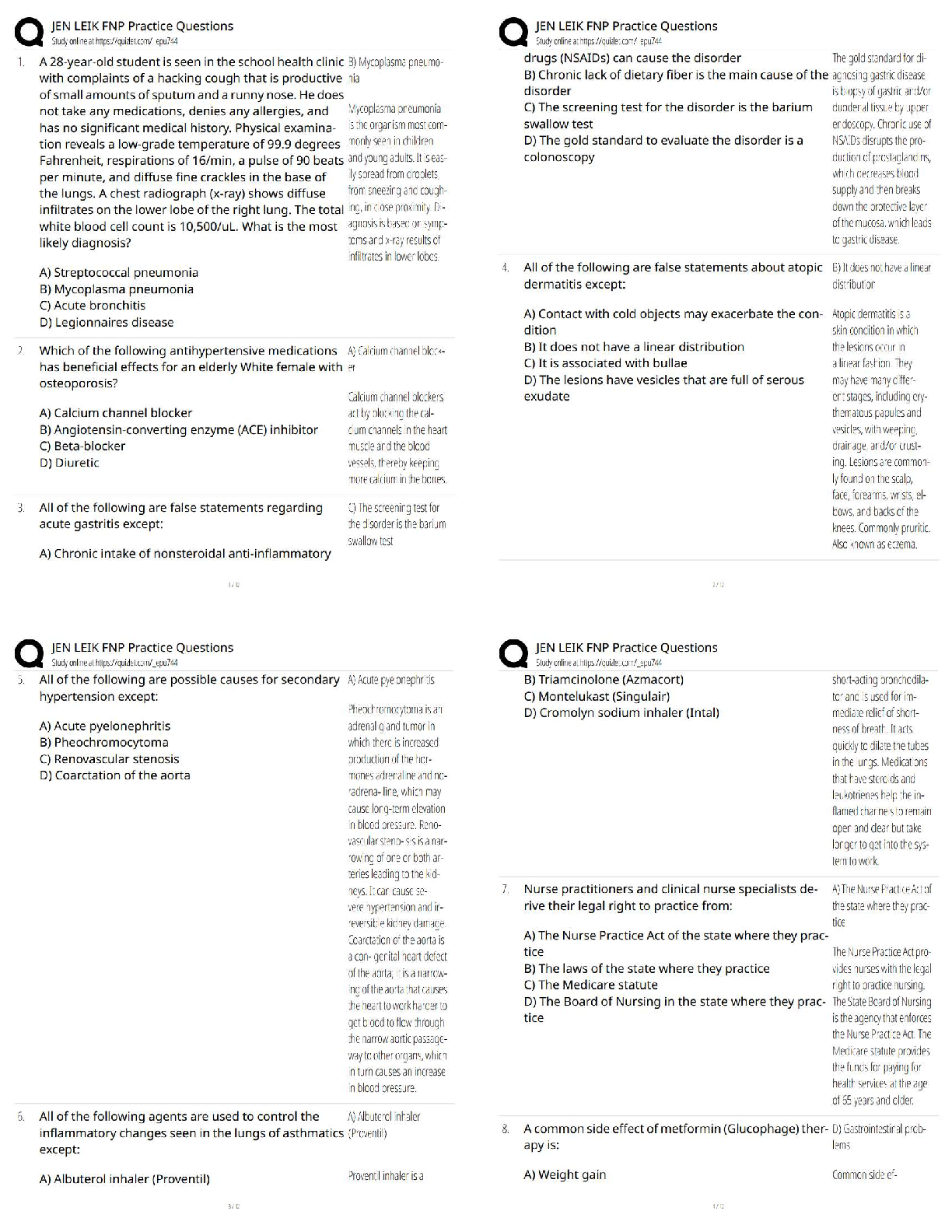
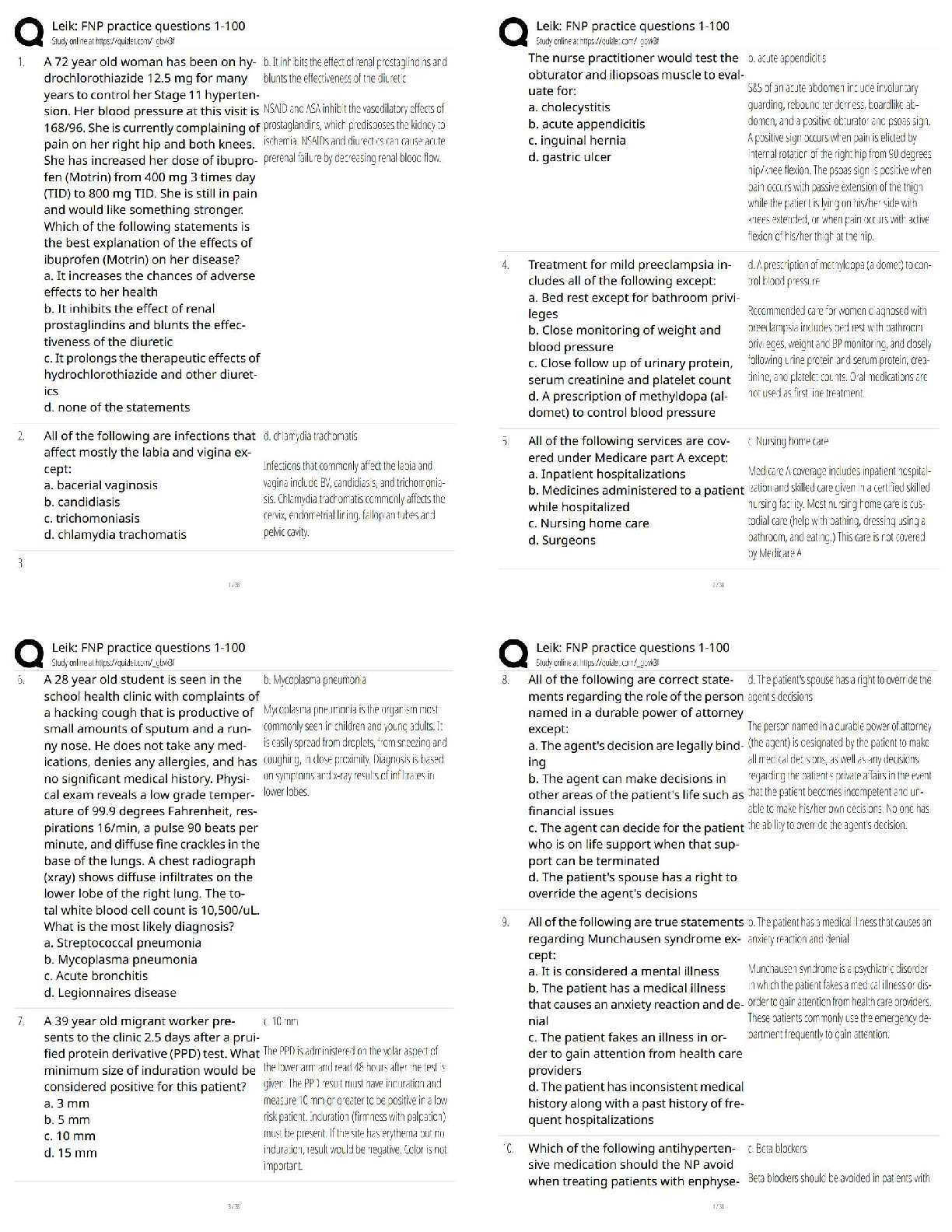
Jen Leik FNP Practice Questions / Family Nurse Practitioner Bo...

$15
589 Pages
Advanced Practice Nursing Procedures by Margaret R. Colyar Fam...

$19.5
0 Pages
Nurse Practitioner Certification Exam / Score 100% / New 2025...

$10
7 Pages
NR 661 Week 1 Certification Review Assignment: Study Plan for...




More related documents below