ELEC4611 - Power System Equipment
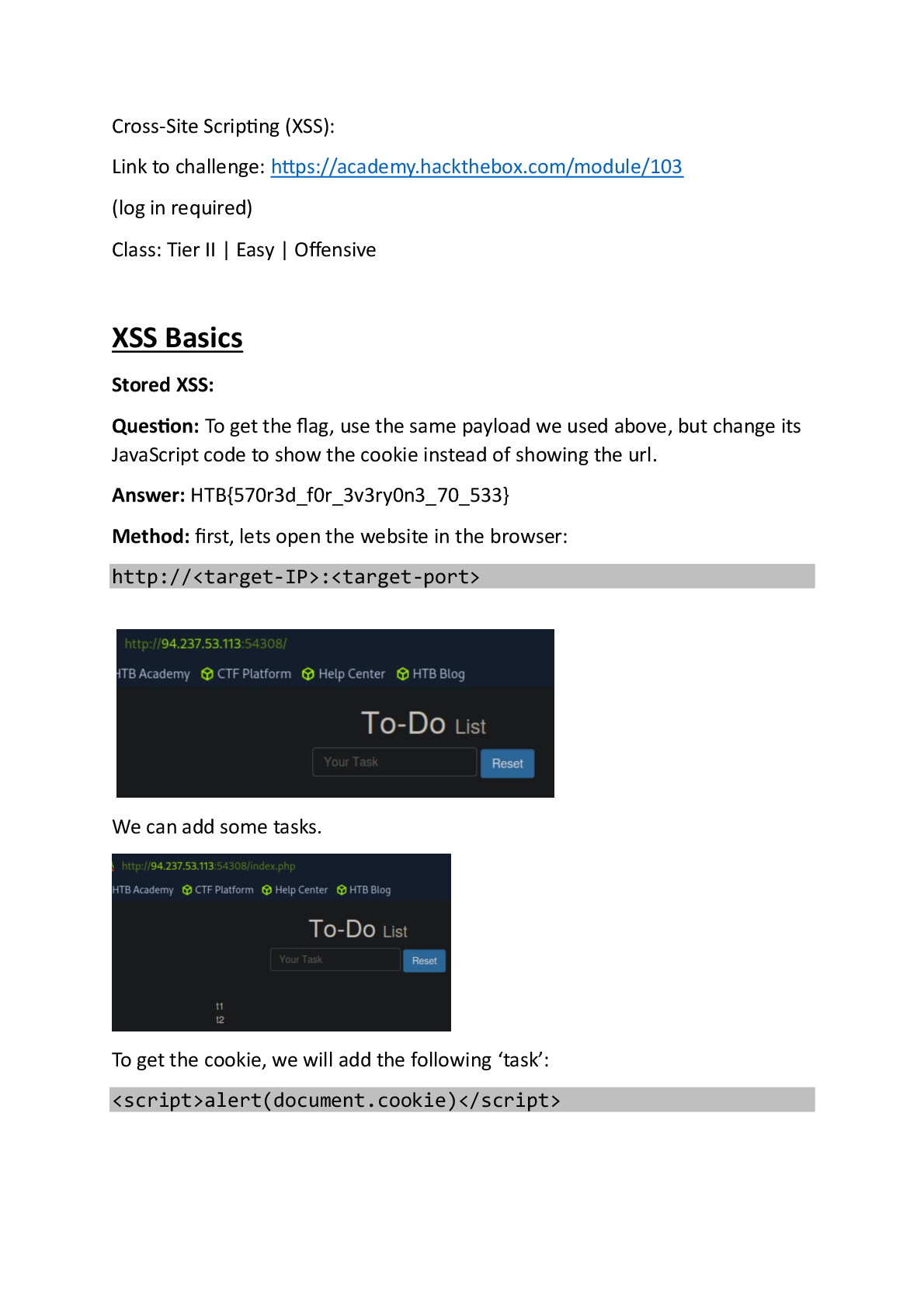
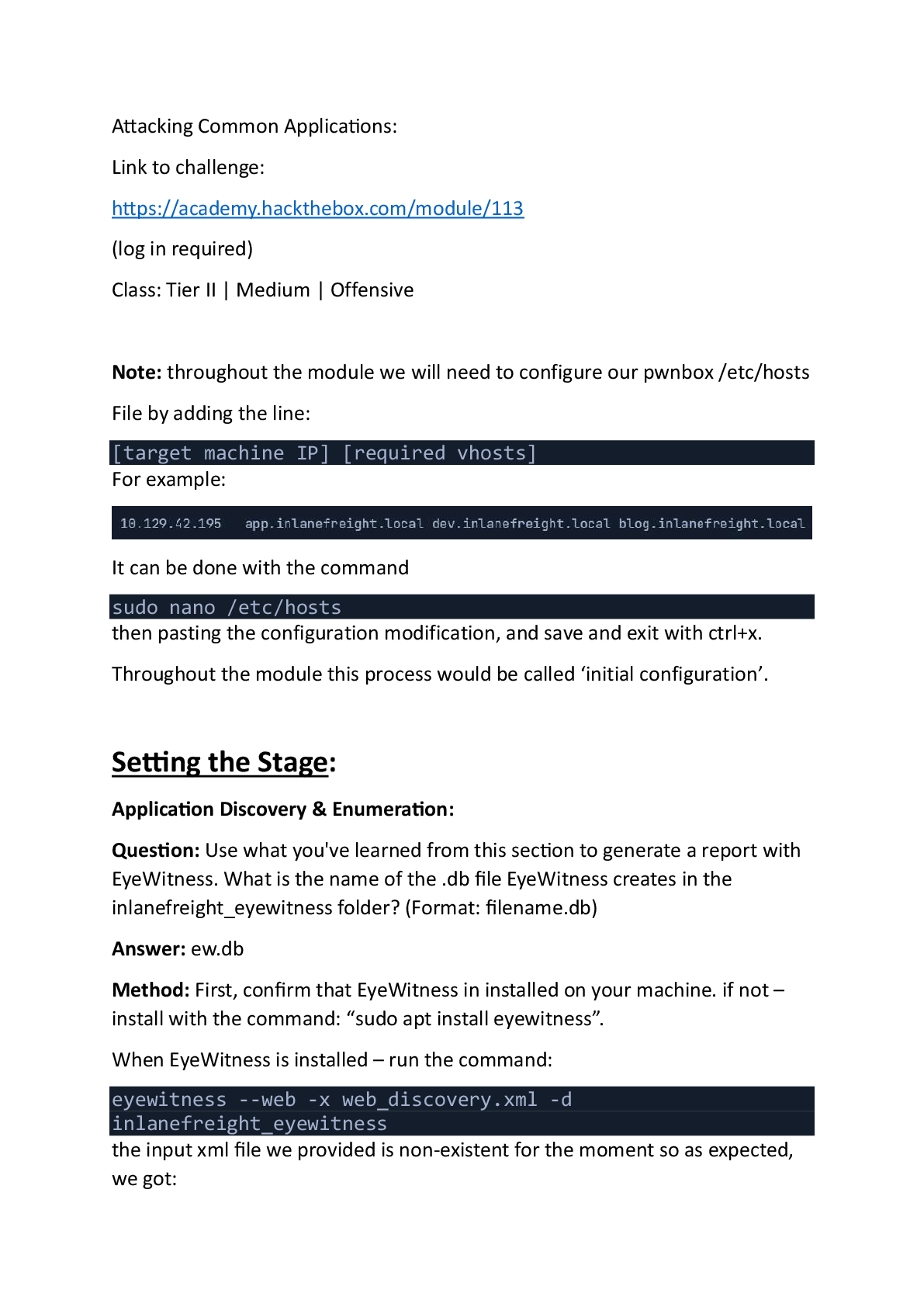
MID-SESSION EXAM
Duration: 75 minutes, closed book, answer all questions, use pens only.
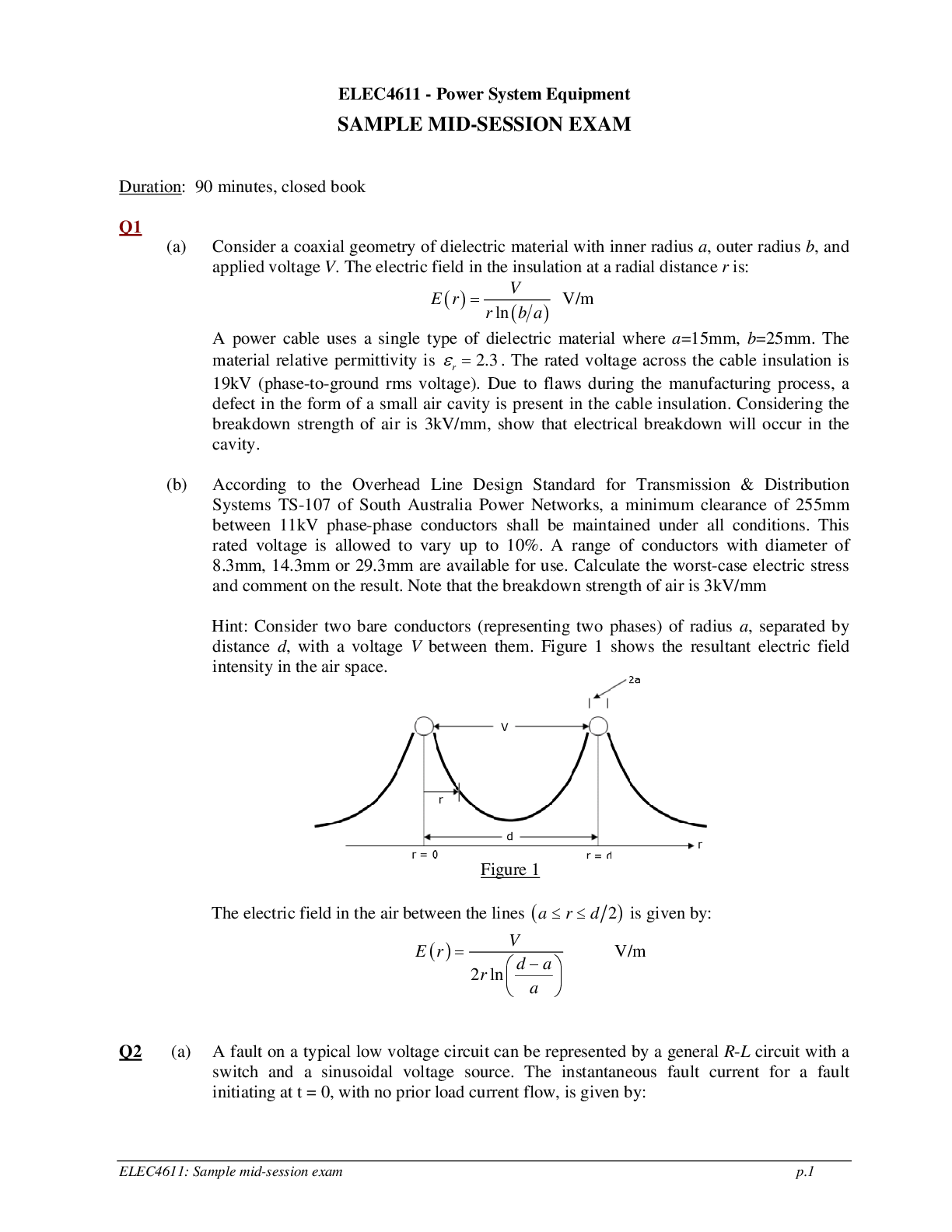
Q1 Consider a coaxial geometry of dielectric material with inner radius a, outer radius b, and
...
ELEC4611 - Power System Equipment
MID-SESSION EXAM
Duration: 75 minutes, closed book, answer all questions, use pens only.
Q1 Consider a coaxial geometry of dielectric material with inner radius a, outer radius b, and applied
voltage V. The electric field in the insulation at a radial distance r is:
ln
V
E r
r b a
A power cable has a single type of dielectric material where a=25mm, b=45mm. The rated voltage of
this cable is 76 kV (rms) phase-to-ground.
a. Determine where in the insulation the stress is the highest. Calculate this value.
b. Now consider a new cable of the same dimension but it uses 2 different dielectric layers of equal
thickness such that the maximum stress in each layer is the same as found in part (a) above.
Calculate the allowable voltage for the new cable design. Comment on the result.
c. If we follow the same design as in (b) above but use a large number of layers, give an estimate of
the allowable voltage for this new cable design. Provide your reasoning.
Q2 a. A fault on a typical low voltage circuit can be represented by a general R-L circuit with a switch
and a sinusoidal voltage source. The instantaneous fault current for a fault initiating at t = 0, with
no prior load current flow, is given by:
2
( ) ( ) ( )
t
V L R
i t sin t sin e
Z
where is power factor angle, is angle of voltage at switch closure and the other quantities have
their usual meanings. Determine the condition that results in the worst-case DC offset and then
derive the formula for the peak instantaneous current.
b. In a particular fault, the supply voltage is 230 V(rms) 50Hz, the inductance L=3mH, and
resistance R=0.5. Connection to the supply is via a twin core flexible cable with 5mm spacing
between the two conductors. Calculate the largest possible force on the conductors caused by the
fault. Is this force attractive or repulsive? Draw a sketch showing current, magnetic field, and
force directions and explain how you work it out.
The electrodynamic force (newtons/metre) between two parallel conductors at a spacing d
(metres) apart and carrying currents i1 and i2 (amperes) is given by:
1 2
2
oi i
F
d
where 4 10 H/m 7
o
Q3 Briefly answer the following questions:
a. Electrodynamic forces arise from interaction of the current in a conductor with the surrounding
magnetic field. This field can be from its own current or current in another nearby conductor.
Sketch 2 examples; clearly indicate directions of the current, magnetic field and resultant force.
b. Explain what is meant by the DC offset current transient that arises from an electrical fault in a
power circuit. Do we need to worry about this effect if the circuit is purely resistive?
c. Explain why it is desirable to keep the surfaces of conductors in high-voltage equipment smooth
and rounded with no sharp edges or protrusions. Further, explain the purpose of using a ‘corona
ring’ when doing high-voltage testing.
d. Insulator strings on overhead transmission lines are composed of identical insulator units
connected in series. Explain the undesirable effect of earth-leakage capacitance on the voltage
distribution across the insulator string. Suggest a practical solution to this problem.
e. A high-voltage DC cable is energized to its rated voltage. If the load current in the cable changes
because of varying load demand, does it affect the electric stress in the cable? Explain why
[Show More]