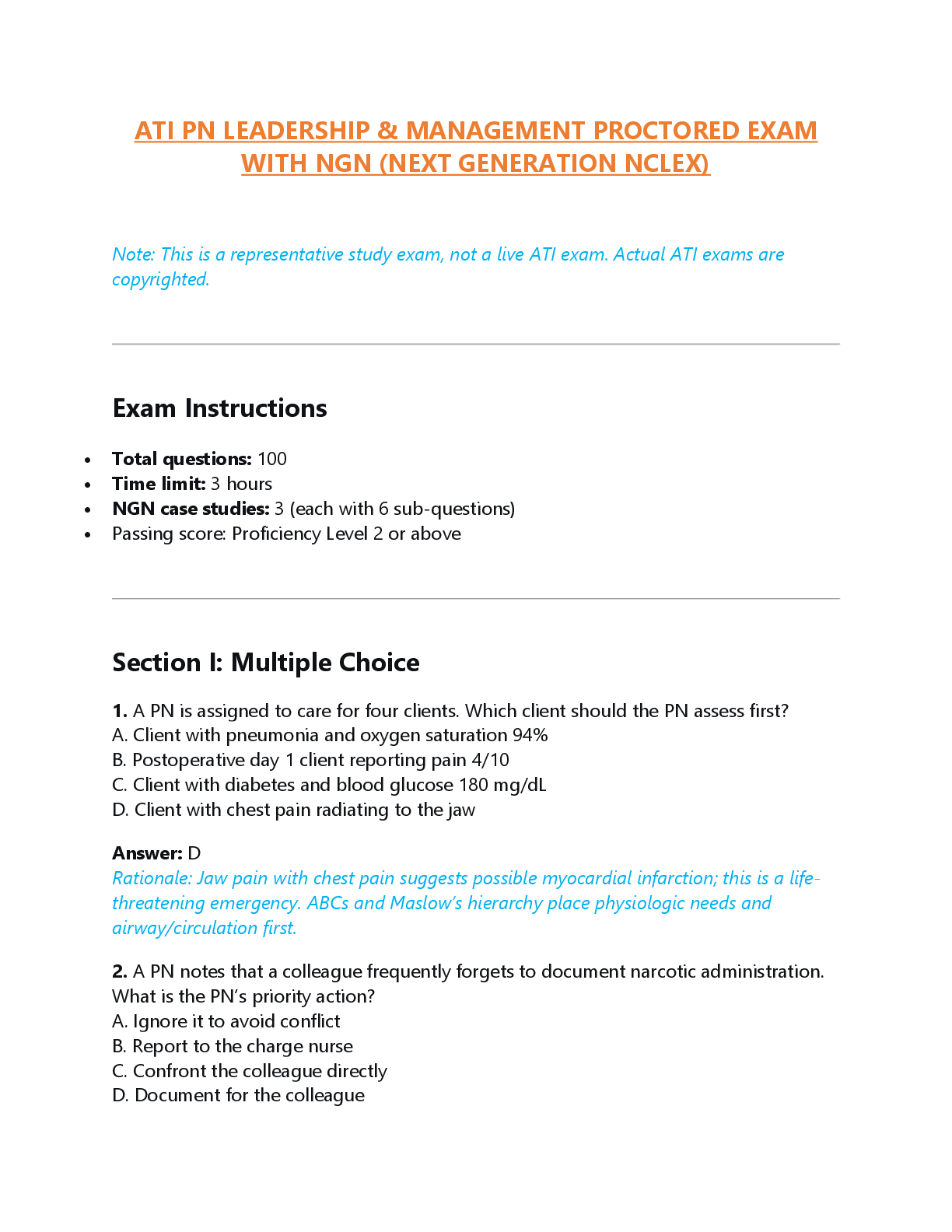
Exam Instructions
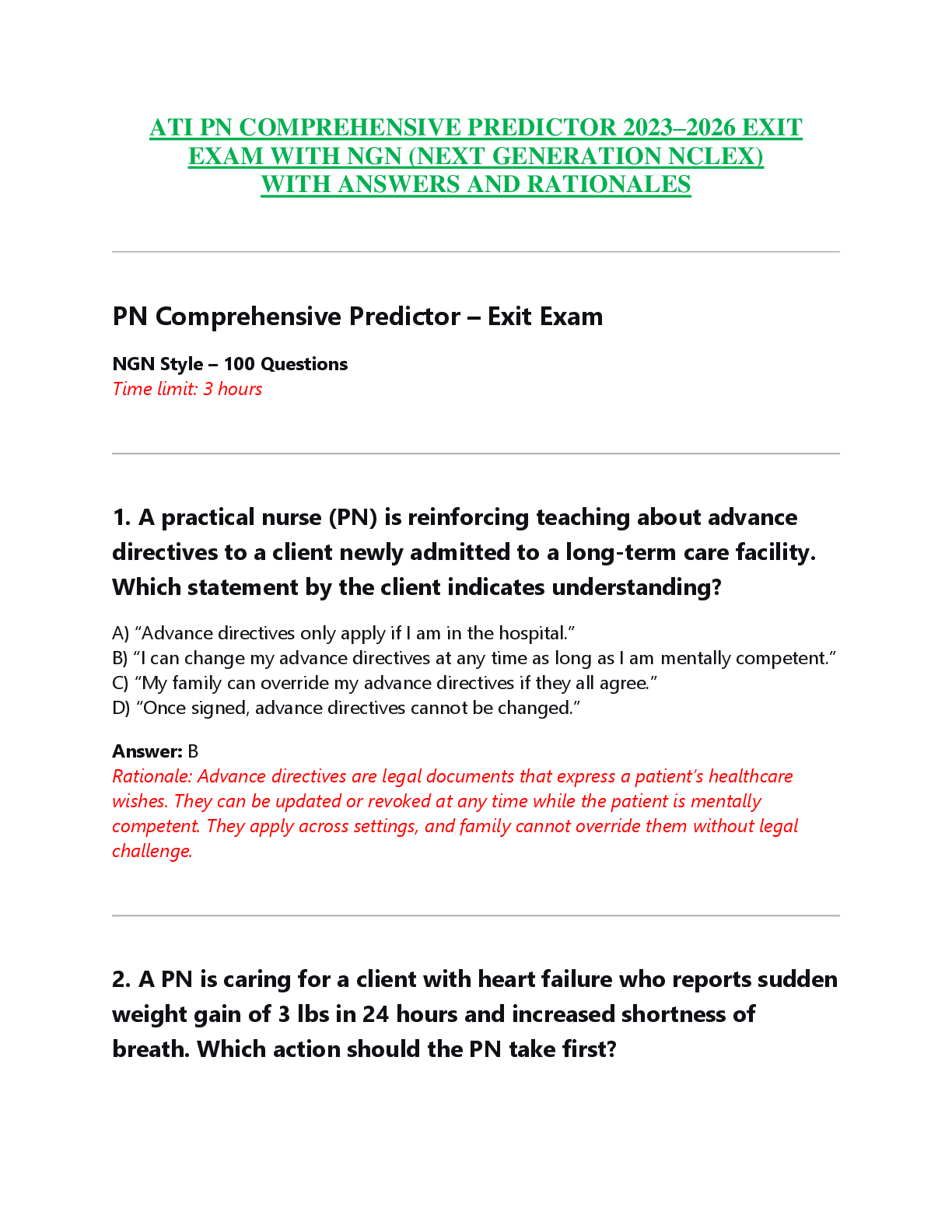
Format: This exam contains multiple case studies. Each case study includes a
scenario and a set of questions. Some questions may have multiple correct
answers (select all that apply), require yo
...
Exam Instructions
Format: This exam contains multiple case studies. Each case study includes a
scenario and a set of questions. Some questions may have multiple correct
answers (select all that apply), require you to highlight findings, or drag and drop
steps. Pay close attention to the specific instructions for each item.
Case Study 1: Cardiovascular – Acute Coronary Syndrome
Scenario: Mark Stevenson, a 58-year-old male, presents to the Emergency Department
(ED) with complaints of substernal chest pressure that began 2 hours ago while
shoveling snow. He rates the pain as an 8 on a 0-10 scale and states it radiates to his left
jaw. He is diaphoretic and short of breath.
Vital Signs: HR 118 bpm, BP 145/90 mmHg, RR 24/min, SpO2 91% on room air,
Temperature 98.6°F (37.0°C).
Assessment Findings:
Cardiovascular: Tachycardic, regular rhythm. Peripheral pulses weak but palpable.
Skin cool and clammy.
Respiratory: Tachypneic, lung sounds clear bilaterally.
Pain: Severe substernal chest pressure with jaw radiation.
Provider's Orders:
Oxygen via nasal cannula to maintain SpO2 > 92%.
Aspirin 324 mg chewed.
Nitroglycerin 0.4 mg sublingual every 5 minutes for up to 3 doses for continued
pain.
Obtain 12-lead ECG stat.
Establish IV access.
Draw cardiac biomarkers (Troponin I, CK-MB).
Morphine 2-4 mg IV for pain unrelieved by nitroglycerin.
Question 1 (Highlight/Select)
The nurse is reviewing the initial assessment data. Which of the following findings
require immediate follow-up? (Choose all that apply).
A. Heart rate 118 bpm
B. Chest pressure radiating to the jaw
C. Oxygen saturation 91%
*D. Blood pressure 145/90 mmHg*
E. Diaphoresis
F. Shoveling snow as the precipitating event
Answer & Rationale: A, B, C, E. Tachycardia (A) increases myocardial oxygen demand.
Jaw radiation (B) is a classic sign of cardiac referred pain and indicates ischemia.
Hypoxemia (C) can further damage ischemic myocardial tissue. Diaphoresis (E) is a
common sympathetic response to the severe pain and stress of an MI. While elevated, the
BP (D) is a priority after ensuring oxygenation and pain relief. The activity (F) is important
history but not an immediate physiological finding to treat.
Question 2 (Matrix/Grid)
The nurse administers the first dose of Nitroglycerin 0.4 mg sublingual. For each
assessment finding below, specify if it indicates a Therapeutic Effect, an Adverse
Effect, or is Unrelated to the nitroglycerin.
[Show More]