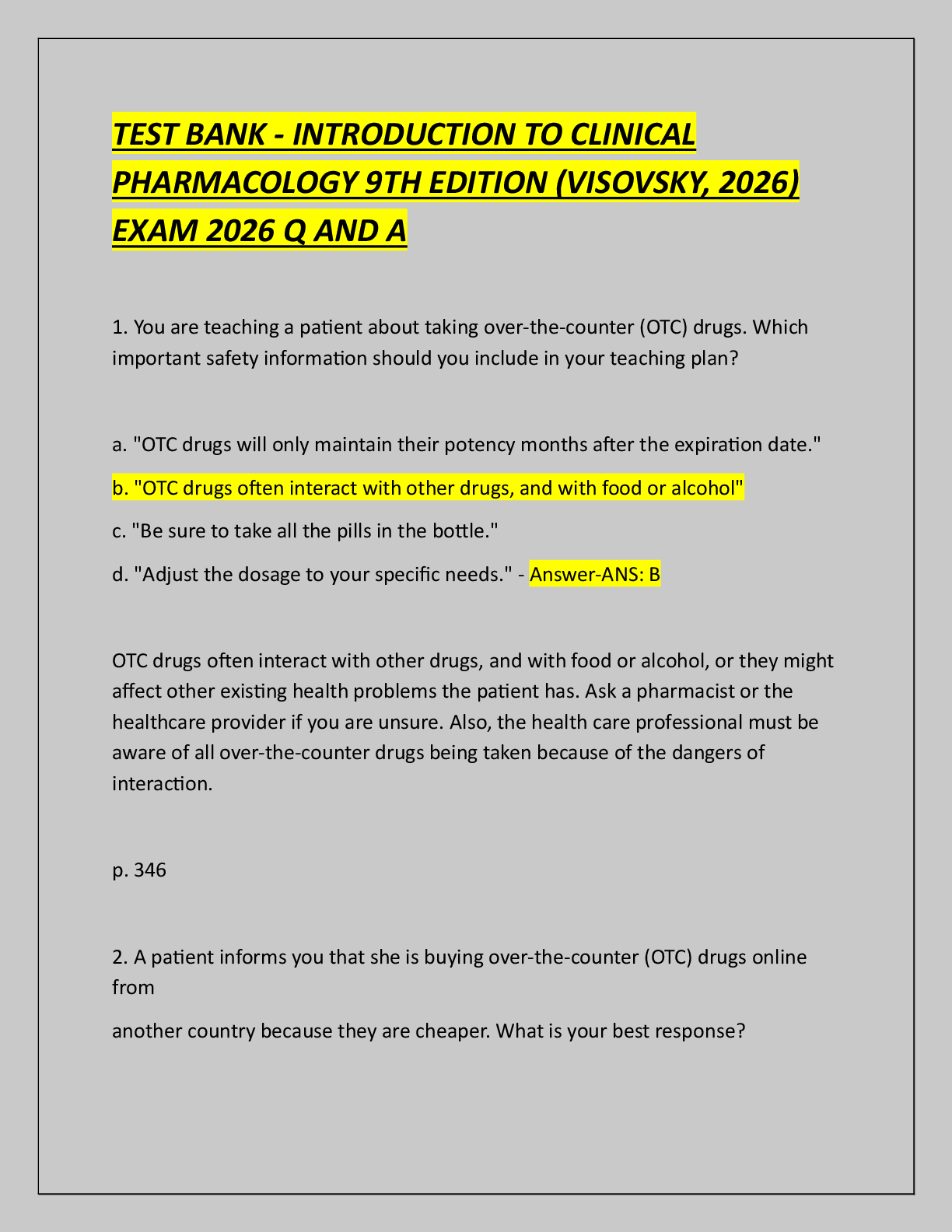
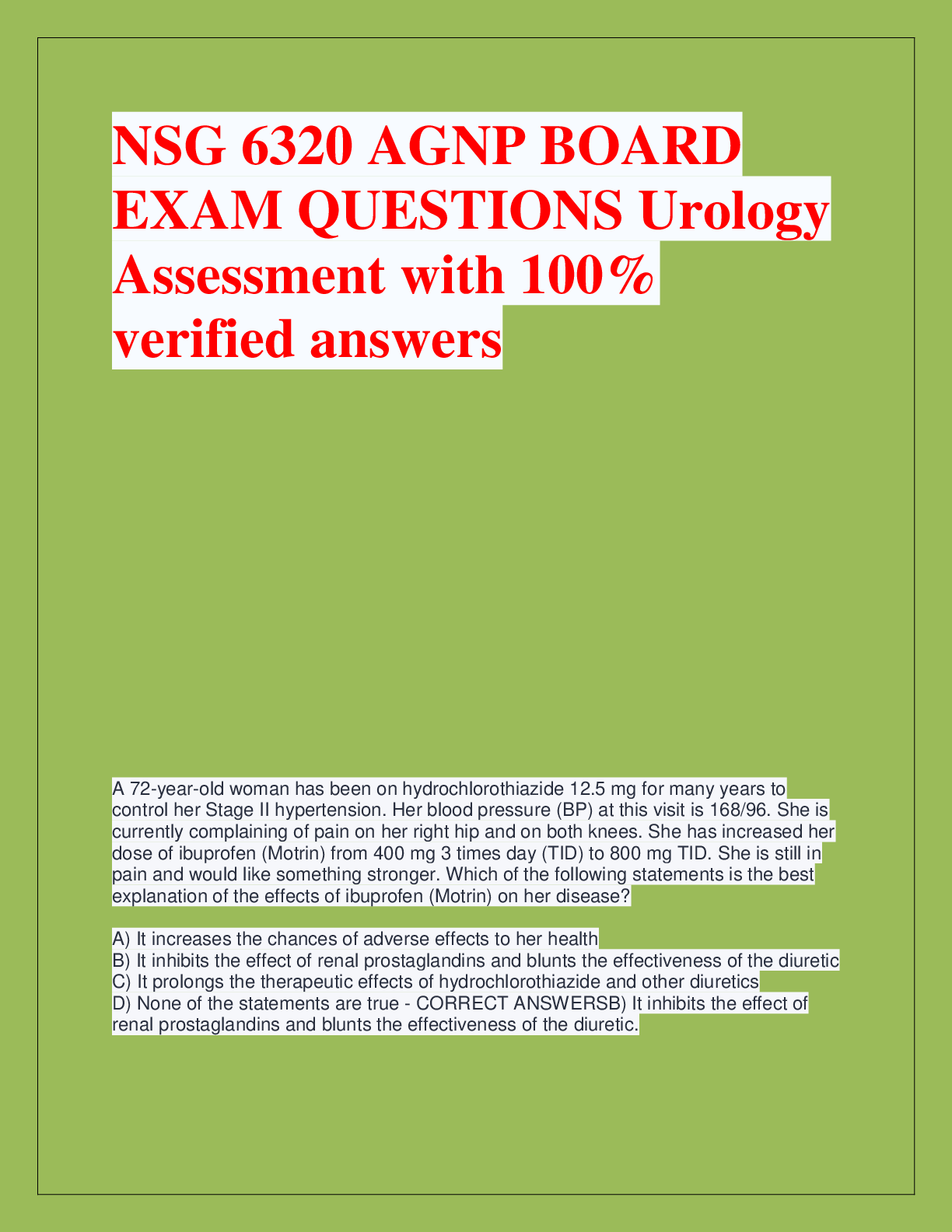
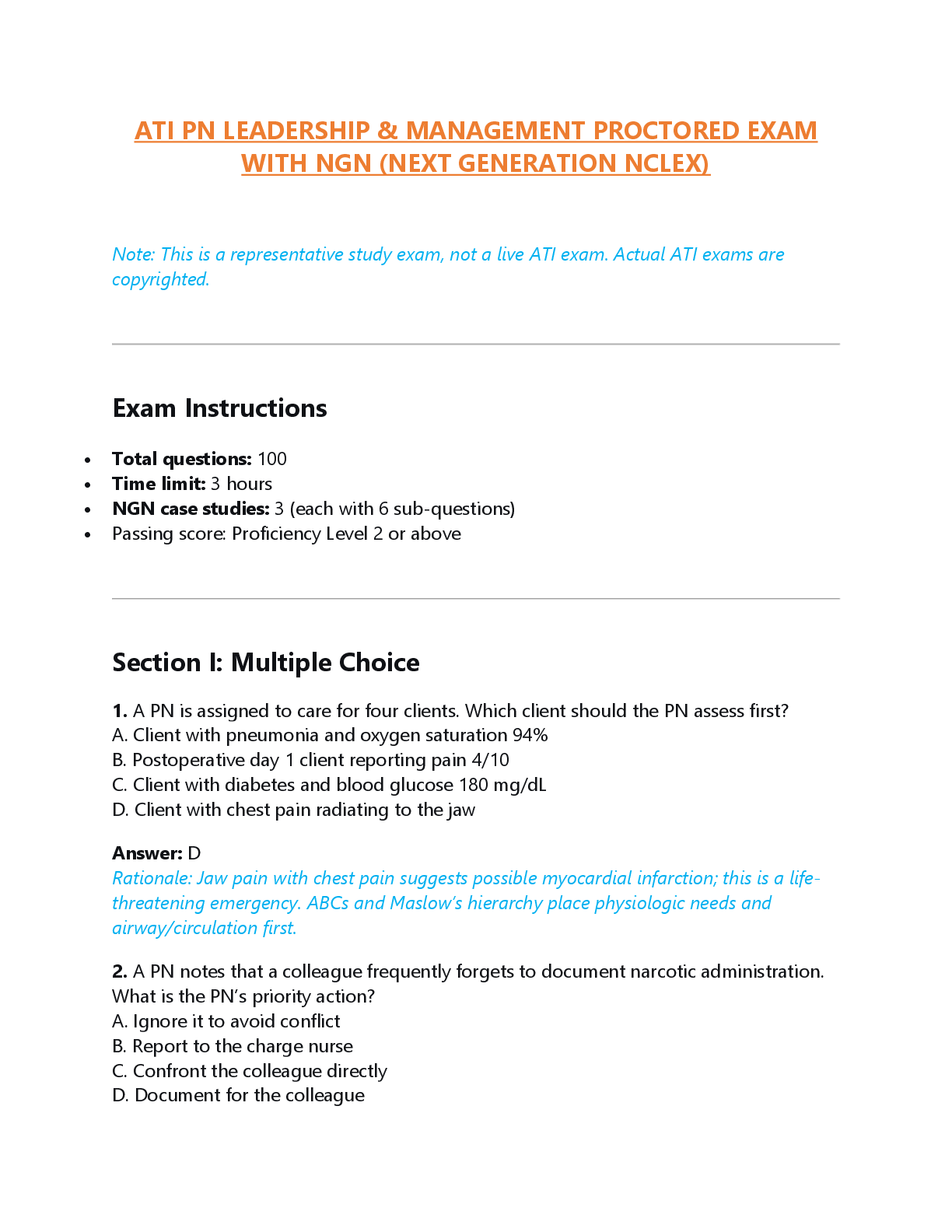
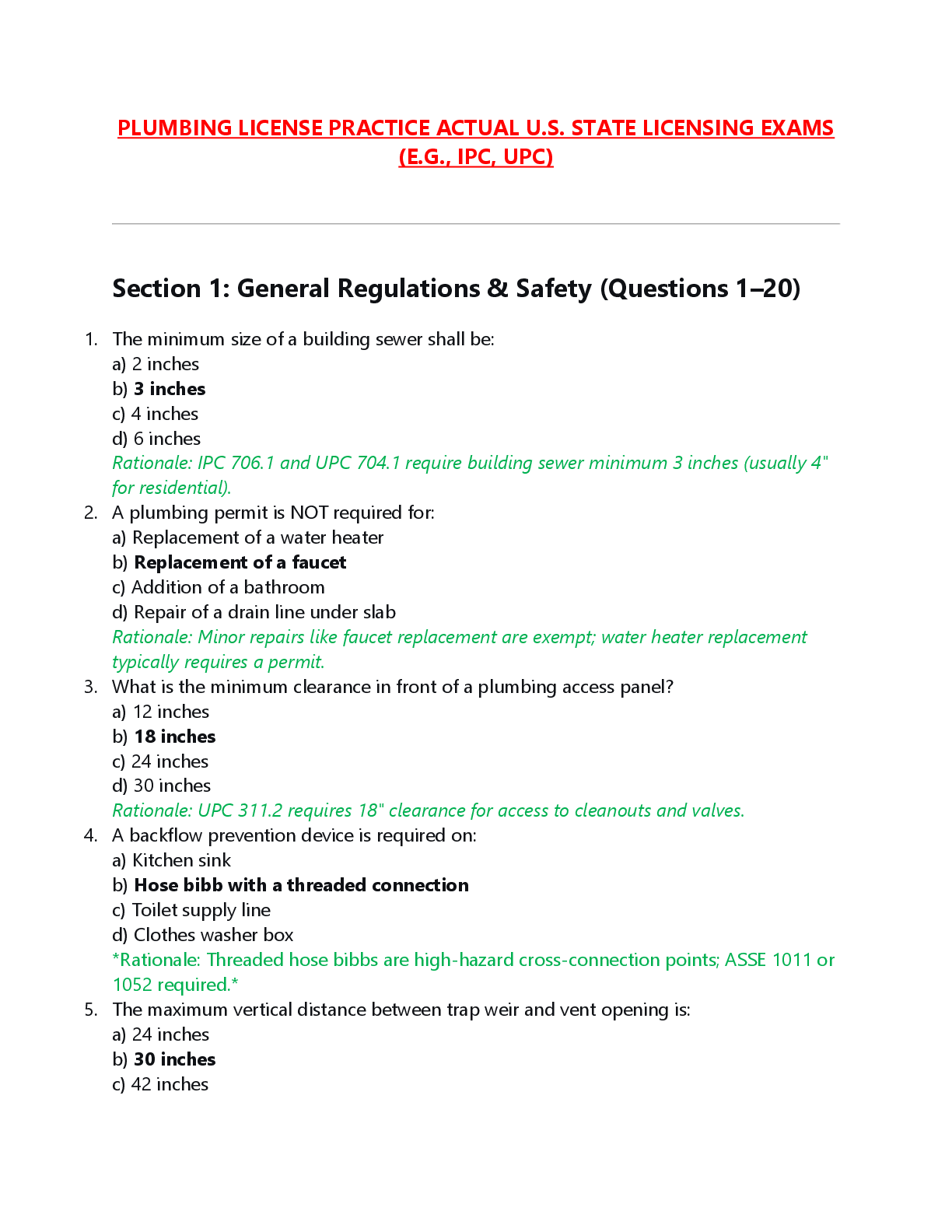
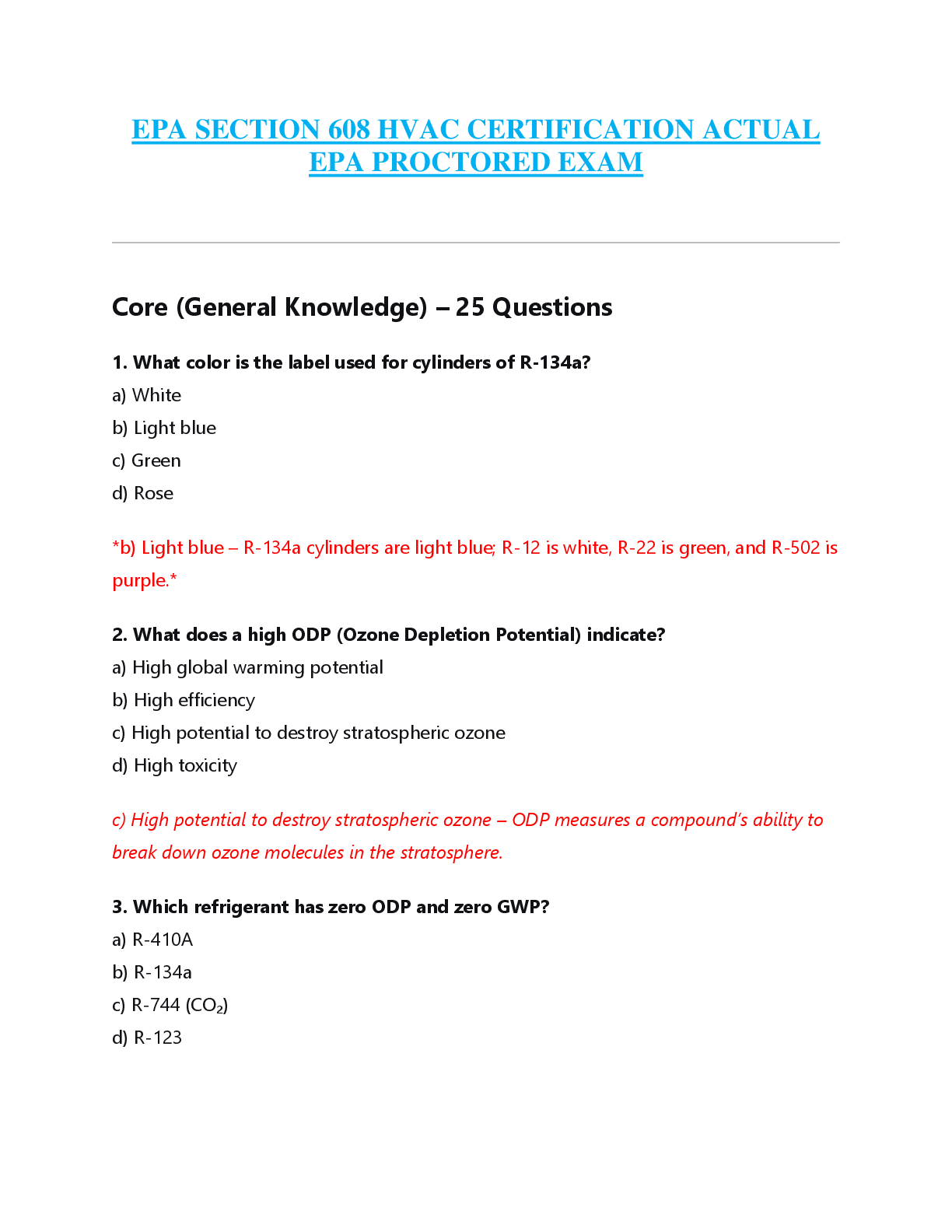
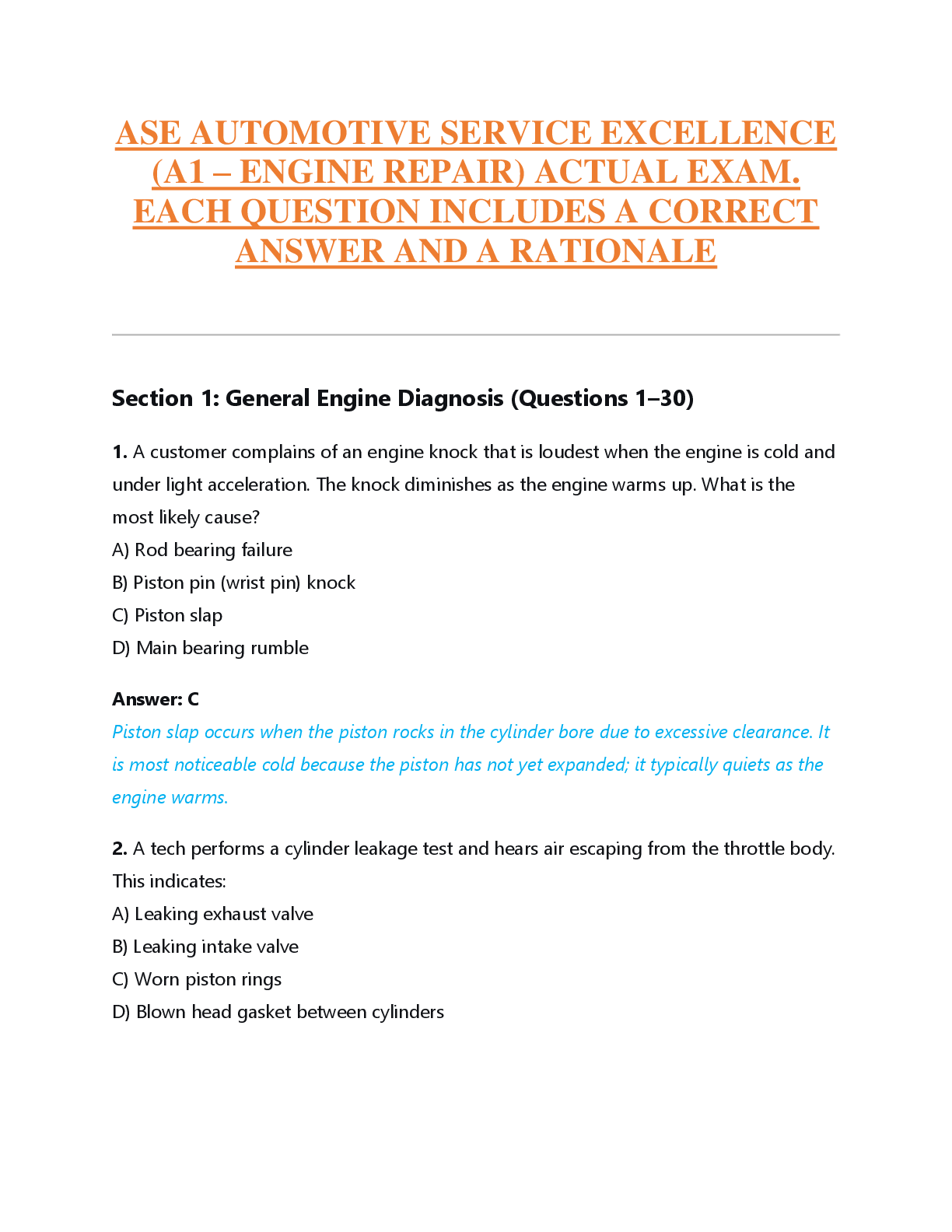
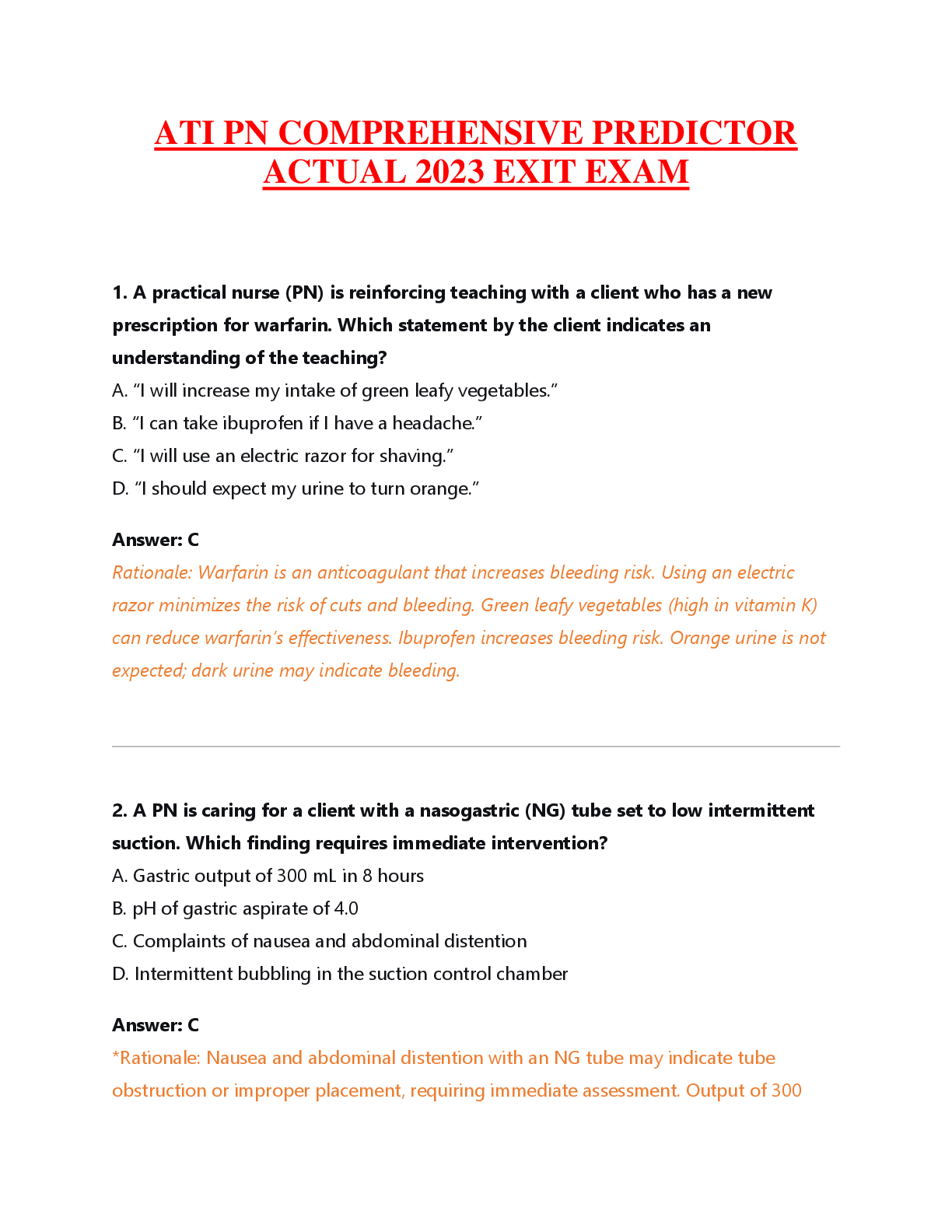
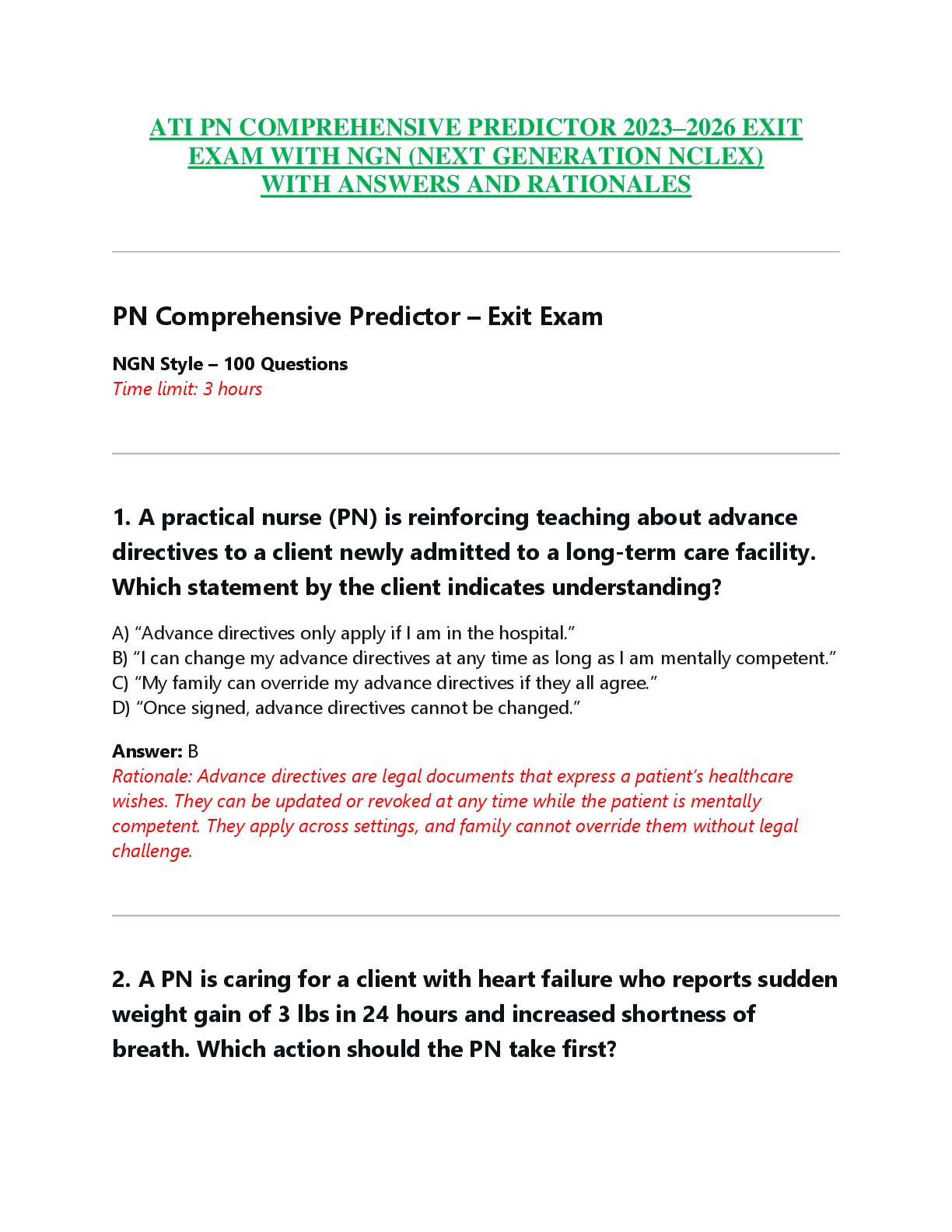
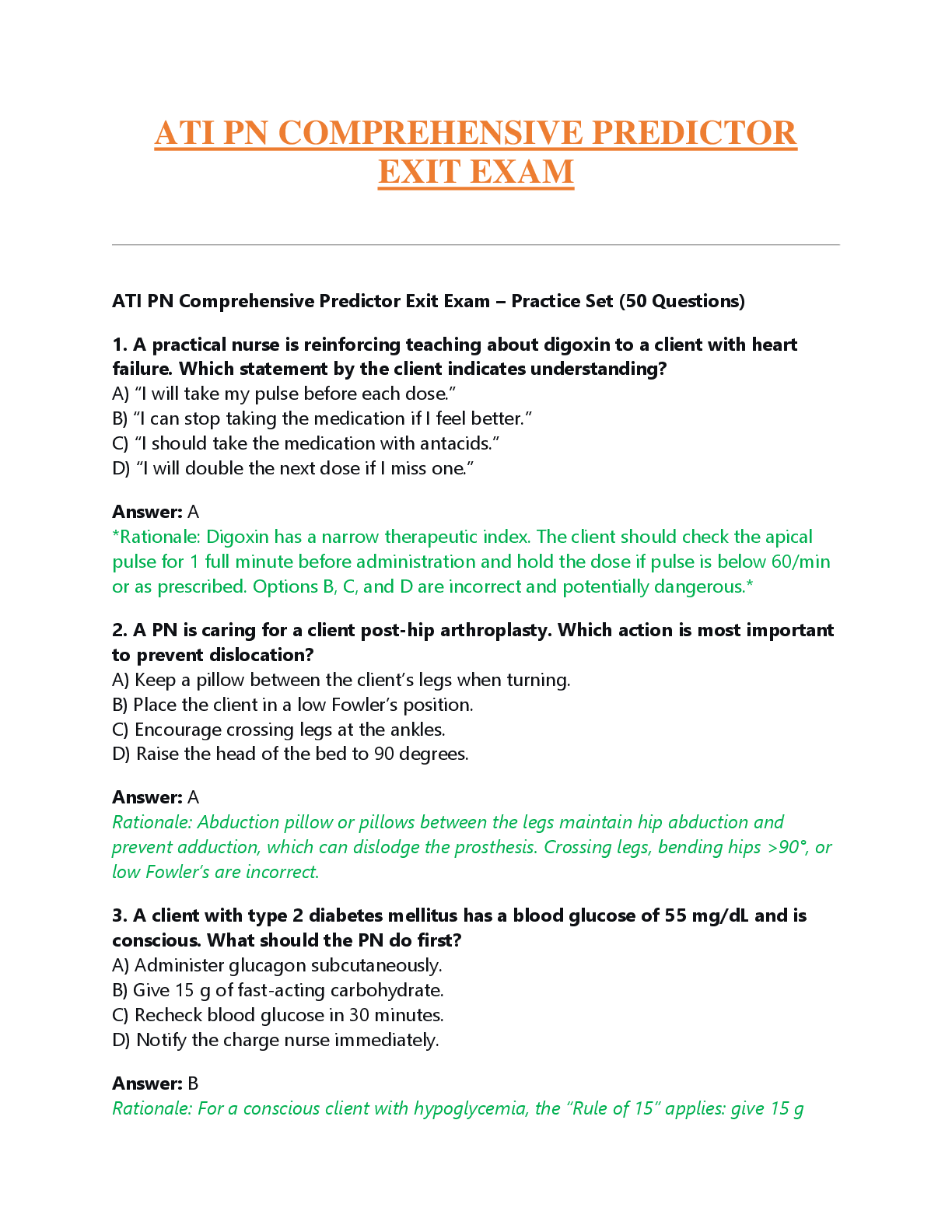
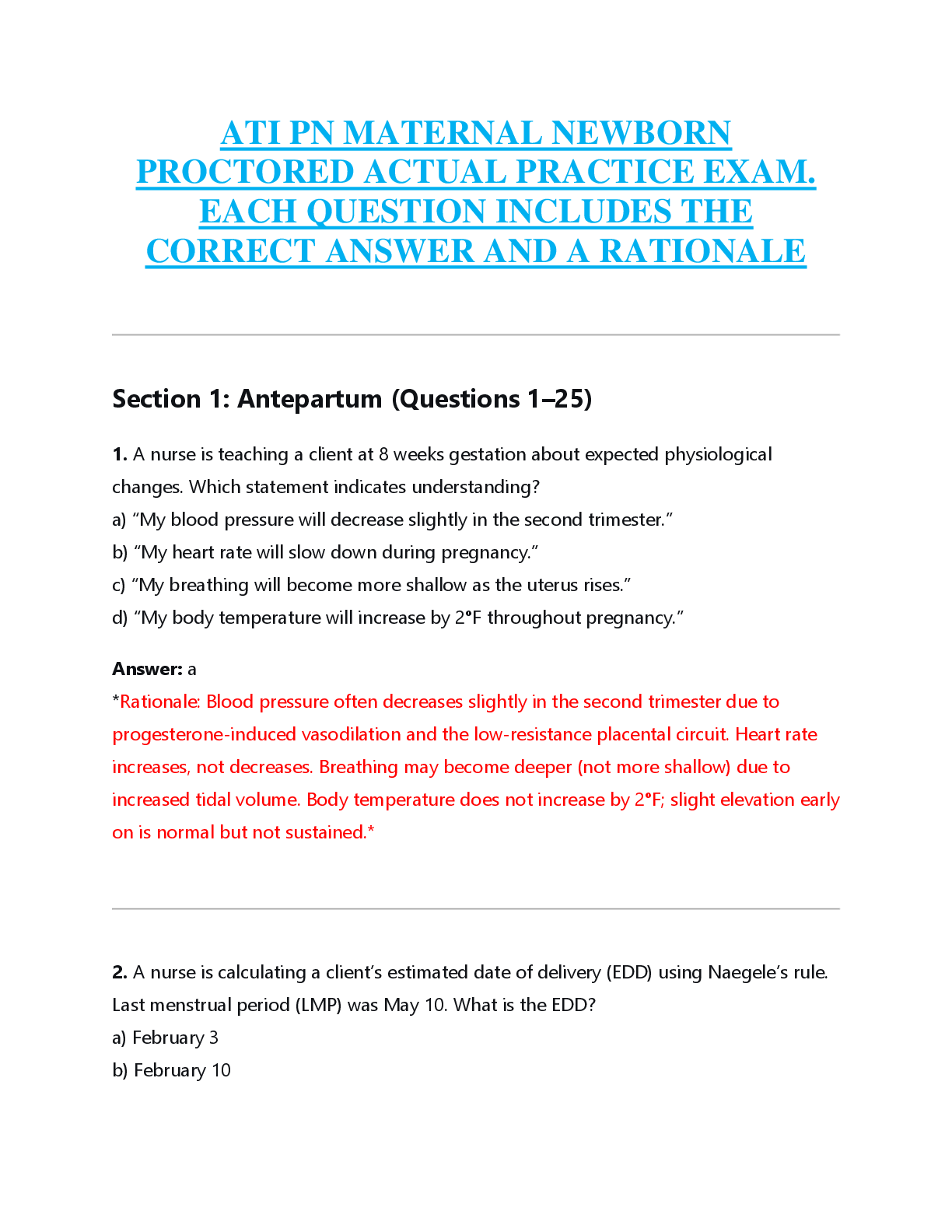
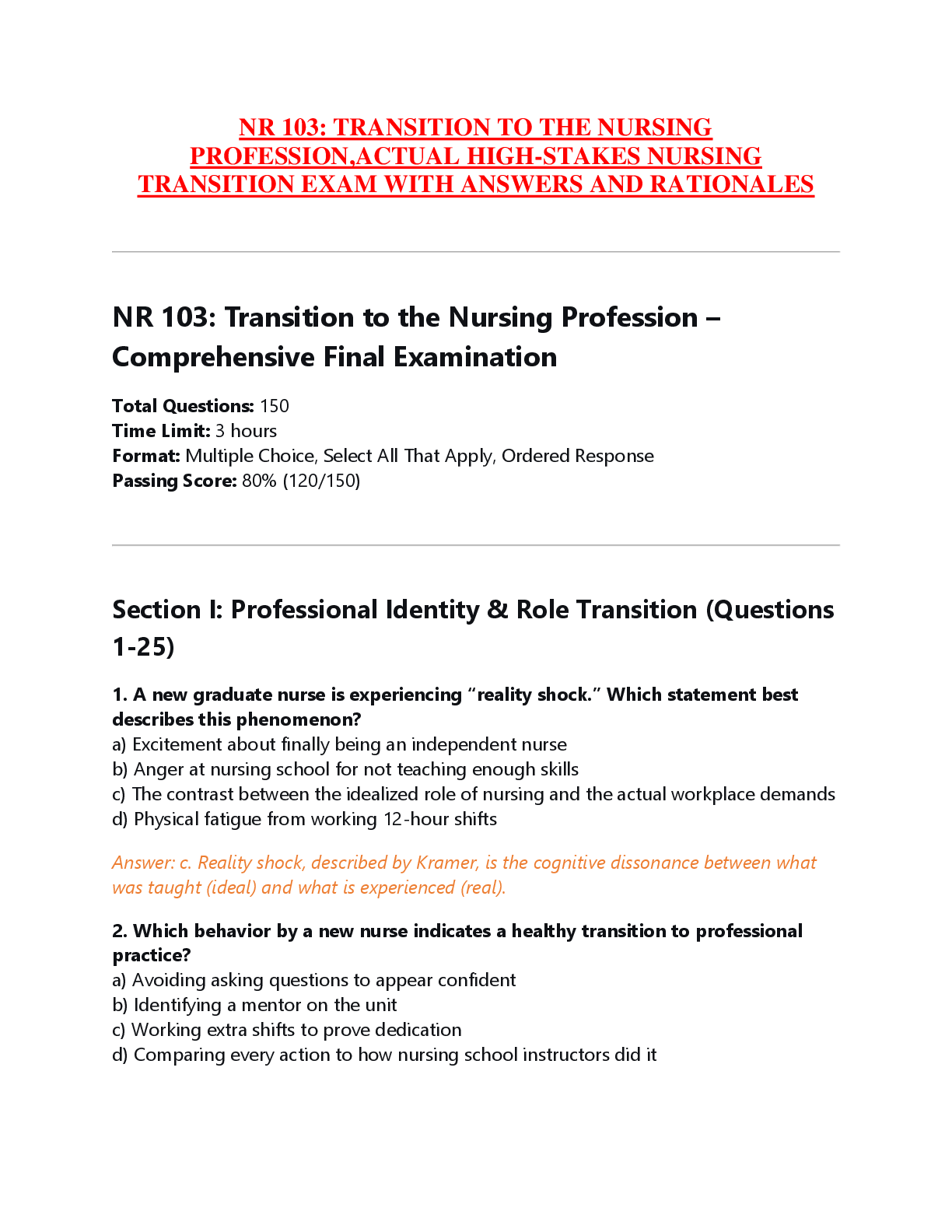
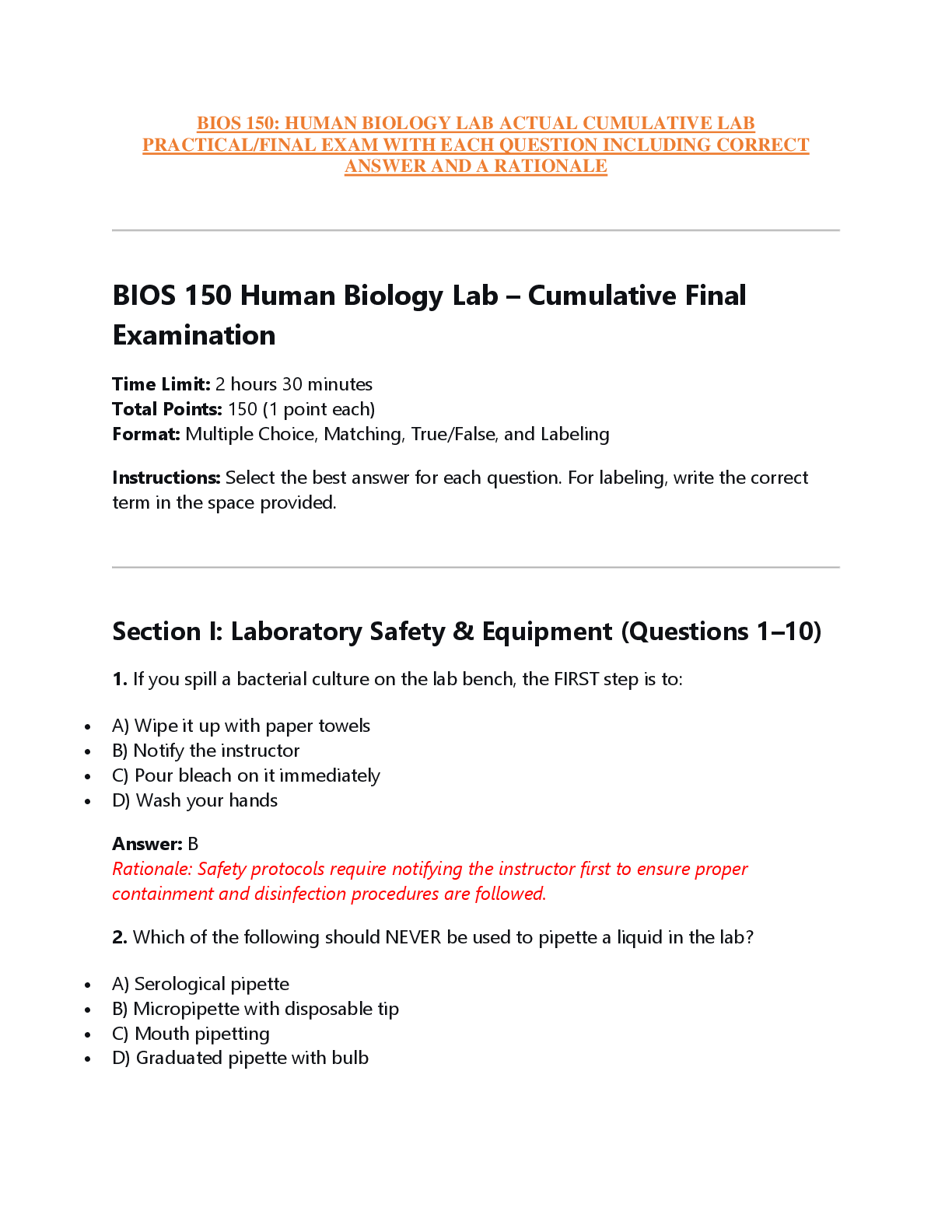
Questions: 75 multiple-choice and alternate-format items.
Format: Questions with a detailed rationale
Topics: Prioritization, Pharmacology, Fluid & Electrolytes, Cardiac, Respiratory,
Leadership, and Safety.
...
Questions: 75 multiple-choice and alternate-format items.
Format: Questions with a detailed rationale
Topics: Prioritization, Pharmacology, Fluid & Electrolytes, Cardiac, Respiratory,
Leadership, and Safety.
Elsevier Simulation Exam: Medical-Surgical Nursing
Instructions: Choose the best answer for each question.
1. A nurse is caring for a patient who is 1-hour post-operative following a
transurethral resection of the prostate (TURP). The patient has a continuous
bladder irrigation (CBI) system in place. The nurse observes the urine output is
bright red with multiple large clots, and the drainage bag is filling rapidly. What is
the nurse's priority action?
a) Manually irrigate the catheter.
b) Increase the flow rate of the irrigation fluid.
c) Notify the healthcare provider immediately.
d) Document the findings and continue to monitor.
*Answer: a) Manually irrigate the catheter. *
Rationale: The priority is to maintain catheter patency. Bright red urine with clots and
rapid filling indicates potential catheter occlusion by clots. If the catheter blocks, bladder
distention can occur, leading to pain, hemorrhage, and increased pressure. The nurse
should first attempt to manually irrigate the catheter to clear the obstruction and restore
drainage. Increasing irrigation flow (b) may help prevent clots but is not the priority if clots
are already occluding. Notification (c) is necessary if irrigation is unsuccessful.
Documentation (d) is important but not the priority action in this escalating situation.
2. The nurse is assessing a patient with heart failure who has been prescribed
furosemide (Lasix) 40 mg IV push. Which laboratory value is most important for
the nurse to review prior to medication administration?
a) Hemoglobin and Hematocrit
b) Serum Potassium
c) Serum Sodium
d) BUN and Creatinine
*Answer: b) Serum Potassium *
*Rationale: Furosemide is a loop diuretic that causes significant excretion of potassium.
Hypokalemia is a common and dangerous side effect that can lead to life-threatening
dysrhythmias. The nurse must review the potassium level to ensure it is not low (< 3.5
mEq/L) before administering the dose. While BUN/Creatinine (d) are important for
assessing renal function and the drug's efficacy, the immediate safety check involves
potassium.*
3. A patient with a new diagnosis of type 1 diabetes mellitus is learning to self
administer insulin. After the nurse teaches the patient how to mix regular and
NPH insulin in the same syringe, which patient action indicates correct
understanding?
[Show More]