INSTANT PDF DOWNLOAD—This comprehensive final exam study guide is specifically designed for Rasmussen University nursing students preparing for the NUR 2356 / NUR2356 Multidimensional Care I (MDC 1) Final Exam for the 20
...
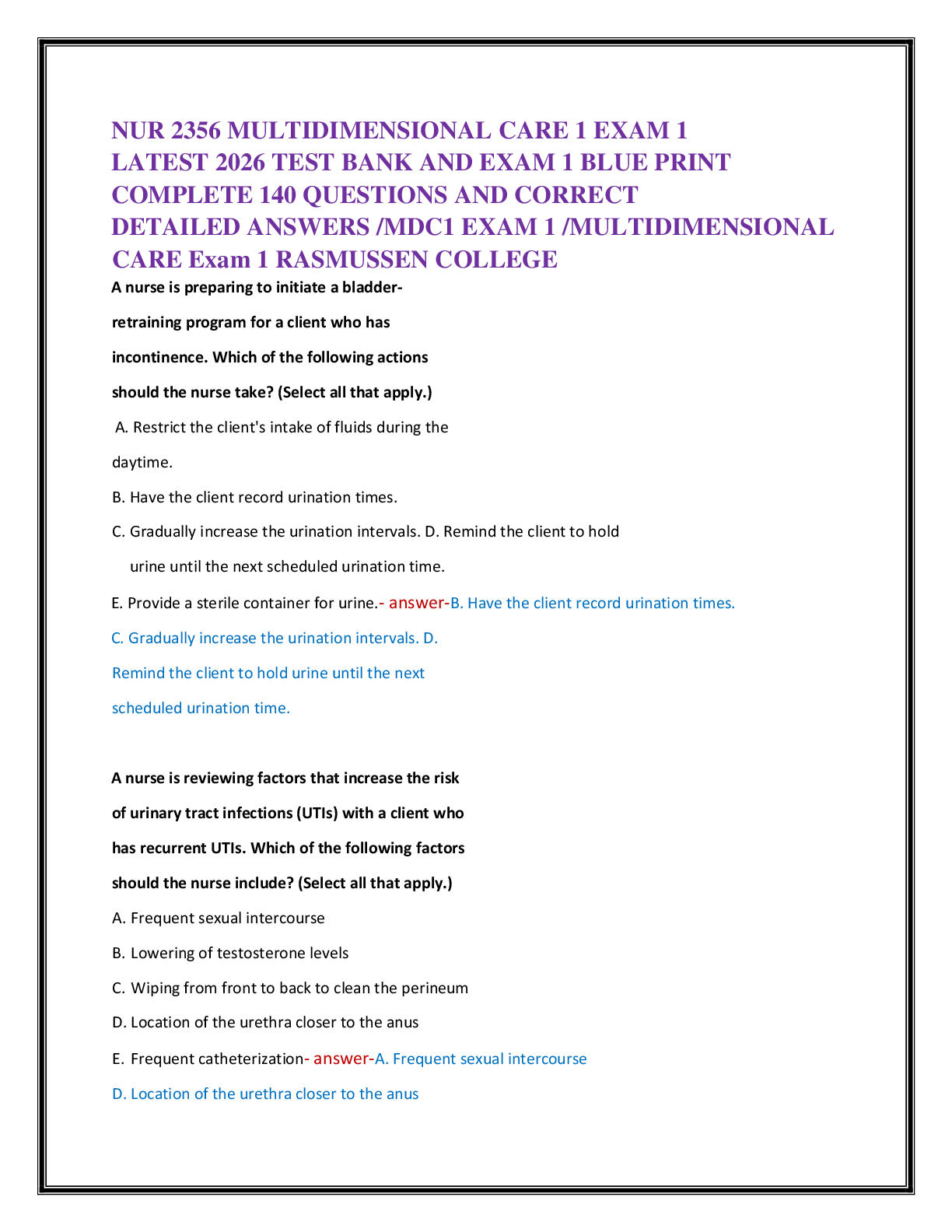
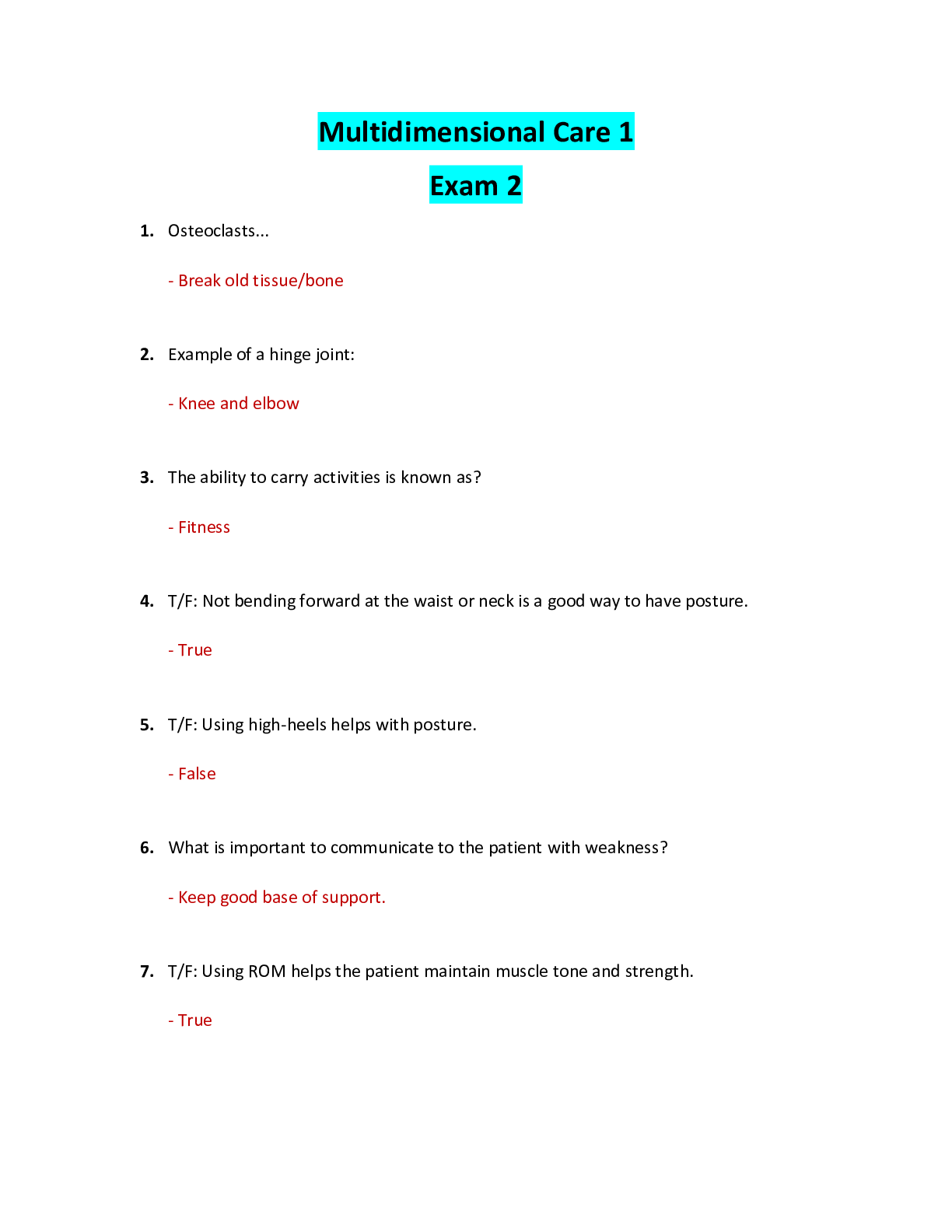
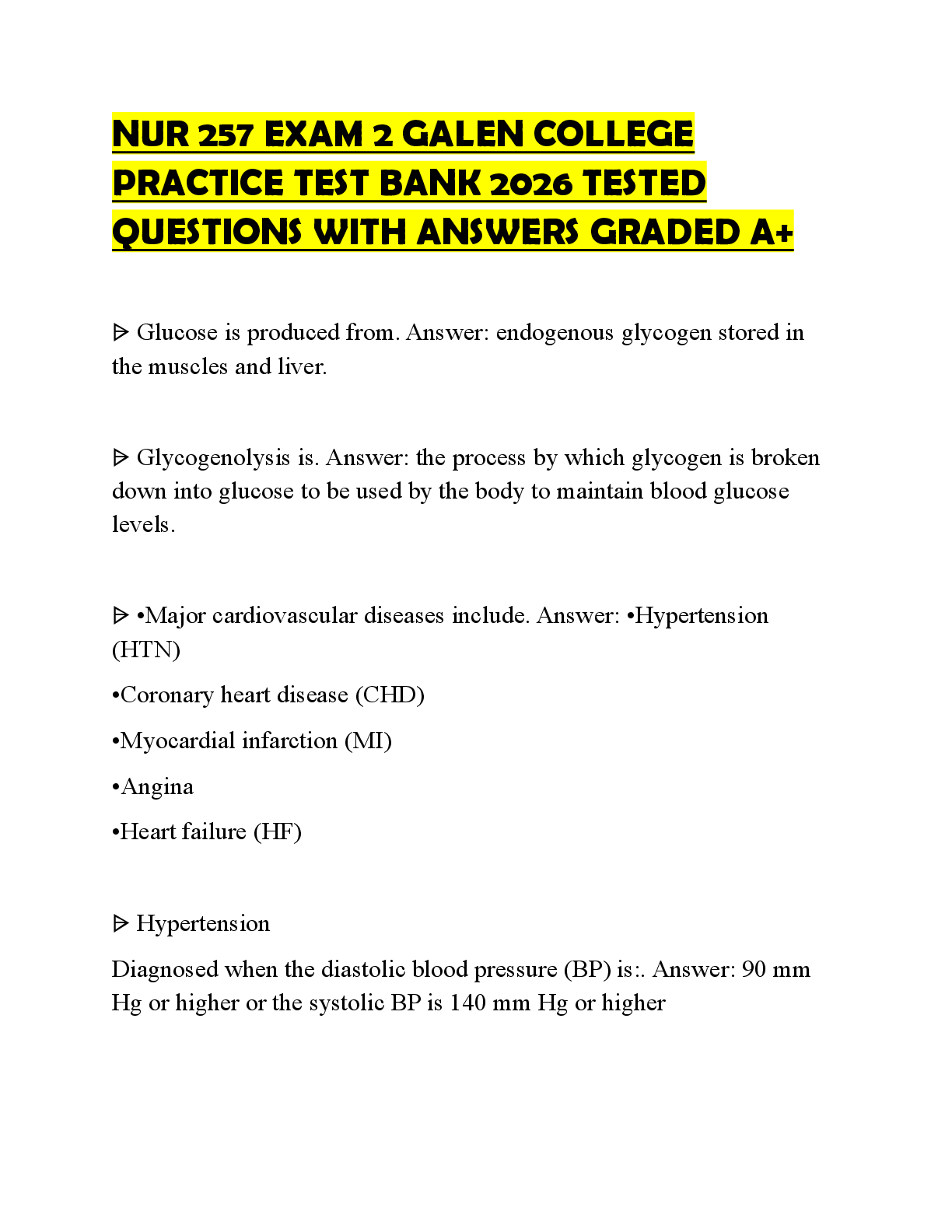
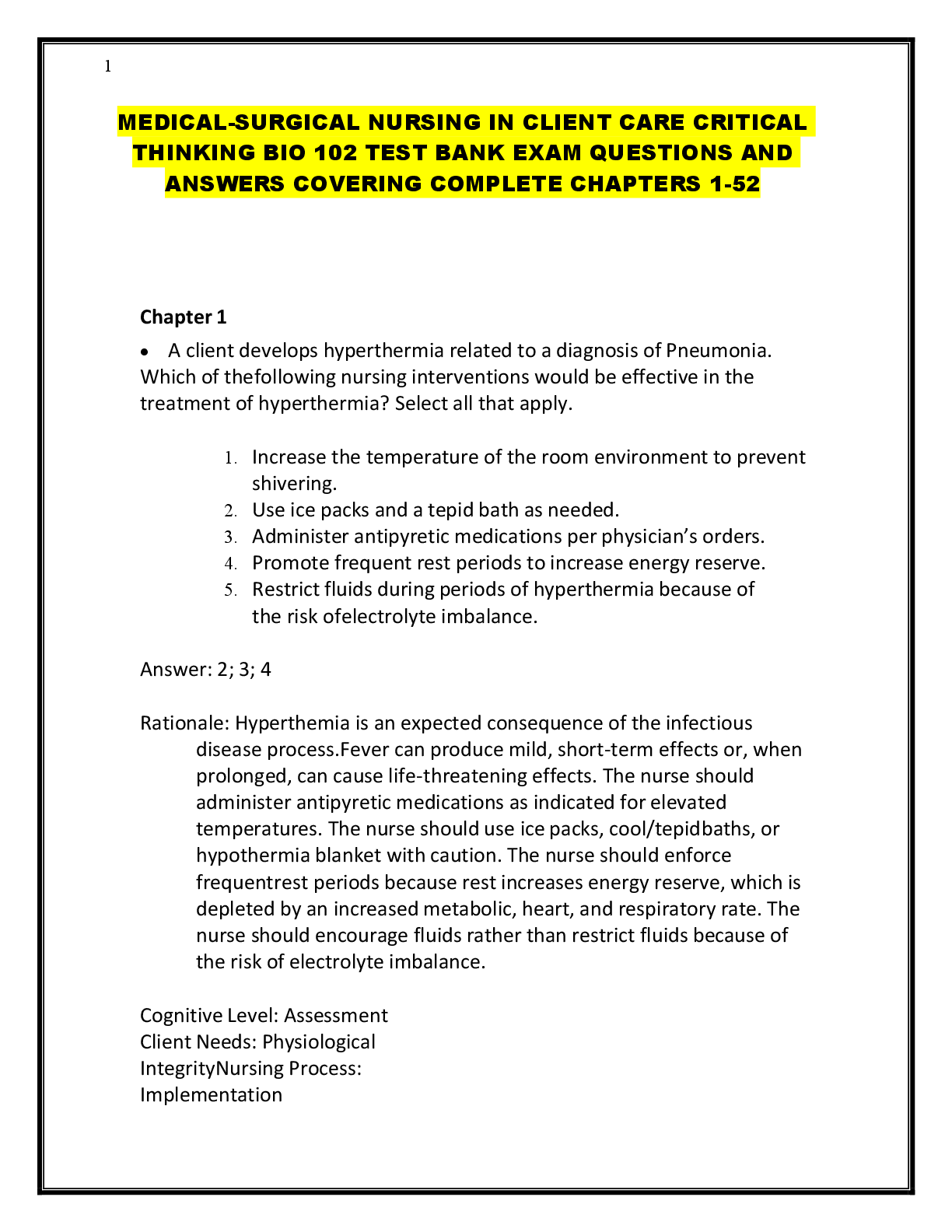
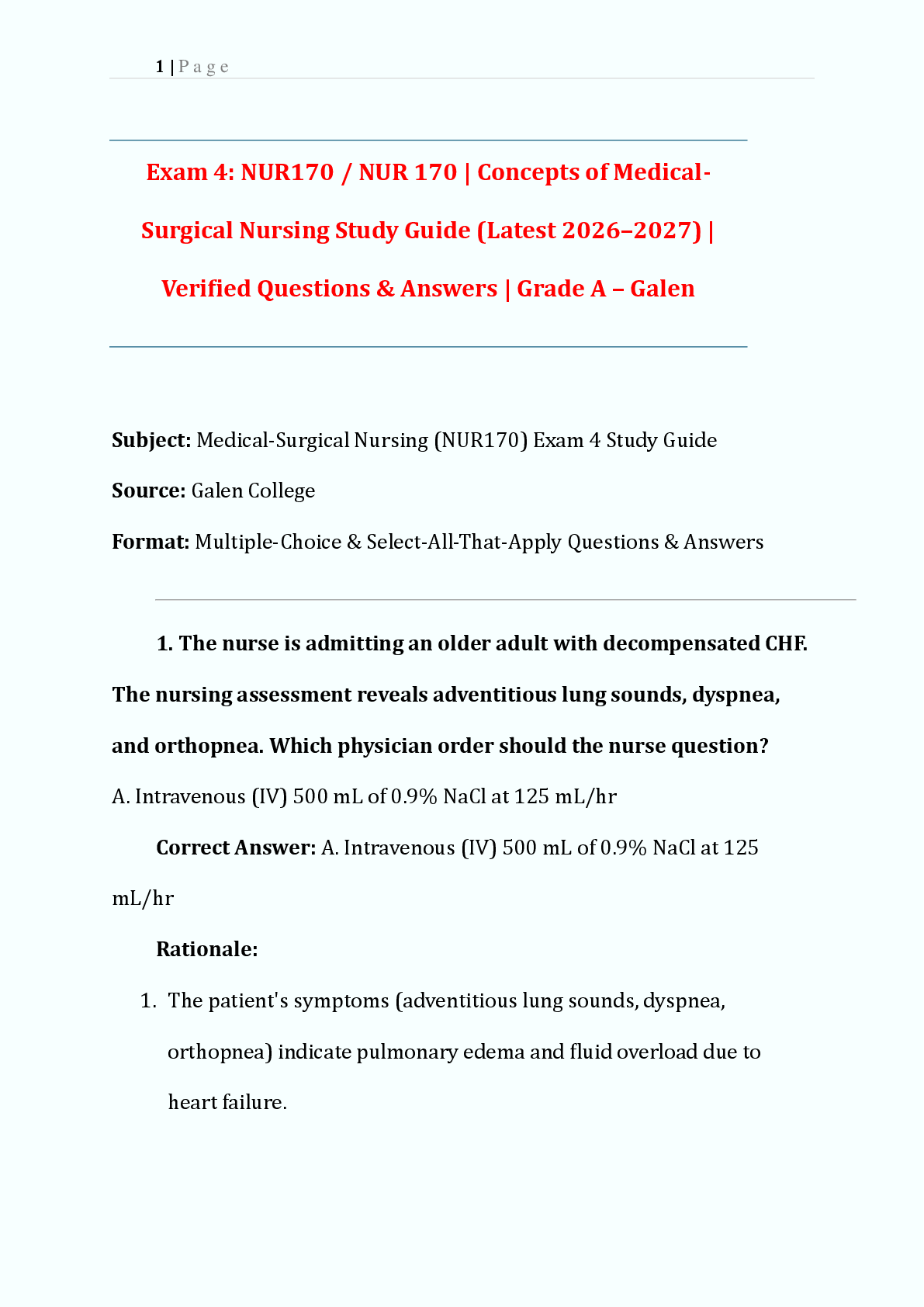
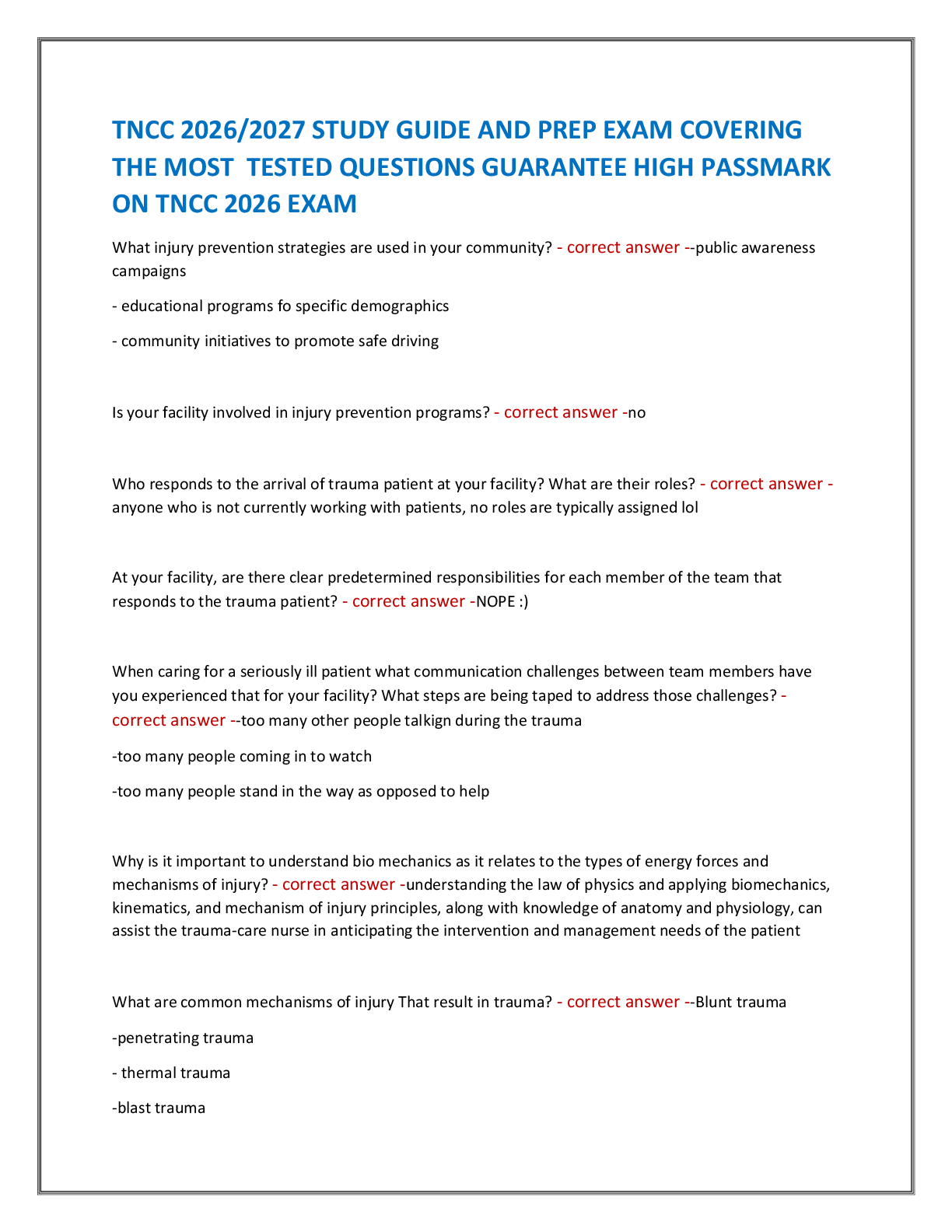
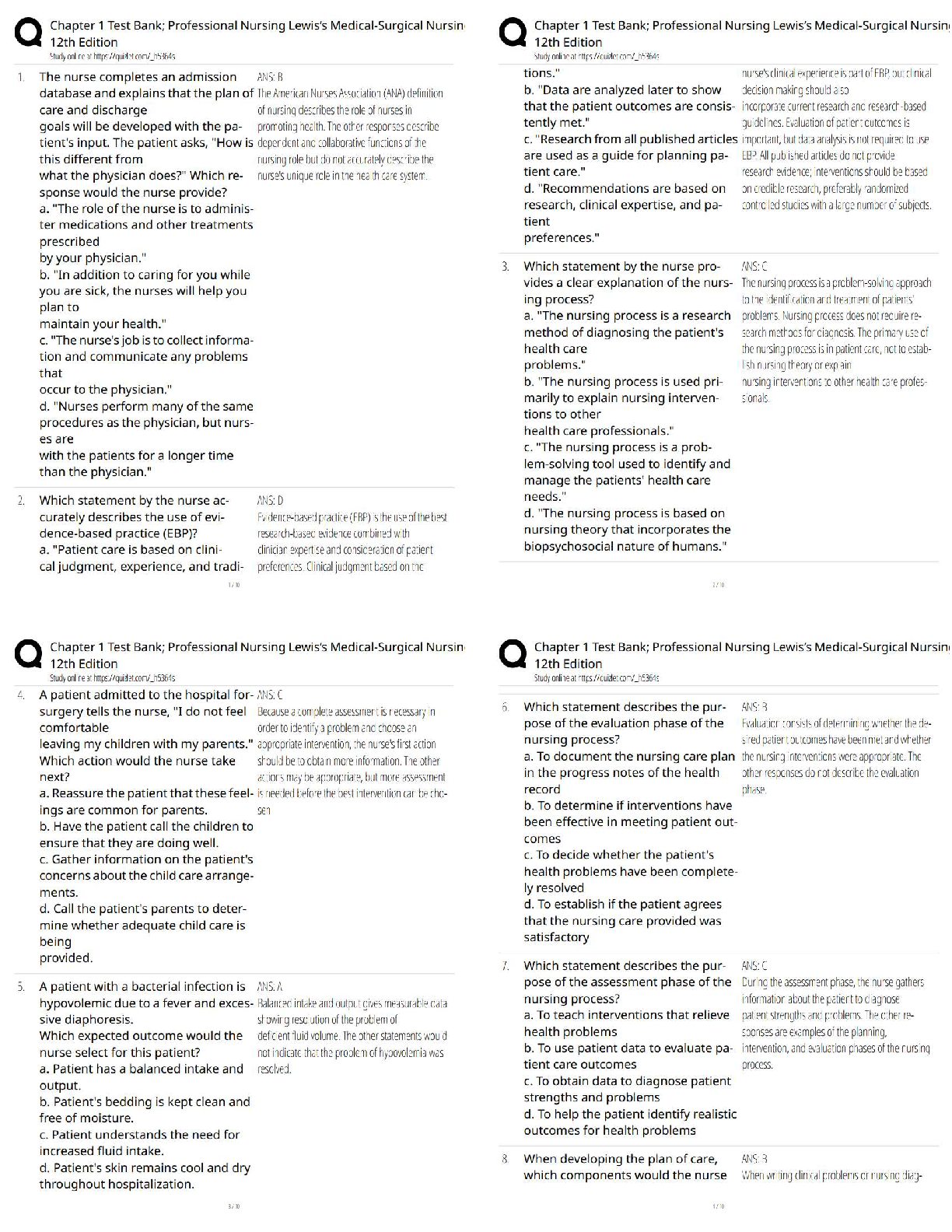
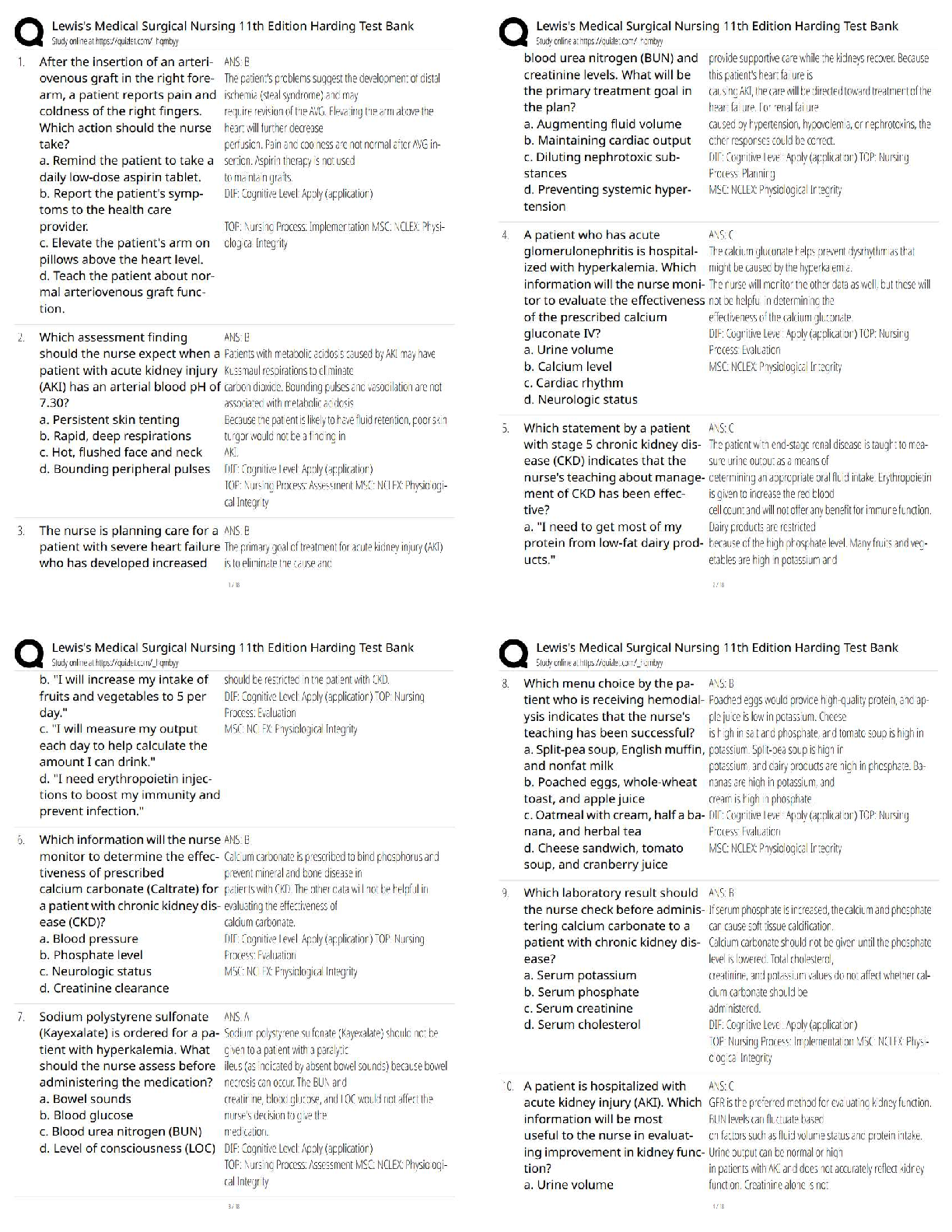
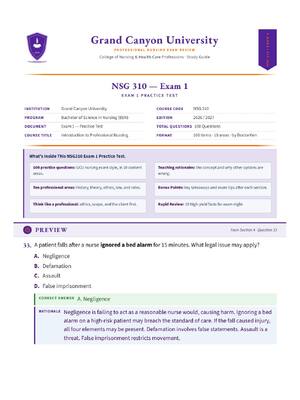
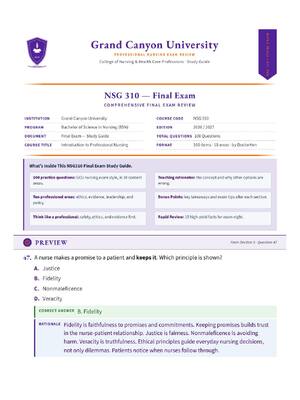
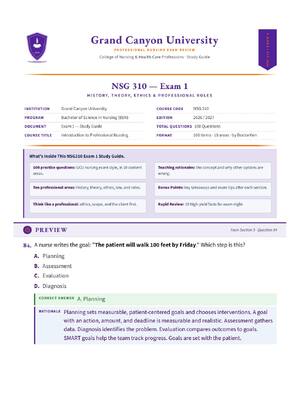
INSTANT PDF DOWNLOAD—This comprehensive final exam study guide is specifically designed for Rasmussen University nursing students preparing for the NUR 2356 / NUR2356 Multidimensional Care I (MDC 1) Final Exam for the 2025/2026 academic year. This resource contains multiple versions with 200+ expertly verified practice questions and 100% correct answers with detailed rationales to help you master core concepts and achieve a top score (Grade A+) .
This guide covers all major topics tested on the MDC 1 Final Exam, including:
Wound Healing & Skin Integrity
Primary intention healing occurs when surgical wound edges are well-approximated with sutures, resulting in minimal scarring
Serosanguineous drainage (pink, thin, watery) is expected during the inflammatory phase (post-op days 1-3)
Stage 1 pressure injury: intact skin with non-blanchable erythema over bony prominence
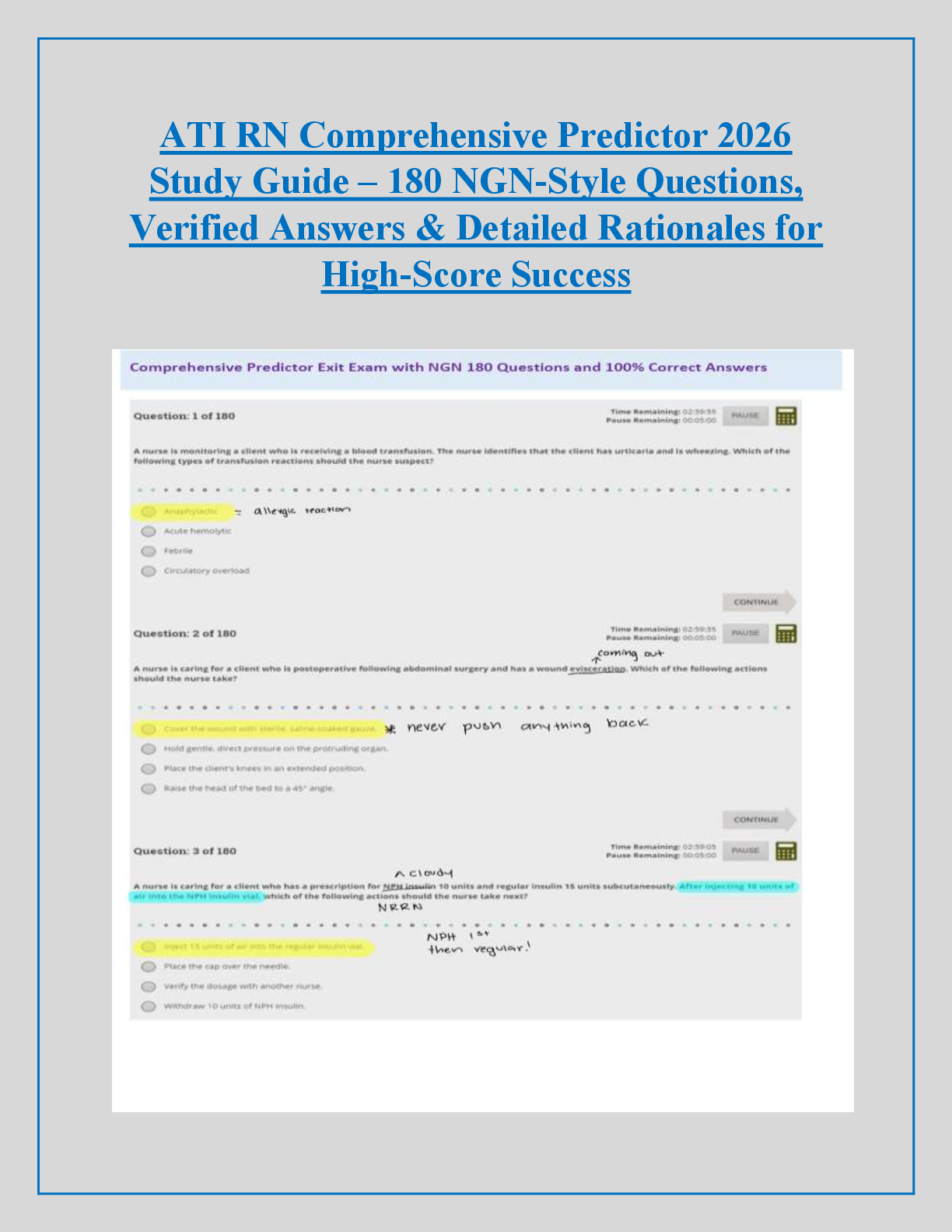
Wound evisceration (bowel protruding from incision) requires covering with sterile saline-soaked gauze and immediate provider notification
Cellulitis management includes warm, moist towel application to affected area
Infection Control & HIV/AIDS
HIV patients have lower than normal CD4+ T-cells with normal CD8+ T-cells; CD4+ count <200 indicates AIDS with opportunistic infection risk
Needlestick first action: wash/flush exposed skin with water immediately
MRSA requires contact precautions: gown and gloves (not sterile)
Active pulmonary TB requires airborne precautions: negative pressure room, N95 respirator
Connective Tissue Diseases
Rheumatoid arthritis flare-up: Positive Rheumatoid Factor (RF); adaptive devices (grab bars, reaching tools, adaptive silverware) appropriate for home safety
Osteoarthritis risk factors include female, older age, obesity, sports injuries—but NOT vegan diet
SLE priority concern: urine output of 20 mL/hour (indicates renal involvement) over butterfly rash or fatigue
Raynaud's phenomenon: cold and purple nailbeds, hands appear white; wear gloves in winter to prevent flare-ups
Fibromyalgia symptom reduction: establish regular sleep pattern
Systemic sclerosis (scleroderma): Raynaud's phenomenon is typically first symptom
Patient Safety & Emergency Response
RACE fire protocol: Rescue patients in immediate danger → Activate alarm → Confine fire (close doors) → Extinguish
PASS extinguisher technique: Pull pin → Aim at base → Squeeze handles → Sweep back and forth
Fall prevention interventions: hourly rounding, call light within reach, nonskid footwear, bed in lowest position, fall-risk assessment completion
Sentinel event: serious preventable incident that should never occur in hospital
The Joint Commission publishes National Patient Safety Goals
Perfusion & Neurovascular Assessment
Signs of adequate perfusion: bounding pulses, pink fingers, intact sensation
Signs of inadequate perfusion: cyanosis, pallor, coolness
Compartment syndrome signs: acute pain greater than severity of fracture, pins and needle sensation, weak/thready pulse
Pain Management
PQRST assessment: Palliative/Provoking, Quality, Region/Radiation, Severity, Timing
Nonverbal pain signs: increased agitation, decreased attention span, grimacing, increased heart rate
Acute pain: lasts <6 months, caused by specific event (broken bone)
Chronic pain: lasts >6 months, affects ADLs
Neuropathic pain: "pins and needles" from damaged nerves (phantom limb, diabetic neuropathy)
Therapeutic Communication
Phases: Pre-interaction (gather info before meeting), Orientation (establish rapport), Working (bulk of communication, mutual respect), Termination (evaluate progress)
Communication barriers: asking "why," offering advice, false reassurance, stereotyping, patronizing language
Nonverbal communication: facial expression, posture, gestures, touch, personal appearance
Multidimensional Care Concepts
Primary goal: addressing holistic patient needs including physical, emotional, and social well-being
Watson's Theory of Human Caring aligns with holistic multidimensional care
Spiritual care integration: offering access to clergy or prayer as requested
Complementary & Alternative Therapies
Ginkgo biloba: improves memory and cerebral oxygenation
Valerian: promotes sleep and reduces anxiety
Chamomile: anti-inflammatory and calming properties
Echinacea: enhances immunity
Mind-body therapies: guided imagery, meditation, biofeedback, art therapy, yoga
Cultural Considerations
Cultural imposition: imposing one's beliefs on another (African mother and baby sling example)
Respect religious practices: collaborate with Muslim diabetic patient fasting for Ramadan to develop client-centered care plan
Interpreter use: priority intervention for Spanish-speaking patient
DOCUMENT ACCESS:
This study guide is available as an instant digital download (PDF) immediately upon purchase. Fully text-searchable, printable, and accessible anytime through your user account. 100% satisfaction guarantee. Trusted by thousands of Rasmussen nursing students for exam preparation and mastering multidimensional care competencies .
[Show More]