INSTANT PDF DOWNLOAD—This comprehensive final exam package is specifically designed for Walden University PMHNP students preparing for the NRNP 6665 / NRNP-6665 Final Exam: Psychiatric Mental Health Nurse Practitioner Ca
...
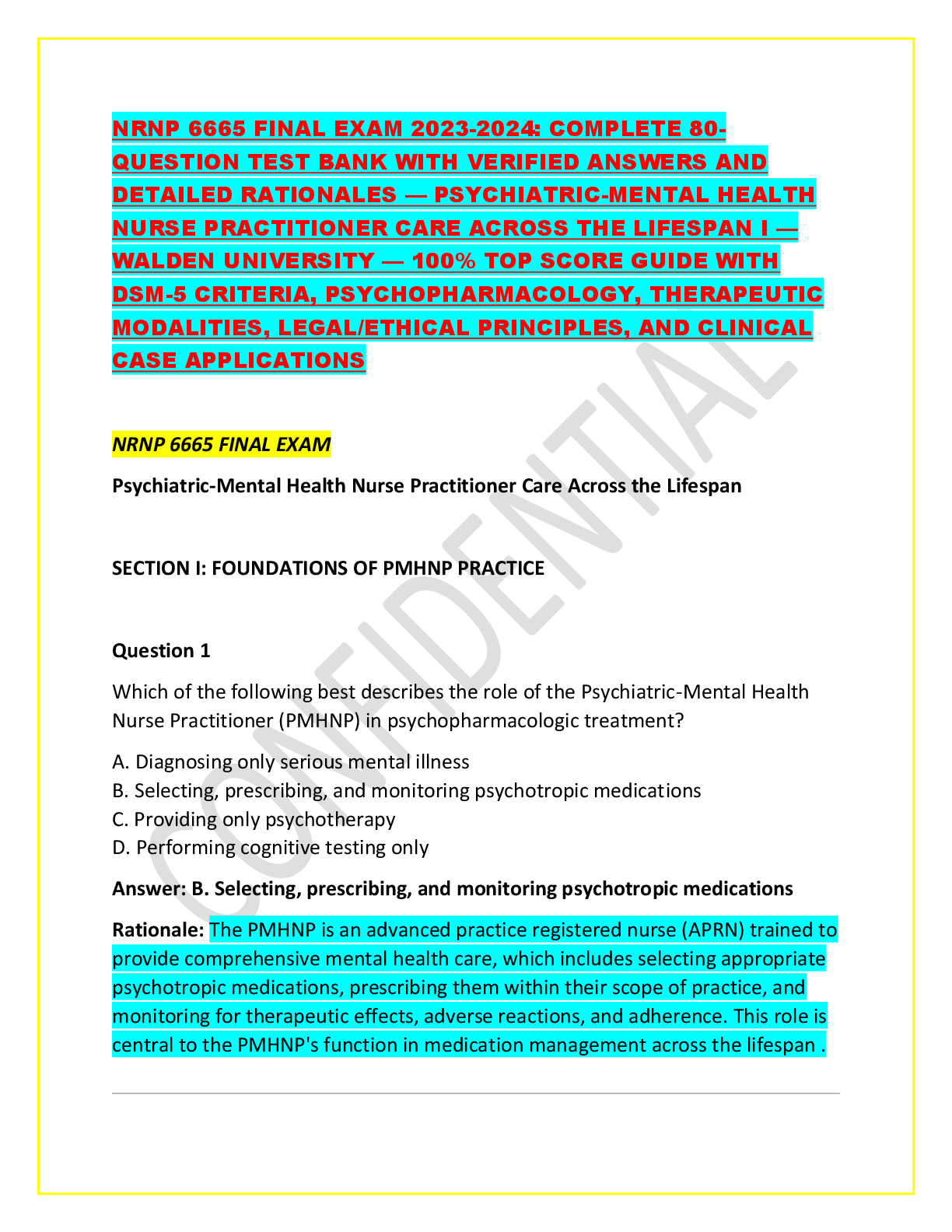
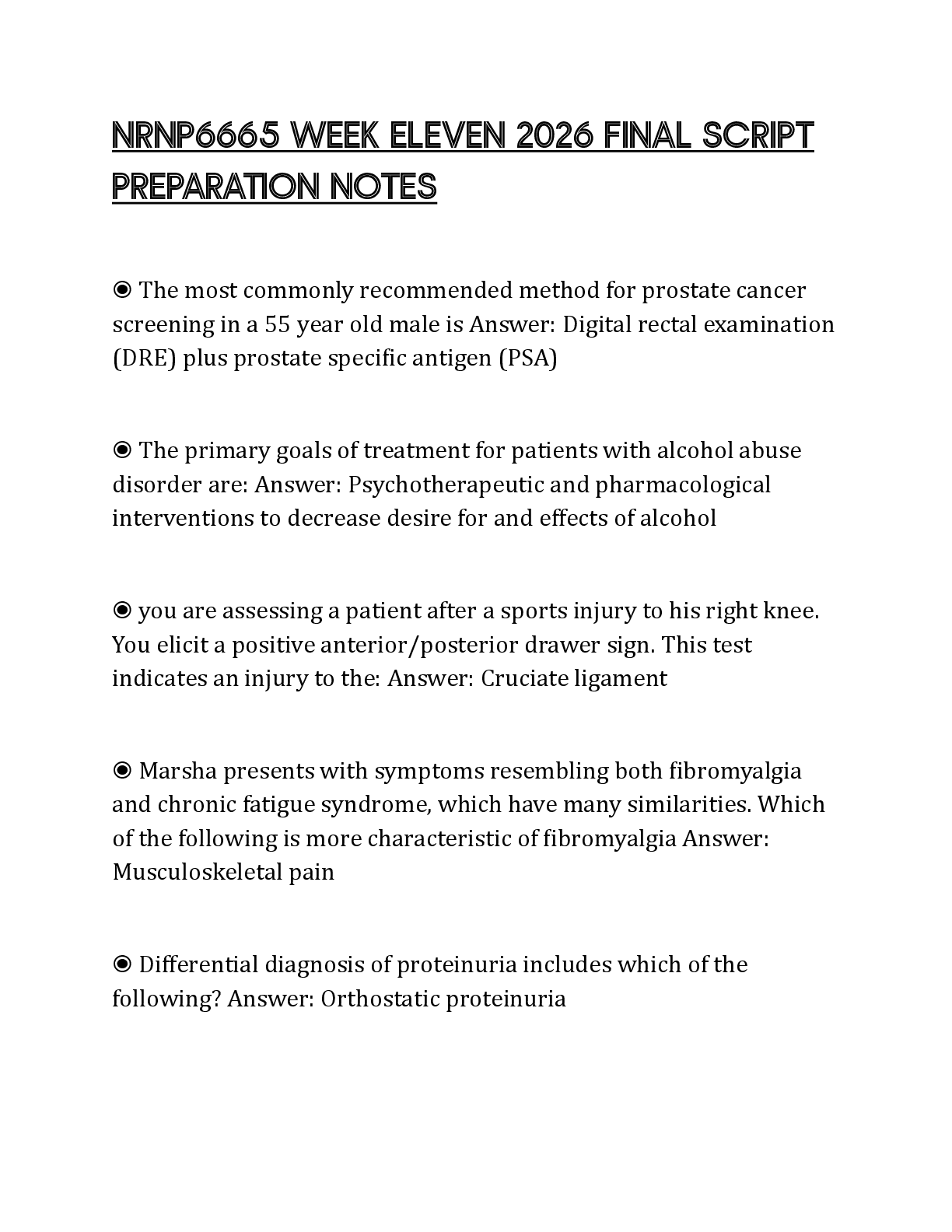
INSTANT PDF DOWNLOAD—This comprehensive final exam package is specifically designed for Walden University PMHNP students preparing for the NRNP 6665 / NRNP-6665 Final Exam: Psychiatric Mental Health Nurse Practitioner Care Across the Lifespan I for the 2025/2026 academic year . This resource contains three complete versions (A, B & C) with 100 questions per version, totaling 300+ expertly verified practice questions and 100% correct answers with detailed rationales to help you master core concepts and achieve a top score (Grade A+) .
This comprehensive test bank covers all major topics tested on the NRNP 6665 Final Exam across three versions, including:
Psychiatric Assessment & Diagnostic Tools
The Confusion Assessment Method Instrument (CAMI) is a standardized assessment tool for delirium
Delirium is specified as acute (few hours or days) vs. persistent per DSM-5
Signs of imitative dissociative identity disorder include confusion and symptoms related to stress
Under hypnosis, recovering memory of a painful experience is known as abreaction
The symptom of giving approximate answers is known as Ganser syndrome
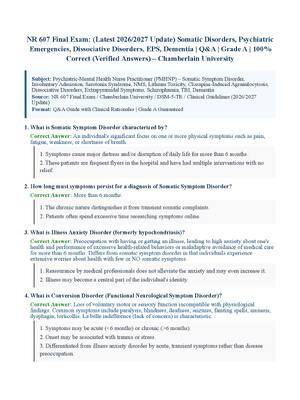
Dissociative & Somatic Symptom Disorders
Christine, a 9-year-old in foster care with multiple placements, is at high risk for attachment disorder
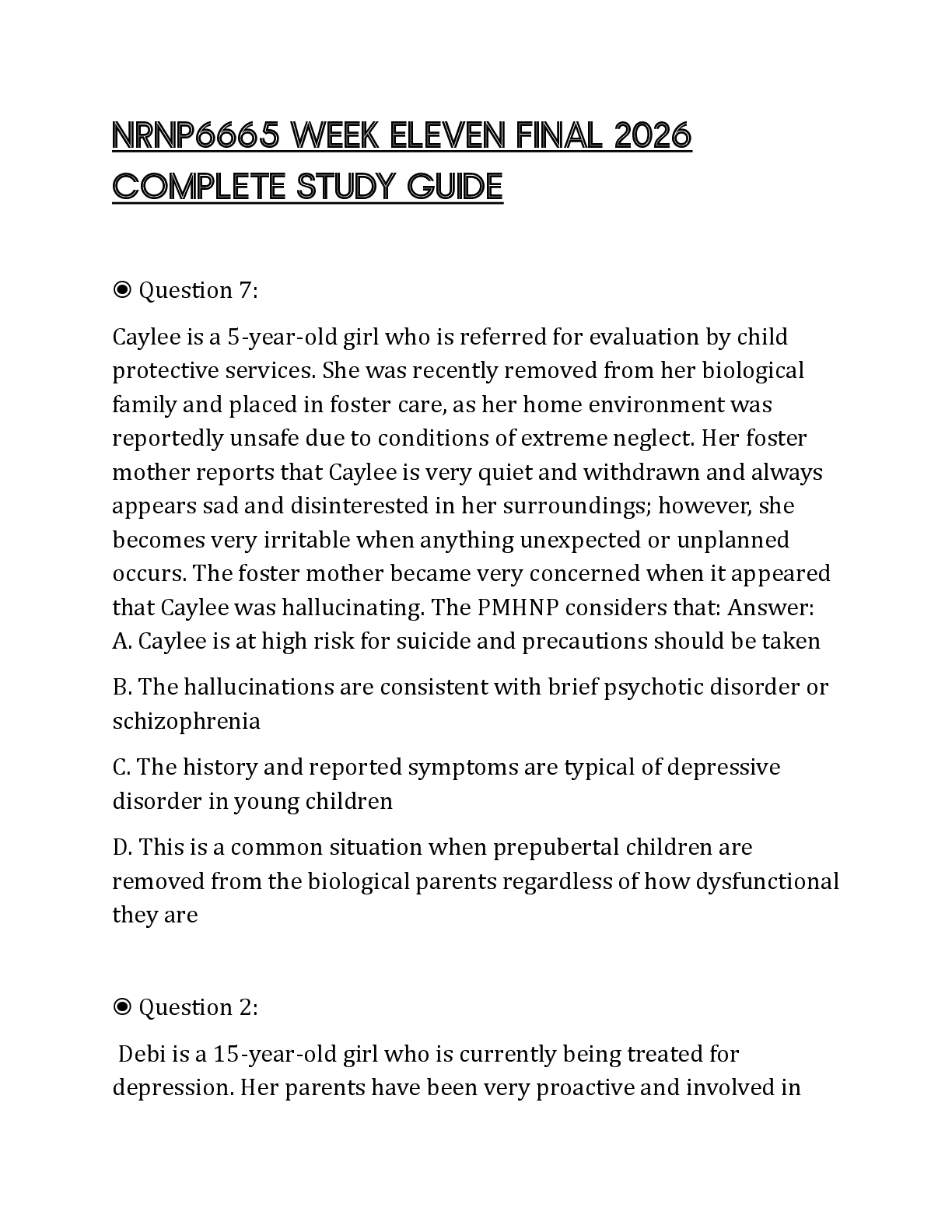
Caylee, a neglected 5-year-old who appears sad, withdrawn, and irritable with hallucinations: symptoms are typical of depressive disorder in young children
Common sensory deficits of conversion disorder include blindness and deafness
A patient expressing feelings of unreality/detachment from environment: derealization
Persistent feelings of detachment from one's self: depersonalization
Experiences of depersonalization/derealization are common in patients who use marijuana
Depersonalization and derealization are the third most commonly reported psychiatric symptom
Psychopharmacology & Medications
Agomelatine (Valdoxan): Melatonin multimodal antidepressant; agonist at melatonergic receptors, antagonist at 5HT2C receptors
Aripiprazole (Abilify): Atypical antipsychotic; "dopamine stabilizer"; side effects include insomnia, akathisia
Brexpiprazole (Rexulti): Atypical antipsychotic for depression
Bupropion (Wellbutrin): Antidepressant and smoking cessation aid
Clomipramine (Anafranil): TCA; FDA approved for pediatric OCD (ages 10+)
Cyamemazine (Tercian): Typical antipsychotic of phenothiazine class
Desipramine (Norpramine): TCA; norepinephrine reuptake inhibitor
Desvenlafaxine (Pristiq): SNRI; FDA approved for MDD
Risperidone (Risperdal): Atypical antipsychotic; EPS (dose-dependent), TD, significant PRL increases
Atomoxetine (Strattera): Black box warning for suicidal ideation; contraindicated in glaucoma, pheochromocytoma, MAOI use within 14 days; severe hepatotoxicity warning
Neurocognitive Disorders & Dementia
Medications used in Parkinson's disease dementia/psychosis include Nuplazid, Rivastigmine, and off-label Olanzapine; Memantine is used for Alzheimer's disease
A frontotemporal dementia with onset in fifth-sixth decade, more common in men, with personality change and cognitive decline: Pick's Disease
First-line therapy for dementia with behavioral disturbance: non-pharmacological interventions
A patient with Alzheimer's accusing family of plotting: educate that delusions are part of the disease process
Impulse Control & Disruptive Disorders
Fascination with fire, recurrent deliberate fire-setting: pyromania
Biological factors associated with kleptomania: brain disease, cortical atrophy, enlarged lateral ventricles
Discrete episodes of losing control of aggressive impulses grossly out of proportion: intermittent explosive disorder
MRI findings in intermittent explosive disorder may reveal changes to prefrontal cortex
Factors That Lower Impulse Control
Fatigue, incessant stimulation, and psychic trauma can all lower a person's resistance to control impulses
Psychosomatic Medicine Classification
Schizophrenia in a patient with end-stage renal disease: psychiatric symptoms secondary to a medical condition
Acute withdrawal from alcohol: medical complications of psychiatric conditions or treatments
Depression secondary to interferon treatments: psychiatric complications of medical conditions and treatments
Child & Adolescent Psychiatry
Debi, a 15-year-old with depression in remission: advise that 20-40% of adolescents with MDD will develop bipolar I within 5 years
Mean length of major depressive episode in adolescents: 4 months
Anticipatory guidance for 6-month-old parent: all the above (give attention, attune to needs, provide supervised time for crawling/sitting/rolling)
Autism spectrum disorder is four times more common in boys than girls
Ethics & Confidentiality
Informed consent for minors: ethics are clear that parents are generally considered to have the right to consent for children
The right of consent to treatment belongs to the parents, not the individual child/adolescent of minor age
Transgender Health
Donna, a 16-year-old transgender female starting hormone therapy: advise that sterility is a probable consequence of hormone therapy
Gonadotropin-releasing hormone has no role in adult transgender management but is used in adolescents
DOCUMENT ACCESS:
This test bank is available as an instant digital download (PDF) immediately upon purchase. Fully text-searchable, printable, and accessible anytime through your user account. 100% satisfaction guarantee. Trusted by thousands of Walden PMHNP students for final exam preparation and mastering psychiatric mental health nurse practitioner competencies across the lifespan .
[Show More]






.png)