INSTANT PDF DOWNLOAD—This comprehensive study guide is specifically designed for University of West Florida (UWF) students preparing for Exam 1 in EDF 6226 / EDF6226: Applied Behavior Analysis for the 2026/2027 academic
...
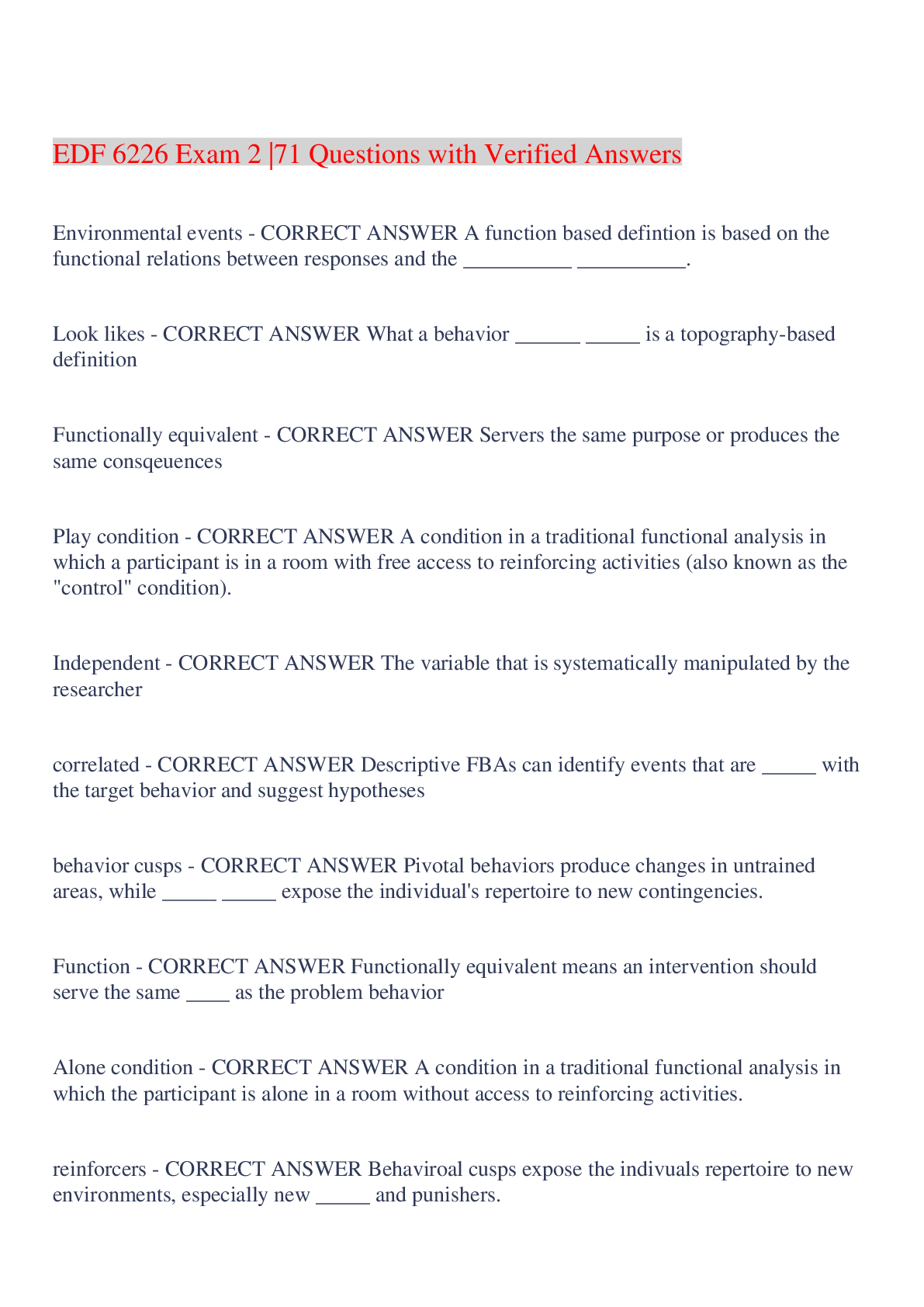
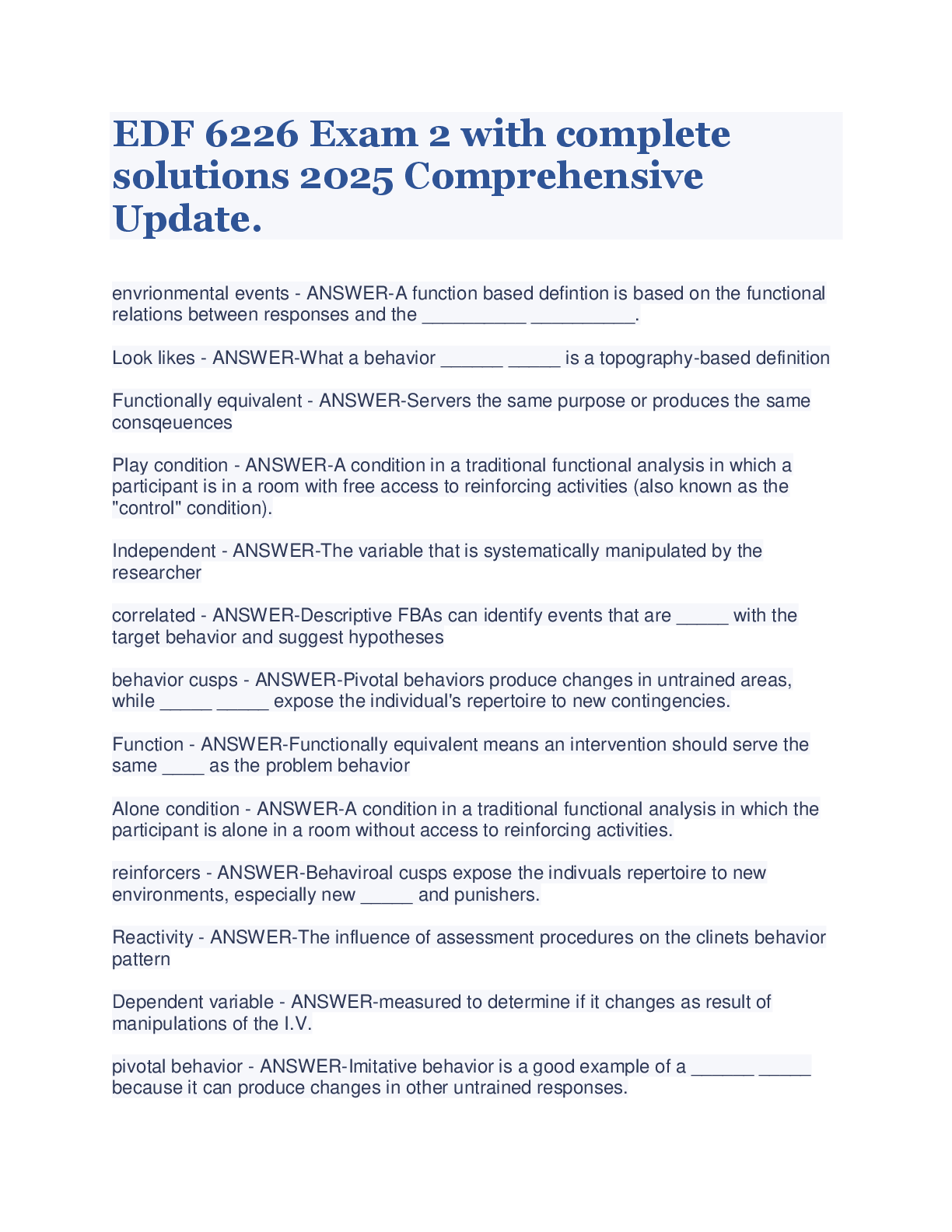
INSTANT PDF DOWNLOAD—This comprehensive study guide is specifically designed for University of West Florida (UWF) students preparing for Exam 1 in EDF 6226 / EDF6226: Applied Behavior Analysis for the 2026/2027 academic year. Based on verified exam materials from top-selling student resources , this 43+ page resource contains expertly verified practice questions and 100% correct answers with detailed rationales to help you master core ABA concepts and achieve a top score (Grade A+) .
This comprehensive guide covers all major topics tested on Exam 1 across 43+ pages with rationales :
Foundations of ABA & Scientific Attitudes: Determinism (the world is a lawful and orderly place) , Empiricism (objective observation of phenomena) , Parsimony (relying on simplest theory) , Philosophic Doubt (continually questioning truth) , Replication (repeating essence of research) , and Selectionism (selection by consequences) .
Behavioral Assessment: Purposes include determining if behavior analytic services are needed, ensuring social significance, identifying target behaviors, creating effective functions, preventing challenging behaviors, and decreasing reliance on default technologies . The five phases: Screening, Defining and Quantifying Problems, Pinpointing Target Behaviors, Monitoring Progress, and Follow-Up .
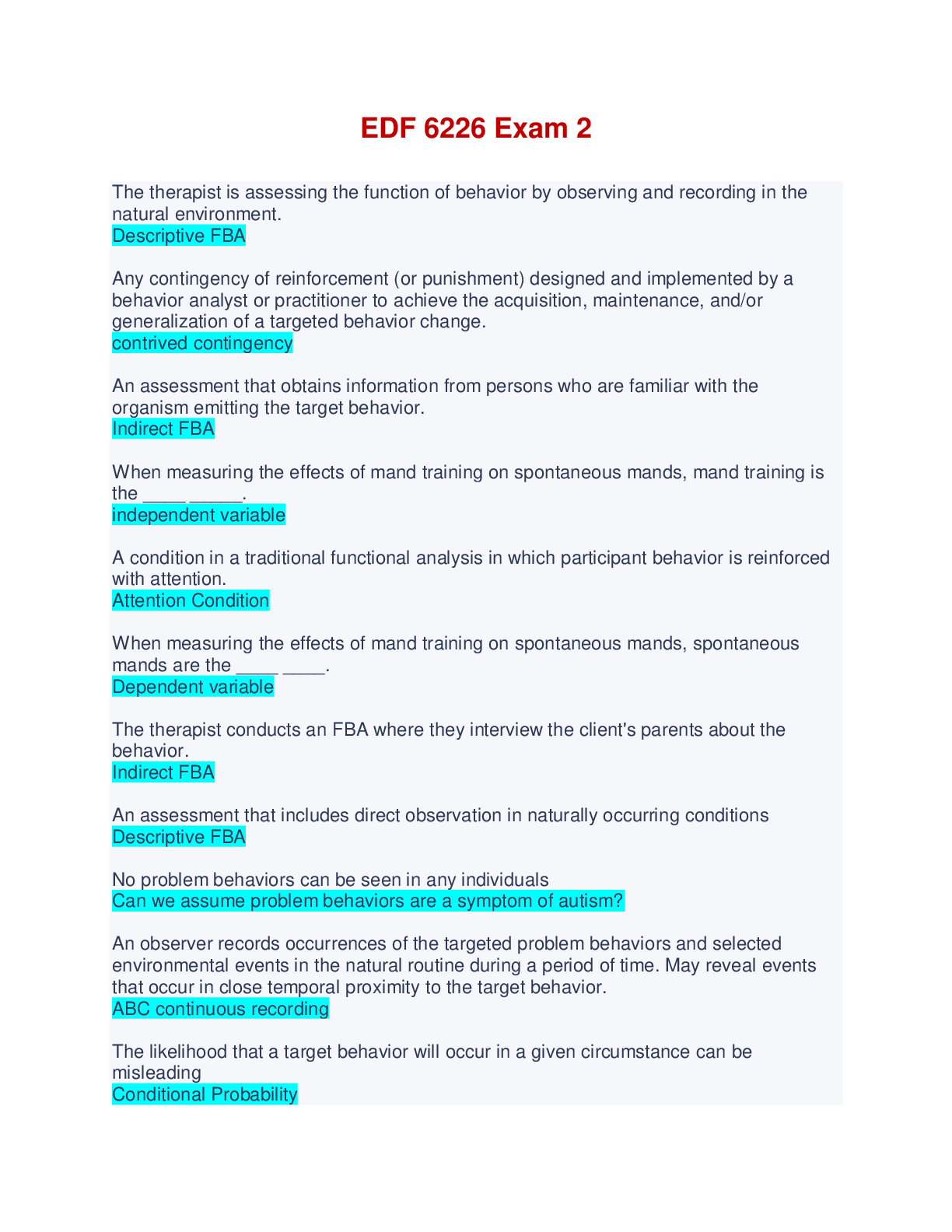
Assessment Methods: Indirect FBA (interviews, checklists, rating scales with stakeholders) ; Descriptive FBA (direct observation in naturally occurring conditions) ; Functional Analysis (experimental manipulation of antecedents and consequences) . Reactivity occurs when the observer's presence affects behavior .
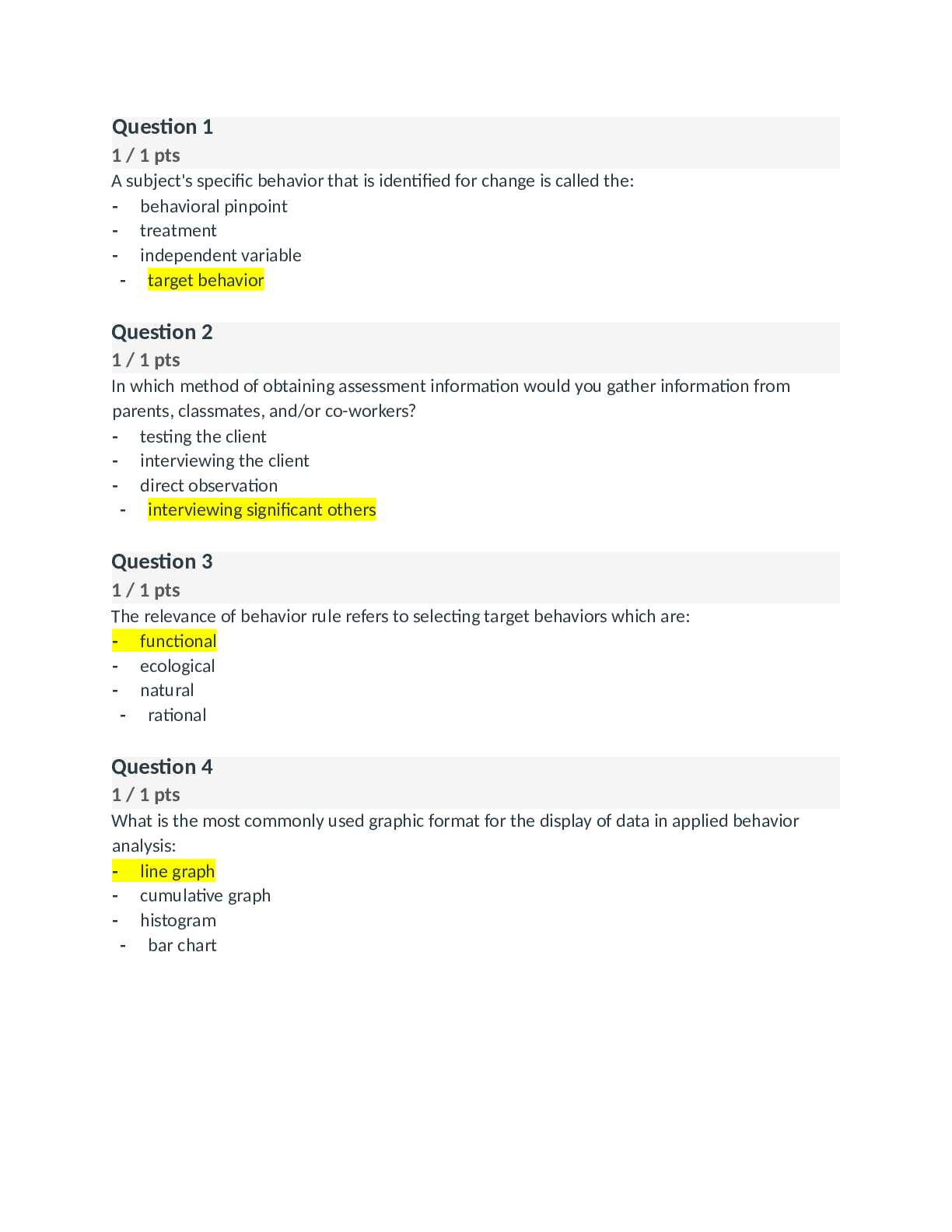
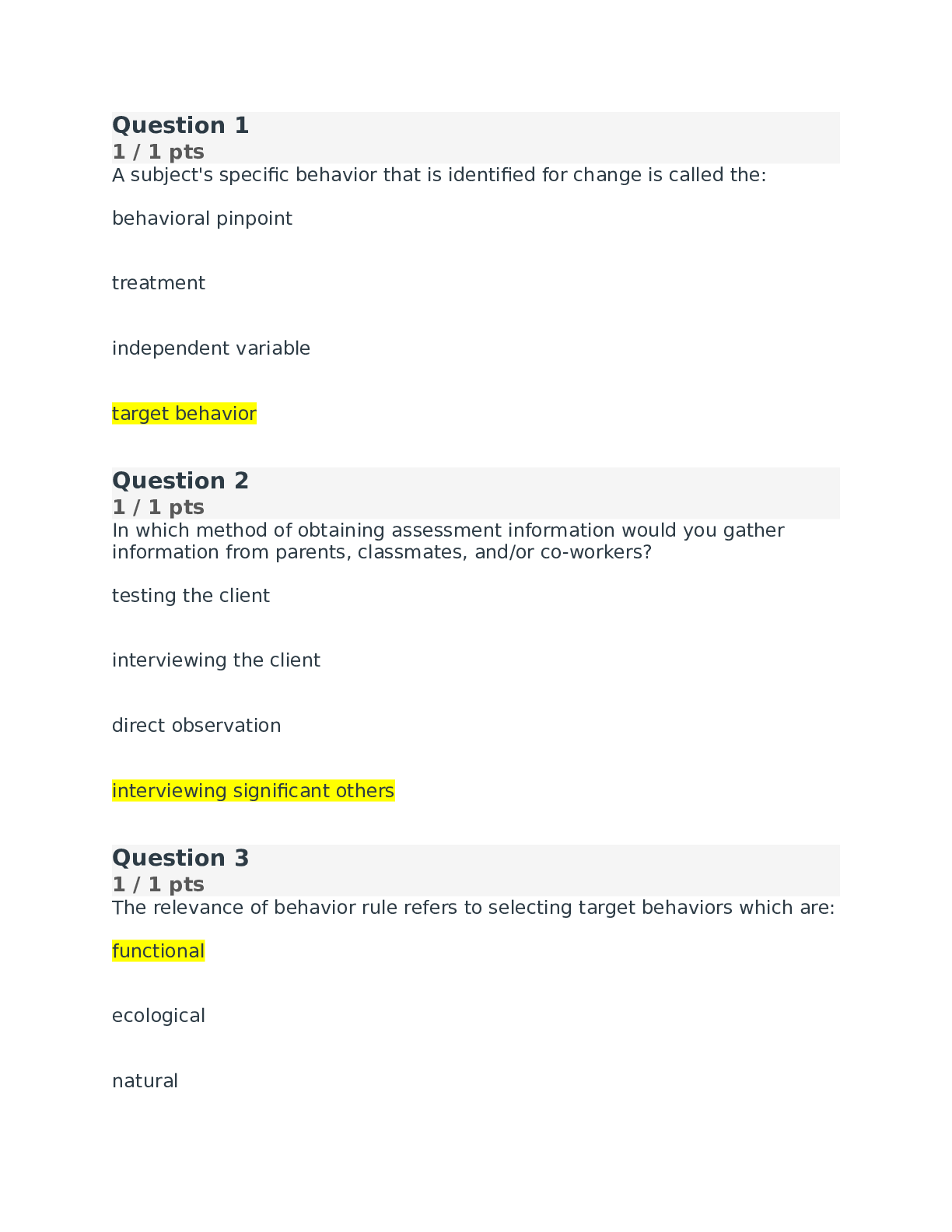
Target Behavior Selection: The Relevance of Behavior Rule states that only behaviors likely to produce reinforcement in the client's natural environment should be targeted . Behavior Cusp opens access to new environments and reinforcers (e.g., reading, walking) . Pivotal Behavior leads to improvement in other untrained behaviors (e.g., imitation) . Weight loss is not an appropriate target behavior—it is a direct effect of other behaviors .
Graphing & Data Analysis: The line graph is most common with a 2:3 aspect ratio . The bar graph displays discrete sets of unrelated data . The Standard Celeration Chart (SCC) demonstrates frequency over time . The scatterplot identifies time patterns of behavior . The cumulative record records cumulative responses .
Baseline Logic & Experimental Control: Prediction anticipates future behavior; Verification shows behavior returns to baseline without intervention; Replication demonstrates similar outcomes when intervention is reintroduced . Steady state responding means behavior is stable and does not change over time . A functional relation exists when changes in the dependent variable are related to manipulations of the independent variable .
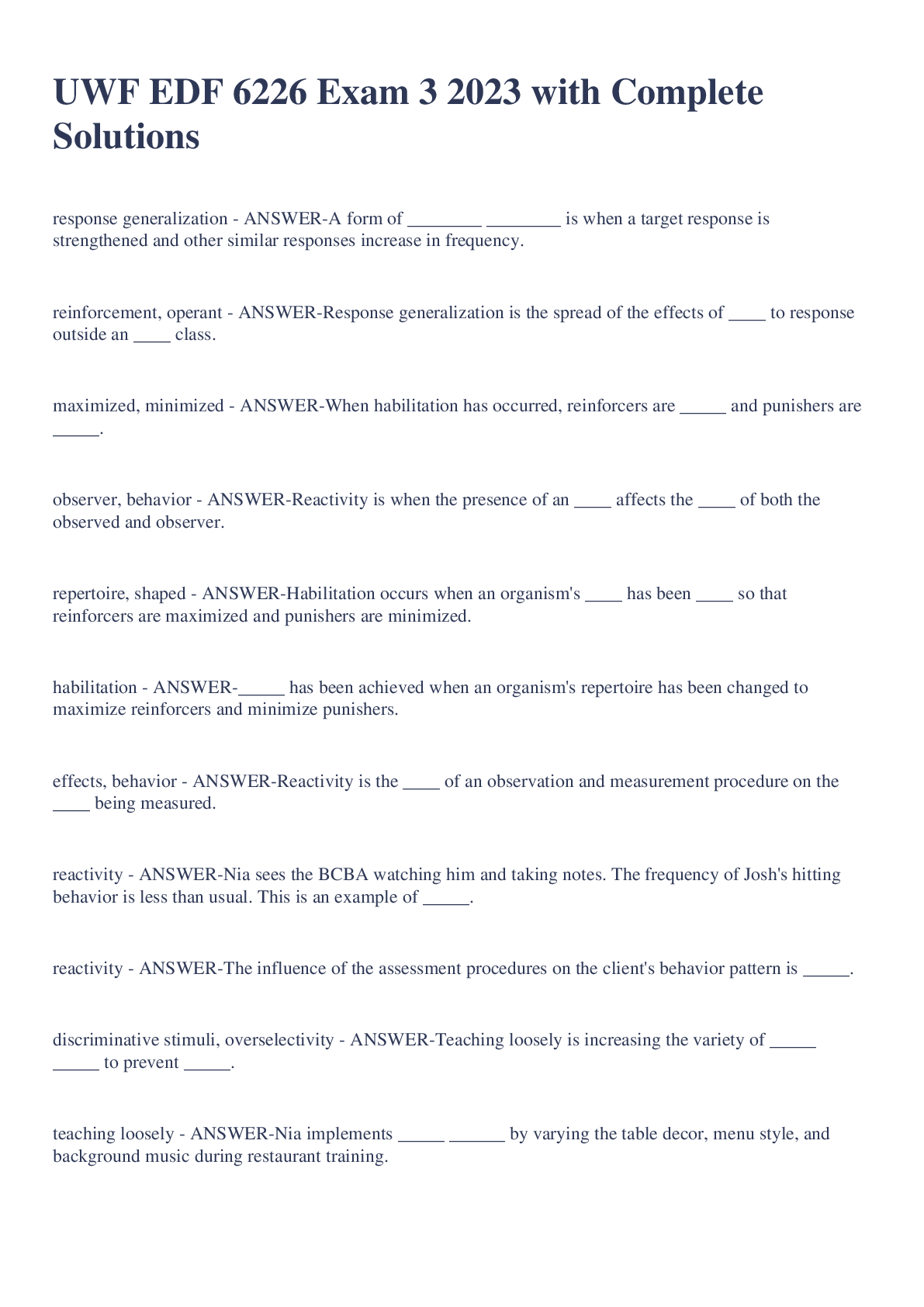
Generalization: Response Maintenance is continued performance after intervention is withdrawn . Setting/Situation Generalization occurs when behavior emits in settings differing from instruction . Response Generalization involves untrained functionally equivalent responses . Key strategies include Teach Enough Examples, Multiple Exemplar Training, Teaching Loosely, and Indiscriminable Contingencies .
Sample Questions Include :
"Sally is observing a new client, Michael. Every time she comes in the room, he puts his head down. She is possible experiencing an effect known as:" → Reactivity (the observer's presence affects the client's behavior) .
"Margo distributed several questionnaires to her new client's teachers. What assessment method is she using?" → Indirect assessment (information obtained from others, not direct observation) .
"When considering a target behavior, Fernando selects one that will expose the individual to new environments, including reinforcers and punishers. Best name for this?" → Behavior cusp (opens access to new contingencies) .
"Sam's target behavior was 'lose weight'. What response should the BCBA provide?" → Weight loss is a direct effect of other behaviors and not appropriate as a target behavior .
"Michelle wants to compare the same behavior of two or more participants. Her best option would be:" → Line graph .
"What is the approximate proportion of the horizontal and vertical axis?" → 2:3 .
"What is the Relevance of Behavior Rule?" → A target behavior should be selected only when it will likely produce reinforcement in the person's natural environment .
"What does a steady state of responding mean?" → Behavior that is stable and does not change over time .
All questions include complete rationales based on current behavior analysis standards and UWF curriculum requirements.
DOCUMENT ACCESS:
This study guide is available as an instant digital download (PDF) immediately upon purchase. Fully text-searchable, printable, and accessible anytime through your user account. 100% satisfaction guarantee. Trusted by thousands of UWF students for exam preparation and mastering applied behavior analysis competencies .
[Show More]