NURSING > STUDY GUIDE > NURS6521 / NURS 6521 Midterm Exam Study Guide (Latest): Advanced Pharmacology - Walden University (All)
NURS6521 / NURS 6521 Midterm Exam Study Guide (Latest): Advanced Pharmacology - Walden University
Document Content and Description Below
Last updated: 7 months ago
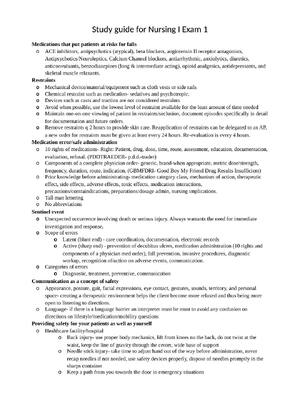
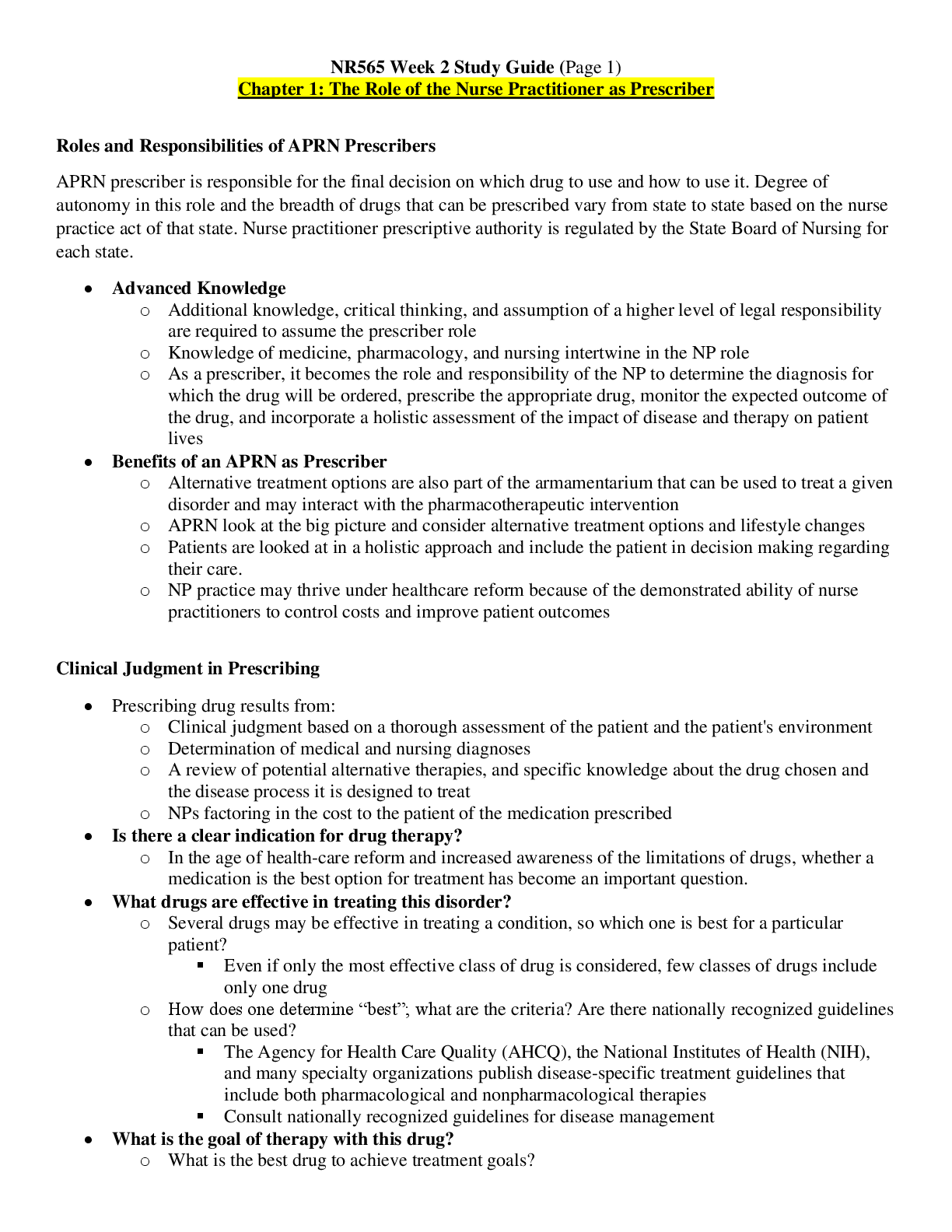
Preview 1 out of 20 pages
Instant download

Buy this Document to get the Full Access Instantly
Provided by Students Who Aced it
We Verify Document Content to Gurantee Accuracy
Reviews( 0 )
Document information
Connected school, study & course
About the document
Uploaded On
Apr 27, 2021
Number of pages
20
Written in
All

Additional information
This document has been written for:
Uploaded
Apr 27, 2021
Downloads
0
Views
198
Topic Tags
Recommended For You
Get more on STUDY GUIDE »
2026 NURS 6521 Week 11 Final Exam / NURS6521 Week 11 Final Exa...

NURS6521 Advanced Pharmacology Final 100 QUESTIONS AND 100% C...

NURS 6521N Advanced Pharmacology, NURS 6521N, Walden Universit...

NURS 6521N Advanced Pharmacology, NURS 6521N, Nursing Program,...

NURS 6521N 55 Advanced Pharmacology 2020 FINAL EXAM [101 Quest...

Walden University NURS 6521N Final Exam Pharma 2020 (101 Quest...

NURS 6521 Final Exam Version 1, Version 2, Version 3, Version...
NURS 6521 Week 4 Assignment: Advanced Pharmacology Patient...
AComprehensiveNURS65216521NMidterm ExamStudyGuide. 100%Guidedw...
NURS 6521N Advanced Pharmacology Test Bank – Q & A with Ration...
NURS 6521 Week 4 Assignment: Advanced Pharmacolog y Patien...
HESI A2 REVIEW Anatomy and Physiology, HESI A2 Science, HESI A...
NSG 3500 Exam 3 Testbank – Comprehensive Nursing Practice Ques...
STUDY GUIDE for Lehne's Pharmacology for Nursing Care 12th Edi...
NUR 265 Exam 4 – Advanced Medical-Surgical Nursing Questions,...
NR566 Week 5 Study Guide Chapter 18: Drugs Affecting the Hemat...
Solutions Manual for Organic Chemistry 9th Edition by John McM...


.png)
.png)