Prometric
Exam
Collection 2020
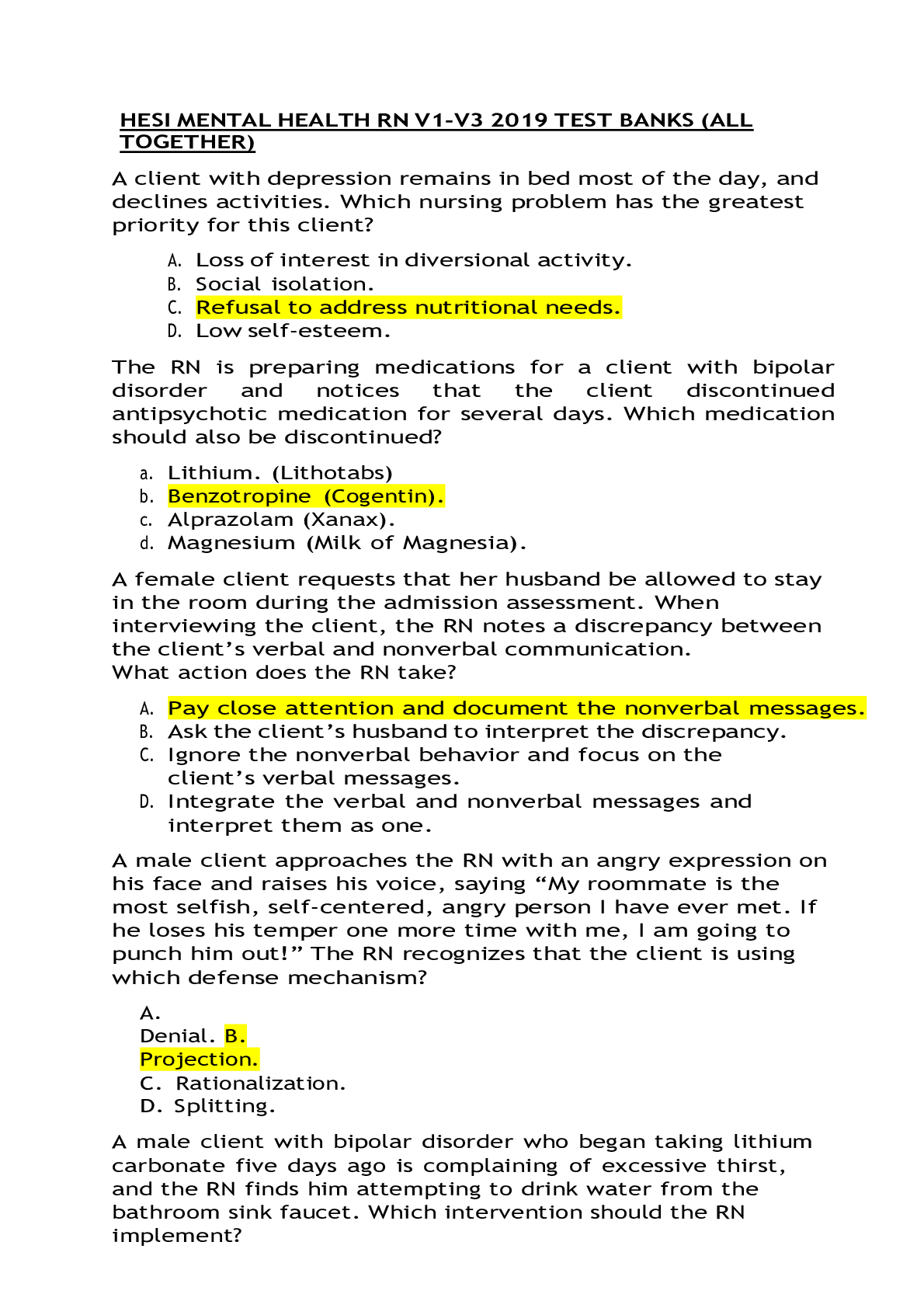
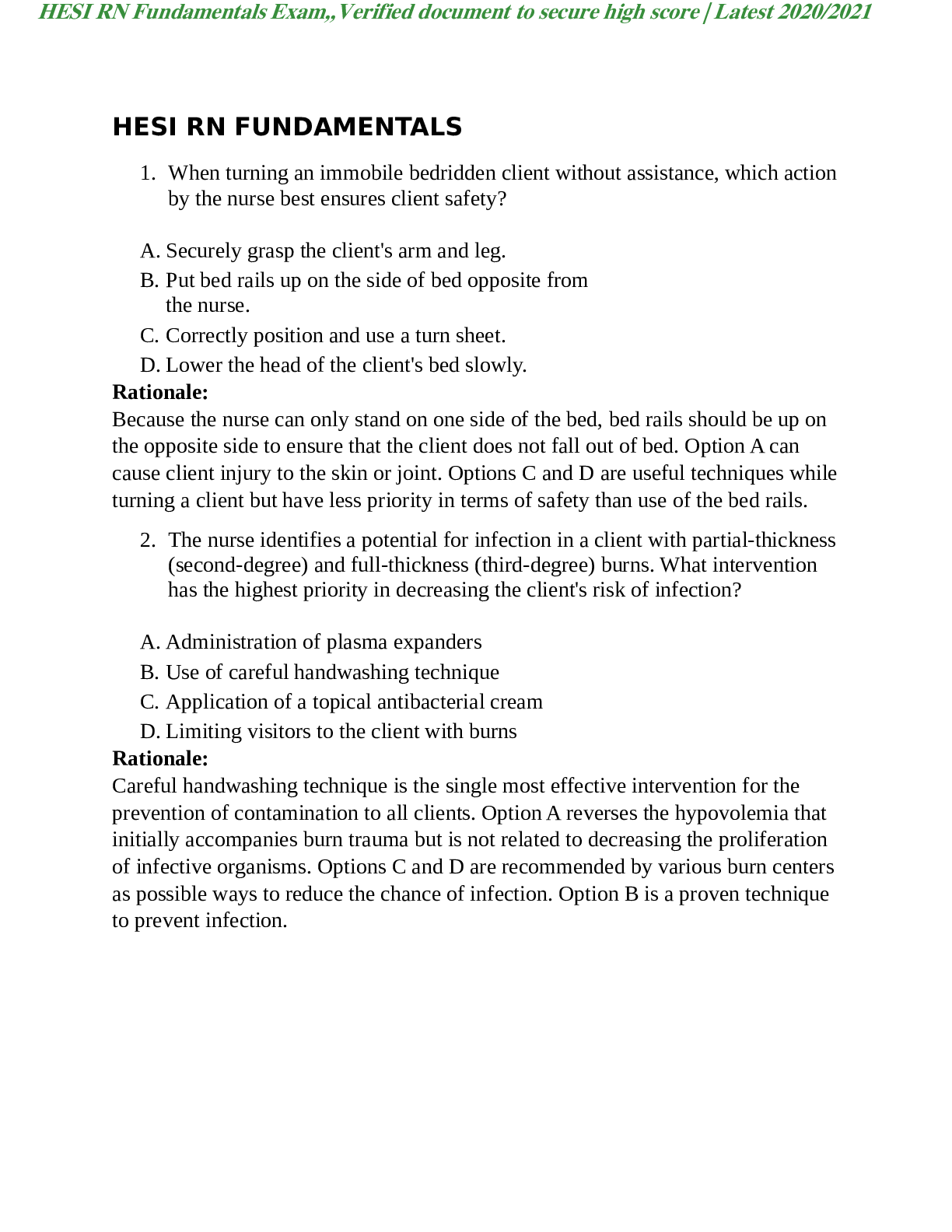
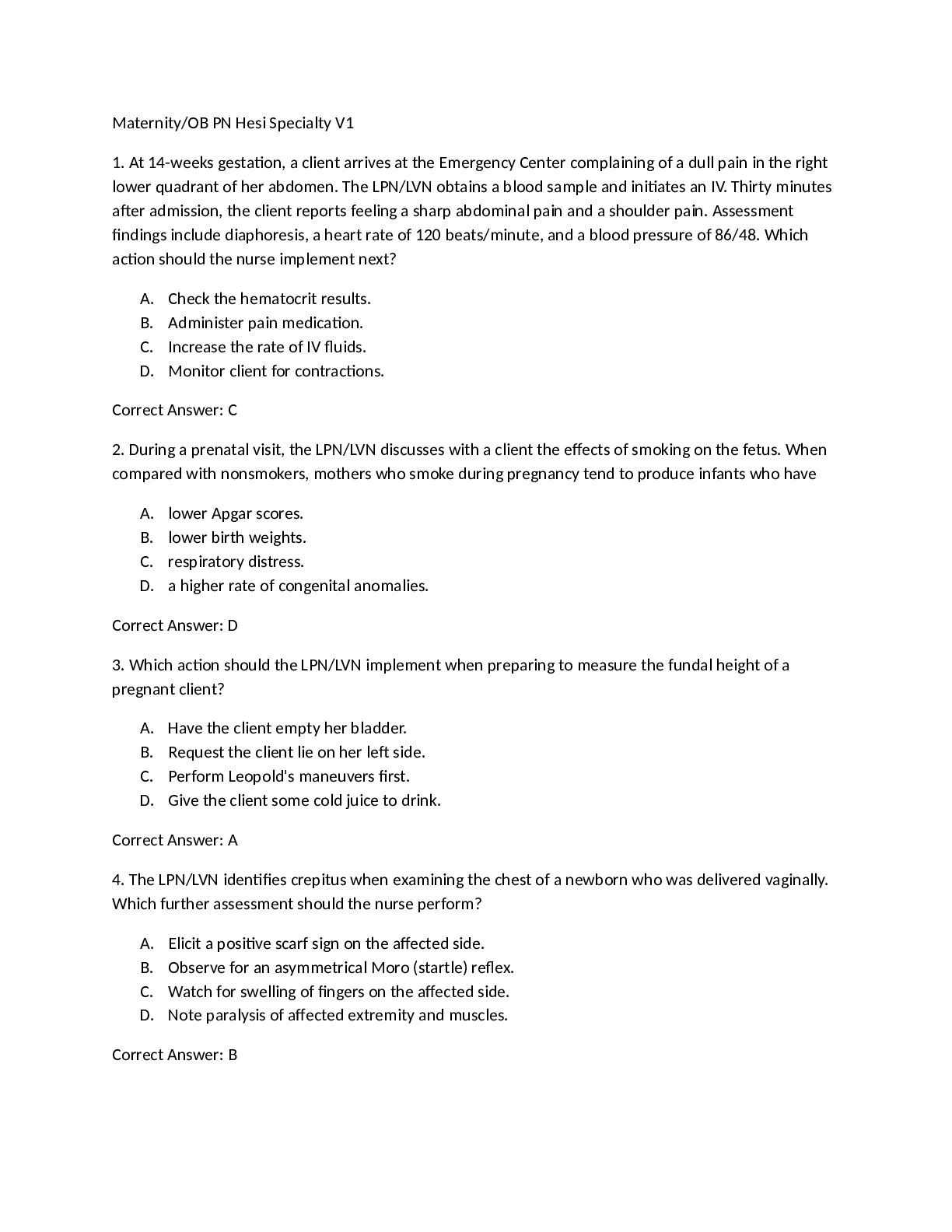
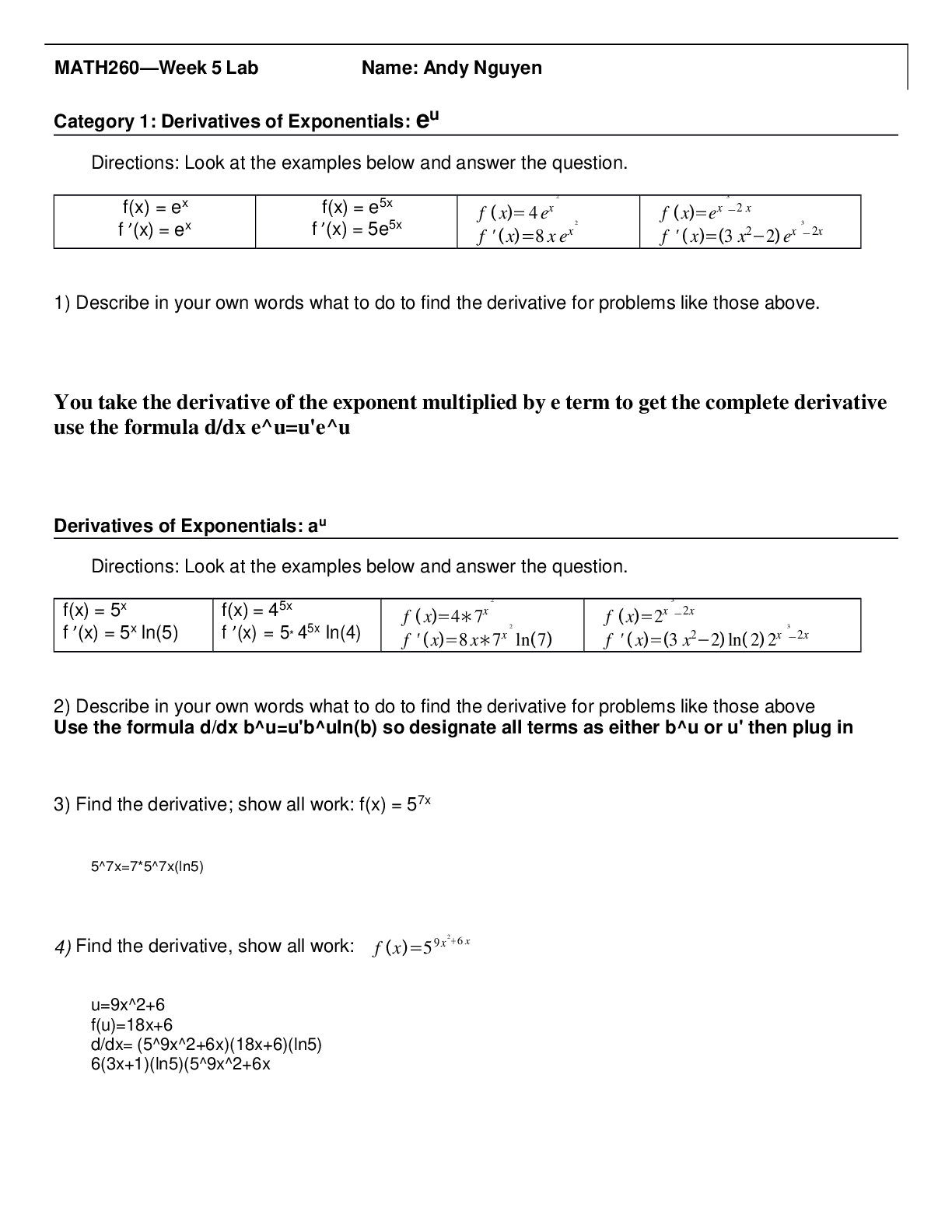
1. Nursing diagnosis:
a. A statement that describes potential health problem only.
b. A statement that describes actual and potential health problems.
c. A statement that describes ac
...
Prometric
Exam
Collection 2020
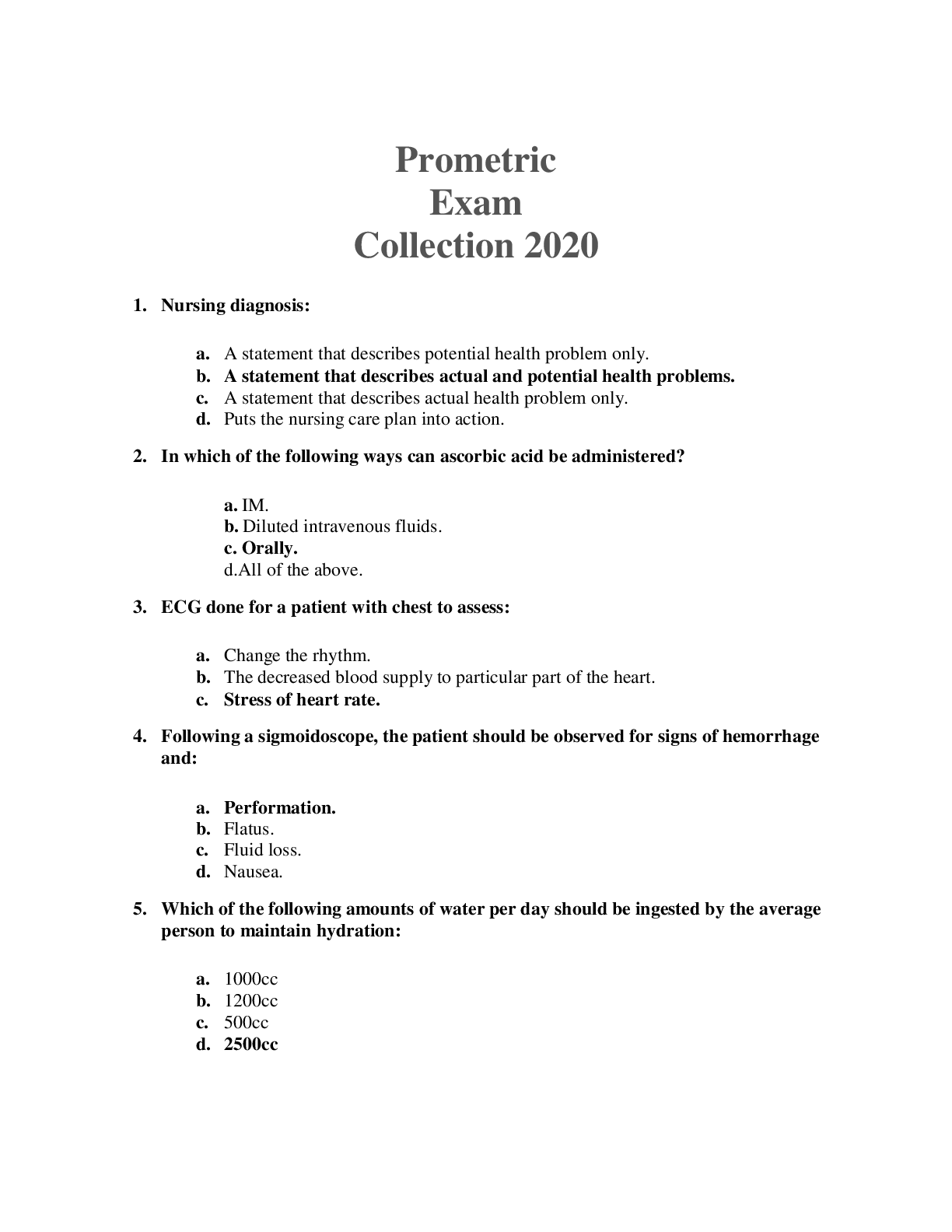
1. Nursing diagnosis:
a. A statement that describes potential health problem only.
b. A statement that describes actual and potential health problems.
c. A statement that describes actual health problem only.
d. Puts the nursing care plan into action.
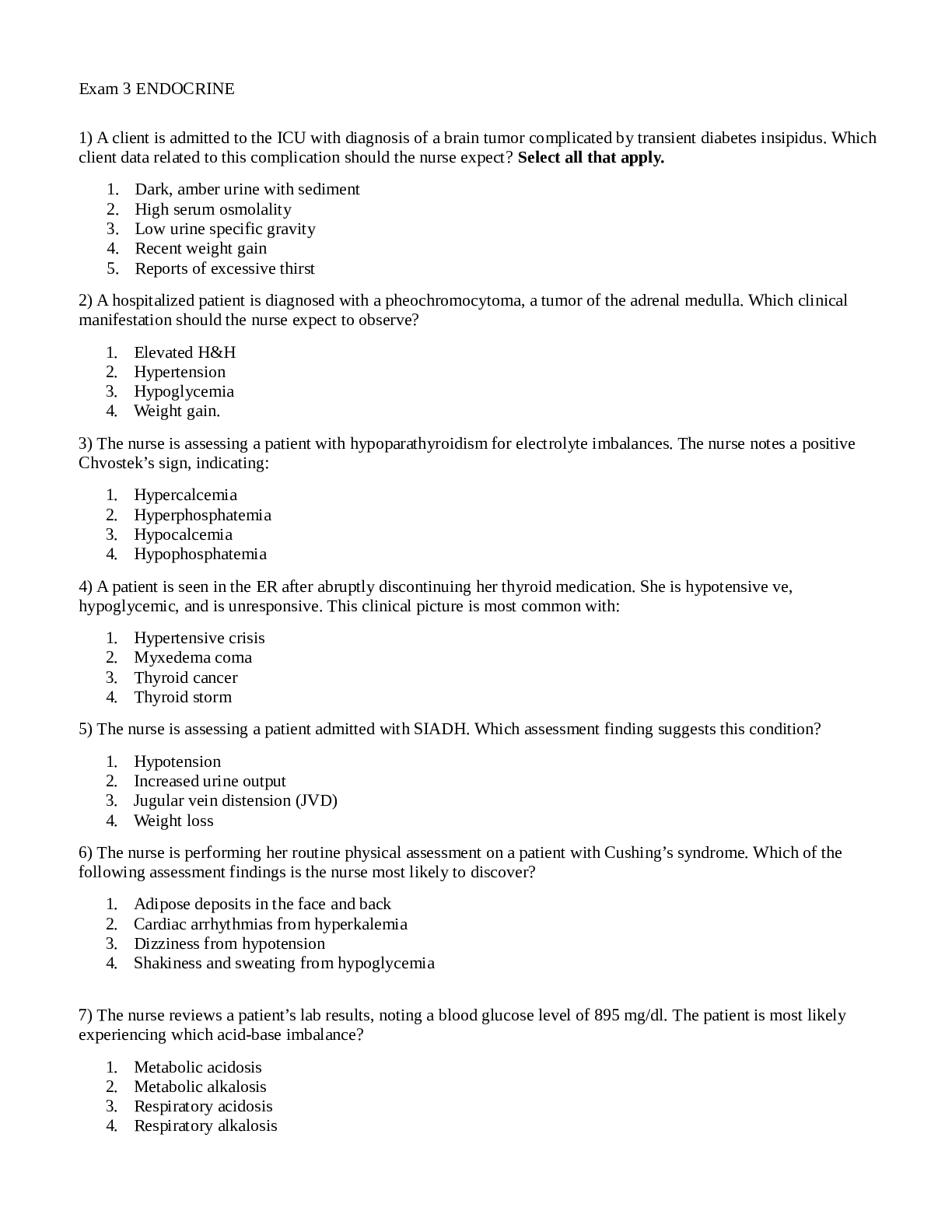
2. In which of the following ways can ascorbic acid be administered?
a. IM.
b. Diluted intravenous fluids.
c. Orally.
d.All of the above.
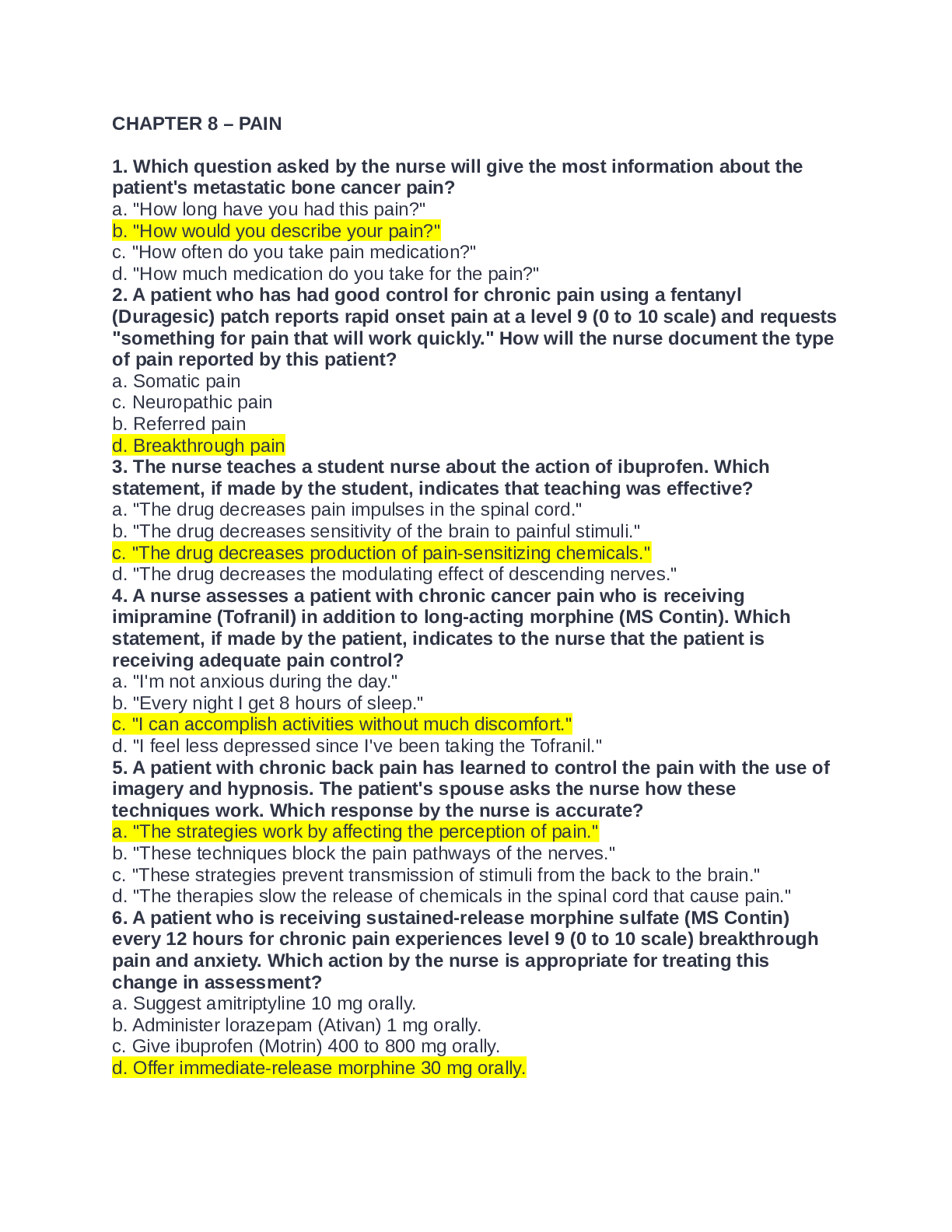
3. ECG done for a patient with chest to assess:
a. Change the rhythm.
b. The decreased blood supply to particular part of the heart.
c. Stress of heart rate.
4. Following a sigmoidoscope, the patient should be observed for signs of hemorrhage
and:
a. Performation.
b. Flatus.
c. Fluid loss.
d. Nausea.
5. Which of the following amounts of water per day should be ingested by the average
person to maintain hydration:
a. 1000cc
b. 1200cc
c. 500cc
d. 2500cc
6. If a nasogastric tube has been misplaced in the trachea during preparation to obtain
a gastric specimen, the nurse should anticipate that the patient will:
a. Swallow every few seconds.
b. Gage without relief.
c. Have difficulty in breathing.
d. Complain of feeling nauseated.
7. A 40 year old male patient is complaining of chronic progressive and mental
deterioration is admitted to the unit. The nurse recognized that these characteristics
indicate a disease that results in degeneration of the basal ganglia and cerebral
cortex. The disease is called:
a. Myasthenia gravis.
b. Huntington disease.
c. Multiple sclerosis.
d. Guillain-Barre syndrome.
8. To prevent the formation of thrombi in the postoperative patient, the nurse should:
a. Have the patient lie still.
b. Place pillows under the knee.
c. Teach foot and leg exercises.
d. Lie in lateral position.
9. Mr. Lucas, a 63 year old, went to the clinic complaining of hoarseness of voice and a
cough. His wife states that his voice has changed in the last few months. The nurse
interprets that Mr. Lucas’s symptoms are consistent with which of the following
disorders:
a. Chronic sinusitis.
b. Laryngeal cancer.
c. Gastro esophageal reflux disease
d. Coronary artery disease
10. Which of the following symptoms is most characteristic of a client with a cancer of
the lung?
a. Air hunger
b. Exceptional dyspnea
c. Cough with night sweats
d. Persistent changing cough
11. The relation between the pulse and respiratory rate is represented by which of the
following ratios:
a. One respiration to 3 or 4 heartbeat.
b. One respiration to 4 or 5heartbeat.
c. One respiration to 2 or 3heartbeat.
d. One respiration to 5 or 6 heartbeat.
12. 12 hours after delivery the fundus is at level of:
a. One fingerbreadth above the umbilicus.
b. At the level of umbilicus.
c. One fingerbreadth below the umbilicus.
d. Below symphysis pubis.
13. When the patient is diagnosed with wilms tumor, the nurse should:
a. Avoid palpation of abdomen.
b. Observe foe nausea and vomiting.
c. Always keep bed rails up.
14. Red has just returned from the post anesthesia care unit (PACU) from
hemorrhidectomy. His postoperative orders include sitz baths every morning. The
nurse understands that sitz bath is use for:
a. Relive tension.
b. Lower body temperature.
c. Promote healing.
d. Cause swelling.
15. A 48 year old woman presents to the hospital complaining of chest pain, tachycardia
and dyspnea. On exam, heart sounds are muffled. Which of the following assessment
findings would support a diagnosis of cardiac tamponade:
a. deviated trachea
b. Absent breath sounds to the lower lobes
c. Pulse 40 with inspiration
d. Blood pressure 140/80
16. The intentional wound is:
a. Occur accidentally.
b. The mucous membrane or skin surface is broken.
c. Occur during therapy.
d. The tissue is traumatized without a break in the skin.
17. Lisa is newly diagnosed with asthma and is being discharged from the hospital after
an episode of status asthmaticus. Discharge teaching should include which of the
following:
a. Limitations in sports that will be imposed by the illness
b. Specific instructions on staying cal during an attack
c. The relationship of symptoms and a specific trigger such as physical exercise
d. Incidence of status asthmaticus in children and teens.
18. The client has ST segment depression on his 12-lead ECG. The nurse determines that
this would indicate the following:
a. Necrosis
b. Injury
c. Ischemia
d. nothing significant
19. Nurse Fiona is caring a patient with Raynaud’s disease. Which of the following
outcomes concerning medication regimen is of highest priority?
a. Controlling the pain once vasospasm occur
b. Relaxing smooth muscle to avoid vasospasms
c. Preventing major disabilities that may occur
d. Avoiding lesions on the feet
20. A shuffling gait is typically associated with the patient who has:
a. Parkinson’s disease
b. Multiple sclerosis
c. Raynaud’s disease
d. Myasthenia gravis
[Show More]




 HESI VI EXIT EXAM.png)
.png)